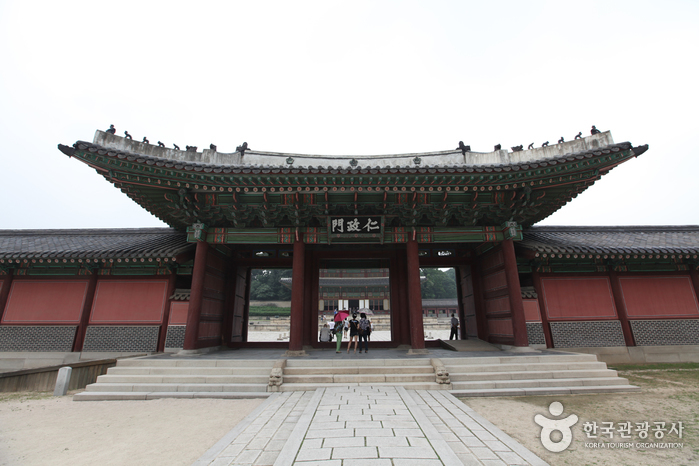
Changdeokgung Injeongmun Gate (창덕궁 인정문)
4.7Km 2025-01-14
99, Yulgok-ro, Jongno-gu, Seoul
+82-2-3668-2300
Serving as the main gate of Injeongjeon Hall, Injeongmun Gate was established in 1405 (5th year of King Taejo’s reign during the Joseon dynasty). Later on, the gate was destroyed by multiple fires during the Imjin War (Japanese invasion of Korea in 1592), therefore current form of the establishment displays designs that are more often seen in the late 19th century's. In addition, a lot
of subsidary marks and buildings are removed from the original places and relocated passing the time, however, still remains to represent prestigious ambience.
Injeongmun Gate served as the place for several coronation ceremonies of kings, prince's succession of throne, and many other national affairs celebrated by the royal members who gathered and aligned around this gate.

Seoul National Cemetery (국립서울현충원)
4.7Km 2024-03-07
210, Hyeonchung-ro, Dongjak-gu, Seoul
+82-2-813-9625
Seoul National Cemetery is a national cemetery for individuals who worked or fought for Korea and sacrificed their lives. It encompasses those who fought for Korea's independence from the late 19th century to the early 20th century, those who perished in the Korean War (1950-1953), and former presidents, totaling over 165,000 individuals. There are exhibition halls and parks with related artifacts. Shuttle buses are provided for the convenience of visitors.
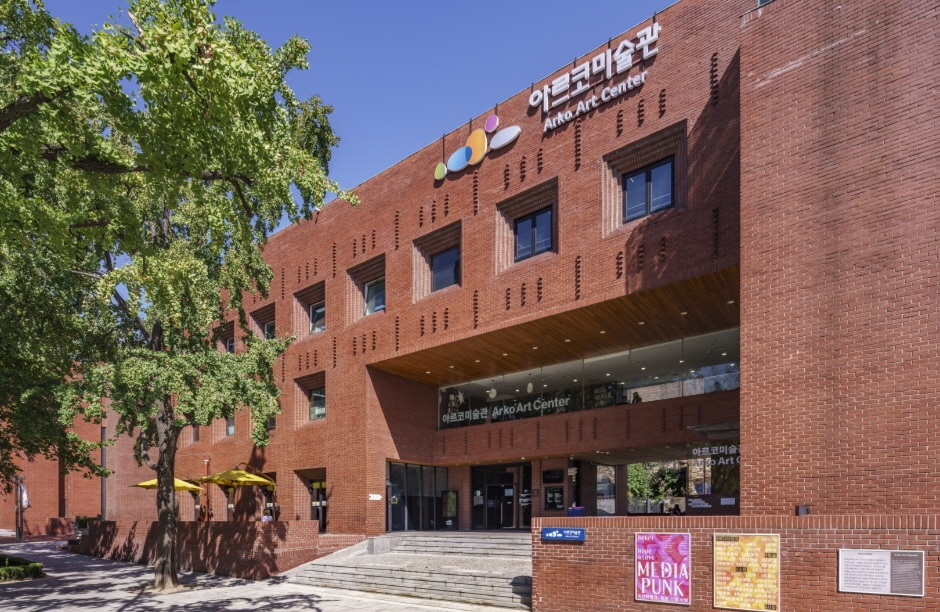
ARKO Art Center (아르코미술관)
4.7Km 2025-06-05
3, Dongsung-gil, Jongno-gu, Seoul
+82-2-760-4850
ARKO Art Center was founded in 1974 as Misulhoegwan in a building of former Deoksu Hospital in Gwanhun-dong, Jongno-gu to offer much-needed exhibition space for artists and arts groups. In 1979, Misulhoegwan moved to its present building, designed by preeminent Korean architect Kim Swoo-geun (1931-1986) and located in Marronnier Park, the former site of Seoul National University. The two neighboring brick buildings accommodating ARKO Art Center and ARKO Arts Theater are the major landmarks of the district of Daehakro.
As more public and private museums and commercial galleries came into the art scene in the 1990s, Misulhoegwan shifted to curating and presenting its own exhibitions. Renamed as Marronnier Art Center in 2002, ARKO Art Center assumed a full-fledged art museum system and played an increasingly prominent role as a public arts organization leading the contemporary art paradigm. When The Korea Culture and Arts Foundation was reborn as Arts Council Korea, Marronnier Art Center became ARKO Art Center named after the abbreviation for Arts Council Korea in 2005.
ARKO Art Center is committed to working as a platform where research, production, exhibitions and the exchange of creative activities grow and develop in connection with one another in addition to having a diversity of programs including thematic exhibitions addressing social agenda and public programs widely promoting various discourses in art.
Gyeonghuigung Palace (경희궁)
4.7Km 2024-07-09
45 Saemunan-ro, Jongno-gu, Seoul
+82-2-724-0274
Gyeonghuigung Palace, a designated Historic Site, was originally called the large palace by Saemun Gate, or the Western Palace, for its location within the city. It was not until the eighth year of Gwanghaegun (1616) that the palace was used as a royal residence for the king, changing the name to Gyeongdeokgung Palace. The name later changed again to the current Gyeonghuigung Palace in 1760. The palace grounds included many halls but they were mostly all burned down in a fire in 1829. After the Japanese occupation began, all remaining buildings on the site were torn down and the palace grounds were turned into Gyeongseong Middle School (now Seoul High School). The school moved to Gangnam area in 1987, afterwhich the previous location was turned into a park. The palace grounds currently hold Seoul Museum of Art and walking paths, as well as a restoration of Heunghwamun Gate, the main gate of the palace, and Sungjeongjeon Hall, the main hall, completed in November 1994.
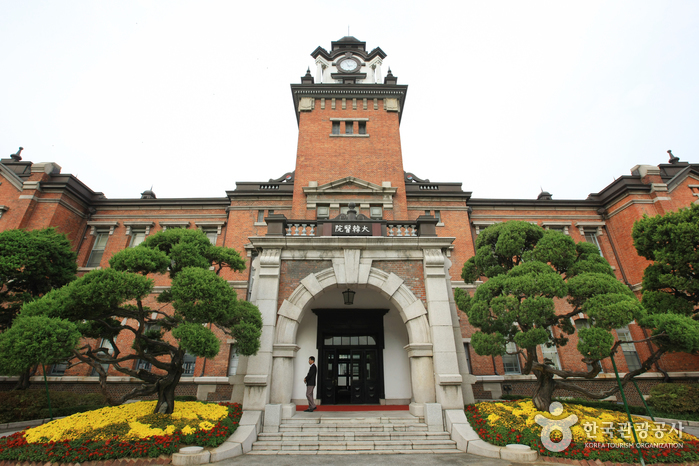
Seoul Daehan Hospital (서울 대한의원)
4.7Km 2021-12-23
101, Daehak-ro, Jongno-gu, Seoul
+82-2-2148-1842
Daehanuiwon (Daehan Medical Center) is an antique two-story brick building within the grounds of Seoul National University Hospital. It was established under the direct administration of the Uijeongbu (State Council), combining the Gwangjewon (under the Home Ministry), Gyeongseong Medical School and the Korean Red Cross Hospital (under the Royal Household).
Built in the Madubong Hill area, this location where Hamchunwon, the outer garden of Changgyeonggung Palace, once stood in 1484 (15th year of King Seongjong), was also once the site of Gyeongmogung Palace, where King Jeongjo enshrined the mortuary tablet of his birth father Crown Prince Sado Seja in 1776 (the year King Jeongjo ascended to the throne).
These places that held importance for the royal family were destroyed as the Japanese built Gyeongseong Empire University in its place. In 1907, with the announcement of the plan to establish Daehan Medical Center, construction began on the main building, seven wards and affiliated buildings. Construction was completed in November 1908.
The Daehan Medical Center opened in Gwangjewon, but upon Japanese colonization in 1910, its name was changed to the Japanese Viceroyalty Hospital. In 1926, it was included as a part of Gyeongseongjeguk University to become a university hospital. Since the liberation of Korea in 1945, it has been a hospital affiliated with Seoul National University.

Seongsu-dong Handmade Shoes Street (성수동 수제화거리)
4.8Km 2025-03-15
15, Yeonmujang 7-gil, Seongdong-gu, Seoul
Handmade shoe manufacturers began to gather in the 1970s to form a street and make history. Today, there are some 350 handmade shoe manufacturers, 100 intermediate processing and raw materials companies, and new cafes with unique vibes opening up one after another. Thanks to its vintage appeal, many people visit on dates and to take cool photos.
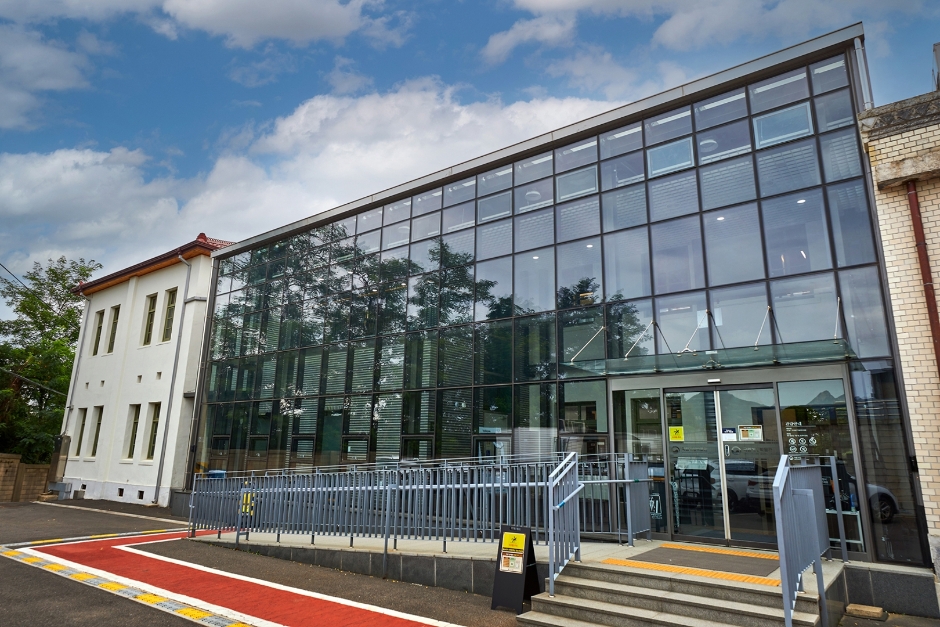
National Meteorological Museum of Korea (국립기상박물관)
4.8Km 2024-03-26
52 Songwol-gil, Jongno-gu, Seoul
A museum where one can look at Korea's meteorological observation history and technological development through exhibitions. The museum has the world's first rain gauge, invented in 1441, in the early Joseon dynasty. The museum operates approximately 350 meteorological observatories across Korea and focuses on promoting the uniqueness and excellence of Korea's meteorological science. There are permanent collections and special exhibitions. The permanent collections focus on the history of meteorological science in Korea. At the same time, the special exhibitions take a closer look at the history and information about meteorological science and natural disasters (e.g., earthquakes) that occurred in various regions of Korea. There are experience programs related to meteorological science, such as making a rain gauge or learning about rain gauges.
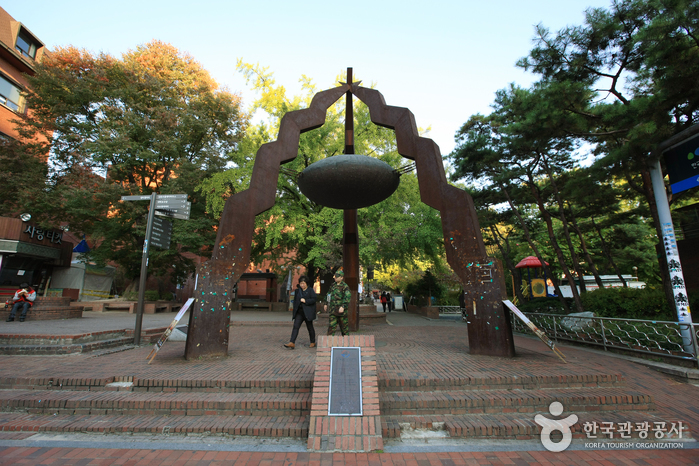
Marronnier Park (마로니에공원)
4.8Km 2021-07-14
104, Daehak-ro, Jongno-gu, Seoul
+82-2-2148-4158
Marronnier Park was given its name due to the marronnier trees, or horse chestnut trees, growing within the area. The location where Seoul National University's College of Liberal Arts & Science and School of Law once stood, it is now a park dedicated to culture and arts open to the public. In addition to a variety of outdoor performances that take place throughout the area, exhibitions and cultural centers create a romantic atmosphere unique to the park.
Seoul National University Hospital (서울대학교병원)
4.8Km 2025-10-23
101 Daehak-ro, Jongno-gu, Seoul
Seoul National University Hospital, a national central hospital that has led Korean medicine for over 130 years, is a top-tier hospital equipped with world-class medical professionals and cutting-edge systems. For 25 consecutive years, it has ranked first in brand power in the hospital sector. The hospital is renowned for its cancer research, the most comprehensive pediatric care in the country, and treatments for rare and intractable diseases. Through patient-centered, personalized services, it has established itself as a trusted healthcare institution.
GANGNAM BRIGHT-SMILE EYE CLINIC (강남밝은미소안과)
4.8Km 2025-10-23
3rd Floor, YBM Gangnam Center, 408 Gangnam-daero, Gangnam-gu, Seoul
Gangnam Bright Smile Eye Clinic is located right in front of Exit 11 at Gangnam Station. The clinic specializes in SMILE LASIK, LASIK & LASEK, and cataract surgery. With advanced equipment and technology, we provide precise and safe procedures along with personalized care based on thorough examinations. Our attentive post-operative management ensures a high level of patient satisfaction. We are also dedicated to welcoming international patients and contributing to the growth of global medical tourism.
 English
 한국어
한국어 日本語
日本語 中文(简体)
 Deutsch
 Français
 Español
 Русский


