
Amsa-dong Prehistoric Site Museum (암사동선사유적박물관)
14.1Km 2023-12-22
875 Olympic-ro, Gangdong-gu, Seoul
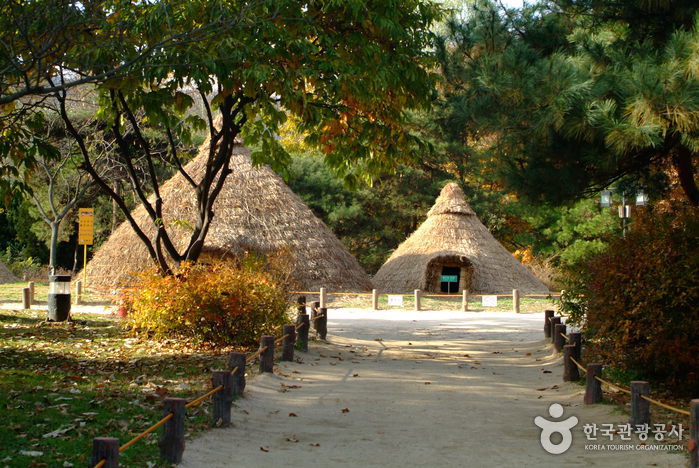
The archaeological sites in Amsa-dong, Seoul, were a collective settlement where people lived during the Neolithic Age about 6,000 years ago and became known to the world after the sand dunes along the Hangang River caved in during the great flood of 1925, exposing numerous pieces of comb-patterned pottery. The area designated as a historic site in 1979, and excavation of the site took place from 1981 to 1988. The cultural heritage protection area was expanded to a total area of 78,133㎡. Currently, nine Neolithic dugout huts and one experiential dugout hut have been restored. The exhibitions currently open to the public are Exhibition Hall 1, which displays a restoration of a Neolithic Age dugout, and Exhibition Hall 2, which displays various panels and models to help understand the prehistoric era as a whole.
Archaeological Site in Amsa-dong, Seoul (서울 암사동 유적)
14.2Km 2021-07-27
875, Olympic-ro, Gangdong-gu, Seoul
+82-2-3425-6520
The Archaeological Site in Amsa-dong reproduces the lifestyle of the Neolithic Era. Even the entrance gate is shaped like a huge dolmen and the trash cans are ancient diagonal-line patterned earthenware. Archaeological Site in Amsa-dong was excavated in 1925 when a flood washed away the soil on the banks of the Hangang River and exposed a large number of diagonal-line patterned earthenware. After several excavations, the Archaeological Site in Amsa-dong was established.
The site was a location for a massive colony, thus many ancient buildings, stone axes and stone arrows have been uncovered as well as countless diagonal-line patterned earthenware. The housing site is round with a spot in the center for fire. The site is colossal and possesses nine mud huts, two exhibition halls displaying ancient artifacts and an open mud hut where visitors can experience life in the Neolithic Era. The site offers many attractions such as mud huts and promenades. Archaeological Site in Amsa-dong is also very educational for children and families who want to learn and experience the Neolithic Age.
Seoul World Cup Stadium (서울월드컵경기장)
14.2Km 2025-03-15
240 World Cup-ro, Mapo-gu, Seoul
+82-2-2128-2000
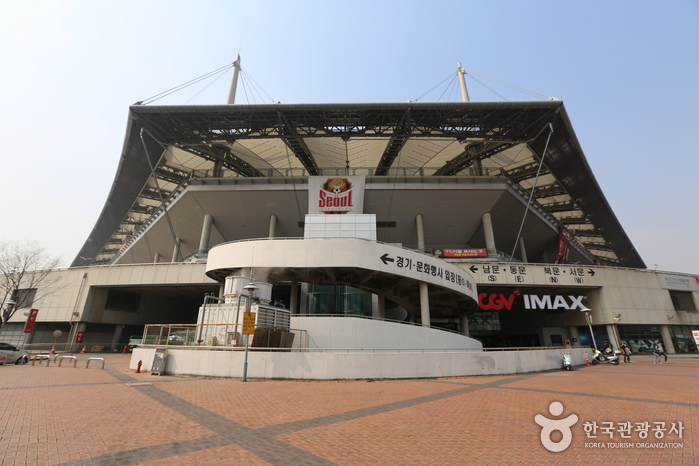
Seoul World Cup Stadium, constructed for the 2002 World Cup co-hosted by South Korea and Japan, stands as the largest soccer-specific stadium in Korea. Currently serving as the home ground for FC Seoul's K-League , it also hosts matches for the South Korean national soccer team. The vicinity boasts large-scale supermarkets, cinemas, sports centers, and saunas. Nearby attractions include Haneul Park and Pyeonghwa Park.
Football Faentasium (풋볼 팬타지움)
14.2Km 2022-09-13
240, World Cup-ro, Mapo-gu, Seoul
+82-2-305-2002
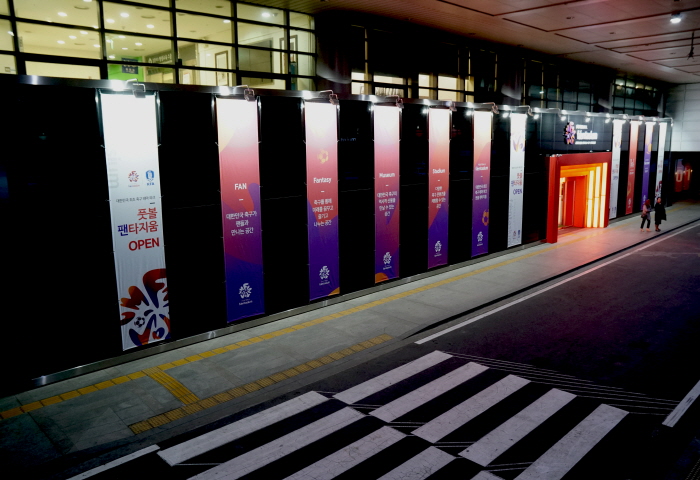
Football Faentasium is the first soccer-themed experience museum in Korea, founded by the Korea Football Association. The museum uses the lastest in IT for exciting displays, experiences, educational lessons, and more for a facility more like a theme park than a museum. The name comes from a mix of the words fan, fantasy, museum, and stadium.
Seokparang (석파랑)
14.2Km 2024-09-02
309 Jahamun-ro, Jongno-gu, Seoul
+82-2-395-2500
Seokparang is a place built by relocating the Sarangchae of Heungseon Daewongun, the father of King Gojong of the Joseon dynasty. It boasts beautiful late Joseon-style gardens and three traditional hanok buildings. Here, one can enjoy authentic Gungjung hanjeongsik (royal Korean table d'hote) for both lunch and dinner, featuring meticulously prepared dishes such as traditional porridge, chilled salads, steamed prawns, kimchi cabbage wraps with pork, soybean paste jjigae set menu, and desserts. Diners can also savor traditional liquors crafted by artisans from across the country.
Gwangmyeong Cave (광명 동굴)
14.3Km 2025-10-27
142 Gahak-ro 85beon-gil, Gwangmyeong-si, Gyeonggi-do
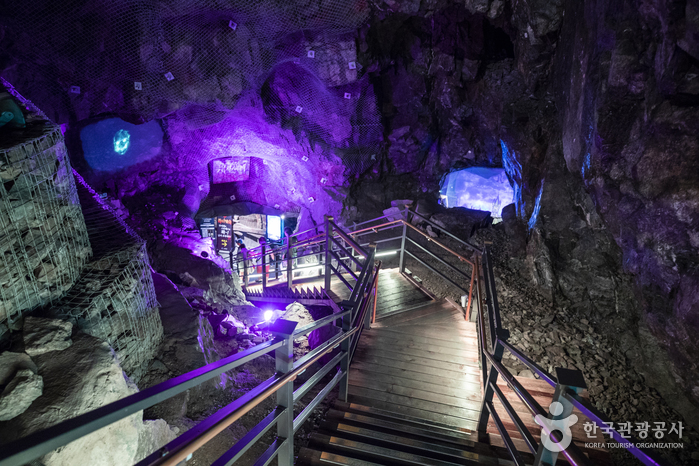
Gwangmyeong Cave was developed in 1912 during the Japanese colonial period to exploit resources, including gold mines, and continued to be developed for industrial purposes after liberation. After the mine was closed in 1972, it was used as a salted seafood warehouse for about 40 years. Gwangmyeong City purchased the site, reorganized it, and made it available to the public. It is currently recognized as a modern industrial heritage site with high historical value, and is well known as a cave theme park in the metropolitan area. Along with the cave, colorful lights and sculptures create a spectacular sight. Aside from tasting and purchasing Korean wine at the Gwangmyeong Wine Cave, visitors can also see the largest media art piece in Korea at the Lascaux Exhibition Hall, enjoying a more diverse travel experience.
GSam Hospital (지샘병원)
14.3Km 2025-10-23
591 Gunpo-ro, Gunpo-si, Gyeonggi-do
Opened in June 2013 in Gunpo, Gyeonggi-do, G SAM Hospital is a global general hospital with 400 beds, 35 medical departments, and more than 20 specialty centers and clinics providing patient-centered care.
Our medical staff is composed of top-notch specialists with extensive clinical experience across all departments, offering a high-quality medical care. They have outstanding clinical expertise in cancer, and cerebrovascular, circulatory, digestive, joint/spine diseases.
In particular, we provide excellent treatment regarding metastatic cancer through our targeted therapy (LHIPEC, ET, etc.), NK cell therapy, and immunotherapy, which have attracted many international patients to our hospital.
We are certified by the Korean Accreditation Program for Hospitals Serving Foreign Patients (KAFH) and a Leading Institution for Medical Tourism, and operate an international healthcare center for overseas patients. Specialized coordinators fluent in English, Russian, and other languages provide interpretation for appointments and follow-up care.
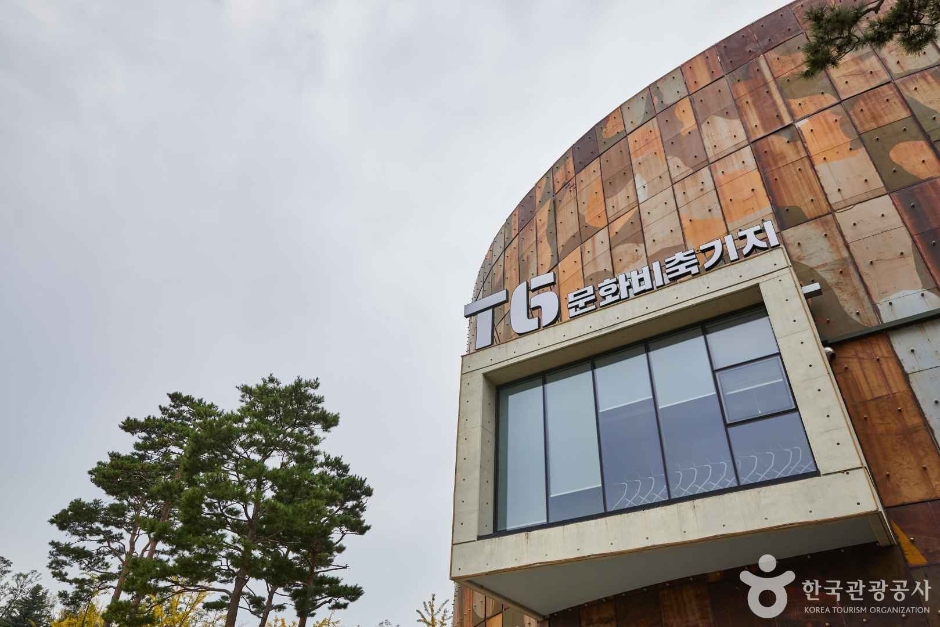
Oil Tank Culture Park (문화비축기지)
14.5Km 2024-11-01
87 Jeungsan-ro, Mapo-gu, Seoul
+82-2-376-8410
After being used as an oil tank for 41 years, the tanks were reborn into a culture space. The five tanks were transformed into performance halls, exhibition halls, and a multi-purpose pavilion, while one new tank was built to be used as an information center. In addition, the temporary parking lot turned into a culture yard where visitors can relax as well as enjoy activities or performances.
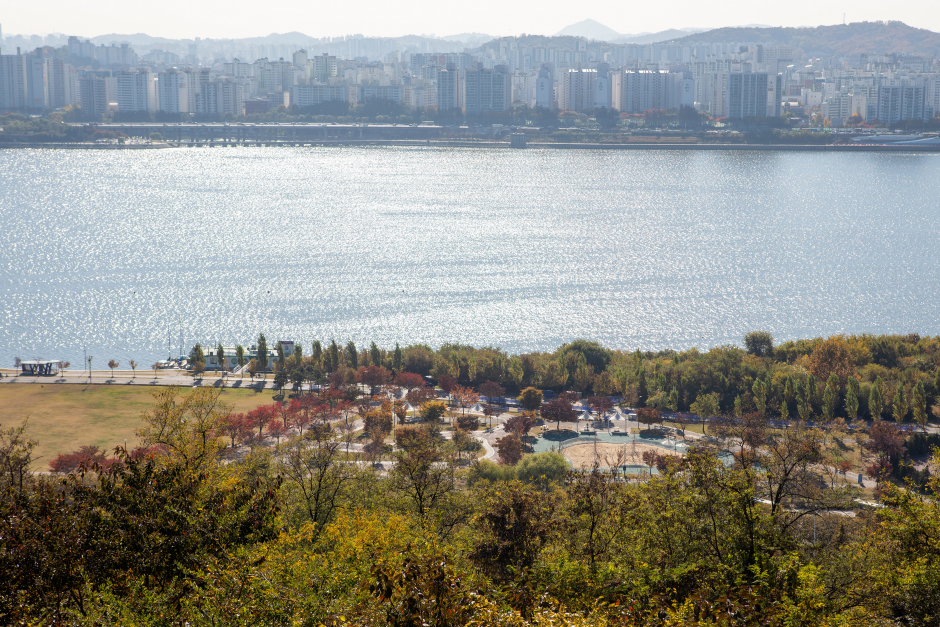
Nanji Hangang Park (난지한강공원)
14.5Km 2025-01-07
162 Hangangnanji-ro, Mapo-gu, Seoul
Nanji Hangang Park, situated north of the Hangang River near World Cup Park, provides a riverside space for leisure and recreation. The park offers Campgrounds, Water Leisure Sports Facilities, Bike Lane, Waterside Plaza, Mirror Fountain, Riverside Pool, a convenience store, and an information center. The Mirror Fountain emits a rainbow-like light with each water spray. The campgrounds are popular for their proximity to the city and affordable fees. Visitors can enjoy activities such as motorboating, water skiing, and wakeboarding on the Hangang River.
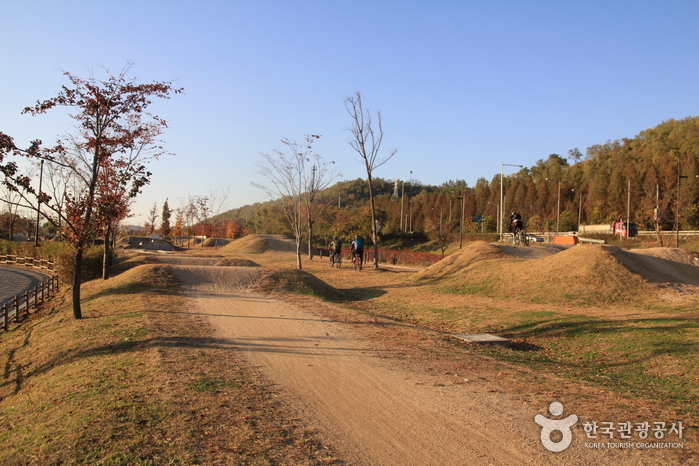
Nanji Hangang Park MTB Course Site (난지한강공원 MTB코스장)
14.6Km 2022-10-26
162, Hangangnanji-ro, Mapo-gu, Seoul
+82-2-3780-0611
Situated in Nanji Hangang Park, the MTB Course Site is perfect for MTB lovers as well as beginners who wish to enter the world of extreme biking with safety. The MTB Course Site is the nation's first MTB course site, established on a flatland, reproducing perfectly realistic mountain ridges and slopes.
 English
 한국어
한국어 日本語
日本語 中文(简体)
 Deutsch
 Français
 Español
 Русский


