
Bank of Korea Money Museum (화폐박물관)
7.8Km 2024-03-18
39 Namdaemun-ro, Jung-gu, Seoul
This Renaissance-style three-story stone building is the museum of the Bank of Korea. The older Bank of Korea was established as the central bank of the Korean Empire in 1909 and has been designated as a National Historical Site. During the Japanese colonial period, the bank was renamed the Bank of Joseon, and the building was used as the main and head office of the Bank of Korea until 2001. The building has been used as the nation’s Money Museum since June 2001 in celebration of the 50th anniversary of the Bank of Korea. The museum has 13 exhibition rooms on two floors, with one basement floor and two above-ground floors. It holds special exhibitions of various currency and art collections to provide domestic and foreign visitors with the opportunity to enjoy the history and culture of currency. Visitors can learn about the Bank of Korea and the central banking system, as well as how to identify counterfeit notes and how money is produced and circulated. It is also a good place for children to learn about currencies from around the world. Advance reservations are required, and parking is not available. The museum can easily be reached via subway by getting off at Hoehyeon Station (Seoul Subway Line 4) and exiting through Exit 7.
Ewha Centennial Hall (이화여고100주년기념관)
7.8Km 2024-02-20
26 Jeongdong-gil, Jung-gu, Seoul
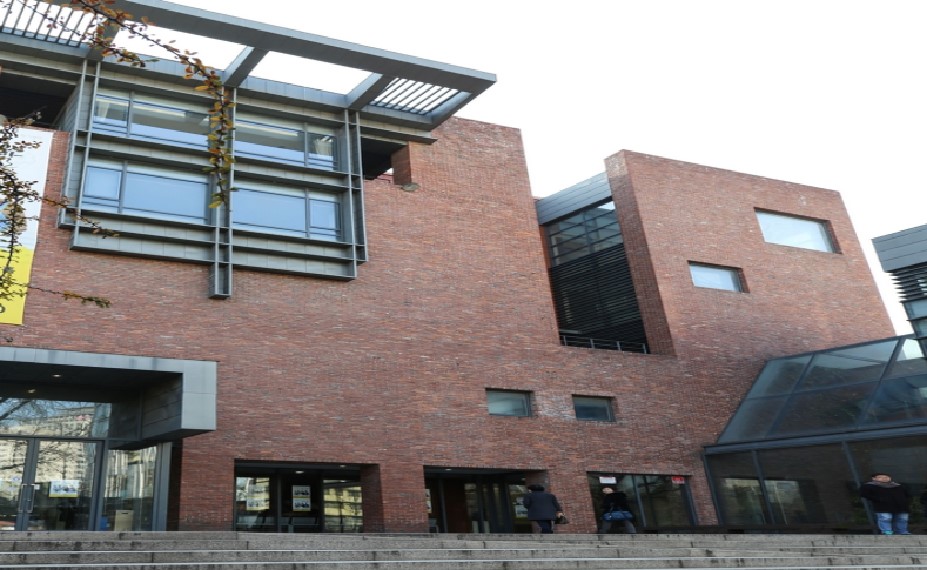
Ewha Centennial Hall is a multimedia education center located next to Ewha Girls' High School. Spanning underground and five above-ground floors, it features a gallery, a cafe, music rooms, individual practice rooms, and audio-visual rooms. The Hwaham Hall on the first and second floors is utilized for performances such as musicals and concerts, as well as educational events.
Myeong-dong Ttungttungi Jokbal (명동뚱뚱이족발)
7.8Km 2024-10-15
9, Toegye-ro, 20-gil, Jung-gu, Seoul
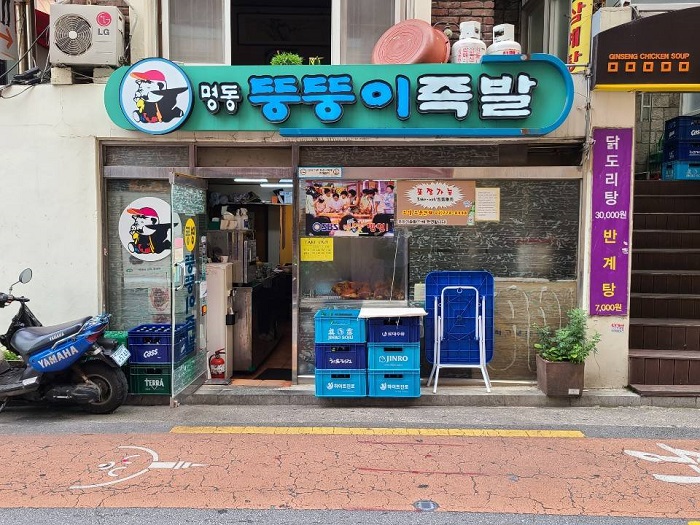
One of the old restaurants in Myeong-dong featured in Korean gourmet programs. This Korean dishes restaurant is located in Jung-gu, Seoul. The most famous menu is braised pigs' feet.
Seoul Museum of Art (서울시립미술관(서소문본관))
7.9Km 2024-06-19
61 Deoksugung-gil, Jung-gu, Seoul
The Seoul Museum of Art (SeMA) is a space for all to meet and experience the joy of art. Located in the center of Jeong-dong, a district that retains traces of Seoul’s modern and contemporary history, the museum integrates the historical facade of the former Supreme Court with modern architecture. In addition to various programs―encompassing exhibitions, educational outreach initiatives, screenings, workshops, performances, and talks, communal spaces including SeMA Cafe, the artbook store, the open space lobby, and the outdoor sculpture park SeMA WALK provide a rich range of ways for visitors to experience art.
Namsan Arts Center (남산예술센터)
7.9Km 2021-08-26
138, Sopa-ro, Jung-gu, Seoul
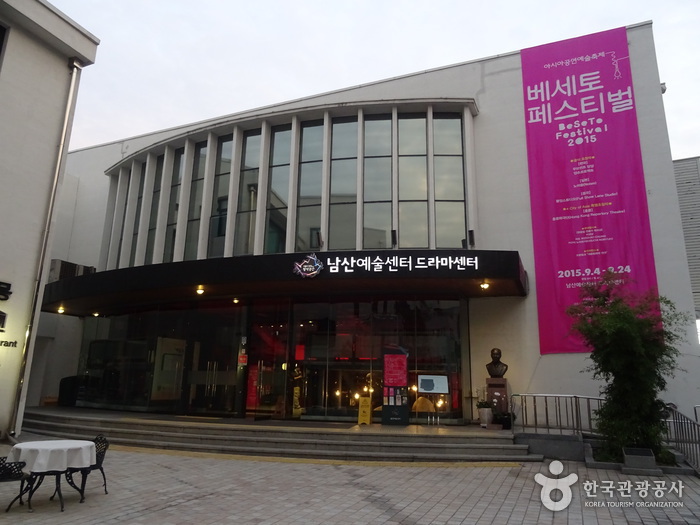
Namsan Arts Center, reopened as a creative space in Seoul in September 2009. It redefined the colors and characteristics of the theater, aiming for a modern theater production center centered on creative premieres, a contemporary performance venue where visitors can feel the pulse of the times, and a theater capable of various experiments.
Namsan Arts Center Drama Center is the first modern folk theater in Korea and the oldest performance hall in which the original architectural form has been preserved. Under the concept of "Contemporary & New Wave," the center continues to produce domestic original plays, and through active exchanges with excellent overseas theaters, build a repertoire of high-quality works that can read domestic and overseas trends, and present contemporary cultural diversity.
National Memorial of Korean Provisional Government (국립대한민국임시정부기념관)
7.9Km 2023-01-16
279-24, Tongil-ro, Seodaemun-gu, Seoul
The National Memorial of Korean Provisional Government was established to shine a light on the proud history of the Korean Provisional Government's independence and the spirit of a democratic republic and to pass it on to future generations. The four-story memorial building with three underground floors houses three permanent exhibits, one special exhibit, Larchiveum, Symbol Plaza, storage, multi-purpose hall, and rooftop garden over a total area of 3,656 square meters, a total floor area of 9,703 square meters and a total exhibition space of 2,240 square meters. The permanent exhibits consist of a series of historic events from the March 1st Movement, which served as a turning point for the formation of the Provisional Government, to the foundation of the Korean Government that succeeded the mantle of the provisional government, while the special exhibit on the 1st floor currently hosts a special opening exhibition under the title of 『The Return of the Provisional Government of the Republic of Korea』. Moreover, a symbolic wall installation under the theme of "Waves of History" is displayed in the outdoor plaza on the 1st floor of the memorial expressing the Provisional Government’s desire for independence and the dynamics of the past, present, and future of Korea.
Savina Museum of Contemporary Art (사비나 미술관)
7.9Km 2022-10-20
93 , Jingwan 1-ro, Eunpyeong-gu, Seoul
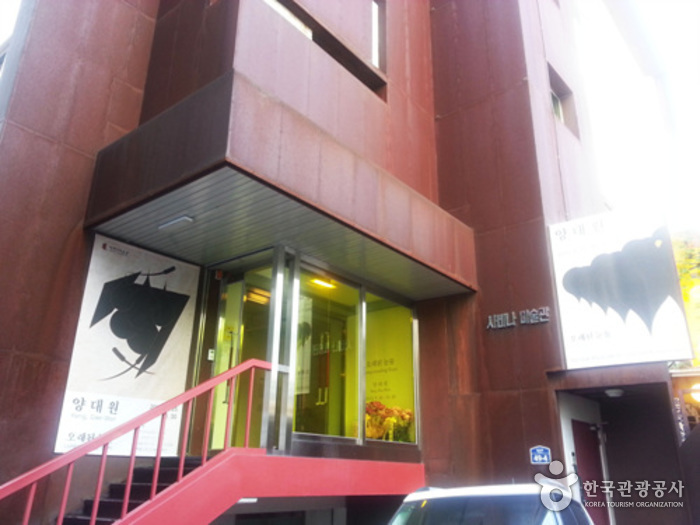
The Savina Museum provides visitors with fresh and exciting pieces that reflect the diverse and dynamic aspects of Korean modern art. Museum organizers actively focus on developing the museum’s exhibitions, educational programs, publications, and art collections, continually working to transform the museum into a living, breathing center of arts. The museum not only supports the development of artists from a more traditional list of fields like painting, sculpture, photography and media arts, but also introduces exhibits highlighting new trends in the art world.
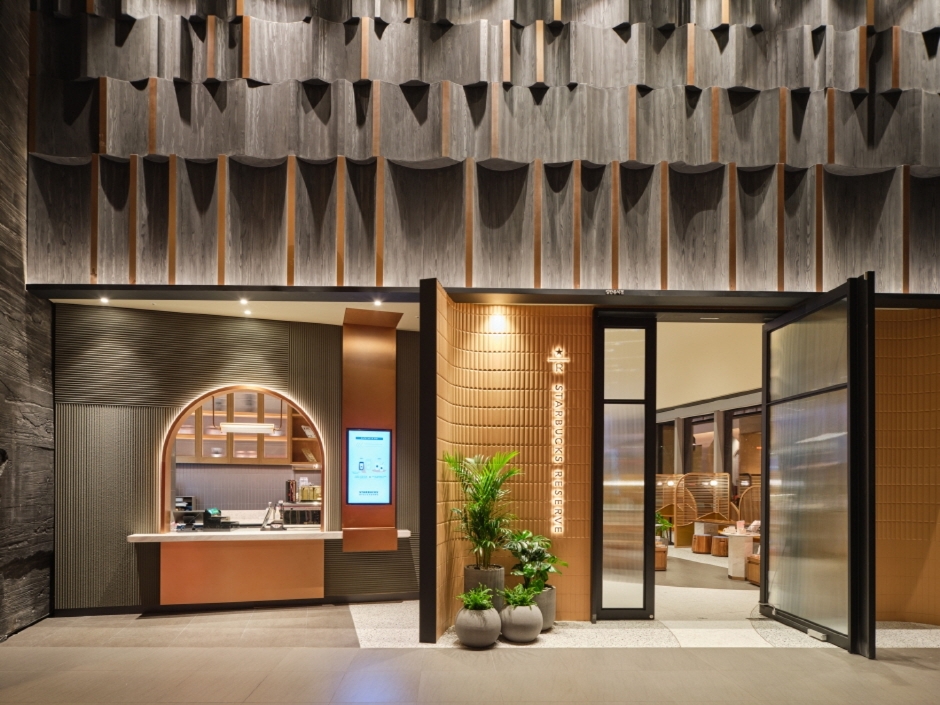
Starbucks Byuldabang (스타벅스 별다방)
7.9Km 2024-12-27
100 Toegye-ro, Jung-gu, Seoul
Byuldabang is a cozy space in the city, where the present and future of Starbucks coexist
Byuldabang is a special name. It combines the Korean words byul, which means stars, and dabang, which means a traditional space where people gather and talk over tea or drink. Byuldabang is the nickname Koreans generally use for Starbucks. Starbucks Byuldabang store opened in appreciation of customers of Starbucks Korea, celebrating its 22nd anniversary. This particular store is a Starbucks Reserve store with new concept food items, and is the first among Starbucks stores worldwide to have digital art wall decorations. The images projected to the art wall are “The Journey of Siren.” It is a surreal journey of Siren, who delivers coffee messages around the ocean, day and night. Customers love the story.
Shinsegae Department Store - Main Store (신세계백화점 (본점))
7.9Km 2025-04-07
63 Sogong-ro, Jung-gu, Seoul
Shinsegae Department Store opened its doors as the first modern department store in the country in 1960. It stands where Korea's first department store, the Japanese Misreukkosi Department Store, used to be in the 1930s. After undergoing remodeling in 2007, it reopened as a luxury hall, featuring diverse brands ranging from the top three international luxury brands to new designer brands. In addition, the Trinity Gardens and art halls in the department store serve as a cultural space for a shopping experience that combines art and shopping.
Dongnimmun Gate (독립문)
7.9Km 2022-12-15
251, Tongil-ro, Seodaemun-gu, Seoul
Dongnimmun stands at the location originally known as Yeongeun, where envoys were once treated. When a Chinese envoy visited, the King would go out through this door to greet. In 1898, to announce the independence from Japan, Dongnimun was constructed with the fund collected by the citizens. The traces of the past still remain on Dongnimmun with two pillars in front of Dongnimmun being the remains of Yeongeunmun.
The Arc de Triomphe in France can be recalled in comparison to Dongnimmun. Dongnimmun was built using granite with a passageway x_height of 14.28 meters. On the top it is written ‘Dongnimmun’ in Korean with the national flag drawn on each side. On the inner-left side there are stone stairs leading to the attic. The national flower Mugunghwa are planted around Dongnimmun. Now it is surrounded by roads and it is eye-catching to view when passing by.
 English
 한국어
한국어 日本語
日本語 中文(简体)
 Deutsch
 Français
 Español
 Русский


