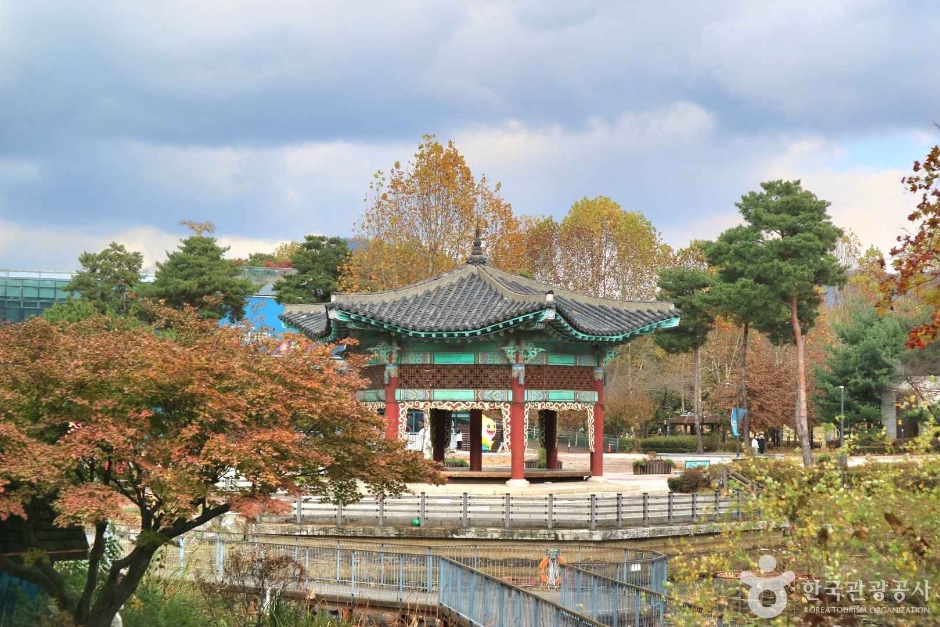
Seoul Children's Grand Park (서울어린이대공원)
10.1Km 2024-11-28
216 Neungdong-ro, Gwangjin-gu, Seoul
Opened in May 1973, Seoul Children’s Grand Park is a theme park situated among green forests and fields with a total area of 56,552㎡. It contains a zoo, arboretum, amusement park, and performance venues. Seoul Children’s Grand Park has been a beloved part of Seoul, a paradise for children and a living venue for education. For grown-ups, it functions as an area of refuge and culture within the city. The Grand Park offers facilities that everyone in the family can enjoy, so everyone can find their own fun in the Grand Park.
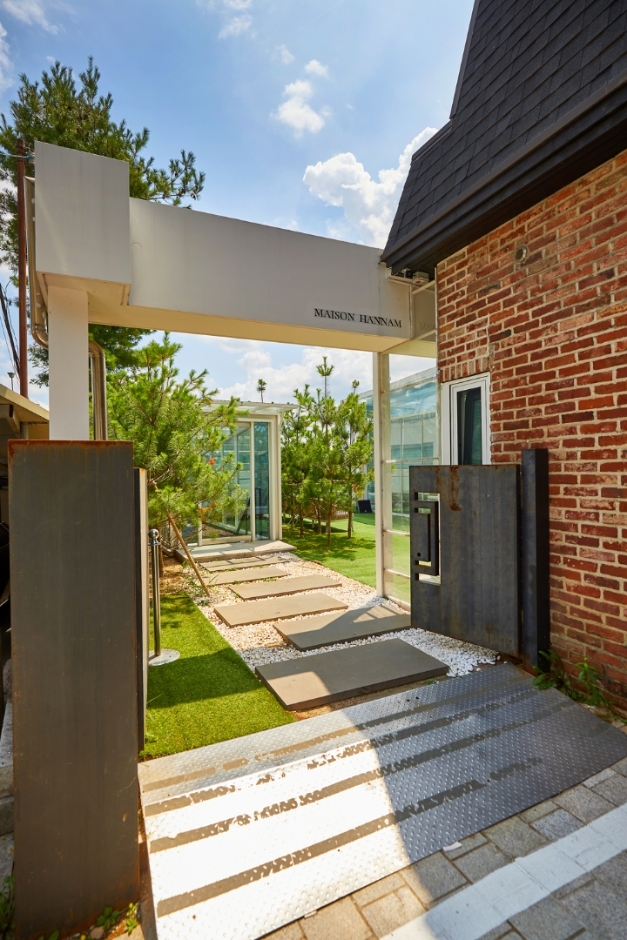
Maison Hannam (메종 한남)
10.1Km 2024-12-27
24 UN village 3-gil, Yongsan-gu, Seoul
Remodeled from the prevoius Italian Embassy, this restaurant boasts an excellent view of the Hangang River and Lotte World Tower. It is a popular place for dates or birthday parties, requiring a reservation at least a month in advance to sit on the terrace with a view of the Hangang River. Among the recommended menus is the Maison Lunch Set, which offers three courses, including appetizers (such as grilled scallops), pasta, and Korean beef steak. The food is served warm, and the utensils are changed frequently for a pleasant meal. There is a glass greenhouse on the outdoor terrace, so guests can enjoy the Hangang River view regardless of the weather.

Seoul Hyochang Park (서울 효창공원)
10.2Km 2024-07-09
177-18 Hyochangwon-ro, Yongsan-gu, Seoul
Hyochang Park covers 122,245 square meters spanning across Hyochang-dong and Cheongpa 2-dong. It is a historic landmark that once contained several royal tombs, and was known at that time as Hyochangwon. The cemeteries that were originally located in Hyochangwon belonged to Crown Prince Munhyo, King Jeongjo’s first son who died at the age of five; Royal Noble Consort Uibin of the Seong Clan, King Jeongjo’s royal concubine and Crown Prince Munhyo’s mother; Royal Noble Consort Sugui of the Park Clan, King Sunjo’s royal concubine; and her daughter Princess Yeongon. The royal tombs were moved to Seooreung Tombs in the waning months of the Japanese colonial period. The Japanese empire began the development of Hyochangwon into a park in 1924, and the Japanese governor-general officially assigned the site as a park in 1940.
Presently, several of Korea’s greatest leaders are buried in Hyochang Park. The remains mostly belong to independence activists including Yoon Bong-gil, Lee Bong-chang, and Baek Jeong-gi, whose graves are collectively known as Samuisa Tomb. A statue of Lee Bong-chang has been built in the graveyard. Among the other patriotic martyrs who are interred in the park are Kim Gu and some of the key figures of the provisional government such as Lee Dong-nyeong, Cha I-seok, and Cho Seong-hwan. An ancestral shrine named Uiyeolsa has been built along the main gate and holds the portraits of the deceased independence activists.
East Nine Royal Tombs [UNESCO World Heritage] (구리 동구릉 [유네스코 세계문화유산])
10.2Km 2024-03-20
197 Donggureung-ro, Guri-si, Gyeonggi-do
The East Nine Royal Tombs, situated on the eastern outskirts of Hanyang (the Joseon dynasty capital), represent a significant collection of nine royal burial sites. This area serves as the final resting place for seven kings and ten queens from the Joseon era. The surrounding forest paths are accessible to the public during the spring and fall seasons. Additionally, the East Nine Royal Tombs Healing Culture and Arts Festival takes place here every autumn, offering a blend of cultural and artistic experiences.
Yonsei University (연세대학교)
10.2Km 2023-07-04
50, Yonsei-ro, Seodaemun-gu, Seoul
Yonsei University, which opened in 1885, is a prestigious university that boasts a beautiful campus. In particular, it is famous for its wooden trails, antique buildings covered with ivy, and Cheongsongdae Forest, a popular dating spot among couples. Yonsei University also has a Korean language institute for foreigners interested in learning Korean.
![Lindapick [Korea Quality] / 린다픽 [한국관광 품질인증]](http://tong.visitkorea.or.kr/cms/resource/10/2803310_image2_1.jpg)
Lindapick [Korea Quality] / 린다픽 [한국관광 품질인증]
10.2Km 2024-10-30
26-5, Itaewon-ro 23-gil, Yongsan-gu, Seoul
Lindapick is a guesthouse located a five-minute walk from Itaewon Station (line 6). The host of this new guesthouse, open in May 2021, prioritizes cleanliness by washing bedding and disinfect the whole place every time a guest leaves. The CCTVs that are installed outside and at the shared inner space are operated around the clock, strengthening the security. The light-lemon-color exterior walls of the accommodation and the muted-colored rooms are in harmony, forming a fresh and calm atmosphere. The room that can accommodate two persons shows how the host is considerate. A 100% natural aroma diffuser emits peppermint scent that makes guest unwind, and the lavender scent lets guests sleep tight. The kitchen with a refrigerator and a microwave oven is where you can cook a simple dishes, and the air purifier and the washing machine let you enjoy a fresher rest. From the entrance to the room, there is a garden that is decorated as an outdoor terrace, where you can have a leisurely time sunning yourself.
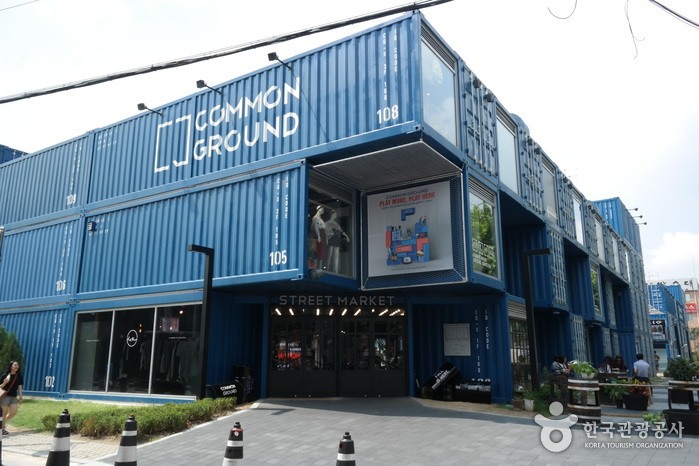
Common Ground (커먼그라운드)
10.2Km 2025-10-23
200 Achasan-ro, Gwangjin-gu, Seoul
Korea's first pop-up store built with shipping containers,
Common Ground is approximately 5,300 square meters in scale, made up of 200 large containers and is capable of transforming into different structures or moving into different places. Mega-sized mainstream brands are hard to spot in Common Ground. Instead, new and trendy mid-sized shops by up-and-coming new designers and editorial shops can be found here.
On the central square of the ground market, a weekend market is held with different themes. In addition, various events such as exhibitions and performances continue to entertain shoppers while playing its role as a cultural space. On the third floor terrace, famous restaurants sprawl along the sides of the alley. If you feel like having a light snack, you can also pop down to the food trucks on the market ground that offers an exotic gastronomic dining experience.
Soon Chun Hyang University Hospital Seoul (순천향대학교 부속 서울병원)
10.3Km 2025-10-23
59 Daesagwan-ro, Yongsan-gu, Seoul
Soonchunhyang University Hospital Seoul has established a systematic and dedicated system for international patients covering all stages from pre-entry processes to departure and aftercare. Based on the medical records provided by the patient, we consult with the medical staff of each specialty to come up with an estimated treatment plan and costs to help patients prepare for their treatment in Korea. Our dedicated outpatient and inpatient teams provide expert medical interpretation, guidance, and integrated appointment management to ensure prompt and organized medical care for international patients throughout their stay. Complete with spacious and comfortable rooms, the International Ward is staffed by coordinators and a nursing team reserved for international patients. Multidisciplinary care with organized systems, state-of-the-art medical equipment, and top-notch medical staff ensure accurate diagnosis and the best treatment outcomes possible.
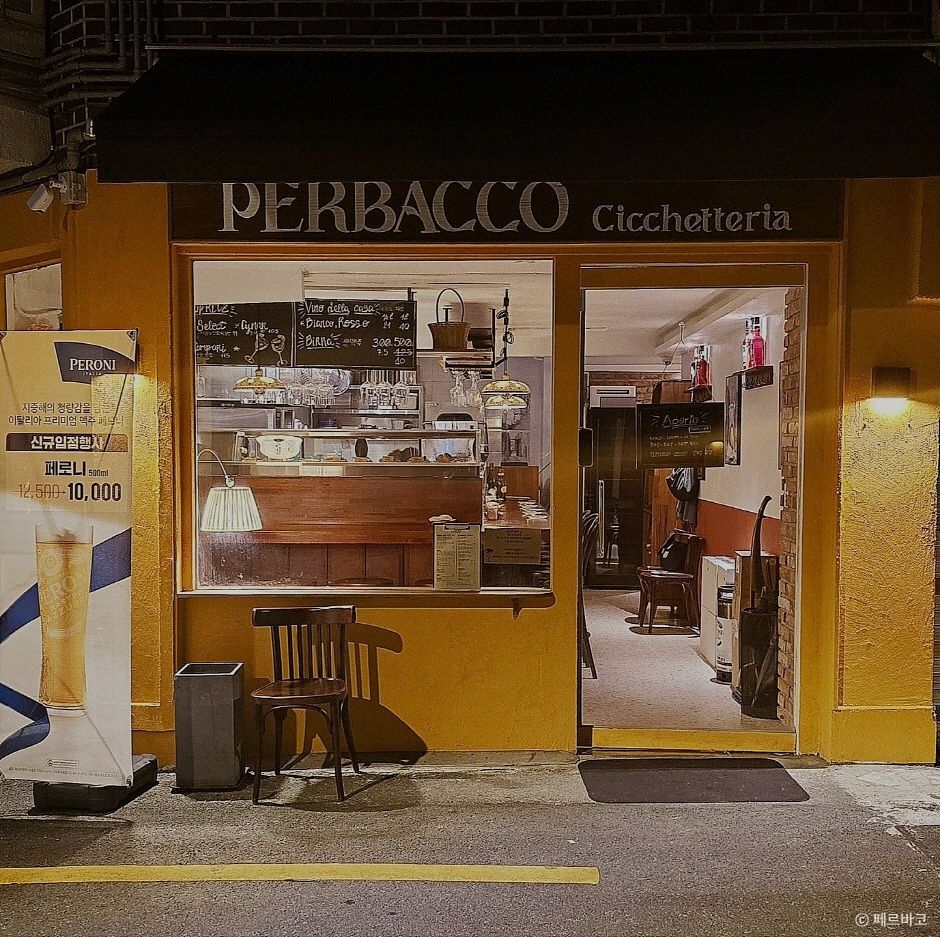
Perbacco (페르바코)
10.3Km 2024-09-11
30 Neungdong-ro 16-gil, Gwangjin-gu, Seoul
Perbacco is a Venetian style pub, better known as a chicchetteria. The pub offers lesser-known Italian snack fare from Venice, with their main dish being cicchetti, flat slices of bread piled with various ingredients, usually focusing on seafood.
Itaewon Special Tourist Zone (이태원 관광특구)
10.3Km 2024-11-27
196 Itaewon-ro, Yongsan-gu, Seoul
Itaewon was the first special tourist zone in Seoul, designated in 1997. It is a multicultural place where over 20,000 foreigners live and is widely recognized by international visitors.
The name Itaewon started to spread worldwide in the 1980s when Korea hosted the 1986 Seoul Asian Games and the 1988 Seoul Olympic Games, as well as many international conferences. Since then, Itaewon has become a popular travel destination. Clothes and accessories with unique designs, and leather products in particular are famous. This is a go-to place for both shopping and entertainment. The street is crowded with shops selling clothes and bags, as well as hotels, restaurants, entertainment facilities and travel agencies. With about 2,000 shops and stores lining every street, visitors can experience a multicultural atmosphere. Also famous in the district is Antique Furniture Street where more than 100 shops selling furniture and antiques stretch from Hamilton Hotel toward Bogwang-ro.
Travelers can taste authentic cuisine and experience culture from around the globe on World Food Street where there are 40 restaurants operated by foreigners. Since the late 1990s, an increase in the number of tourists from Southeast Asia and the Middle East has transformed the streets from being US Army-oriented into culturally diverse. Various performances and events are held in the area. In particular, Itaewon Global Village Festival, held every October, is a famous festival. Tourists can pay in US dollars, Japanese yen, or another currency freely. In addition, visitors can use various languages like English, Japanese, and Chinese with the sellers.
 English
 한국어
한국어 日本語
日本語 中文(简体)
 Deutsch
 Français
 Español
 Русский


