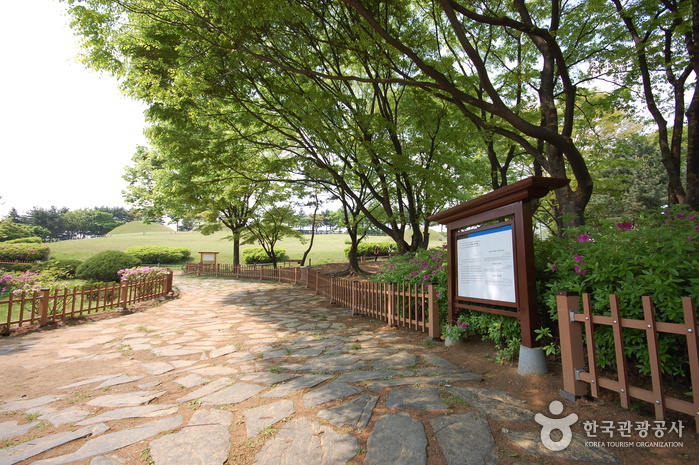
Seoul Bangidong Ancient Tombs (서울 방이동 고분군)
8.7Km 2022-12-29
219, Ogeum-ro, Songpa-gu, Seoul
The ancient tombs in Bangi-dong were discovered during the land readjustment project of Jamsil-jigu District in 1975. A total of eight ancient tombs were excavated until 1976, and the site was restored into a park in 1983. The Bangi-dong area was originally a low line of hills with an altitude of 30-50 meters above sea level, but it has been made into flatland for urban development purposes. Tomb numbers 1 to 6 lie on the same hill, while tomb no. 7 and 8 are located on another hill a short distance away.
All eight tombs have circular burial mounds. The insides of the a tomb feature a square or rectangular-shaped burial chamber with earthen ground and stone walls, and a passage leading from the tomb entrance to the chamber. However, details of the burial chambers vary by tomb. Most of the tombs had been robbed before the investigation, but a few relics such as plates and pots have been excavated. At the time of excavation, the relics were presumed to have come from the Baekje dynasty (18 BC-660 AD), but it is now estimated that they date back to the Unified Silla Period (676-935 AD).
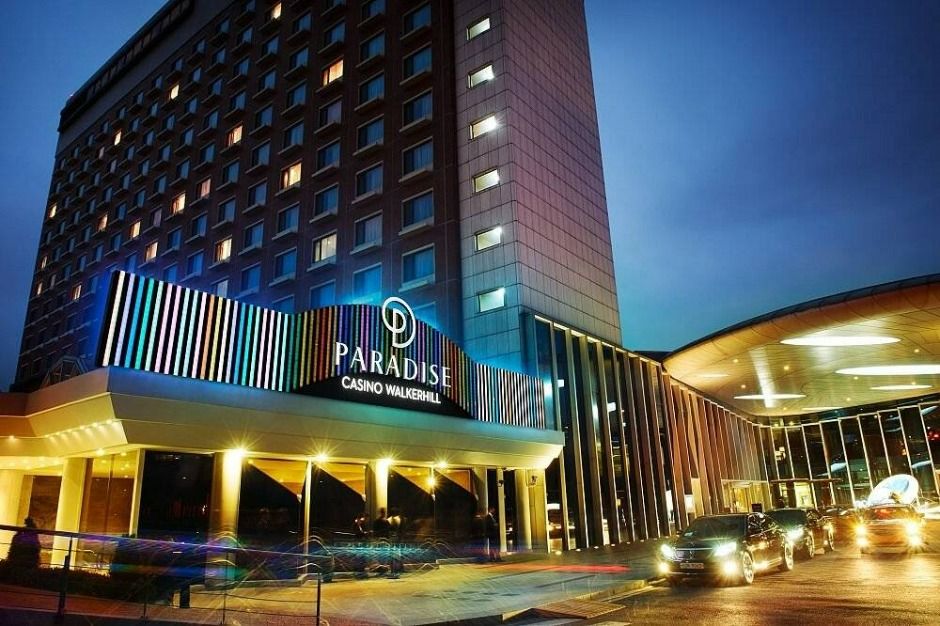
Paradise Casino Walker Hill (파라다이스 카지노 워커힐)
8.7Km 2025-05-16
177, Walkerhill-ro, Gwangjin-gu, Seoul
Paradise Casino Walker Hill is a foreigner-exclusive casino operating inside Walker Hill Hotel, from where guests can enjoy a fine view of the Hangang River nearby. The casino is open 24 hours a day, all year round, and offers baccarat, blackjack, roulette, and tai-sai tables among others, and a variety of slot machines as well. The game tables are run by expert dealers, and staff members are fluent in many languages to serve the customers’ needs.

Grand Walkerhill Riverpark (Outdoor swimming pool) (그랜드 워커힐 리버파크 수영장(야외수영장))
8.7Km 2022-12-21
177, Walkerhill-ro, Gwangjin-gu, Seoul
Grand Walker Hill Riverpark is a swimming pool using water comprised of alkali ingredients such as sodium and potassium from underground granite. Since it opened in 1994, the Riverpark is one of Seoul's most popular summer getaways to enjoy swimming. Located by the Hangang River and Achasan Mountain, it provides fresh air as well as the beautiful nature scenery. People can use any of the various facilities, including the main pool, lazy river, swimming pool for children, pool-side restaurant offering special summer lunch, and sun tanning beds.
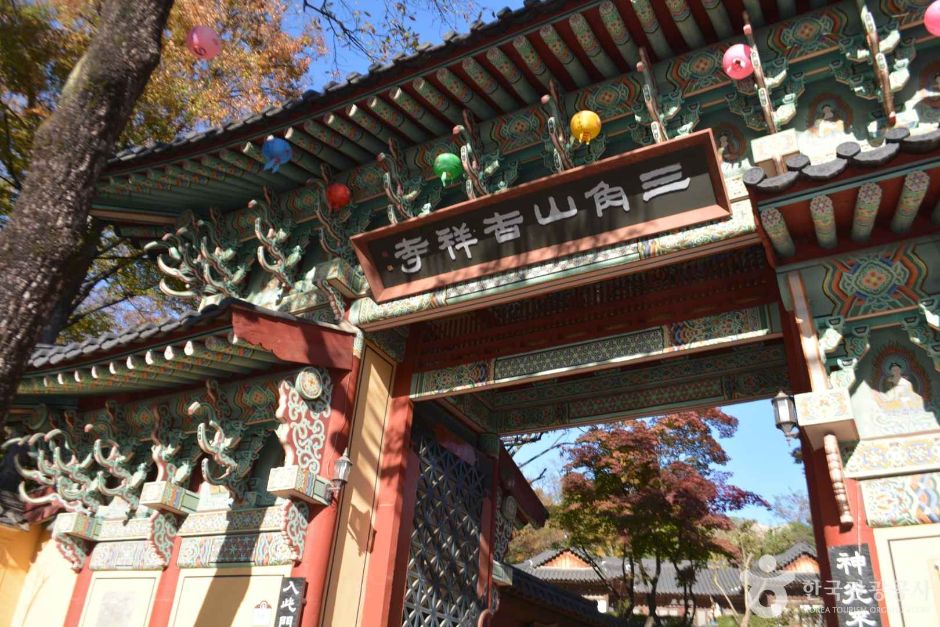
Gilsangsa Temple (Seoul) (길상사(서울))
8.8Km 2025-06-17
68 Seonjam-ro 5-gil, Seongbuk-gu, Seoul
Gilsangsa Temple is a prominent temple located in Seongbuk-dong, Seoul. The name Gilsangsa means "a favorable and auspicious temple." Visitors can experience temple, participate in Buddhist practices, and even enjoy Templestay programs on weekends. In fall, visitors can admire red spider lilies and wildflowers, immersing themselves in the beauty of nature and finding inner peace.
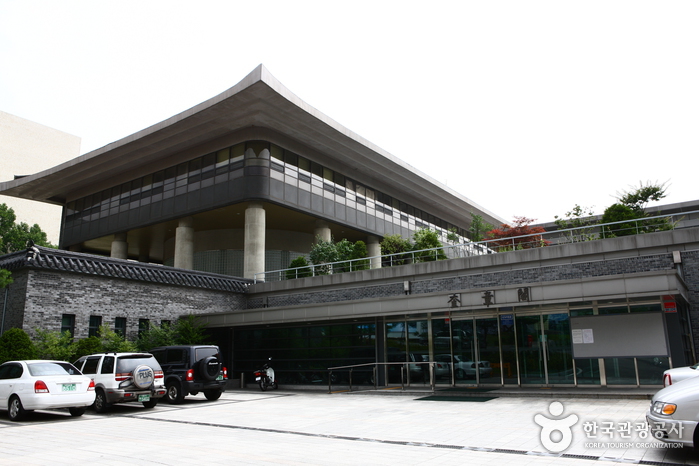
Gyujanggak Library of Seoul National University (서울대학교 규장각)
8.9Km 2022-07-27
1, Gwanak-ro, Gwanak-gu, Seoul
Gyujanggak Library was founded in 1776 during the reign of King Jeongjo, the 22nd ruler of the Joseon dynasty, at which time it was located within the Changdeokgung Palace grounds. It functioned as the royal library, which housed writings of the previous kings, their relics and books from home and abroad.
Today Seoul National University maintains the items of Gyujanggak in a traditional Korean building which is equipped with state-of-the-art facilities necessary for the preservation of cultural heritages. Moreover, Gyujanggak Library of Seoul National University collects and publishes books from a variety of sectors such as politics, economy and society.
Gyujanggak now houses more than 270,000 items including 7 national treasures, 8 treasures, 180,000-plus old books, about 50,000 documents and 18,000 printing blocks. Among them, Joseon Wangjo Sillok (the Annals of the Joseon Dynasty, a National Treasure), Seungjeongwon Ilgi (the Diaries of the Royal Secretariat, a National Treasure) and Uigwe (the Royal Protocols of the Joseon Dynasty) have been designated as UNESCO World Cultural Heritages.
Seoul National University (서울대학교)
8.9Km 2023-07-07
1, Gwanak-ro, Gwanak-gu, Seoul
Founded in 1946, Seoul National University is the most reputable university in Korea based on its long academic history and tradition. It was the first national university in Korea established by merging several institutions of higher education around the Seoul area, including Kyongsong University
H+ Yangji Hospital (에이치플러스 양지병원)
9.0Km 2025-11-21
1636 Nambusunhwan-ro, Gwanak-gu, Seoul
We operate a one-stop medical service with 15 specialty centers and 21 departments, along with a 24-hour emergency room. As a certified training hospital for gastroenterology endoscopy specialists, we have been accredited as an Excellent Endoscopy Unit for three consecutive terms and are equipped with state-of-the-art endoscopy and liver-specialized systems.
Our world-renowned medical team, including SRC Master Surgeons (U.S.), provides efficient and safe personalized bariatric and metabolic surgeries. The Spine and Joint Center performs minimally invasive and minimal incision surgeries through close multidisciplinary collaboration.
We also operate Da Vinci robotic surgery and maintain a dedicated Department of Critical Care Medicine.

Olympic Park (올림픽공원)
9.0Km 2023-10-19
424 Olympic-ro, Songpa-gu, Seoul
Olympic Park is an impressive leisure facility in which historic remains from the Baekje era share space with modern, state-of-the-art sports stadiums, an eco-friendly forest, and spacious grass fields. The legacy of the 1988 Seoul Olympics, the park not only houses the country’s largest sports arena, but has also become a place where Seoul residents come to relax and unwind.
Spread across approximately 1.45 million square meters, Olympic Park encompasses the land that was once Mongchontoseong Fortress and Mongchonhaeja (manmade lake) from the early Baekje period. The park is divided into several zones, including a leisure sports park, a cultural art park, an eco-park, and the History Experience Park dedicated to the area’s rich historic heritage.
Because Olympic Park is so large and takes over three hours to explore, visitors are advised to familiarize themselves with entrances and exits and travel routes before they start. To further save time, visitors can ride the Road Train (“Hodori Train”) located next to Peace Square.
Korea Furniture Museum (한국가구박물관)
9.0Km 2025-10-24
121 Daesagwan-ro, Seongbuk-gu, Seoul
The Korea Furniture Museum, located on a hill in Seongbuk-dong, Seoul, is a special museum that displays items related to Korea's traditional living culture. The museum exhibits wooden furniture made in the late Joseon dynasty by material (persimmon tree, maple tree, paulownia tree, zelkova tree, pine tree, papers, etc.), by the type of space (men’s quarters, women’s quarters, kitchen, etc.), and by regional characteristics. It also exhibits interior decorations, flower walls, chimneys, and yards, as well as ten traditional Korean houses.
This museum operates through a guided tour (maximum of 20 people per group) only, suitable for showing Korea's housing culture that harmonizes furniture and nature. The old household items, “furniture,” are displayed in rooms outside glass storage boxes, allowing visitors to experience a beautiful traditional culture.
Since it was selected as the official luncheon venue for the spouses of leaders of 20 countries at the 2010 G20 Seoul Summit, there has been a steady stream of state guests and worldwide celebrities, including Chinese President Xi Jinping and his wife, the German President, the Prime Minister of Hungary, the Prime Minister of Singapore, the King and Queen of Belgium, the King of Sweden, the head of the IMF, and movie stars Brad Pitt, and Victoria Beckham.
In addition, it was selected as the "most beautiful museum in Seoul” by CNN in 2011. The museum also served as an interview location for BTS members, who are receiving global attention. As such, it is attracting attention as a representative tourist destination in Seoul and a cultural space preferred by government ministries and companies. Tours require reservations, which can be made through the website.
Pungnap-dong Toseong Fortress (서울 풍납동 토성)
9.0Km 2025-01-10
Pungnap-dong, Songpa-gu, Seoul
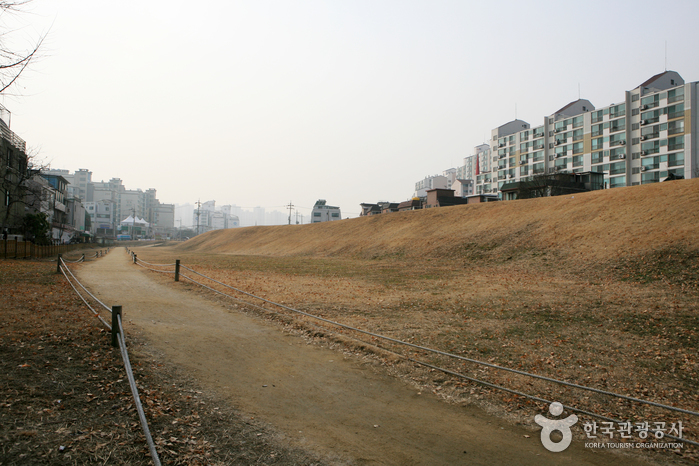
Onjo, the progenitor of Kingdom Baekje, first settled in Wiryeseong Hanam. But exact location is still unknown. One thing for sure, however, is that Pungnaptoseong Fortress, Mongchontoseong Fortress, Bangidong Ancient Tombs of Baekje, Seokchondong Stone Mound Tomb of Early Baekje are the remains of Baekje. Pungnaptoseong Fortress faces Hangang River to its west and connects to Mongchontoseong Fortress to the south. To the northwest faces Achasanseong Fortress over Hangang River and far to the southeast is Namhansanseong Fortress.
Pungnaptoseong Fortress, located at the south end of Cheonhodaegyo Bridge over Hangang River, is one of the remains of Early Baekje. Originally, the fortress was 4km in circumference, but due to massive overflowing of Hangang River during flood season in 1925, most of the fortress was lost and only 2.7km of it remains. To the east of the fortress are 4 vestiges of the fortress gates. The remains from the prehistoric era through the Samguk (Three States) era have been unearthed, indicating that this place was a residential area well before the Baekje Era. Through vigorous excavation, some people suggest that there used to be a palace located here during the Baekje Era.
 English
 한국어
한국어 日本語
日本語 中文(简体)
 Deutsch
 Français
 Español
 Русский


