
Sinchon Dain Dental Hospital (신촌다인치과병원)
8.7Km 2025-10-23
(10th-11th Floors, Grand Plaza), 94 Sinchon-ro, Mapo-gu, Seoul
Our main dental hospital, spanning approximately 1,740 square meters, is conveniently located near Sinchon Station, just a 40-minute drive from both Gimpo International Airport and Incheon International Airport, making it easily accessible for international patients. We are staffed by around 60 specialized medical professionals and equipped with the latest technology, including an in-house laboratory for fast and precise dental work. Our team includes nine expert directors in orthodontics, prosthodontics, conservative dentistry, oral surgery, and periodontology, ensuring comprehensive and systematic care in each specialty. We offer a wide range of advanced procedures for our international patients, including implants, complex extractions, orthodontics, periodontal treatment, and prosthetic care, as well as high-quality neurological and aesthetic treatments.
Conrad Seoul (콘래드 서울)
8.8Km 2025-01-07
10, Gukjegeumyung-ro, Yeongdeungpo-gu, Seoul
The five-star Conrad Seoul, selected as one of the ‘Best New Hotels’ by Conde Nast Traveler, a world-renowned travel magazine, offers the top-class service and
for the best customer experience. Strategically located in a core business district of Yeouido, Conrad Seoul is one of the four pillar buildings of
the IFC (International Finance Center) Seoul. The building is directly accessible underground from Yeouido Subway Station.
Conrad Seoul has 434 guest rooms with an open, refreshing atmosphere, picturesque views, and
are equipped with Apple digital devices. The hotel also houses a Grand Ballroom, restaurants which offer diverse gourmet cuisines and
a top-notch wellness center.
Seodaemun Independence Park (서대문독립공원)
8.8Km 2022-12-15
251, Tongil-ro, Seodaemun-gu, Seoul
Seodaemun Independence Park was built on the former Seoul Detention Camp. It was used to imprison thousands of Korean independence activists until the liberation from the Japanese occupation on August 15, 1945, as well as the political prisoners during the political turmoil in the 1960s. When the prison was moved to Uiwang-si, Gyeonggi-do in November 1987, the area was restored and turned into a memorial park in August 15, 1992 to honor the sacrifices of the martyrs. The park preserves seven prison buildings, an execution ground, underground women’s prison, and the March 1st Movement Monument that has been moved from Tapgol Park in Jongno.
One of the most significant monuments of the Seodaemun Independence Park is Dongnimmun Gate (Independence Gate), which has been designated a Historic Site. Nearby is Dongnipgwan (Independence Hall), originally called Mohwagwan, which was used to greet Chinese envoys during the Joseon dynasty. Today, the hall enshrines 2,327 tablets inscribed with the names of Koreans who died for the cause of national independence. Standing right next to Dongnimmun Gate are the remnants of Yeongeunmun Gate, another Historic Site. Other sights inside the park include the Patriotic Martyr Monument, Declaration of Independence Monument, and Statue of Dr. Seo Jae-pil, who was an independence activist and publisher of Korea’s first independent newspaper. The main highlight of the park is the Seodaemun Prison History Hall, a former prison building that was renovated into a history museum.

Olympic Park (올림픽공원)
8.8Km 2023-10-19
424 Olympic-ro, Songpa-gu, Seoul
Olympic Park is an impressive leisure facility in which historic remains from the Baekje era share space with modern, state-of-the-art sports stadiums, an eco-friendly forest, and spacious grass fields. The legacy of the 1988 Seoul Olympics, the park not only houses the country’s largest sports arena, but has also become a place where Seoul residents come to relax and unwind.
Spread across approximately 1.45 million square meters, Olympic Park encompasses the land that was once Mongchontoseong Fortress and Mongchonhaeja (manmade lake) from the early Baekje period. The park is divided into several zones, including a leisure sports park, a cultural art park, an eco-park, and the History Experience Park dedicated to the area’s rich historic heritage.
Because Olympic Park is so large and takes over three hours to explore, visitors are advised to familiarize themselves with entrances and exits and travel routes before they start. To further save time, visitors can ride the Road Train (“Hodori Train”) located next to Peace Square.
Sooyeon Sanbang (수연산방)
8.8Km 2025-10-23
8 Seongbuk-ro 26-gil, Seongbuk-gu, Seoul
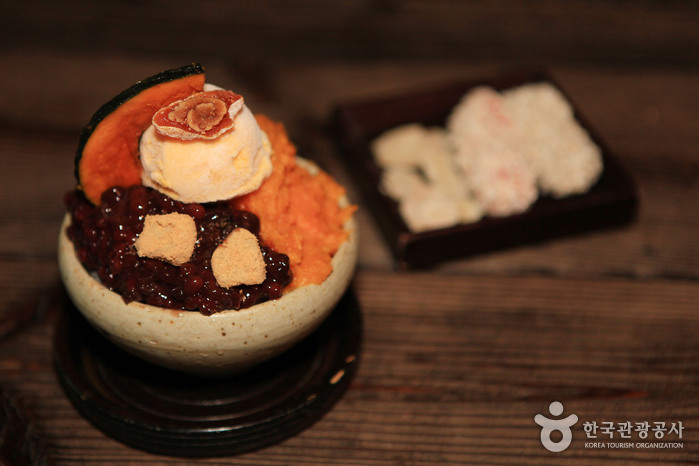
Sooyeon Sanbang is a traditional tea house located in Seongbuk-dong. It was originally built during the Japanese colonial period and was the hanok of the literary figure Lee Taejun. Today, it is operated as a tea house by the writer's granddaughter. The name Sooyeon Sanbang means "a house where literati gather in the mountains." Visitors can enjoy traditional teas such as daechucha (jujube tea) and ssanghwacha (medicinal herb tea), along with snacks like injeolmi (bean-powder-coated rice cake).
Korea Medical Institute KMI Yeouido Clinic ((재)한국의학연구소 케이엠아이여의도의원)
8.8Km 2025-10-23
13F-15F & 17F-18F, 24 Gukjegeumyung-ro 2-gil, Yeongdeungpo-gu, Seoul
Korea Medical Institute (KMI), a leader in 'K-health checkups,' operates health checkup centers across eight locations nationwide, from Seoul to Jeju. KMI has been striving to prevent and detect diseases early. It has led the popularization of comprehensive medical examinations in Korea. Based on 39 years of accumulated data and expertise, KMI has enhanced its capabilities in health checkups, services, and brand value.
By utilizing its diagnostic data accumulated over the years, KMI provides accurate test results and follow-up care promptly.
KMI will stay committed to becoming a lifetime health management partner and 'K-health checkup' leader by leveraging its excellence in Korean medicine, beyond health checkups for foreign patients.
National Memorial of Korean Provisional Government (국립대한민국임시정부기념관)
8.8Km 2023-01-16
279-24, Tongil-ro, Seodaemun-gu, Seoul
The National Memorial of Korean Provisional Government was established to shine a light on the proud history of the Korean Provisional Government's independence and the spirit of a democratic republic and to pass it on to future generations. The four-story memorial building with three underground floors houses three permanent exhibits, one special exhibit, Larchiveum, Symbol Plaza, storage, multi-purpose hall, and rooftop garden over a total area of 3,656 square meters, a total floor area of 9,703 square meters and a total exhibition space of 2,240 square meters. The permanent exhibits consist of a series of historic events from the March 1st Movement, which served as a turning point for the formation of the Provisional Government, to the foundation of the Korean Government that succeeded the mantle of the provisional government, while the special exhibit on the 1st floor currently hosts a special opening exhibition under the title of 『The Return of the Provisional Government of the Republic of Korea』. Moreover, a symbolic wall installation under the theme of "Waves of History" is displayed in the outdoor plaza on the 1st floor of the memorial expressing the Provisional Government’s desire for independence and the dynamics of the past, present, and future of Korea.
Suseongdonggyegok Valley (수성동계곡)
8.8Km 2023-08-17
185-3, Ogin-dong, Jongno-gu, Seoul 서울특별시 종로구 옥인동
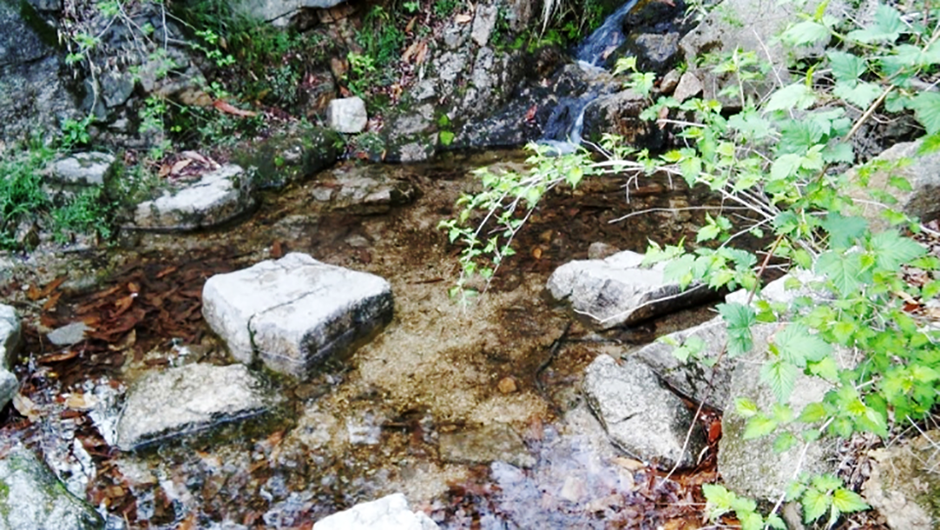
Suseong-dong Valley's stream runs down from Inwangsan Mountain and joins Cheonggyecheon Stream, and it is said that the name of the village was called Suseong-dong during the Joseon dynasty due to the loud and clear sound of the flowing water. It appears in the painting "Jangdong Palgyeongcheop," which is Jangdong Eight Scenic Views, that depicts the eight scenic views of Bugaksan Mountain and Inwangsan Mountain as well as in other historical books of the Joseon dynasty as a place of scenic beauty. The valley was so famous for its beauty, that Prince Anpyeong of the Joseon dynasty built his house "Bihaedang" to fully enjoy the view, and the valley and its stone bridge were designated as a cultural property of Seoul in 2010.
Soma Museum of Art (소마미술관)
8.8Km 2023-04-13
424, Olympic-ro, Songpa-gu, Seoul
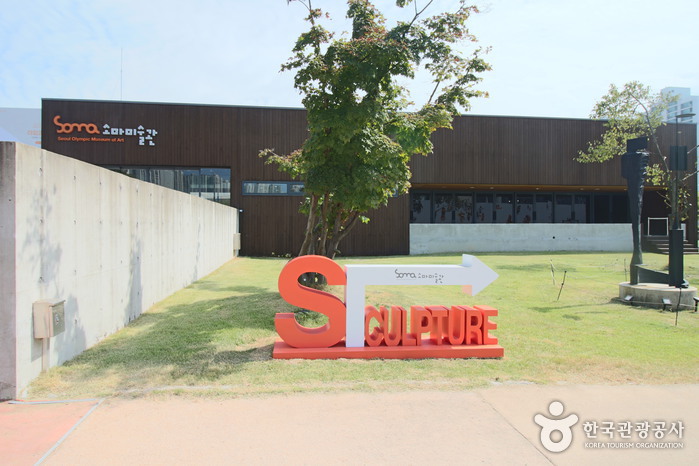
Soma Museum of Art was opened in September 2004 as a cultural space amid the nature of Seoul Olympic Park. The museum displays over 222 sculptures, and offers a variety of cultural and educational programs, including the nation's first drawing center and archive.
Seoul Mongchontoseong Earthen Fortification (서울 몽촌토성)
8.8Km 2024-03-12
424, Olympic-ro, Songpa-gu, Seoul
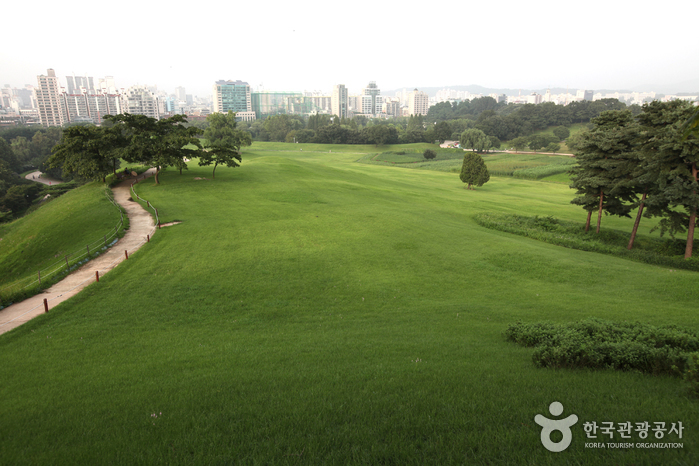
Mongchontoseong Earthen Fortification is an ancient earthen fortress built during the Hanseong period of the ancient Korean kingdom of Baekje (BC 18-AD 660). It is believed to have been constructed in the 3rd to 4th centuries. Utilizing the natural advantages of the Hangang River, it served defensive purposes with its trench and log barrier. Excavated relics from the Baekje era are on display at the Seoul Baekje Museum. The site is situated within the Olympic Park in Songpa, Seoul.
 English
 한국어
한국어 日本語
日本語 中文(简体)
 Deutsch
 Français
 Español
 Русский


