
We Trip Korea ((주)우리클럽관광개발)
9.8Km 2025-10-23
(101-1204, Lotte Castle President), 467 Gongdeok-dong, Mapo-gu, Seoul
We Trip Korea was established in 2011 and has been successfully attracting international travelers for 13 years. Our company is dedicated to promoting and showcasing our travel products through extensive overseas sales efforts. We actively collaborate with various online travel agencies (OTA) to offer a wide range of travel products that align with current trends. As a professional and customized travel agency, we cater to all types of events, from standard packages to incentive trips, Meetings, Incentives, Conferences, Exhibitions (MICE), medical tourism, VIP services, and personal travels. When you choose our company, you can expect prompt and accurate tailored bookings to meet your specific needs.
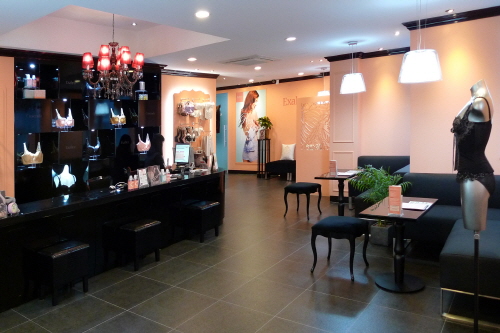
Exabra (엑사브라)
9.8Km 2024-05-16
132, Dosan-daero, Gangnam-gu, Seoul
+82-2-6085-9017
Exabras are handmade under garments specialized for functional bridal wear. Exbaras’ product “Grow Night,” an industry first, is a line of sleeping bras to help the reshaping process for breast implant patients.
The store located in Nonhyeon-dong provides consultations, fitting services, as well as refreshments. Reservation is advised since the store has been drawing lots of visitors after featured in the cable TV show “Get it Beauty.”
![Olens - Sinchon Myeongmul Street Branch [Tax Refund Shop] (오렌즈 신촌명물)](http://tong.visitkorea.or.kr/cms/resource/05/2888205_image2_1.jpg)
Olens - Sinchon Myeongmul Street Branch [Tax Refund Shop] (오렌즈 신촌명물)
9.8Km 2024-04-17
1F, 18, Myeongmul-gil, Seodaemun-gu, Seoul
-
SYNERGY Plastic Surgery (시너지성형외과의원)
9.8Km 2025-10-23
1st, 5th Floors, SYH Tower, 107 Dosan-daero, Gangnam-gu, Seoul
Synergy Plastic Surgery is a clinic specializing in anti-aging procedures such as facelifts, neck lifts, forehead lifts, and stem cell treatments. The clinic's head doctor, Jung Kyung-in, graduated from Seoul National University College of Medicine and has over 27 years of experience. He personally provides one-on-one customized consultations to ensure a systematic surgical process. Notably, the clinic has specialized expertise in accessing not just the surface layer of the skin but also the underlying SMAS (superficial muscular aponeurotic system) layer, aiming for fundamental improvement. They also perform procedures using stem cells.
Seoul Wave Art Center (서울웨이브아트센터)
9.8Km 2025-10-27
145-35 Jamwon-ro, Seocho-gu, Seoul
Seoul Wave Art Center is located within Jamwon Hangang Park, and focuses on promoting the relationship between the sky and earth, people and nature, and people and people. The art center opened in 2020 and has continued to host a range of new exhibitions.
![ABC-Mart - Sinchon Branch [Tax Refund Shop] (ABC마트 GS신촌점)](http://tong.visitkorea.or.kr/cms/resource/95/2890495_image2_1.jpg)
ABC-Mart - Sinchon Branch [Tax Refund Shop] (ABC마트 GS신촌점)
9.9Km 2024-04-22
6, Myeongmul-gil, Seodaemun-gu, Seoul
-
Rebom Hospital (리봄한방병원)
9.9Km 2025-10-23
(2nd-4th Floors), 7 Hakdong-ro 50-gil, Gangnam-gu, Seoul
Rebom Hospital is a spine and joint hospital characterized by collaboration between western and Korean medicine. We provide treatment for spine and joint pain focusing on chiropractic and spinal joint care, along with precise examination through equipment such as X-rays and the exBody 3D body shape measurement system. Our main practice areas include neck and back discs, car accident aftereffects, herbal medicine for diet control, and x_height growth stimulation. We specialize in prescribing premium clean herbal medicines as well as body shape correction for conditions such as pelvic deformity, text neck and curved back, scoliosis, temporomandibular disorders (TMD).
Our international support team is available in multiple languages, including English, French, Chinese, Arabic, and more, so that international patients feel comfortable to visit us.
![Miigwech - Sinchon Branch [Tax Refund Shop] (미그웨치 신촌)](http://tong.visitkorea.or.kr/cms/resource/92/2875492_image2_1.jpg)
Miigwech - Sinchon Branch [Tax Refund Shop] (미그웨치 신촌)
9.9Km 2024-04-22
1F, 21, Yonsei-ro, Seodaemun-gu, Seoul
-
![Rovl Avenue [Tax Refund Shop] (로블에비뉴의원)](http://tong.visitkorea.or.kr/cms/resource/97/3312997_image2_1.jpg)
Deesse Plastic Surgery (청담여신성형외과의원)
9.9Km 2025-10-29
(14th-15th Floors, Nonhyeon-dong), 108 Dosan-daero, Gangnam-gu, Seoul
Deesse Plastic Surgery provides the highest level of medical care in Korea in the fields of lip plastic surgery, rhinoplasty, facial bone contouring, face-lift, and eyelid surgery. Many foreign patients are visiting us after hearing about our reputation. In order to provide high-quality medical services to foreign patients, we have interpretation coordinators available for Japanese, Chinese, Thai, and other languages on site. Also, we constantly strive to improve the quality of medical services to ensure the best experience for international patients. As a result, the hospital is rapidly gaining recognition by people around the world interested in receiving plastic surgery in Korea, and the results have been remarkable and foreign customers who visited our hospital showed high satisfaction. Our efforts have been rewarded in 2023 as we were designated by the Ministry of Justice for excellent medical tourism.
 English
 한국어
한국어 日本語
日本語 中文(简体)
 Deutsch
 Français
 Español
 Русский


