
National Gugak Center (국립국악원)
5.2Km 2025-01-17
2364 Nambusunhwan-ro, Seocho-gu, Seoul
The National Gugak Center is the governing body established to preserve and promote traditional Korean performing arts. The center can accommodate every type of traditional performing arts, such as palace music, court music, and all other genres including major productions of changgeuk (Korean musical drama). Originally opened in Busan in 1951, the center moved to its current location in Seoul in 1987. The center also opened branch locations in Namwon, Jindo, and Busan in 1992, 2004, and 2008 respectively.
Stay Passport Sindang Ryokan (스테이 패스포트 신당 료칸)
5.4Km 2025-04-24
33 Nangye-ro 11-gil, Jung-gu, Seoul
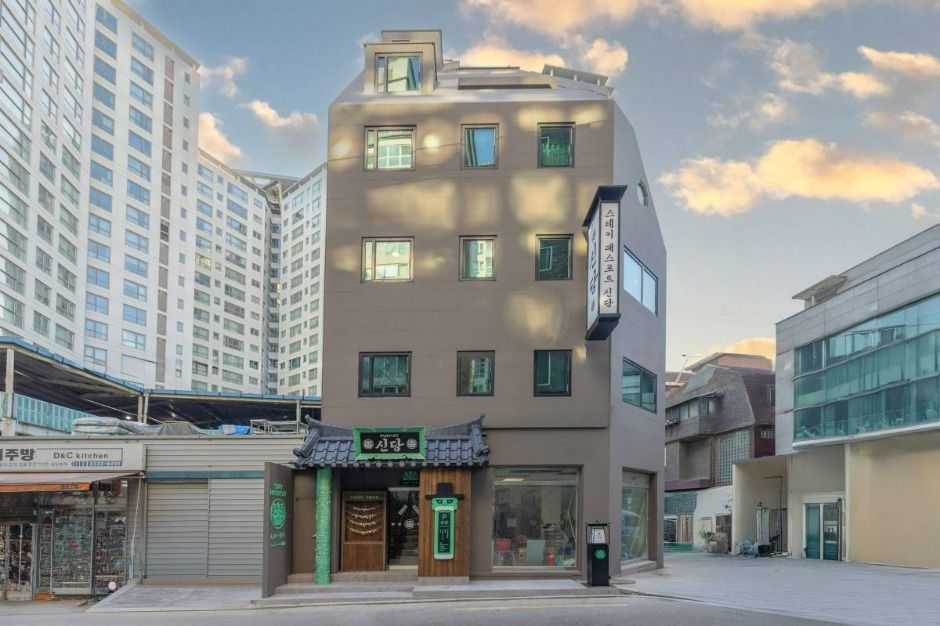
Stay Passport Sindang Ryokan offers a four major room types: "Goyo" and "Sohyang," designed for two who seek privacy and relaxation away from the busy city life; "Pungryu," accommodating up to four people, perfect for family guests or a group of friends; and "Pungyo," designed to offer utmost relaxation.
Lotte World Indoor Ice Skating Rink (롯데월드 아이스링크 (실내))
5.5Km 2022-12-23
240, Olympic-ro, Songpa-gu, Seoul
Lotte World Indoor Ice Skating Rink, located on B3 of Lotte World, is an indoor ice skating rink that is open all year round. Its modern interior design is in harmony with the surrounding facilities, offering a pleasant environment enjoyable with friends and loved ones. Despite its location underground, natural light pours in from the glass dome roof of Lotte World Adventure, giving a feel of outdoor skating. The skating rink is surrounded by 400 spectator seats where visitors can relax. The skating rink also has a variety of restaurants and a game arcade to enjoy when taking a break from skating.
YOU&I Clinic Jamsil (유앤아이의원 잠실점)
5.5Km 2025-11-24
3rd Floor, Lotte World Wellbeing Center, 240 Olympic-ro, Songpa-gu, Seoul
YOU&I Clinic is a trusted dermatology and aesthetic clinic with extensive experience and expertise accumulated since 2006.
At YOU&I Clinic, we are committed to using authentic products, providing precise and honest treatments, and offering personalized services tailored to each individual’s needs.
We welcome clients not only from Korea but also from Japan, China, and Thailand, and offer Japanese and Chinese interpretation services. All foreign clients receive treatments at the same prices as Korean clients.
YOU&I Clinic specializes in lifting, petite procedures, and skin boosters, as well as a wide range of aesthetic skin treatments. We also provide thorough aftercare to ensure the highest level of satisfaction for every client.
Samsung Medical Center (삼성서울병원)
5.5Km 2025-10-23
81 Irwon-ro, Gangnam-gu, Seoul
Samsung Medical Center (SMC) has been at the forefront of change in the Korean medical field since its foundation in 1994. Guided by its new vision, "We aspire to be the frontier of future medicine," SMC is committed to delivering excellent treatment results for patients with severe and complex diseases by using the latest medical technologies. SMC's International Healthcare Center (IHC) operates an outpatient clinic dedicated exclusively to foreign patients.
Soul (소울)
5.5Km 2025-08-20
B1, 35 Sinheung-ro 26-gil, Yongsan-gu, Seoul
Soul is a fine-dining located in Hannam-dong. It presents reinterpretations of Korean cuisine, drawing inspiration from traditional dishes. The menu is structured into lunch and dinner courses. Known for its ability to artistically express familiar flavors encountered in daily life, Soul was selected for the 2023 Michelin Guide Seoul. Operating on a reservation-only basis, bookings can be made via phone.
Nungin Sunwon (능인선원)
5.5Km 2024-03-20
340 Yangjae-daero, Gangnam-gu, Seoul
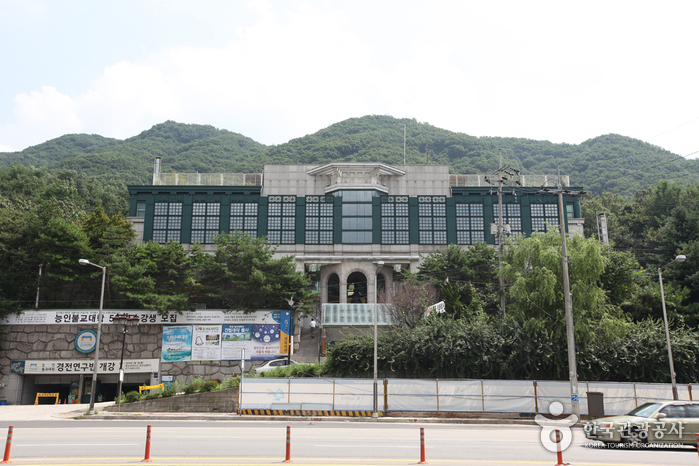
Nungin Sunwon, nestled at the base of Guryongsan Mountain, is named after another name of Buddha, Sakyamuni, signifying "the one who skillfully educates and benefits others." This temple complex includes several key structures: the Daeungjeon Hall, the Dharma Hall, the Gwaneumjeon Hall, and the resplendent Great Bhaisajyaguru, known for its golden glow. Additionally, the site houses a Buddhist university, providing a range of programs that cover basic to advanced Buddhist studies.
Chungmu Arts Center (충무아트센터)
5.5Km 2024-03-06
387, Toegye-ro, Jung-gu, Seoul
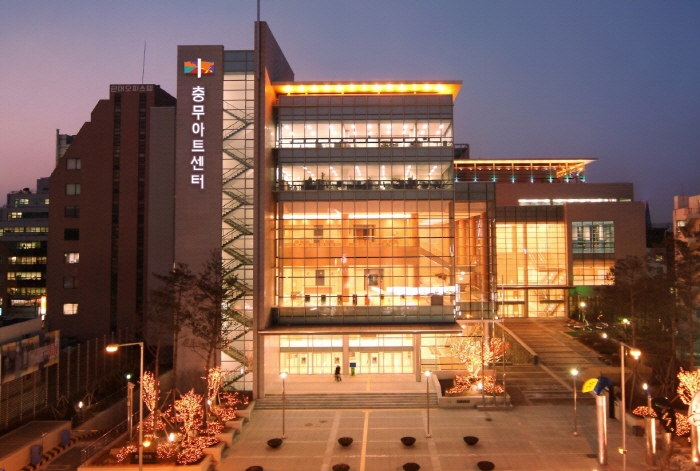
Chungmu Arts Center is a complex cultural facility with an optimal conditions for watching performances. It has a large theater, a medium theater (black), and a small theater (blue). It also boasts great galleries, studios, and a swimming pool, attracting numerous visitors. In addition, one can enjoy performances of various genres, including classical music, plays, musicals, and concerts. Located close to Dongdaemun, it has good accessibility.
Ceramic Palace Hall (세라믹 팔레스 홀)
5.5Km 2024-03-04
90 Irwon-ro, Gangnam-gu, Seoul
Ceramic Palace Hall, situated on the second basement floor of the Milal Art Center, is adorned with aesthetically pleasing pastel-colored ceramic walls. Designed for acoustic excellence, it ensures that every instrument played is heard with clarity. Primarily, it serves as a venue for various concerts, with a particular emphasis on classical music, including piano recitals, chamber music festivals, and violin concerts. Additionally, it offers venue rental services, catering to a range of events.
Lotte World Folk Museum (롯데월드 민속박물관)
5.5Km 2024-03-12
240, Olympic-ro, Songpa-gu, Seoul
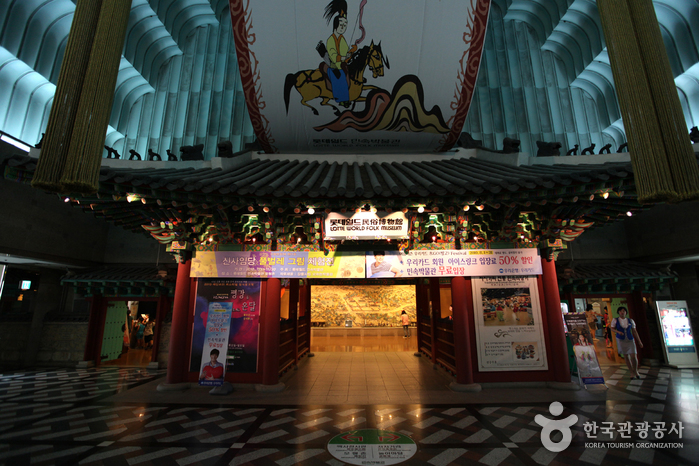
Lotte World Folk Museum, located within Lotte World, is a museum showcasing the ancient lifestyles of Korea. It exhibits artifacts from the prehistoric era to the Japanese colonial period, divided by historical eras. Particularly noteworthy is the miniature village, featuring over two thousand dolls at a scale of 1:8, depicting various aspects of life during the Joseon dynasty, including the four seasons, seasonal customs, four ceremonial occasions, and the lives of the yangban and commoners with remarkable realism.
 English
 한국어
한국어 日本語
日本語 中文(简体)
 Deutsch
 Français
 Español
 Русский


