Bonghwasan Mountain - Seoul (봉화산 (서울))
9.8Km 2022-09-14
Sinnae-ro 21-gil, Jungnang-gu, Seoul
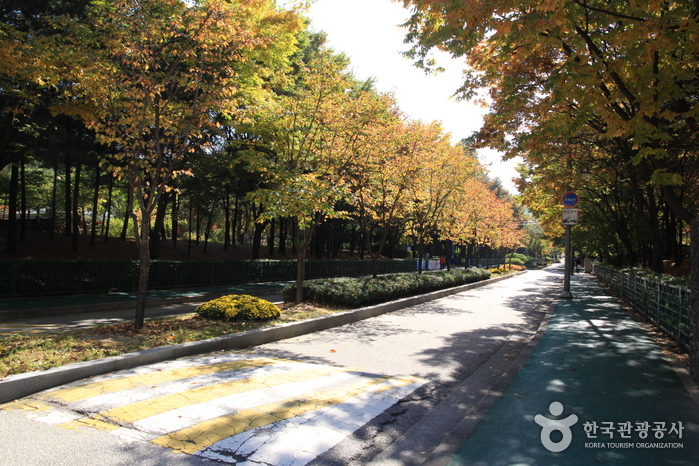
Bonghwasan Mountain (alt. 160 meters) in Jungnang-gu, Seoul offers scenic views of Buramsan, Dobongsan, and Namsan mountains. From the mountain, hikers can even see as far as the Yangju area of Gyeonggi-do Province to the north. Officially designated a “neighborhood park” in July 1977, Bonghwasan Mountain has a variety of convenience facilities, not least of which is the beacon tower of Achasan Bongsudae (remolded in 1994) perched on the mountain summit. Also near the summit is Sansingak Shrine, which is the site of the annual Bonghwasan Dodanggut (Intangible Cultural Property of Seoul), a shamanistic rite performed on the third day of the third lunar month.

Yonsei University (연세대학교)
9.8Km 2023-07-04
50, Yonsei-ro, Seodaemun-gu, Seoul
Yonsei University, which opened in 1885, is a prestigious university that boasts a beautiful campus. In particular, it is famous for its wooden trails, antique buildings covered with ivy, and Cheongsongdae Forest, a popular dating spot among couples. Yonsei University also has a Korean language institute for foreigners interested in learning Korean.

The Hyundai Seoul (더현대 서울)
9.9Km 2024-07-22
108 Yeoui-daero, Yeongdeungpo-gu, Seoul
The Hyundai Seoul, an ultra-modern flagship store, is located in the heart of Seoul, the center of globally trending K-content. Under the slogan of "Echoes for the Future," The Hyundai Seoul presents the vision for a happier tomorrow and standards for new life. Featuring an innovative design of spaces, global content curation, and, even, futuristic technologies, The Hyundai Seoul is the most prominent new global landmark in Seoul. At The Hyundai Seoul, the latest global trends in interior and architectural design can be witnessed from encounters with novel materials, the balance between planes and lines, and creative interior design filled with light. As soon as one steps into The Hyundai Seoul, the Sounds Forest and Waterfall Garden welcome them with open arms. This incredible piece of nature encountered in such a high-tech structure designed for the future is amazingly beautiful. A vast 3,306-square-meter indoor garden with natural grass and sunlight falling through the glass ceiling located some 20 meters high delivers echoes of a forest to all visitors. Art is a language in the broadest category that can be felt and empathized with without speaking. A large 595-square-meter three-dimensional exhibit instantaneously and overwhelmingly stimulates inspiration as soon as one enters. Inspiration for better lives and communication for culture start here. An artwork by Studio Swine designed with a message from nature - Unite & Shine, STUDIO SWINE - and appreciated by the audience that feels and enjoys it meets with high-end brands on the Exclusive Label (1F) floor.
Fairmont Ambassador Seoul (페어몬트 앰배서더 서울 (Fairmont Ambassador Seoul))
9.9Km 2025-10-27
108 Yeoui-daero, Yeongdeungpo-gu, Seoul
◎ Travel information to meet Hallyu’s charm - "Strange Lawyer Woo Young-woo"
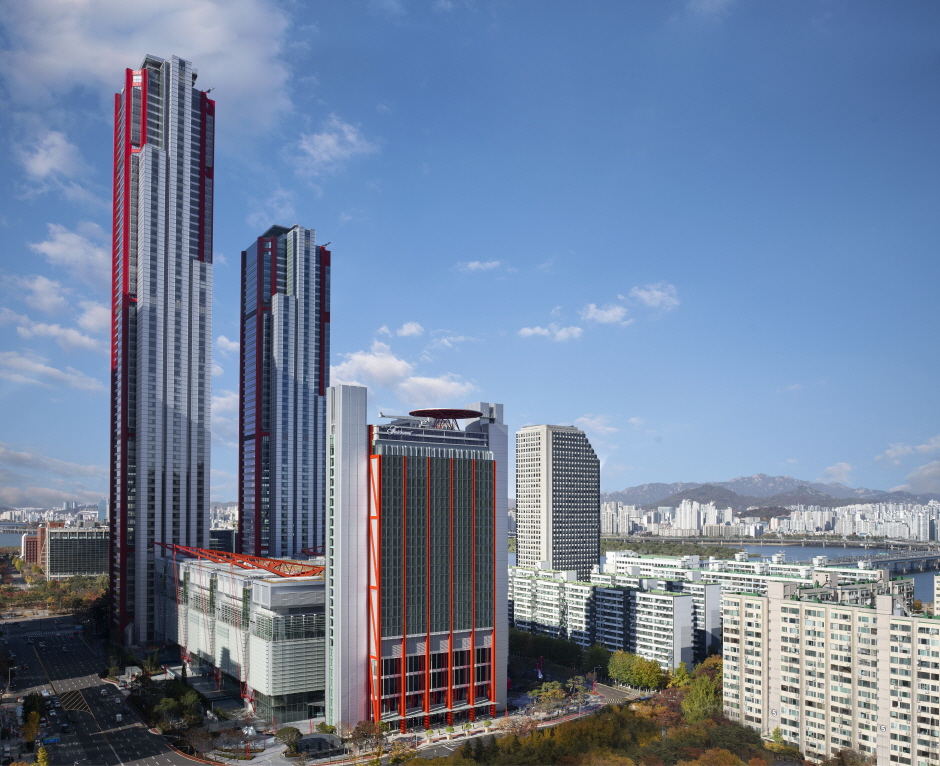
In the drama, an incident occurred during a wedding ceremony held at this hotel, and it is the place where Youngwoo visited to investigate. It is a 5-star luxury hotel with 308 rooms, and it is very impressive to see the skyline and view of Seoul. As it is close to Hangang Park as well as Hyundai Department Store and IFC Mall, it is the perfect place to stay, relax and enjoy shopping at the same time.
MEDIPACT (메디팩트)
10.1Km 2025-10-23
2nd Floor, 9 Bongcheon-ro 31-gil, Gwanak-gu, Seoul
Medipact is a company that provides an integrated medical platform encompassing foreign patient attraction, global influencer marketing, and interpretation support services. For international patients, Medifact offers personalized one-on-one services to ensure an optimized medical experience, while leveraging its global influencer network to enhance the brand value of partner hospitals and strengthen their international competitiveness.
Furthermore, Medifact goes beyond patient-centered services by operating educational programs for foreign physicians and medical professionals, transferring Korea’s advanced medical technologies and specialized skills. Through these initiatives, Medifact contributes to spreading the excellence of Korean healthcare worldwide and serves as a vital bridge for global medical cooperation.
Conrad Seoul (콘래드 서울)
10.2Km 2025-01-07
10, Gukjegeumyung-ro, Yeongdeungpo-gu, Seoul
The five-star Conrad Seoul, selected as one of the ‘Best New Hotels’ by Conde Nast Traveler, a world-renowned travel magazine, offers the top-class service and
for the best customer experience. Strategically located in a core business district of Yeouido, Conrad Seoul is one of the four pillar buildings of
the IFC (International Finance Center) Seoul. The building is directly accessible underground from Yeouido Subway Station.
Conrad Seoul has 434 guest rooms with an open, refreshing atmosphere, picturesque views, and
are equipped with Apple digital devices. The hotel also houses a Grand Ballroom, restaurants which offer diverse gourmet cuisines and
a top-notch wellness center.
Korea Medical Institute KMI Yeouido Clinic ((재)한국의학연구소 케이엠아이여의도의원)
10.3Km 2025-10-23
13F-15F & 17F-18F, 24 Gukjegeumyung-ro 2-gil, Yeongdeungpo-gu, Seoul
Korea Medical Institute (KMI), a leader in 'K-health checkups,' operates health checkup centers across eight locations nationwide, from Seoul to Jeju. KMI has been striving to prevent and detect diseases early. It has led the popularization of comprehensive medical examinations in Korea. Based on 39 years of accumulated data and expertise, KMI has enhanced its capabilities in health checkups, services, and brand value.
By utilizing its diagnostic data accumulated over the years, KMI provides accurate test results and follow-up care promptly.
KMI will stay committed to becoming a lifetime health management partner and 'K-health checkup' leader by leveraging its excellence in Korean medicine, beyond health checkups for foreign patients.
Dream Forest Art Center (꿈의숲 아트센터)
10.3Km 2025-01-15
173, Wolgye-ro, Gangbuk-gu, Seoul
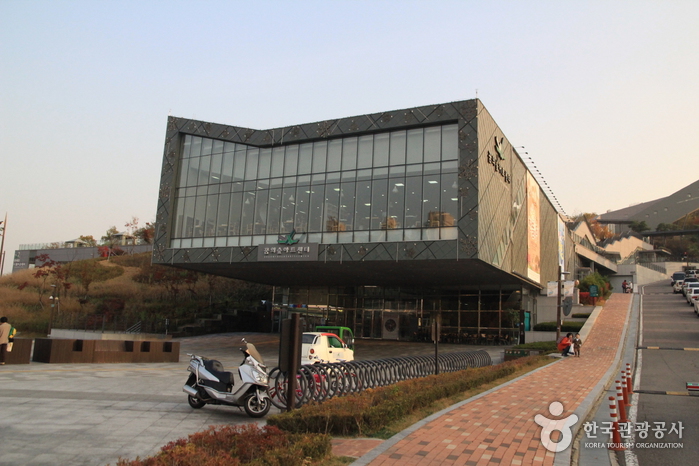
Dream
Forest Art Center, located in Gangbuk, Seoul, is operated by the Sejong Center
for the Performing Arts. Composed of two performance venues (Performance
Hall and Concert Hall), alongside with Sang Sang Tok Tok Art Gallery and Dream
Gallery, there are also a Chinese restaurant, cafe and an observatory deck available
for all visitors to enjoy.
Unplugged Hongdae Branch(언플러그드)
10.3Km 2025-11-05
26 Wausan-ro 33-gil, Mapo-gu, Seou
IU ‘Sleepless Rainy Night’
As the name suggests,it is a cafe with an analog charm. Old wooden floors and furniture, pianos and guitars, and turntables are old and more stylish. In a space full of LPs and CDs, you can feel the warmth and coziness you felt in the music video. A variety of menus are available, from drinks to beer and pretty cocktails named after musicians. There is a performance hall in the basement, where performances are often held.
Youth Clinic (유스의원)
10.3Km 2025-10-23
(4th Floor, Islex), 108 Uisadang-daero, Yeongdeungpo-gu, Seoul
Youth Clinic is a single-room dermatology practice that sees only 20 patients per day. We offer dermatology care, obesity care, and petit plastic surgery. We operate at two locations in Cheongdam and Yeouido. Our staff consist of family medicine and dermatology specialists providing high-quality medical services, and our flagship procedures include 5G Lifting, which is a non-surgical anti-wrinkle and lifting procedure, Youth Double Skinny lipolysis, which treats partial obesity without surgery, Youth Fill collagen filler, which increases skin elasticity and volume at the same time, and Atos laser treatment, which improves pores and skin elasticity. Our signature procedures have won the 2014 and 2016 Medical Korea Awards, No. 1 in 2015 and 2016 Consumer Satisfaction Index, and the 2014 Beauty Industry Award. We have trademarks registered for all procedures.
 English
 한국어
한국어 日本語
日本語 中文(简体)
 Deutsch
 Français
 Español
 Русский


