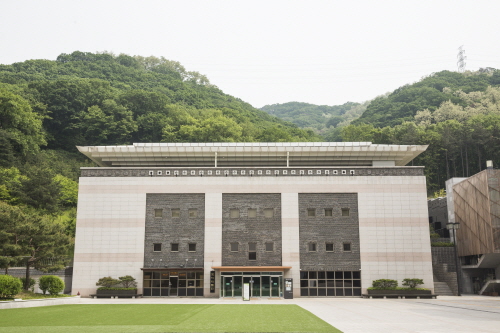
National Gugak Museum (국립국악박물관)
5.9Km 2021-08-13
2364, Nambusunhwan-ro, Seocho-gu, Seoul
The National Gugak Museum opened on February 23, 1995 as the first gugak museum in Korea, featuring approximately 6,000 pieces of gugak-related materials and relics which have both historical and cultural value. It is comprised of seven themed permanent exhibition halls that present 250 pieces of audio and video clips regarding gugak. In the 3D room, visitors can enjoy 3D animation at all times. The museum also hosts special exhibitions in unique and interesting themes.

National Gugak Center (국립국악원)
5.9Km 2025-01-17
2364 Nambusunhwan-ro, Seocho-gu, Seoul
The National Gugak Center is the governing body established to preserve and promote traditional Korean performing arts. The center can accommodate every type of traditional performing arts, such as palace music, court music, and all other genres including major productions of changgeuk (Korean musical drama). Originally opened in Busan in 1951, the center moved to its current location in Seoul in 1987. The center also opened branch locations in Namwon, Jindo, and Busan in 1992, 2004, and 2008 respectively.
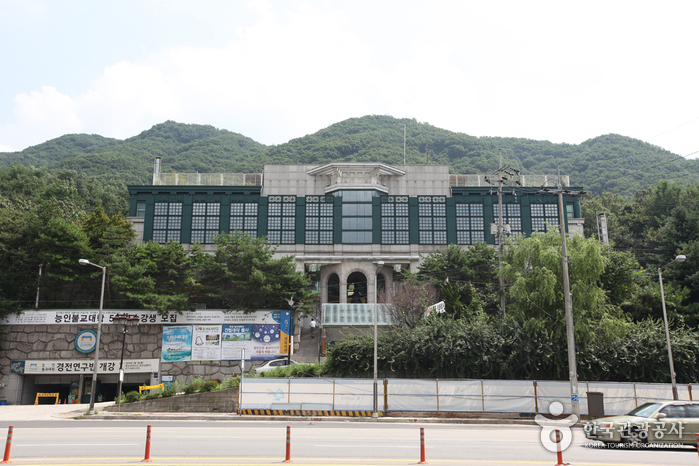
Nungin Sunwon (능인선원)
5.9Km 2024-03-20
340 Yangjae-daero, Gangnam-gu, Seoul
Nungin Sunwon, nestled at the base of Guryongsan Mountain, is named after another name of Buddha, Sakyamuni, signifying "the one who skillfully educates and benefits others." This temple complex includes several key structures: the Daeungjeon Hall, the Dharma Hall, the Gwaneumjeon Hall, and the resplendent Great Bhaisajyaguru, known for its golden glow. Additionally, the site houses a Buddhist university, providing a range of programs that cover basic to advanced Buddhist studies.
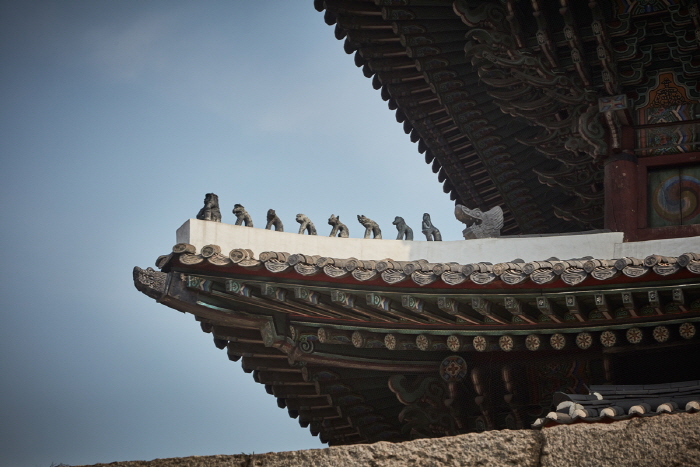
Heunginjimun Gate - Dongdaemun Gate (흥인지문)
5.9Km 2025-10-23
288, Jong-ro, Jongno-gu, Seoul
Heunginjimun Gate was built to protect Hanseongbu, which historically housed essential government facilities. Heunginjimun Gate was the gate on the east side of the outer wall of Seoul Fortress among eight gates. It is referred to as Dongdaemun Gate as well. The gate was constructed during King Taejo’s 5th year in 1396, remodeled during the reign of King Danjong in 1453, and was newly built in 1869 during the sixth year of King Gojong’s reign in 1869.
The gate features a hipped roof with five front and two side compartments on a two-storied building. The thin and weak bracket system supports the eaves and is excessively decorated, reflecting the construction features of the late Joseon period. Also, outside of the fortress is the half-circle-shaped Ongseong, a small wall, to protect the gate.
One of the unique factors of Heunginjimun Gate is that it is the only gate among Seoul’s eight to have Ongseong, further exhibiting the style of construction used during the late Joseon period.
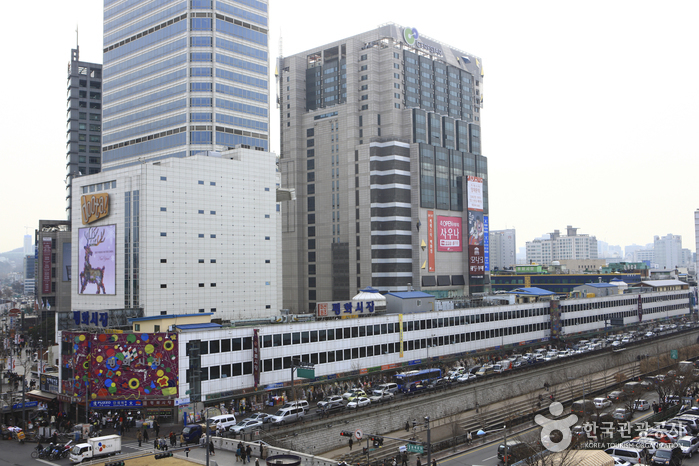
Dongdaemun Shopping Complex·Dongdaemun Shopping Town (동대문 종합시장·동대문 쇼핑타운)
6.0Km 2025-06-30
266 Jong-ro, Jongno-gu, Seoul
Dongdaemun Shopping Complex is one of Korea’s most well-known markets. It was founded in December 1970 as the largest of its kind in Asia and has maintained that status for the last 40 years. Browsing the plethora of shops, you can find fabric and clothing following all the latest global fashion trends. Dongdaemun Shopping Complex continues to build up its reputation as a hub of international design.
Cheonggyecheon Stream (청계천)
6.0Km 2024-05-16
Changsin-dong, Jongno-gu, Seoul
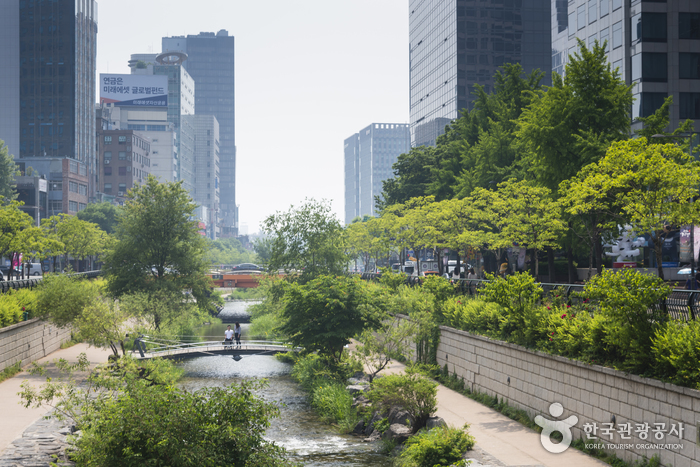
Cheonggye Plaza was built on Sejong-ro Street, where Cheonggyecheon Stream begins. It was built between Dong-A Ilbo, the starting point of the Cheonggyecheon Stream restoration, and Sindap Railroad Bridge, with a length of 160 meters, a x_width of 50 meters, and a total area of 6,962 meters squared. The plaza is decorated with fountains, waterfalls, and walking paths. It was created as a place for meetings, harmony, peace, and unification, to celebrate the significance of the restoration of Cheonggyecheon Stream. A miniaturized version of Cheonggyecheon Stream is displayed here, providing an overview of the restored stream. There are also interpretive panels about the 22 bridges that cross Cheonggyecheon stream. Fountains of various shapes create beautiful scenery. Cheonggyecheon Stream is accessible from the square through stairs on the left and Cheonggye Trail on the right. There is also an 18-meter tunnel on the Cheonggye Trail, providing a unique experience for citizens entering Cheonggyecheon Stream from the plaza. After constructing Cheonggyecheon Plaza, the Seoul Metropolitan Government made it a car-free street on public holidays so that the plaza, waterside area, and streets could be used as cultural spaces for citizens to relax. A spectacular sight is created by three-color lights illuminating the fountains and a two-tiered waterfall coming down from a x_height of four meters. Palseokdam, made of eight stones from eight provinces in Korea, was laid along the waterfall's sides.
Asan Medical Center (서울아산병원)
6.0Km 2025-10-23
(Pungnap-dong), 88 Olympic-ro 43-gil, Songpa-gu, Seoul
Opened in June 1989, Asan Medical Center is the largest tertiary hospital in Korea with 2,764 beds. In 2023, we treated an average of 13,260 outpatients and 2,539 inpatients per day, and performed 70,892 surgeries throughout the year.
With three specialty hospitals–Cancer Institute, Heart Institute, and Children's Hospital–and more than 50 specialized centers, we lead the world in cancer, organ transplantation, and cardiac care. In recognition of our efforts, we have topped the list of Korea's Most Admired Hospitals for 18 consecutive years and ranked NO. 1 in Korea for six consecutive years in U.S. Newsweek's World's Best Hospitals.
As a "quarternary hospital" serving critically ill patients from Korea and abroad who come to us as their last hope, Asan Medical Center treats more than 20,000 international patients from around 100 countries, including the United States, United Arab Emirates, and Mongolia. Medical professionals from developed countries visit us to learn our advanced medicine. Over the past decade, more than 3,700 professionals from nearly 90 countries have visited us to learn the latest medical techniques.
Dongdaemun Dak Hanmari Alley (서울 동대문 닭한마리 골목)
6.0Km 2024-03-04
37-7, Jongno 5(o)-ga, Jongno-gu, Seoul
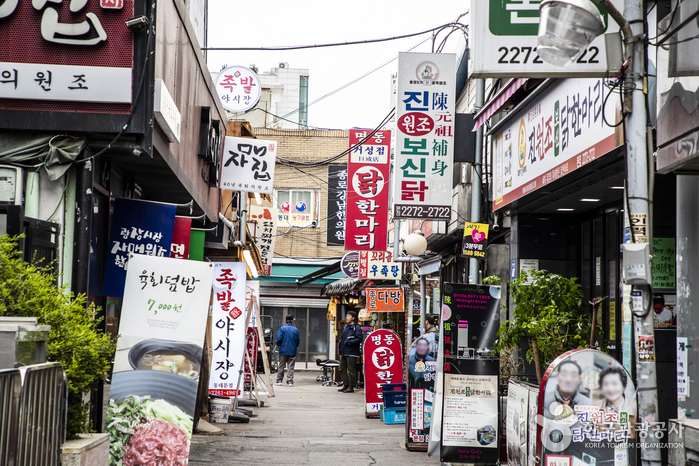
Located near the Dongdaemun Market, Dongdaemun Dak Hanmari Alley gets its name from the restaurants serving dak hanmari (whole chicken soup) that line the alley. Dak hanmari (whole chicken soup), literally “one whole chicken” in Korean, is a dish where a whole chicken is boiled in a soup and served with the alley’s special sauce. After the diners eat the meat, the broth is used to make kalguksu (noodle soup). Because the area is home to large-scale apparel and fashion material markets of the Dongdaemun Market, the district is always lively and bustling.
Namsan Arts Center (남산예술센터)
6.0Km 2021-08-26
138, Sopa-ro, Jung-gu, Seoul
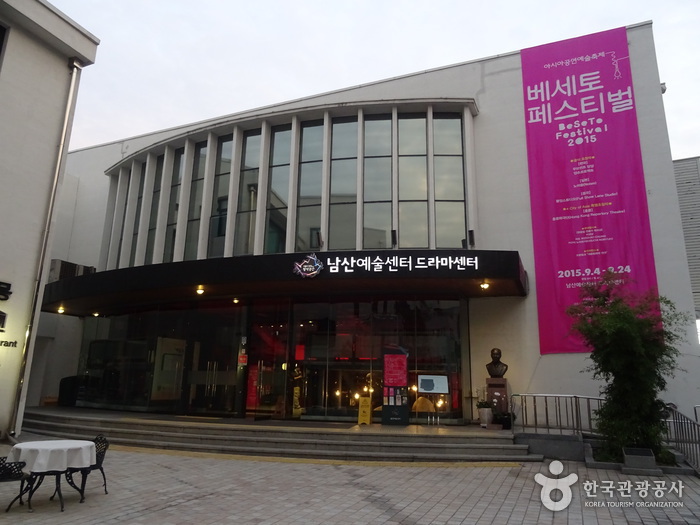
Namsan Arts Center, reopened as a creative space in Seoul in September 2009. It redefined the colors and characteristics of the theater, aiming for a modern theater production center centered on creative premieres, a contemporary performance venue where visitors can feel the pulse of the times, and a theater capable of various experiments.
Namsan Arts Center Drama Center is the first modern folk theater in Korea and the oldest performance hall in which the original architectural form has been preserved. Under the concept of "Contemporary & New Wave," the center continues to produce domestic original plays, and through active exchanges with excellent overseas theaters, build a repertoire of high-quality works that can read domestic and overseas trends, and present contemporary cultural diversity.
Namsan Library (서울특별시교육청 남산도서관)
6.1Km 2021-07-07
109, Sowol-ro, Yongsan-gu, Seoul
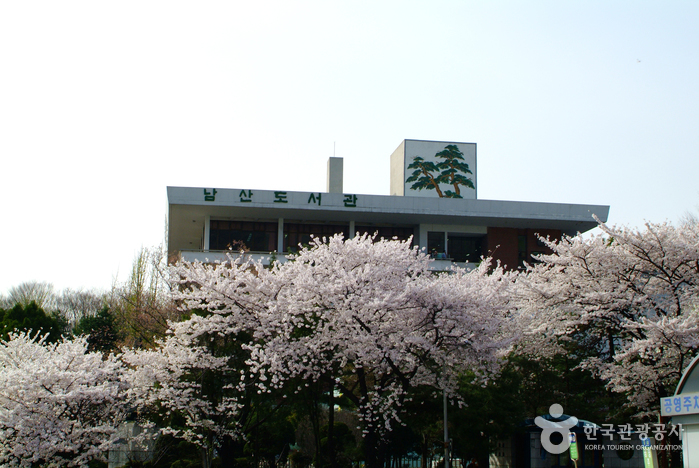
Namsan Library opened as Kyeongseong Prefectural Library in 1922 as a public library in Myeong-dong, Jung-gu, Seoul. The library was moved to the current site in 1964 with a newly built building and its name changed to Namsan Library in 1965. This concrete building was built in 1964 and was designed by architect Lee Haeseong. It was designated as Seoul Future Heritage in 2013, credited for its preservation value.
It is comprised of 19 rooms and educational areas including the Humanity and Social Science Hall, Nature Science Hall, Language and Literature Hall, Electronic Information Room and more. Since opening, the library has collected nearly 500,000 books, 16,000 non-book materials, 700 continuing resources, and other special materials like old books, oriental books (including Japanese books), and more. Namsan Library also operates a reading treatment program unique to this library that began in 2005. The program includes remodeling of reading consultation room, training for people in charge of reading treatment, workshops, programs for individuals and groups. Also, various exhibitions, lectures, shows, cultural classes and other events are available all year long to enhance lifelong education.
 English
 한국어
한국어 日本語
日本語 中文(简体)
 Deutsch
 Français
 Español
 Русский


