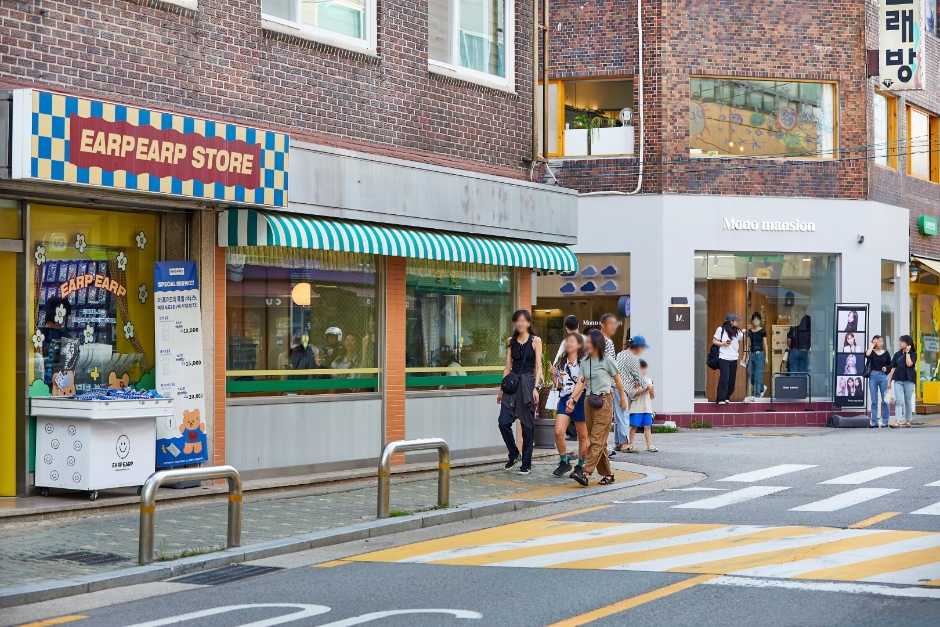
Mangnidan Street (망리단길)
14.1Km 2025-05-20
Poeun-ro, Mapo-gu, Seoul
Mangnidan Street is located near Poeun-ro, which can be reached in about 6 to 8 minutes of leisurely walk toward Mangwon Hangang Park from Exit 2 of Mangwon Station on Subway Line 6. Its name comes from the combination of Mangwon-dong and the Gyeongnidan Street in Itaewon, meaning the “Gyeongnidan Street of Mangwon-dong.” There are a variety of restaurants, cafes, dessert shops, and other small shops, each with their own charm, making it a great place to take the kids shopping or just get some rest. This place is quite close to Mangwon Market, so visitors can stop by the market if time allows. Another way to fit this area into the itinerary is as a pit stop for desserts or some shopping before heading to Mangwon Hangang Park.
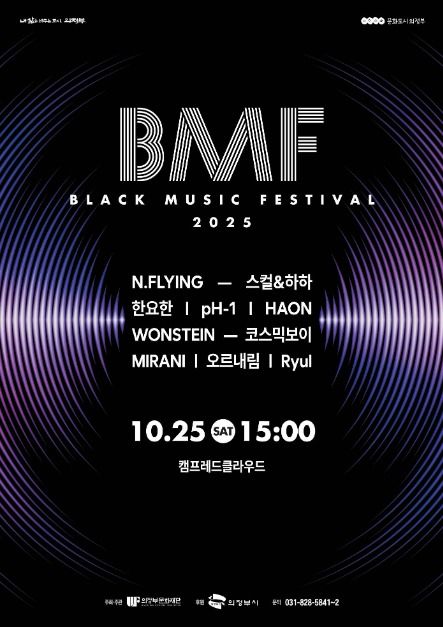
Black Music Festival (BMF) (2025 제7회 BMF(블랙뮤직페스티벌))
14.1Km 2025-10-23
Ganeung-dong, Uijeongbu-si, Gyeonggi-do
+82-31-828-5841
The Black Music Festival feature performances across various genres, including hip hop, R&B, soul form both local artists and international artists. Along with performances, visitors can enjoy various cultural events and hands-on experience programs.
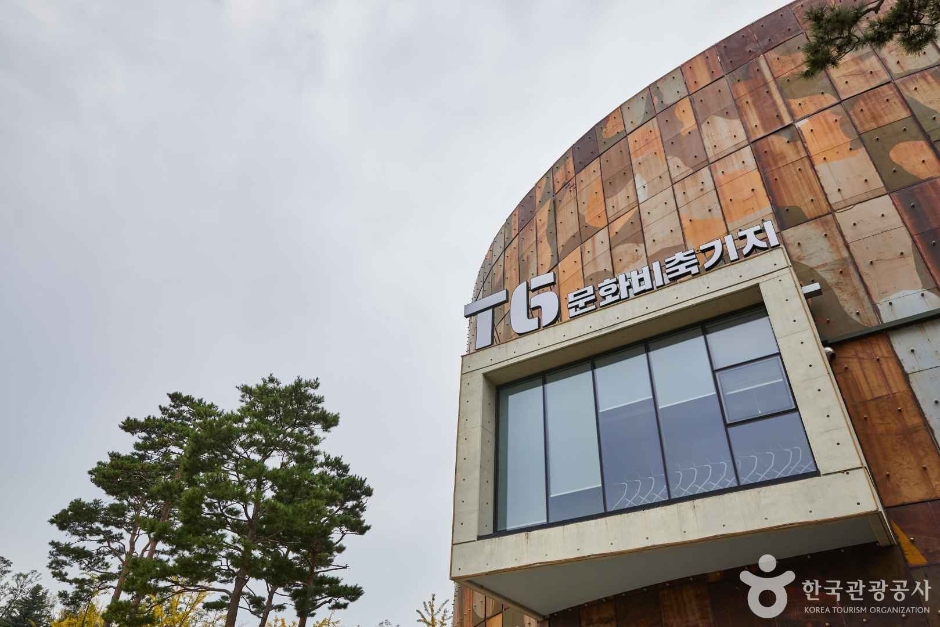
Oil Tank Culture Park (문화비축기지)
14.1Km 2024-11-01
87 Jeungsan-ro, Mapo-gu, Seoul
After being used as an oil tank for 41 years, the tanks were reborn into a culture space. The five tanks were transformed into performance halls, exhibition halls, and a multi-purpose pavilion, while one new tank was built to be used as an information center. In addition, the temporary parking lot turned into a culture yard where visitors can relax as well as enjoy activities or performances.
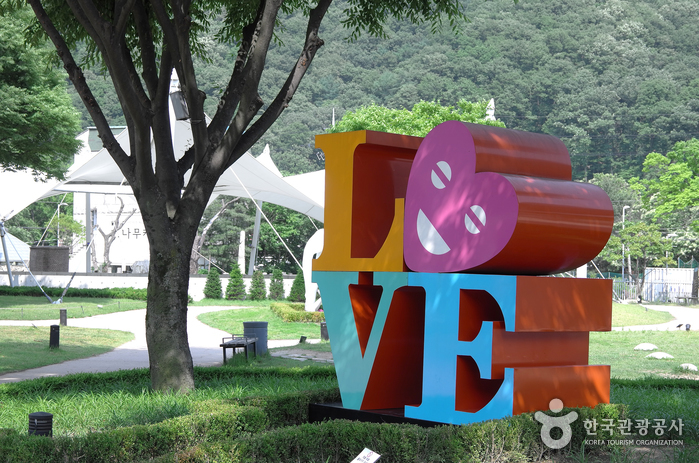
Gana Art Park (가나아트파크)
14.1Km 2024-02-07
117 Gwonyul-ro, Jangheung-myeon, Yangju-si, Gyeonggi-do
Gana Art Park is a park featuring an art museum, playground, performing stage, art shop, restaurant, and more. The park includes the Gana Children’s Art Museum, showcasing artworks by Korean and international contemporary art masters. There is also the Blue Space, where a work of Picasso is displayed, the Red Space dedicated to artworks of contemporary masters, and the Yellow Space, which is a playground equipped with nets
Dojeong Yukgwan (도정육관)
14.1Km 2025-10-27
42 Seocho-daero 78-gil, Seocho-gu, Seoul
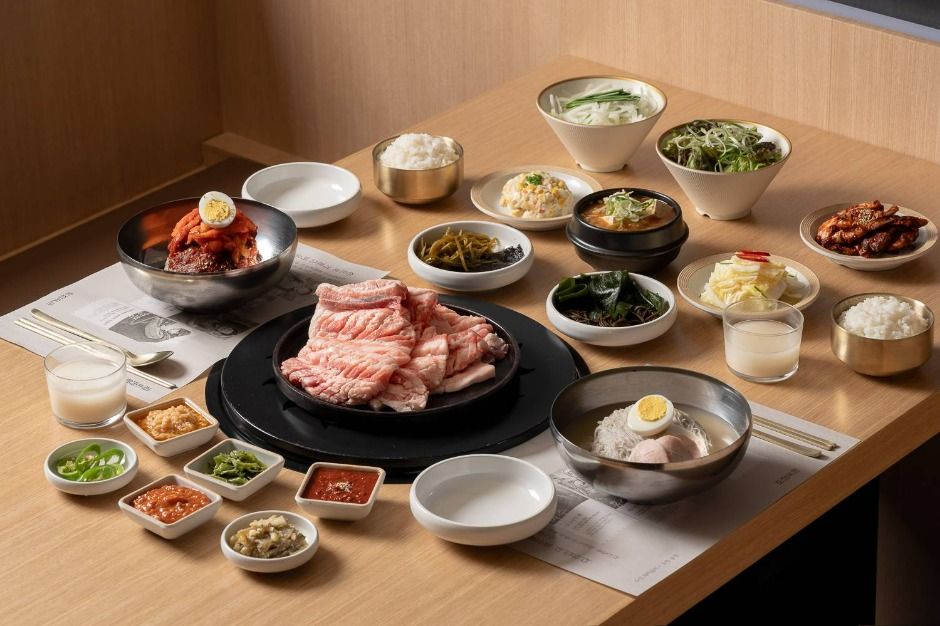
Dojeong Yukgwan is a Korean BBQ restaurant in Gangnam. Every morning, fresh rice is milled on-site to cook the rice, and carefully aged meat is served alongside. The meat is aged at a consistent temperature and humidity, resulting in a tender texture and deep flavor. The meat is grilled over charcoal, with staff grilling the meat to serve it in optimal condition. A variety of side dishes are served alongside the food. The interior features warm lighting and wooden interiors, creating a relaxed yet sophisticated atmosphere.

Always August Roasters (올웨이즈 어거스트 로스터스)
14.2Km 2025-08-20
19 Mangwon-ro 6-gil, Mapo-gu, Seoul
Located near Mangwon Market, this cafe is sandwiched between tranquil residential buildings, so it is a good place to enjoy a cup and some desserts in peace. The joint serves great coffee and desserts, which go even better together. Its placement on the first floor means that one can get some sun and feel the tranquil atmosphere of Mangwon-dong, a different side of Seoul as a city. Note that this place also offers alcoholic beverages in the form of wine, so if you are up for a longer stay, you can indulge in the wine card curated by the management.
World Cup Park (월드컵공원)
14.2Km 2024-10-23
243-60 World Cup-ro, Mapo-gu, Seoul
Opened on May 1st, 2002, the Wolrd Cup Park was once a 15-year-old landfill that held over 92 million tons of garbage. The park is located near Seoul World Cup Stadium, and is made up of five smaller parks - Pyeonghwa (Peace) Park, Haneul (Sky) Park, Noeul (Sunset) Park, Nanjicheon Park, and Nanji Hangang Park.
* Pyeonghwa Park: Closest to Seoul World Cup Stadium, it holds a pond, garden, children’s playground, and forest. As a representative park of World Cup Park, the park was designed in hopes of peace and harmony between mankind and nature. It is often used as a picnic area and place for nature studies.
* Nanji Hangang Park: Nanji Hangang Park was developed on the banks of the Hangang River. In contrast to other Hangang River parks, Nanji Hangang Park is a water-friendly park that has a gradual slope towards the riverbank. The park consists of a camping ground, soccer field, basketball court, grass field, cruise ship port, and an area for nature studies.
* Haneul Park: Haneul Park consists of vast grassland located at the highest elevation of the five parks. The park's pasture is covered with eulalias and wild flowers in their most natural state. In addition, 30,000 butterflies of different species were introduced in 2000 to stabilize the ecosystem. Five wind-powered generators provide power to the park and the park’s maintenance office. Once a mountain of garbage, it is now a green hill with 22 lookout points offering breathtaking views of Seoul, including the N Seoul Tower, Bukhansan Mountain, and Hangang River. Tall trees are line the park to provide shades and serve as resting spots for visitors. As a popular spot to enjoy the sight of eulalias, the park usually remains open until late in the evening during the Eulalia Festival period.
* Noeul Park: In order to prevent the vast area of land of what was once a wasteland from becoming an unnecessary chunk of land, a nine-hole golf course was constructed in what is now known as Noeul Park. The golf course serves as an environment friendly entertainment park to visitors while stabilizing the geographical formation and has an urban park nearby that offers scenic views of the Hangang River and beautiful sunset. Located west of the golf park is Noeul Square, decorated with shrubs and flowers.
* Nanjicheon Park: Nanjicheon Park was developed from the Nanji Stream, which flowed under Haneul Park. It was once overflowing with sewage runoff from a nearby landfill, but it has since been beautifully restored into a park with clear water. The park is built to serve as a recreational spot for those with for youths, elders, and people with disabilities.
ODE Clinic (오드의원)
14.2Km 2025-11-28
8th Floor, Gyeongwon Building, 340 Gangnam-daero, Gangnam-gu, Seoul
ODE Clinic is a dermatology and aesthetic medical institution with a high proportion of domestic patients, ensuring proven safety and trust. The clinic operates a designated doctor system, providing responsible 1:1 consultation and treatment. Its medical team consists of young specialists capable of offering the latest treatment trends. With this experience, ODE Clinic provides reliable medical services to international patients.
![Namyangju Sareung Royal Tomb [UNESCO World Heritage] (남양주 사릉(정순왕후) [유네스코 세계문화유산])](http://tong.visitkorea.or.kr/cms/resource/44/2480844_image2_1.jpg)
Namyangju Sareung Royal Tomb [UNESCO World Heritage] (남양주 사릉(정순왕후) [유네스코 세계문화유산])
14.2Km 2023-06-22
180, Sareung-ro, Namyangju-si, Gyeonggi-do
Sareung Royal Tomb is the tomb of Queen Jeongsun (1440-1521), a consort to King Danjong. She was perhaps the most tragic royal woman of the Joseon dynasty.
In 1453, she was selected to be queen out of many candidates and actually became the queen two years later. However, when King Danjong was forced to abdicate from the throne in 1457 and was exiled to Yeongwol in Gangwon-do, Queen Jeongsun was deprived of her title as well.
After King Danjong died, she built a thatched-roof house outside Seoul’s Dongdaemun Gate and lived there for the rest of her life, continuing to mourn her husband. The tomb’s name, Sareung, came from the fact that she had missed her dead husband so much.
Unlike other royal tombs, Sareung looks very simple. Its size is relatively small.
BBQ Yul (고깃집열)
14.2Km 2025-12-16
48 Seocho-daero 78-gil, Seocho-gu, Seoul
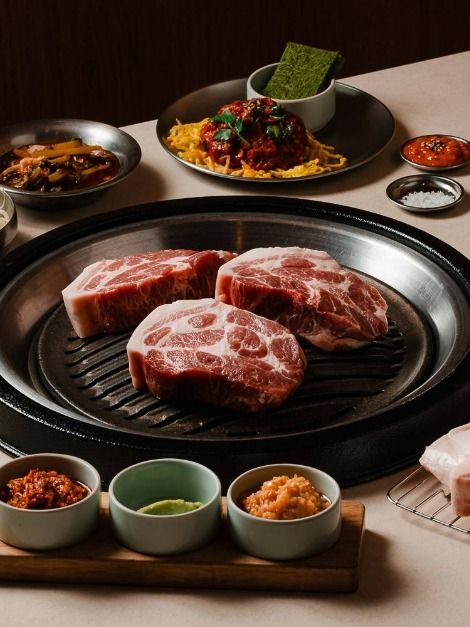
BBQ Yul, a Korean barbecue restaurant in Gangnam, boasts deep flavors of pork aged for 336 hours and charcoal. All meats are sourced domestically and cooked by the skilled staff to ensure optimal cooking and flavor. The interior is composed of warm lighting and wooden decor, and opening the folding door reveals an open space like a terrace.
 English
 한국어
한국어 日本語
日本語 中文(简体)
 Deutsch
 Français
 Español
 Русский


