
Hangaram Art Museum in Seoul Arts Center (예술의전당 한가람미술관)
15.9Km 2022-12-16
2406, Nambusunhwan-ro, Seocho-gu, Seoul
+82-2-580-1300
Hangaram Art Museum, located in the left wing of the Seoul Arts Center, displays a unique exhibition of formative arts. Established in 1990, the museum has a total area of 15,540 ㎡ and contains 6 exhibition halls (including one for oversized artwork), a storage area, and an art shop. The building features a lighting system that controls the humidity and temperature and is equipped with a luminous ceiling system that captures natural sunlight and feeds it into the museum, allowing visitors to enjoy a brightly lit viewing area.
The Art Square in front of the museum houses a wide range of exclusive artwork and serves as a venue for various events such as the Cloz Art Market. Visitors may also enjoy the open-air café right in front of the building or dine at “Yehyang,” a traditional Korean restaurant right down the stairs.
![Goyang West Three Royal Tombs (The tomb of Queen Janggyeong) [UNESCO World Heritage] (고양 서삼릉(장경왕후) [유네스코 세계문화유산])](http://tong.visitkorea.or.kr/cms/resource/85/1150385_image2_1.jpg)
Goyang West Three Royal Tombs (The tomb of Queen Janggyeong) [UNESCO World Heritage] (고양 서삼릉(장경왕후) [유네스코 세계문화유산])
16.0Km 2024-02-07
233-126 Seosamneung-gil, Deogyang-gu, Goyang-si, Gyeonggi-do
+82-31-962-6009
Goyang West Three Royal Tombs is a significant historical site comprising three major royal burial grounds in the western area. Huireung Royal Tomb is dedicated to Queen Janggyeong (1491-1515), the consort of King Jungjong during the Joseon dynasty. Hyoreung Royal Tomb is the resting place of King Injong (1515-1545) and his queen, Inseong. Yereung Royal Tomb holds the remains of King Cheoljong (1831-1864) and his queen, Cheorin. This area is home to numerous tombs and relics belonging to various members of the Joseon royal family.
Seoul Arts Center (예술의전당)
16.0Km 2025-01-17
2406 Nambusunhwan-ro, Seocho-gu, Seoul
The Seoul Arts Center is the representative art complex of Korea. It is comprised of the Opera House, Concert Hall, Art Gallery, Calligraphy Museum, Art Material Hall, and an outdoor stage. You can enjoy various performances and exhibitions all in one site.
The Opera House and Concert Hall consist of a total of five performance halls offering an average of 800 performances ever year, whereas the Art Gallery and Calligraphy Museum has seven exhibition halls providing various exhibitions throughout the year. The outdoor stage also provides various genres of performances all year round.
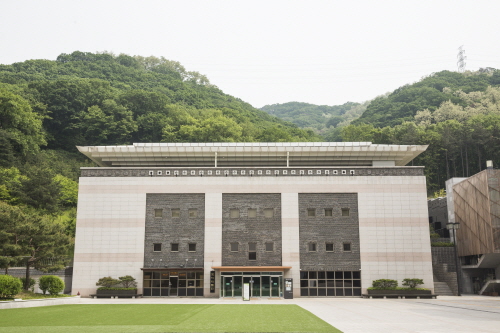
National Gugak Museum (국립국악박물관)
16.1Km 2021-08-13
2364, Nambusunhwan-ro, Seocho-gu, Seoul
+82-2-580-3130
The National Gugak Museum opened on February 23, 1995 as the first gugak museum in Korea, featuring approximately 6,000 pieces of gugak-related materials and relics which have both historical and cultural value. It is comprised of seven themed permanent exhibition halls that present 250 pieces of audio and video clips regarding gugak. In the 3D room, visitors can enjoy 3D animation at all times. The museum also hosts special exhibitions in unique and interesting themes.
National Gugak Center (국립국악원)
16.1Km 2025-01-17
2364 Nambusunhwan-ro, Seocho-gu, Seoul
The National Gugak Center is the governing body established to preserve and promote traditional Korean performing arts. The center can accommodate every type of traditional performing arts, such as palace music, court music, and all other genres including major productions of changgeuk (Korean musical drama). Originally opened in Busan in 1951, the center moved to its current location in Seoul in 1987. The center also opened branch locations in Namwon, Jindo, and Busan in 1992, 2004, and 2008 respectively.
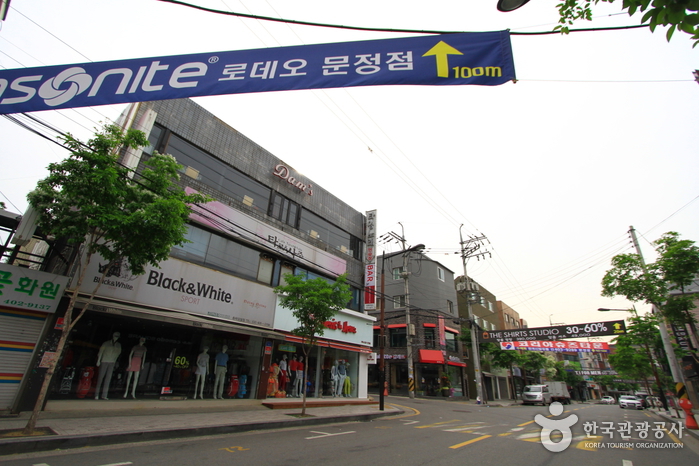
Munjeong-dong Rodeo Street (문정동 로데오거리)
16.4Km 2025-03-29
10, Dongnam-ro 4-gil, Songpa-gu, Seoul
+82-2-400-1633
Munjeong-dong Rodeo Street is a large shopping district containing over 200 brand-name discount stores. The street is T-shaped, with a 1-kilometer-long main street connected to a 400-meter-long alley, and the Munjeong 1-dong Resident Center located at the center. For shoppers’ convenience, there is a public parking lot (if visitors purchase goods at Rodeo Street, they can park here for free) and a parking lot for foreign tourists only (free of charge). Munjeong-dong Rodeo Street is one of Korea’s major shopping streets with customers ranging from teenagers to adults, since discount stores stocking sports wear, casual wear, shoes, men’s and ladies’ suits, and golf wear are all located on this street. Moreover, this is a great place to find deals on famous brands, at prices lower than at a department store. On some items you can get discounts of up to 70-80%.
Since most of the goods are stock from previous seasons, it might be better to purchase the more classic styles rather than the trendy fashions. In some cases, the goods might have been slightly crumpled or stained during the transfer from warehouse storage, but taking them to the dry-cleaners should fix most problems. However you should be careful when looking at the sewing quality, and check for missing buttons.
One more thing to bear in mind is the shopping season. Even discount stores have periods when stock runs low. The best time to shop is immediately after the stores in Rodeo Street restock their merchandise. This is done at about the same time as department stores. There is also an enormous variety of goods to choose from during the Rodeo Festivals in May and September. The purchased goods are exchangeable but non-refundable, so check the quality of the products carefully before purchasing.
In addition, Munjeong-dong Rodeo Street has a wide selection of restaurants and entertainment facilities. There are a number of pizza places, coffee shops, and food courts, as well as internet cafes and game rooms in the alleys behind the stores. Visitors can also relax in the surrounding parks. There’s a park with a 600-year-old zelkova tree right behind the Munjeong 1-dong Resident Center.
Munjeong Rodeo Street is not just a shopping district; it’s a cultural area. The ‘Munjeong-dong Cultural Festival’ takes place every year in May, and the ‘Munjeong-dong Rodeo Festival’ takes place in May every other year. During these festivals, visitors can watch traditional Korean performances, traditional wedding ceremonies, international fashion parades, hip-hop dancing, and more.
A charity sale is held on weekends and national holidays on the open-air stage of the Munjeong 1-dong Resident Center, and merchandise is sold for even bigger discounts.
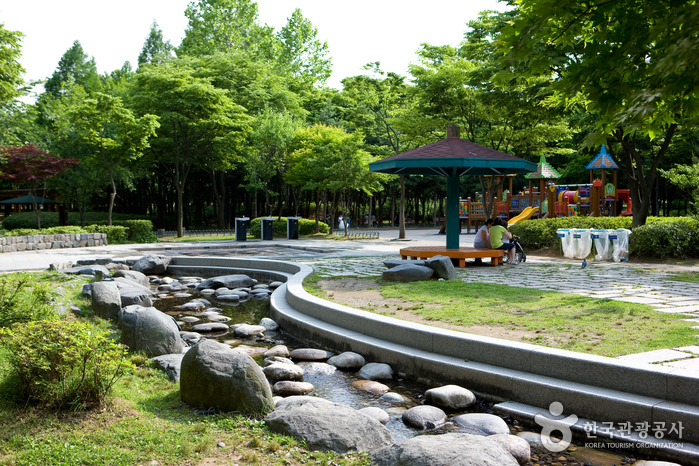
Maeheon Citizen's Forest (매헌시민의 숲)
16.4Km 2022-12-21
99, Maeheon-ro, Seocho-gu, Seoul
+82-2-575-3895
Maeheon Citizen's Forest, located near Yangjae Tollgate, was created in anticipation of the Seoul Asian Games in 1986 and the 24th Olympic Games in 1988. The forest provides a scenic habitat for 94,800 trees of 43 different species including pine, zelkova, purple bloom maple, horse chestnut, and nut pine. These trees are rarely seen in cities and the park is a popular date spot for couples. In the fall, the trees in the park bear an abundance of persimmons and quinces.
Amenities and facilities include an outdoor wedding hall, walking course, basketball court, volleyball court (also used for foot volleyball), tennis court, barefoot walking path, and outdoor workout equipment. Memorial sites and monuments like the memorial of Patriot Yun Bong-Gil can also be found scattered throughout the park grounds.
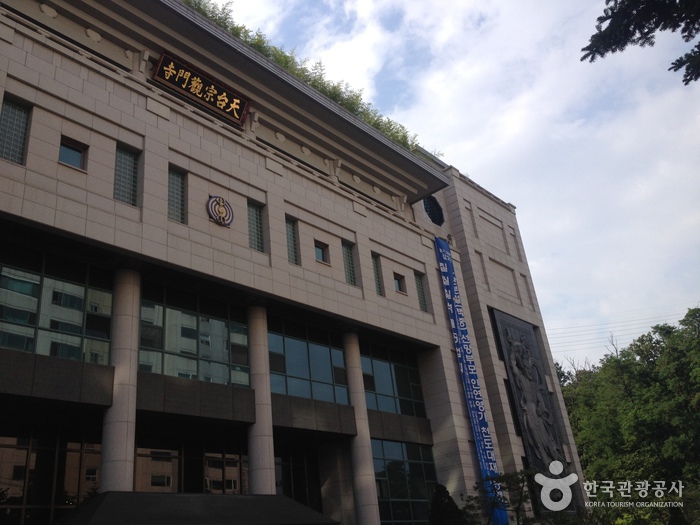
Seoul Gwanmunsa Temple (관문사(서울))
16.4Km 2021-06-01
111, Baumoe-ro 7-gil, Seocho-gu, Seoul
+82-2-3460-5300
Located at the foot of Umyeonsan Mountain in Seocho-gu, Seoul, Gwanmunsa Temple had its ground-breaking ceremony in 1993 and construction was completed in October 1998.
The temple site has a total area of 22,148.76 ㎡ with seven ground levels and four basement levels. The temple was constructed with a mixture of modern and traditional Buddhist architectural designs. Inside the temple, cutting-edge facilities are used for various cultural events, conferences, and sacred ceremonies.
Neighbored by Cheonggyesan Mountain, Umyeonsan Mountain, and Yangjaecheon Stream, the temple is located near many natural spots visitors can enjoy. In particular, Umyeonsan Mountain (alt. 293 m), where Gwanmunsa Temple is located, gets its name for its shape resembling a cow lying down. Designated as a city park and managed by Seoul Metropolitan Government, Umyeonsan Mountain has several valleys with clear spring waters and a dense forest inhabited by diverse animals and plants.
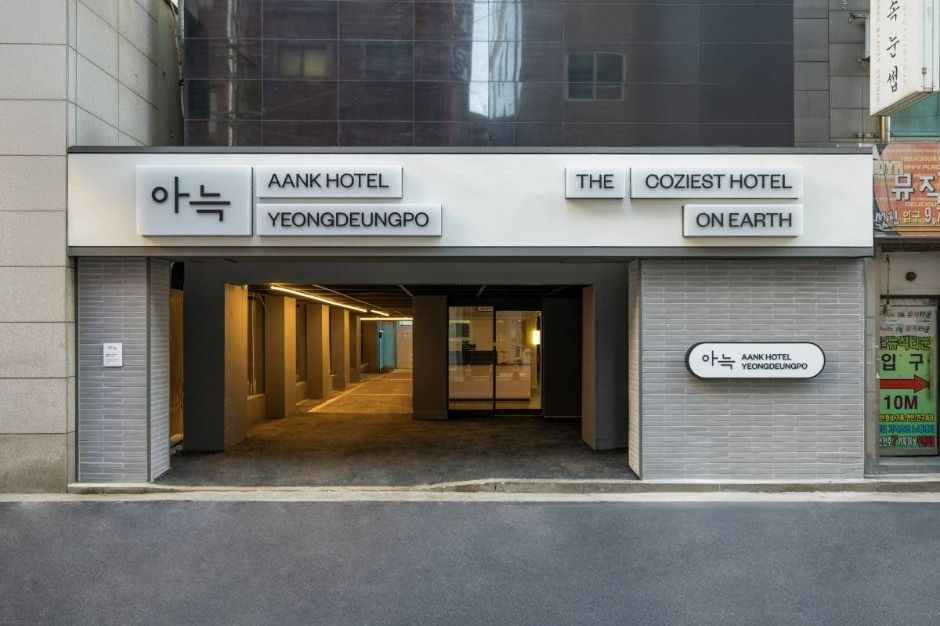
Aank Hotel Yeongdeungpo (아늑호텔 영등포점)
16.5Km 2025-04-24
10 Yeongjung-ro 10-gil, Yeongdeungpo-gu, Seoul
Located within 5 minute's walking distance from Yeongdeungpo Station, Aank Hotel Yeongdeungpo has major attractions like Times Square and Yeongdeungpo Market in the vicnity. The hotel lobby has a coffee machine, ice dispenser, and water dispenser for guests' convenience. Equipped with a variety of room types, guests can enjoy both comfort and entertainment at Aank Hotel Yeongdeungpo.
Ewha Womans University Mokdong Hospital (이화의대부속목동병원)
16.6Km 2025-10-23
1071 Anyangcheon-ro, Yangcheon-gu, Seoul
Ewha Womans University Mokdong Hospital, established in 1993, continues the legacy of Pogoonyogoan (1887), Korea’s first women’s hospital. As a 5th-stage tertiary hospital, it delivers advanced care through specialized centers, treating high-complexity diseases such as cancer, cardiovascular and cerebrovascular disorders, and organ transplantation, as well as chronic conditions like hypertension, diabetes, and joint diseases. With the opening of Cancer Center for Women (2009), Urology Institute (2022), and Blood Cancer Hospital (2025), the hospital has expanded its expertise and patient-centered environment, providing trusted, high-quality medical services.
 English
 한국어
한국어 日本語
日本語 中文(简体)
 Deutsch
 Français
 Español
 Русский


