
Korea University Anam Hospital (고려대학교 안암병원)
6.8Km 2025-10-23
73 Goryeodae-ro, Seongbuk-gu, Seoul
As a premier medical institution at the forefront of Korea's healthcare system, Korea University Anam Hospital integrates cutting-edge technologies into clinical practice. Our focus on precision medicine drives excellence in cancer and cardiovascular disease treatment, offering safe and accurate medical services through state-of-the-art robotic surgery and multidisciplinary care.
Our commitment to patient-centered care is evident in our ongoing investments to enhance our systems and capabilities. In 2008, we established the International Medical Center to serve our growing number of international patients better.
The International Medical Center offers services in English, Russian, Mongolian, and Arabic, ensuring that language barriers do not impede quality care. Additionally, our nutrition team develops global meal plans tailored to the diverse dietary needs of our international patients. For added convenience, we provide airport pick-up services, making the journey to our hospital as smooth as possible.
Yonsei GoodDay Dental Clinic (연세굿데이치과의원 수서점)
6.8Km 2025-12-23
2nd Floor, Suseo Office Building, 281 Gwangpyeong-ro, Gangnam-gu, Seoul
Hello. This is Yonsei Good Day Dental Clinic where English is available. Specialists from university hospitals with more than 10 years of experience gather and treat by field. We provide a wide range of treatment services, including affiliated hotels and tax refund. Experience pain-free dental treatment with painless anesthesia and sleep anesthesia.
Jogui Hansu (족의한수)
6.8Km 2024-10-15
93-1, Supyo-ro, Jongno-gu, Seoul
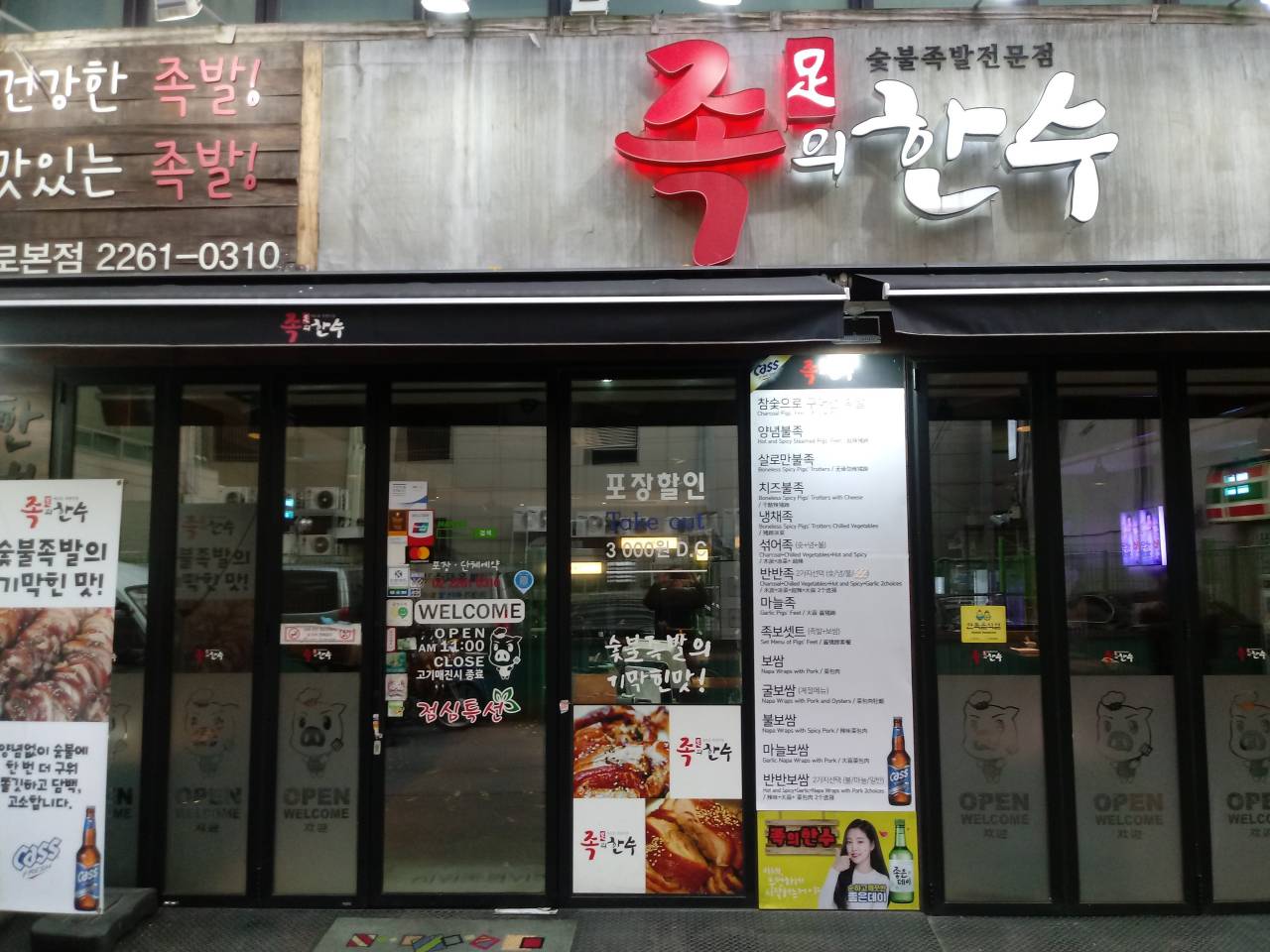
A pig's trotter(s) specialty restaurant located in Jongno, Seoul. This restaurant's signature menu is braised pigs' feet. A restaurant serving both charcoal-grilled jokbal (pig's trotter) and spicy jokbal.
Busan Agujjim Gulbossam (부산아구찜굴보쌈)
6.8Km 2024-10-15
서울특별시 종로구 돈화문로 35
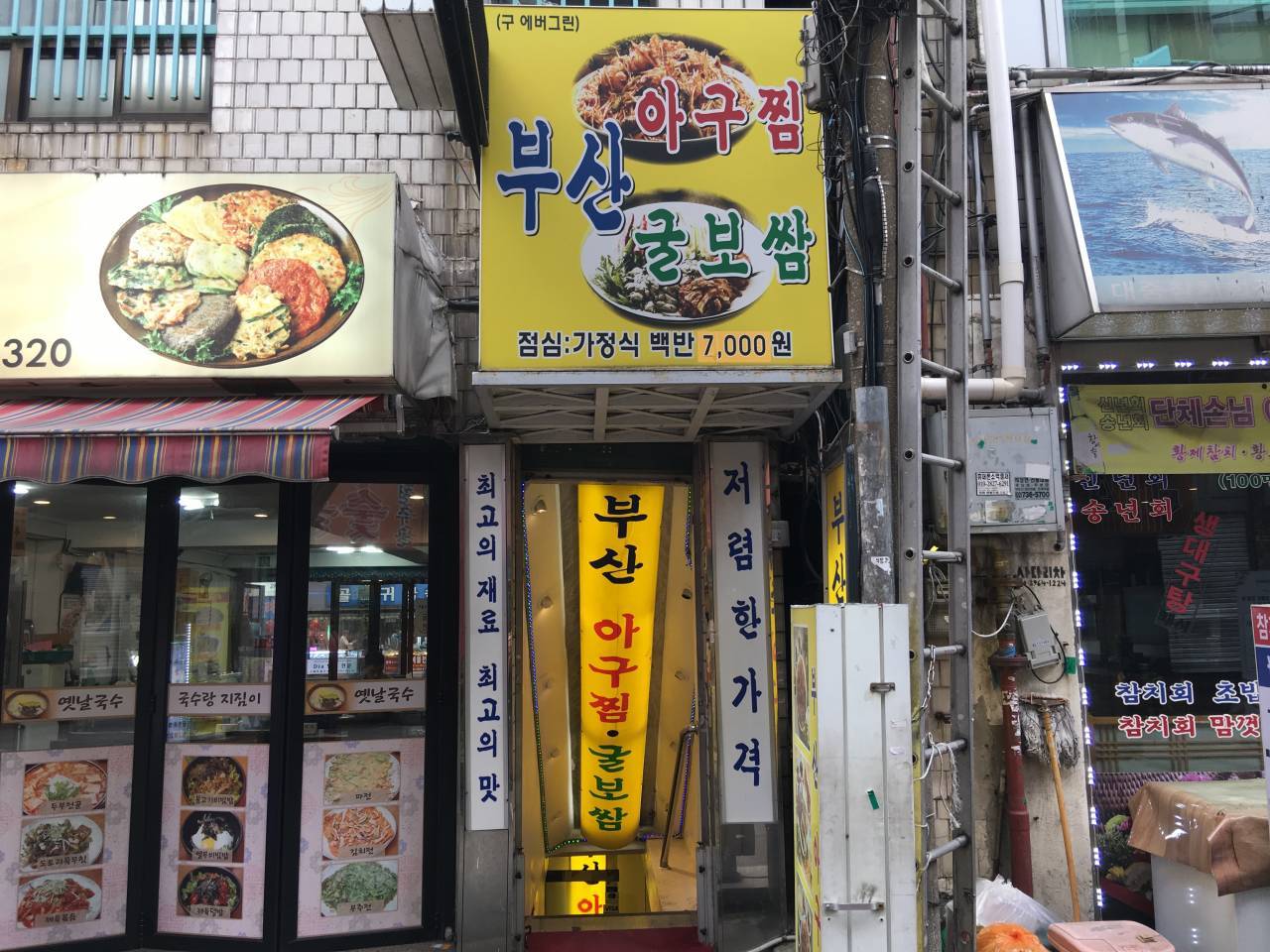
This is a Korean cuisine located in Jongno, Seoul. The best menu at this restaurant is spicy braised monkfish. Stewed monkfish is a spicy seafood dish made of fish and vegetables.
WIZ & MI Clinic (위즈앤미의원)
6.8Km 2025-10-23
#401-#403, 21 Myeongdong 7-gil, Jung-gu, Seoul
WIZ & MI Clinic presents unique beauty based on tailored, customer-oriented treatments and highly skilled know-how. Systemized and specialized treatments, along with standardization, enable the clinic to offer reasonable prices. Additionally, the clinic offers customized procedures for highly satisfactory outcomes and stability without side effects.
The medical staff at WIZ & MI Clinic have proven competencies, abundant clinical experiences, and expertise. With cutting-edge equipment, the clinic's competent staff members share their know-how through live demonstrations each year. WIZ & MIi Clinic pursues 'magic total beauty' that improves and balances physical beauty with a healthy mind. For this, the clinic conducts research and strives for healthy beauty for all its customers.
It is committed to providing honest care and helping patients re-discover their magical beauty and happiness.
YOU&I Clinic Myeongdong (유앤아이의원 명동점)
6.8Km 2025-11-24
#F301, 3rd Floor, Timewalk Myeong-dong Building, 78 Namdaemun-ro, Jung-gu, Seoul
YOU&I Clinic is a trusted dermatology and aesthetic clinic with extensive experience and expertise accumulated since 2006.
At YOU&I Clinic, we are committed to using authentic products, providing precise and honest treatments, and offering personalized services tailored to each individual’s needs.
We welcome clients not only from Korea but also from Japan, China, and Thailand, and offer Japanese and Chinese interpretation services. All foreign clients receive treatments at the same prices as Korean clients.
YOU&I Clinic specializes in lifting, petite procedures, and skin boosters, as well as a wide range of aesthetic skin treatments. We also provide thorough aftercare to ensure the highest level of satisfaction for every client.
Myth Jokbal Myeongdong (미쓰족발명동)
6.8Km 2024-10-15
21, Myeongdong 3-gil, Jung-gu, Seoul
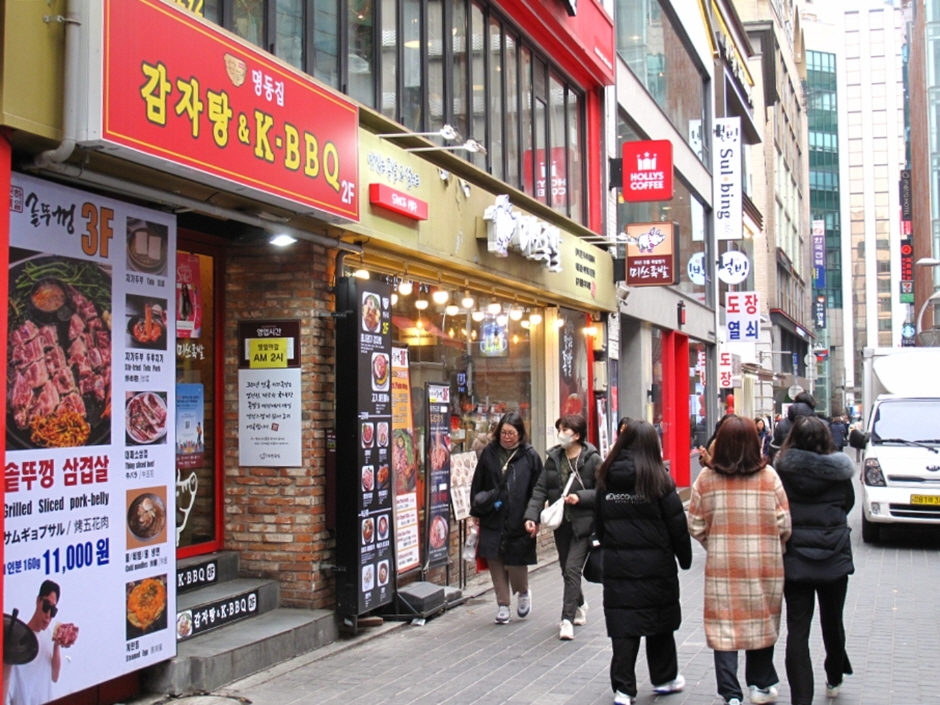
This restaurant specializes in Jokbal (Braised pigs' feet) and Bossam (Napa wraps with pork), both of which are served with vegetable wraps and salad. Jokbal (Braised pigs’ feet) is prepared by braising pigs' feet in spiced stock, a process that removes excess fat, enhances the flavor, and gives the meat a chewier texture. Each order of Jokbal (Braised pigs' feet) is accompanied by Kongnamulkimchiguk (Bean sprout and kimchi soup), to which Kalguksumyeon (Noodles) are added. For those who find the dishes too spicy, the restaurant offers a self-serve Jumeokbap (Riceball), featuring laver flakes, pickled radish, and mayonnaise to cool the palate.
Sulla-gil Yeah Café & Bibi (순라길 예 & 비비)
6.8Km 2025-01-23
55 Seosulla-gil, Jongno-gu, Seoul
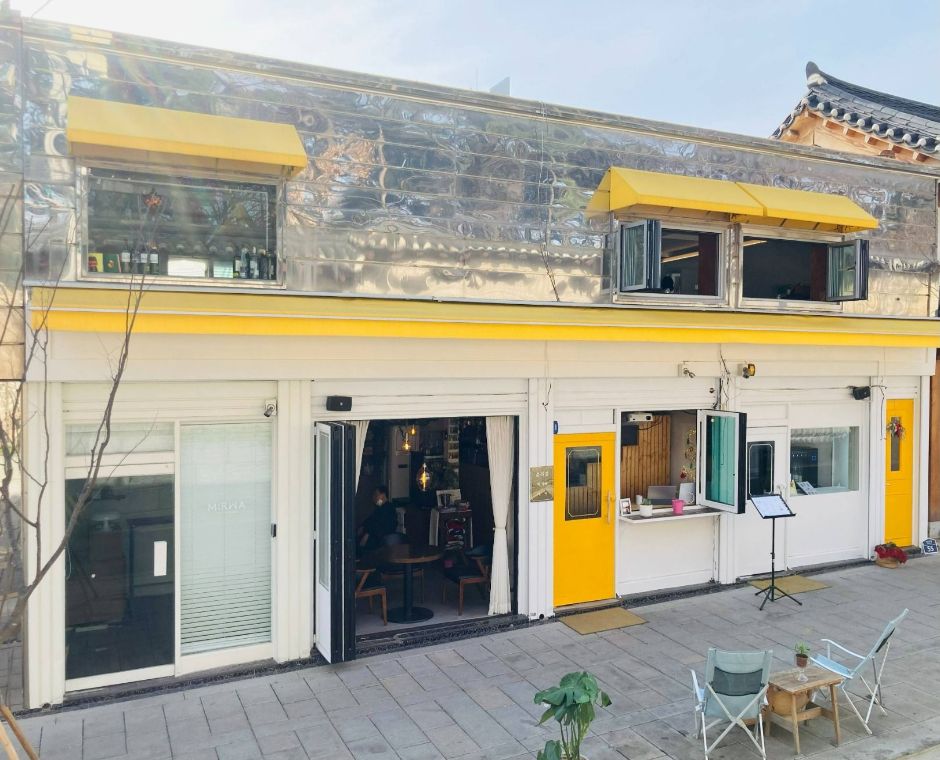
Situated in Sulla-gil, the Sulla-gil Yeah Café & Bibi is a roaster café where each bean is handpicked. It also offers a range of wine selections. The café is a perfect place to relax after exploring downtown Seoul. The cozy atmosphere of the café with the added charm of the stone wall visible from café, makes visitors feel at ease and relaxed. The evenings here turn into a music and movie session, adding a lively atmosphere to the space.
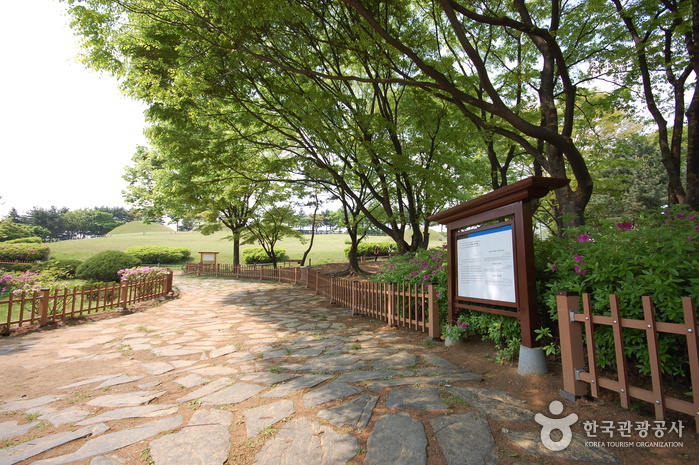
Seoul Bangidong Ancient Tombs (서울 방이동 고분군)
6.9Km 2022-12-29
219, Ogeum-ro, Songpa-gu, Seoul
The ancient tombs in Bangi-dong were discovered during the land readjustment project of Jamsil-jigu District in 1975. A total of eight ancient tombs were excavated until 1976, and the site was restored into a park in 1983. The Bangi-dong area was originally a low line of hills with an altitude of 30-50 meters above sea level, but it has been made into flatland for urban development purposes. Tomb numbers 1 to 6 lie on the same hill, while tomb no. 7 and 8 are located on another hill a short distance away.
All eight tombs have circular burial mounds. The insides of the a tomb feature a square or rectangular-shaped burial chamber with earthen ground and stone walls, and a passage leading from the tomb entrance to the chamber. However, details of the burial chambers vary by tomb. Most of the tombs had been robbed before the investigation, but a few relics such as plates and pots have been excavated. At the time of excavation, the relics were presumed to have come from the Baekje dynasty (18 BC-660 AD), but it is now estimated that they date back to the Unified Silla Period (676-935 AD).
Bank of Korea Money Museum (화폐박물관)
6.9Km 2024-03-18
39 Namdaemun-ro, Jung-gu, Seoul
This Renaissance-style three-story stone building is the museum of the Bank of Korea. The older Bank of Korea was established as the central bank of the Korean Empire in 1909 and has been designated as a National Historical Site. During the Japanese colonial period, the bank was renamed the Bank of Joseon, and the building was used as the main and head office of the Bank of Korea until 2001. The building has been used as the nation’s Money Museum since June 2001 in celebration of the 50th anniversary of the Bank of Korea. The museum has 13 exhibition rooms on two floors, with one basement floor and two above-ground floors. It holds special exhibitions of various currency and art collections to provide domestic and foreign visitors with the opportunity to enjoy the history and culture of currency. Visitors can learn about the Bank of Korea and the central banking system, as well as how to identify counterfeit notes and how money is produced and circulated. It is also a good place for children to learn about currencies from around the world. Advance reservations are required, and parking is not available. The museum can easily be reached via subway by getting off at Hoehyeon Station (Seoul Subway Line 4) and exiting through Exit 7.
 English
 한국어
한국어 日本語
日本語 中文(简体)
 Deutsch
 Français
 Español
 Русский


