Ichon Hangang Park (이촌한강공원)
7.7Km 2025-10-23
62 Ichon-ro 72-gil, Yongsan-gu, Seoul
+82-2-3780-0551
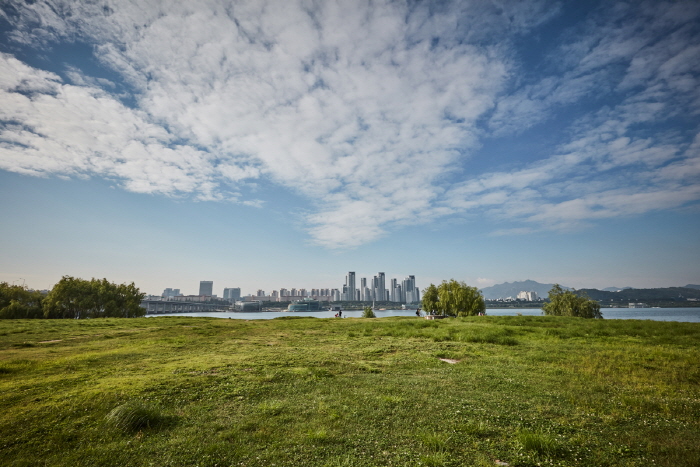
Ichon Hangang Park is built along the Hangang Park in Yongsan. From the park, one can see the Hangang River up close, and one can also find sports facilities like soccer fields, jokgu fields, inline skating rink, water sports facilities, bicycle paths, as well as a nature learning center built around a restored wetland and a lawn. One can follow the Hangangdaegyo Bridge to enter into the Nodeulseom Island, an island in the middle of the river.
◎ Travel information to meet Hallyu’s charm - TV series "Sisyphus: The Myth"
This park was featured in the TV series "Sisyphus: The Myth" as the setting where Seo Hae (played by Park Shin-hye) reflected on bittersweet memories with her father. Its expansive grounds make it an ideal spot for leisure activities such as walking, picnicking, and cultural events.
Gwanaksan Mountain Nakseongdae Park (관악산 낙성대공원)
7.7Km 2021-07-16
77, Nakseongdae-ro, Gwanak-gu, Seoul
+82-2-879-6525
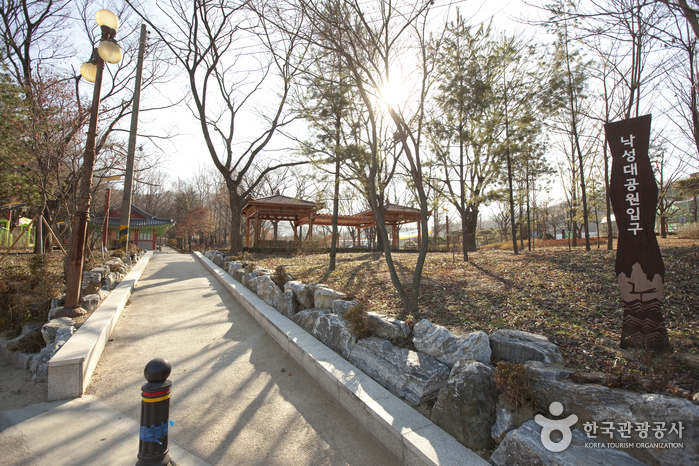
Nakseongdae Park was built as a tribute to General Kang Gam-chan (948-1031) of the Goryeo dynasty. In 1973, the city of Seoul reorganized the birthplace of General Kang, resulting in changes to the park. Located inside the park are Anguksa Shrine, the general’s birthplace, and a three-story stone pagoda, which was made during the Goryeo dynasty. The 4.48-meter-high pagoda is made of granite, and is called “Kang Gam-chan Tap (pagoda)” or “Kang Gam-chan Nakseongdae Tap”.
*Anguksa Shrine
Anguksa is a shrine built in 1974 emulating the wooden architecture style of the Goryeo era. The shrine has high ceilings and houses the portrait of General Kang Gam-chan. The shrine is located on the road leading to the back gate of Seoul National University and has become a popular place in the area.
*Nakseongdae Yuji
Nakseongdae Yuji is the birthplace of General Kang Gam-chan and the original location of the three-story pagoda. During the maintenance of Nakseongdae area in 1973, the pagoda was moved into the vicinity of Anguksa Shrine, and a two-meter tall monument was erected in its original location to mark the historical significance of the site.

Namsan Outdoor Botanical Garden (남산 야외식물원)
7.7Km 2022-12-16
323, Sowol-ro, Yongsan-gu, Seoul
+82-2-798-3771
Namsan Outdoor Botanical Garden opened its doors on February 18, 1997 in Hannam-dong, where the residential complex for foreigners once stood before it was demolished in 1994. Covering an area of around 59 ㎡, it is divided into 13 themed gardens with a total 117,132 plants from 269 species. Among this diversity, 60,912 plants from 129 species are tree types and 56,220 plants from 140 species are grass types.
Gwanak Kang Gam-chan Festival (관악강감찬축제)
7.9Km 2025-07-11
77 Nakseongdae-ro, Gwanak-gu, Seoul
+82-2-828-5765
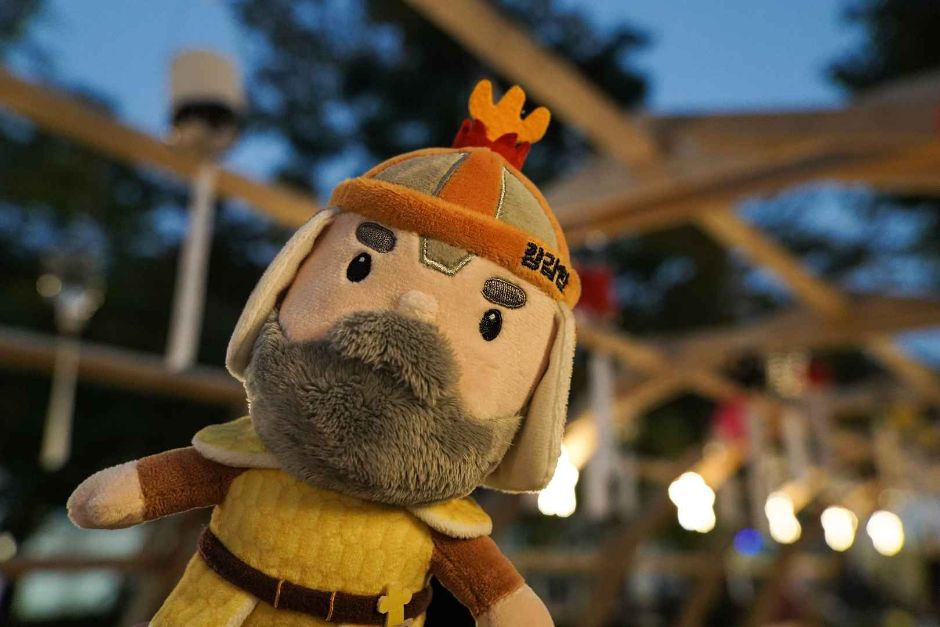
The Gwanak Gang Gam-chan Festival is a historical and cultural event held to honor the patriotic spirit of General Gang Gam-chan, a famous general from the Goryeo Dynasty. The festival is known for its impressive night events, fitting for the location named after a falling star, and features a variety of parades and performances.
◎ Gang Gam-chan and Nakseongdae
General Gang Gam-chan of Goryeo is said to have been born at the place where the fourth star of the Big Dipper fell. This place is called Nakseongdae, which means “the place where the star fell.”

Olympic Park (올림픽공원)
7.9Km 2023-10-19
424 Olympic-ro, Songpa-gu, Seoul
+82-2-410-1114
Olympic Park is an impressive leisure facility in which historic remains from the Baekje era share space with modern, state-of-the-art sports stadiums, an eco-friendly forest, and spacious grass fields. The legacy of the 1988 Seoul Olympics, the park not only houses the country’s largest sports arena, but has also become a place where Seoul residents come to relax and unwind.
Spread across approximately 1.45 million square meters, Olympic Park encompasses the land that was once Mongchontoseong Fortress and Mongchonhaeja (manmade lake) from the early Baekje period. The park is divided into several zones, including a leisure sports park, a cultural art park, an eco-park, and the History Experience Park dedicated to the area’s rich historic heritage.
Because Olympic Park is so large and takes over three hours to explore, visitors are advised to familiarize themselves with entrances and exits and travel routes before they start. To further save time, visitors can ride the Road Train (“Hodori Train”) located next to Peace Square.
Sejong University Museum (세종대학교 박물관)
7.9Km 2022-09-16
209, Neungdong-ro, Gwangjin-gu, Seoul
+82-2-3408-3876
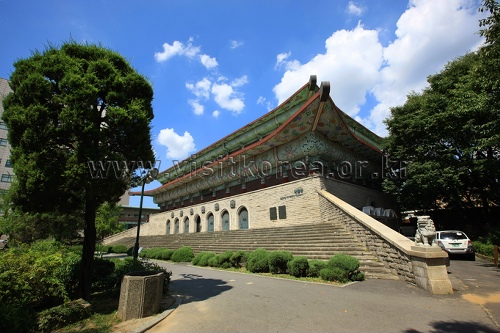
Sejong University Museum exhibits folk art, wooden crafts, clothing, accessories, pottery, paintings and calligraphy collected for over 40 years by the couple who founded the present day Sejong University, Dr. Ju Young-ha and Dr. Choi Ok-ja. This museum has its origins in the Soodo Gallery, which was built in Chungmuro, the campus’ original location, in 1959. Needing more space to house additional artifacts, the museum moved to its current location, which first opened on May 5, 1973 in a four-story concrete building inspired by traditonal tower design from the Baekje era. This building was later expanded on May 20, 1977.
After the university’s name was changed to Sejong University in 1979, the museum was also renamed the Sejong University Museum. The museum showcases unique artifacts to both scholars and students from home and abroad in contribution to the research of Korea’s culture, arts, and archeology.
Seoul Children's Grand Park (서울어린이대공원)
7.9Km 2024-11-28
216 Neungdong-ro, Gwangjin-gu, Seoul
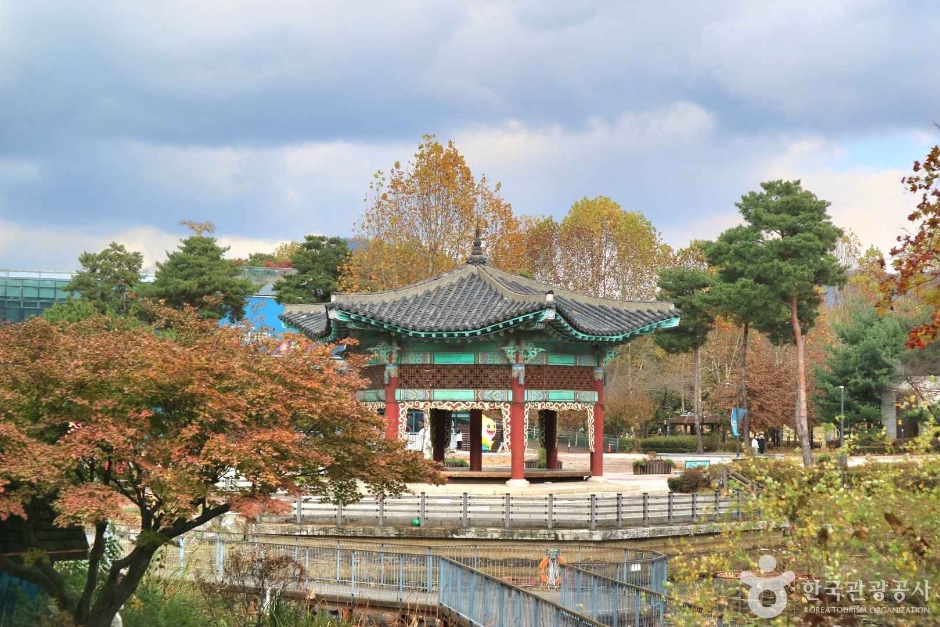
Opened in May 1973, Seoul Children’s Grand Park is a theme park situated among green forests and fields with a total area of 56,552㎡. It contains a zoo, arboretum, amusement park, and performance venues. Seoul Children’s Grand Park has been a beloved part of Seoul, a paradise for children and a living venue for education. For grown-ups, it functions as an area of refuge and culture within the city. The Grand Park offers facilities that everyone in the family can enjoy, so everyone can find their own fun in the Grand Park.
Hyosajeong Pavilion (효사정)
8.0Km 2025-01-13
55, Hyeonchung-ro, Dongjak-gu, Seoul
+82-2-820-9848
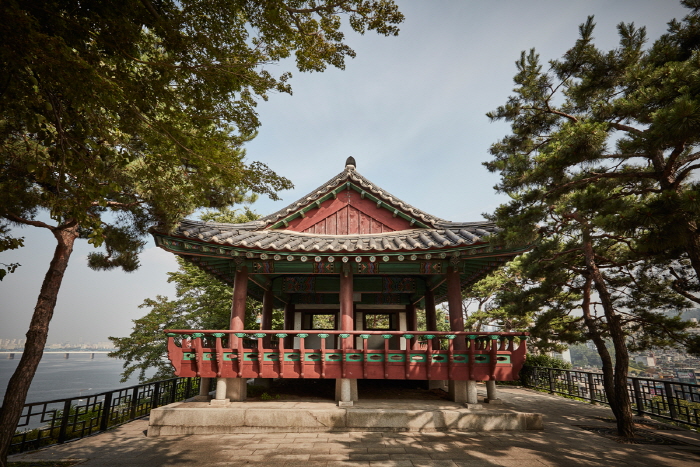
Hyosajeong Pavilion is where Nohan, the second vice premier of the Joseon dynasty during King Sejong and King Sejo’s reign, stayed. After he lost his mother, he built the pavilion to mourn at her grave while still being able to see his father’s grave in Gaeseong to the North. His brother-in-law, then Minister of the Interior, Gang Sa-deok named the pavilion “Hyosajeong,” which means pavilion of filial piety.
In order to find the original location of the pavilion, poems by Jeong Inji and Seo Geojeong and an old map of Korea were referenced, but the pavilion was not found because the surrounding landscape had changed too much. As a result, a location was selected and the pavilion was reconstructed at its current location. The house is 3 kan* in the front and 2 kan* on the side. The roof is a hip-and-gable roof. The pavilion has one room with under floor heating and a railing around the pavilion
(* kan: a traditional measurement that corresponds to the space between two columns)
Seoul Children's Museum (서울상상나라)
8.0Km 2024-03-07
216 Neungdong-ro, Gwangjin-gu, Seoul
+82-2-6450-9500
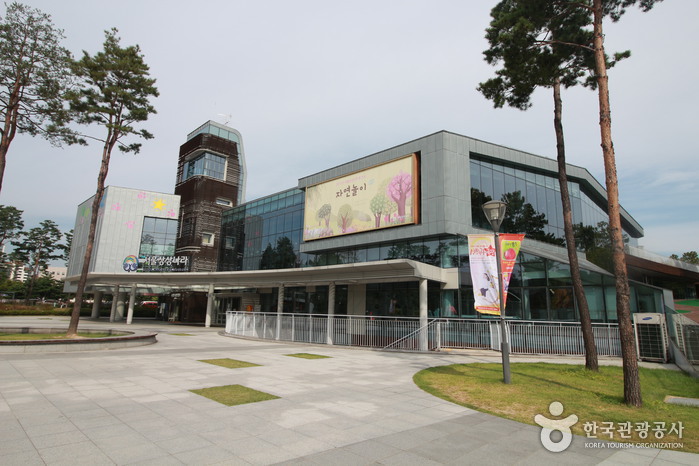
Seoul Children's Museum is a multifaceted cultural space established in 2013 to foster children's creativity and imagination. Spanning from the basement floor to the third floor, it boasts over a hundred interactive exhibits. These exhibits cover a wide range of areas including art, imagination, thought, and physical play, organized into ten distinct zones. It's a popular destination where children can learn and expand their imagination through play. Advanced booking is required, and reservations can be made through the website.
Gyeongnidan Street (경리단길)
8.0Km 2023-01-18
Itaewon-dong, Yongsan-gu, Seoul
Gyeongnidan Street refers to the 937-meter-long road from the main gate of MND Financial Management Corps to Grand Hyatt Seoul as well as all of the nearby streets and alleys. It is called Gyeongnidan Street because the Korean army's central finance corps, or Gyeongnidan in Korean, used to be located here, and has gained fame for presenting a different vibe than that of Itaewon despite being part of Itaewon-dong. Gyeongnidan Street is an area of culture and youth where people are able to enjoy diverse and special cuisine and dishes at unique restaurants and cafes. Although it resembles a typical neighborhood of Seoul, it features foreigners who have come from many different places around the globe living in natural harmony with Korean locals, which exudes a unique, exotic atmosphere. It is fun to walk along the various streets and alleys to discover novel and sophisticated shops.
 English
 한국어
한국어 日本語
日本語 中文(简体)
 Deutsch
 Français
 Español
 Русский


