![Bando Camera - Myeong-dong Chungmu [Tax Refund Shop] (반도카메라 명동충무)](http://tong.visitkorea.or.kr/cms/resource/63/2878663_image2_1.jpg)
Bando Camera - Myeong-dong Chungmu [Tax Refund Shop] (반도카메라 명동충무)
6.5Km 2024-04-17
16, Samil-daero 4-gil, Jung-gu, Seoul
-

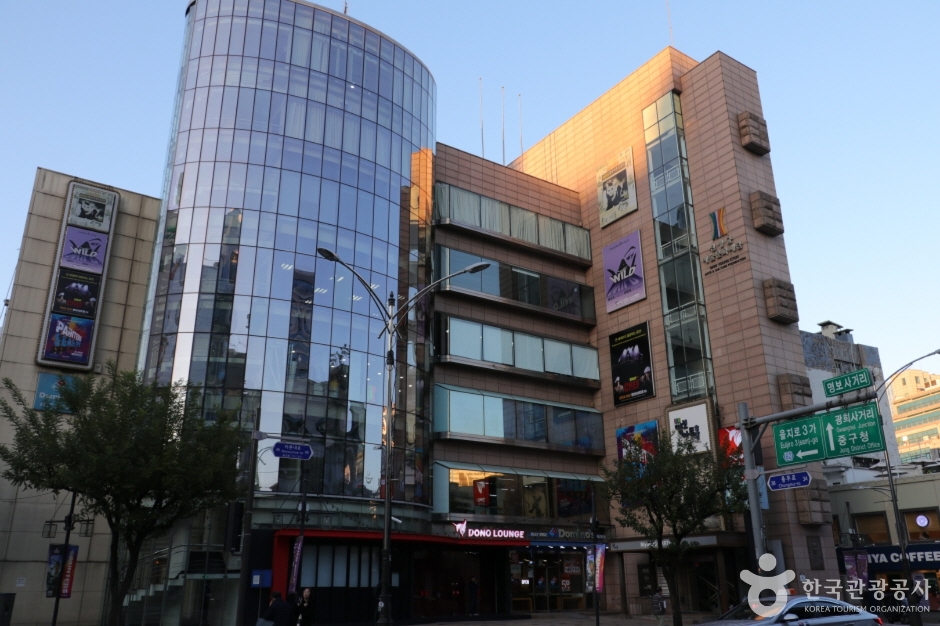
Myungbo Art Hall (명보아트홀)
6.5Km 2025-04-15
47 Mareunnae-ro, Jung-gu, Seoul
Located in Euljiro 3(sam)-ga, the heart of Seoul, Myungbo Art Hall is a cultural complex that consists of a professional theatre hall. Renovated from Myungbo Theater in 2009, Myungbo Art Hall is equipped with state-of-the-arts lighting and sound equipment that guarantees high-quality theatre experience for the audience. In addition, the hall also has comfortable seats along with other amenities for the audience's convenience. Myungbo Art Hall aims to globalize Korean performance culture by creating a variety of content that incorporate Korean theatre with tourism. This area is also where the house of Admiral Yi Sun-sin was located, which is honored with a memorial plaque listing his accomplishments.
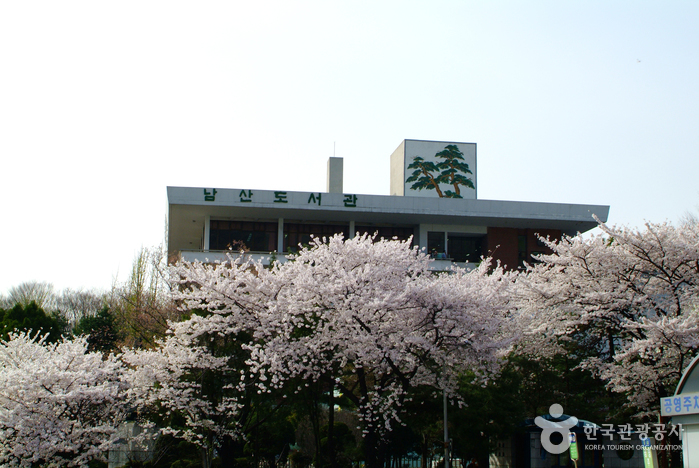
Namsan Library (서울특별시교육청 남산도서관)
6.5Km 2021-07-07
109, Sowol-ro, Yongsan-gu, Seoul
+82-2-754-7338
Namsan Library opened as Kyeongseong Prefectural Library in 1922 as a public library in Myeong-dong, Jung-gu, Seoul. The library was moved to the current site in 1964 with a newly built building and its name changed to Namsan Library in 1965. This concrete building was built in 1964 and was designed by architect Lee Haeseong. It was designated as Seoul Future Heritage in 2013, credited for its preservation value.
It is comprised of 19 rooms and educational areas including the Humanity and Social Science Hall, Nature Science Hall, Language and Literature Hall, Electronic Information Room and more. Since opening, the library has collected nearly 500,000 books, 16,000 non-book materials, 700 continuing resources, and other special materials like old books, oriental books (including Japanese books), and more. Namsan Library also operates a reading treatment program unique to this library that began in 2005. The program includes remodeling of reading consultation room, training for people in charge of reading treatment, workshops, programs for individuals and groups. Also, various exhibitions, lectures, shows, cultural classes and other events are available all year long to enhance lifelong education.
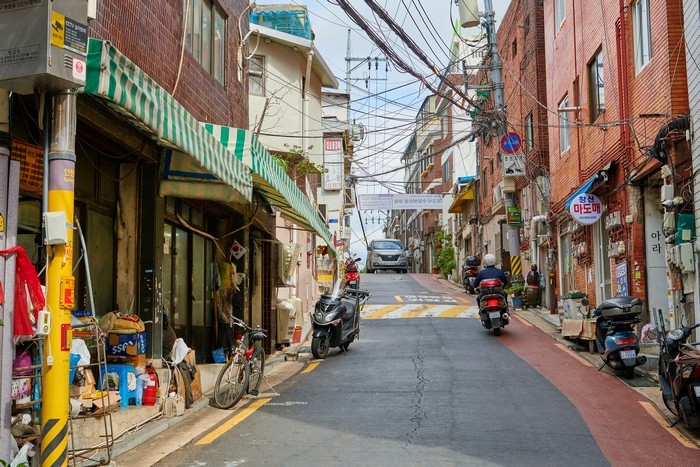
Alleys of Changsin-dong (창신동골목길)
6.6Km 2025-11-05
38, Jibong-ro 11-gil, Jongno-gu, Seoul
K-movie <PARASITE> - A town full of nostalgia
On the day Kitaek's family returned home, the torrential rain flowed ferociously in streams. The alleys of Changsin-dong, with its narrow and steep stairs, were a good backdrop for visually representing the condition of the Kitaek’s family, who were about to fall. Changsin-dong is a warm and charming neighborhood where traces of the 70s and 80s can be felt.
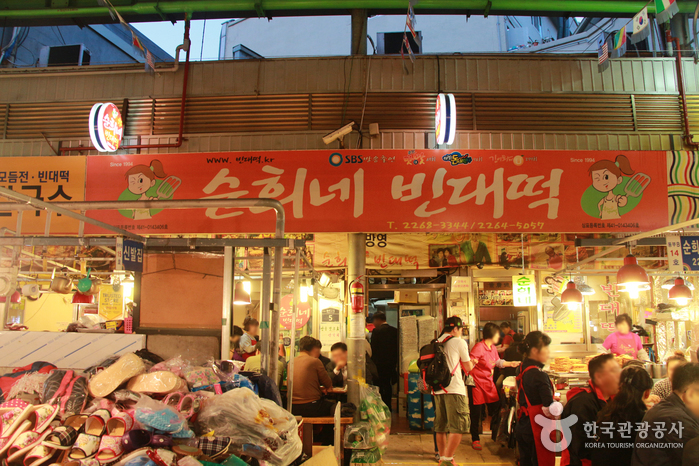
Soonheenae Bindaetteok (순희네빈대떡)
6.6Km 2024-03-20
5 Jong-ro 32-gil, Jongno-gu, Seoul
+82-2-2264-5057
Soonheenae Bindaetteok is a stall located in Gwangjang Market known for its mung bean pancakes and meatballs. Bindaetteok (mung bean pancake) is a dish made by grinding mung beans and mixing them with kimchi, bracken, and ground pork, then flattening and frying the mixture. Here, they grind mung beans on a millstone and fry the bindaetteok on the spot, resulting in a crispy and savory taste. The secret soy sauce dip complements the bindaetteok perfectly. Situated within the traditional market, the atmosphere is lively.
![Saeki P&C [Tax Refund Shop] (세기피앤씨)](http://tong.visitkorea.or.kr/cms/resource/68/2878668_image2_1.jpg)
![Louis Bon - Myeong-dong Branch [Tax Refund Shop] (루이본 명동)](http://tong.visitkorea.or.kr/cms/resource/50/2889050_image2_1.jpg)
Louis Bon - Myeong-dong Branch [Tax Refund Shop] (루이본 명동)
6.6Km 2024-04-22
#101, 37, Toegye-ro 20-gil, Jung-gu, Seoul
-
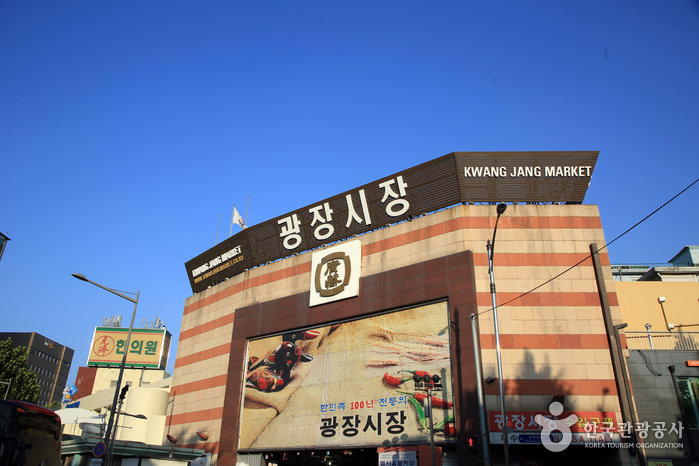
Gwangjang Market (광장시장)
6.6Km 2024-07-08
88, Changgyeonggung-ro, Jongno-gu, Seoul
+82-2-2267-0291
Gwangjang Market was the first permanent market in Korea and continues to thrive as a popular tourist destination today. The name Gwangjang means "to gather from afar and keep altogether." The market began as a small trading center that brought in goods from nearby regions, but has now grown into a large wholesale market selling a variety of goods, including upholstery, imported goods, groceries, dried fish, traditional goods, and more. The most popular section of the market is the food street connected to the East Gate, North Gate 2, and South Gate 1. The food street caters to a wide range of patrons due to the plethora of menus available. It is also one of the most recommended tourist attraction for international travelers.
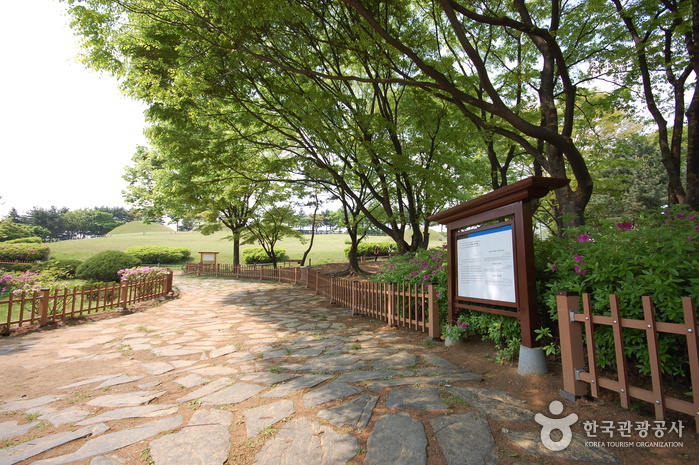
Seoul Bangidong Ancient Tombs (서울 방이동 고분군)
6.6Km 2022-12-29
219, Ogeum-ro, Songpa-gu, Seoul
+82-2-2147-2800
The ancient tombs in Bangi-dong were discovered during the land readjustment project of Jamsil-jigu District in 1975. A total of eight ancient tombs were excavated until 1976, and the site was restored into a park in 1983. The Bangi-dong area was originally a low line of hills with an altitude of 30-50 meters above sea level, but it has been made into flatland for urban development purposes. Tomb numbers 1 to 6 lie on the same hill, while tomb no. 7 and 8 are located on another hill a short distance away.
All eight tombs have circular burial mounds. The insides of the a tomb feature a square or rectangular-shaped burial chamber with earthen ground and stone walls, and a passage leading from the tomb entrance to the chamber. However, details of the burial chambers vary by tomb. Most of the tombs had been robbed before the investigation, but a few relics such as plates and pots have been excavated. At the time of excavation, the relics were presumed to have come from the Baekje dynasty (18 BC-660 AD), but it is now estimated that they date back to the Unified Silla Period (676-935 AD).
 English
 한국어
한국어 日本語
日本語 中文(简体)
 Deutsch
 Français
 Español
 Русский


