![Olive Young - Nambu Bus Terminal Branch [Tax Refund Shop] (올리브영 남부터미널)](http://tong.visitkorea.or.kr/cms/resource/42/2888942_image2_1.jpg)
Olive Young - Nambu Bus Terminal Branch [Tax Refund Shop] (올리브영 남부터미널)
5.3Km 2024-04-18
283, Hyoryeong-ro, Seocho-gu, Seoul
-

Samsung Medical Center (삼성서울병원)
5.4Km 2025-10-23
81 Irwon-ro, Gangnam-gu, Seoul
Samsung Medical Center (SMC) has been at the forefront of change in the Korean medical field since its foundation in 1994. Guided by its new vision, "We aspire to be the frontier of future medicine," SMC is committed to delivering excellent treatment results for patients with severe and complex diseases by using the latest medical technologies. SMC's International Healthcare Center (IHC) operates an outpatient clinic dedicated exclusively to foreign patients.
![Lotte Mart - Seocho Branch [Tax Refund Shop] (롯데마트 서초점)](http://tong.visitkorea.or.kr/cms/resource/56/2887956_image2_1.jpg)
Lotte Mart - Seocho Branch [Tax Refund Shop] (롯데마트 서초점)
5.4Km 2024-04-22
12, Seocho-daero 38-gil, Seocho-gu, Seoul
-
Asan Medical Center (서울아산병원)
5.4Km 2025-10-23
(Pungnap-dong), 88 Olympic-ro 43-gil, Songpa-gu, Seoul
Opened in June 1989, Asan Medical Center is the largest tertiary hospital in Korea with 2,764 beds. In 2023, we treated an average of 13,260 outpatients and 2,539 inpatients per day, and performed 70,892 surgeries throughout the year.
With three specialty hospitals–Cancer Institute, Heart Institute, and Children's Hospital–and more than 50 specialized centers, we lead the world in cancer, organ transplantation, and cardiac care. In recognition of our efforts, we have topped the list of Korea's Most Admired Hospitals for 18 consecutive years and ranked NO. 1 in Korea for six consecutive years in U.S. Newsweek's World's Best Hospitals.
As a "quarternary hospital" serving critically ill patients from Korea and abroad who come to us as their last hope, Asan Medical Center treats more than 20,000 international patients from around 100 countries, including the United States, United Arab Emirates, and Mongolia. Medical professionals from developed countries visit us to learn our advanced medicine. Over the past decade, more than 3,700 professionals from nearly 90 countries have visited us to learn the latest medical techniques.
Ceramic Palace Hall (세라믹 팔레스 홀)
5.4Km 2024-03-04
90 Irwon-ro, Gangnam-gu, Seoul
Ceramic Palace Hall, situated on the second basement floor of the Milal Art Center, is adorned with aesthetically pleasing pastel-colored ceramic walls. Designed for acoustic excellence, it ensures that every instrument played is heard with clarity. Primarily, it serves as a venue for various concerts, with a particular emphasis on classical music, including piano recitals, chamber music festivals, and violin concerts. Additionally, it offers venue rental services, catering to a range of events.
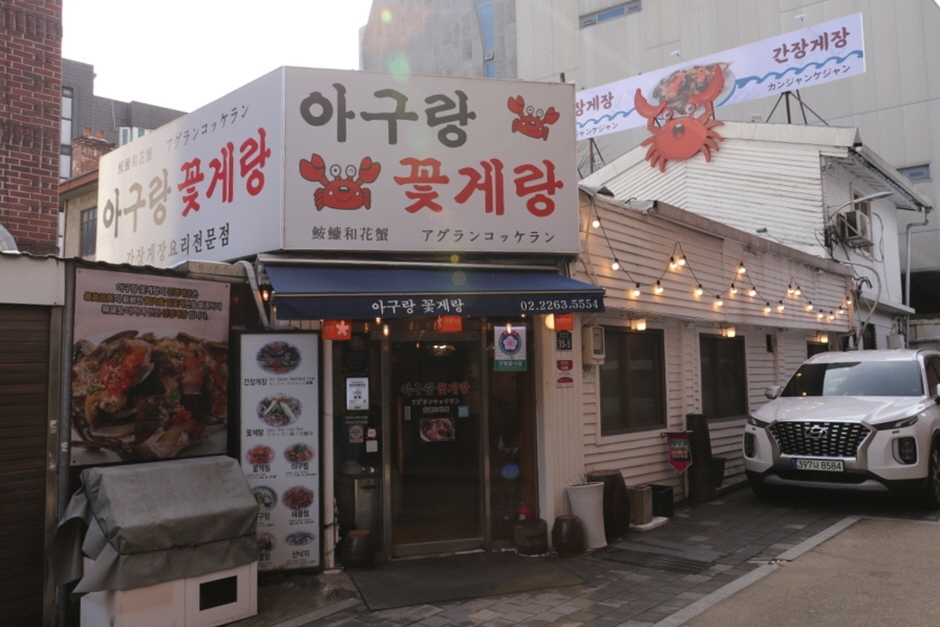
Agurang Kkotgerang (아구랑꽃게랑)
5.4Km 2024-03-08
35-7, Dongho-ro 24-gil, Jung-gu, Seoul
+82-2-2263-5554
This is a seafood restaurant specializing in Ganjanggejang (Soy sauce marinated crab). The crab is plump and seasoned to perfection, making it an excellent accompaniment to steamed rice. The restaurant’s Gulgukbap (Oyster and rice soup), a winter favorite, is enhanced with seaweed fulvescens, which is rich in vitamins and iron, making it beneficial for those suffering from anemia. Side dishes include Cheongpomukmuchim (Mung bean jelly salad), Kimchi, and Kongnamulmuchim (Bean sprout salad). Another popular item on the menu is the spicy Agutang (Monkfish soup), filled with springy monkfish.
Song Won (송원)
5.4Km 2024-03-15
35-4 Dongho-ro 24-gil, Jung-gu, Seoul
+82-2-2275-3118
Song won is a Korean restaurant located in Jangchung-dong Gourmand Alley. They specialize in high-quality Korean beef barbecue such as bulgogi and galbi, seasoned with a variety of 20 different natural ingredients. Additionally, they offer traditional Korean dishes like hot stone pot rice and noodles. Across the street, visitors can find Jangchung-dong Jokbal Street, and both Jangchungdan Park and Jangchung Gymnasium are within walking distance.
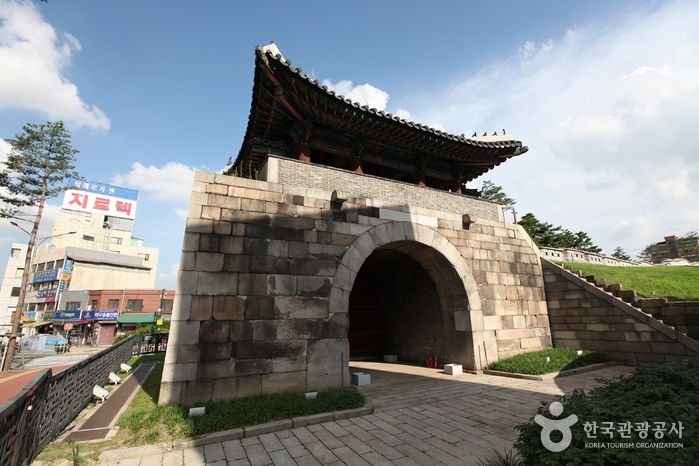
Gwanghuimun Gate (광희문)
5.4Km 2021-02-24
344, Toegye-ro, Jung-gu, Seoul
+82-2-3700-3900
Gwanghuimun Gate is said to have been originally constructed in 1396, the 5th year of King Taejo, at the southeast of the capital city. It was often referred to as Sugumun Gate (water channel gate) and was actually used as a Sigumun, literally meaning “corpse gate,” as funeral processions passed through this gate when exiting to the east.
During the Imjin War (1592-1598), the fortress gate was destroyed to such a degree that it made finding the original location close to impossible. Nevertheless, reconstruction efforts were started in 1711 (37th year of King Sukjong) and the gate was restored together with the gate's watchtower. Gwanghuimun Gate remained intact even when the fortress walls were demolished to build tram tracks during the Japanese occupation, but it was later damaged during the Korean War and left neglected. In 1975, restoration work was carried out to relocate Gwanghuimun Gate to a site 15 meters south of its original location since it stood in the middle of the road.
![LG Best Shop - Songpa Branch [Tax Refund Shop] (엘지베스트샵 송파점)](http://tong.visitkorea.or.kr/cms/resource/25/2879325_image2_1.jpg)
LG Best Shop - Songpa Branch [Tax Refund Shop] (엘지베스트샵 송파점)
5.4Km 2024-04-18
476, Songpa-daero, Songpa-gu, Seoul
-
![Ave Sports - Dapsimni Branch [Tax Refund Shop] (아베스포츠 답십리)](http://tong.visitkorea.or.kr/cms/resource/11/2889011_image2_1.jpg)
Ave Sports - Dapsimni Branch [Tax Refund Shop] (아베스포츠 답십리)
5.4Km 2024-04-23
209, Dapsimni-ro, Dongdaemun-gu, Seoul
-
 English
 한국어
한국어 日本語
日本語 中文(简体)
 Deutsch
 Français
 Español
 Русский


