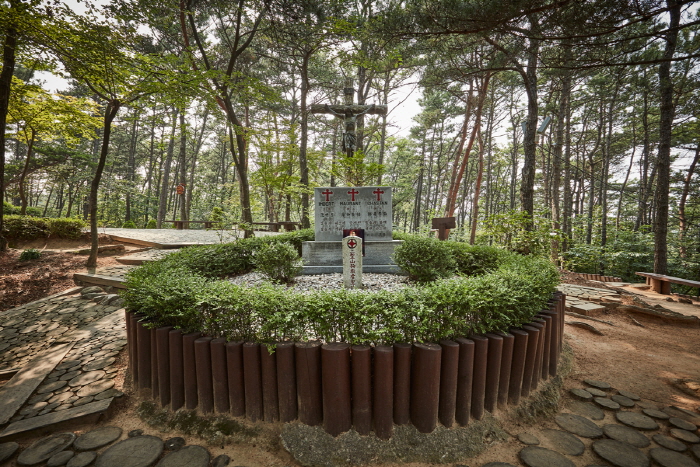
Samseongsan Holy Ground (삼성산성지)
12.0Km 2021-08-17
454-16, Hoam-ro, Gwanak-gu, Seoul
During the Gihae Persecution of 1839, three French Catholic priests were sentenced to death for spreading Catholicism in Korea. Saint Laurent Joseph Marius Imbert (Bishop), Saint Pierre Philibert Maubant (Priest), and Saint Jacques Honore Chastan (Priest) were beheaded on September 21, 1839 at Saenamteo, currently known as the Saenamteo Catholic Holy Place of the Martyrs, and their bodies were buried at Samseongsan Mountain and later transferred to the grotto of Myeondong Cathedral.
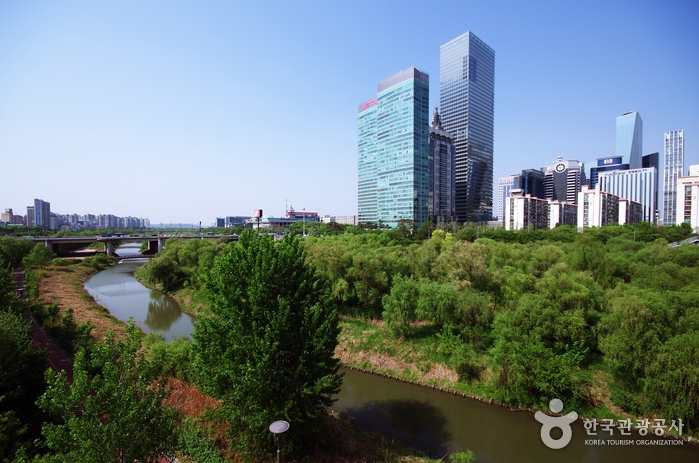
Yeouido Saetgang Ecological Park (여의도샛강생태공원)
12.0Km 2021-06-14
48, Yeouidong-ro, Yeongdeungpo-gu, Seoul
Yeouido Saetgang Ecological Park in central Seoul was the first ecological park in Korea, opened on September 25, 1997. It houses a wide variety of flora and fauna, including kestrels (Natural Monument No. 323), herons, and minnows. There is a 6 kilometer-long promenade that crosses the park, and information signs explaining various flower and plant species throughout the park.

Sangchonjae House (상촌재)
12.0Km 2025-11-06
12-11 , Jahamun-ro 17-gil, Jongno-gu, Seoul
Sangchonjae House, run by the Jongno Cultural Foundation, is a traditional hanok cultural space located in Sejong Village, Ogin-dong, Jongno-gu, and operates various cultural Korean programs such as exhibitions, educational experiences, and events to fully experience Korea's four seasons. The name Sangchonjae was conceived from the old name of Sejong Village, the western part of Gyeongbokgung Palace and the birthplace of King Sejong. The house reflects the lifestyle of an ordinary peasant during the Joseon dynasty. It consists of three buildings: the main building, the guesthouse known as sarangchae, and the annex. There is an experience center indoors offering tea ceremonies and traditional game experiences.
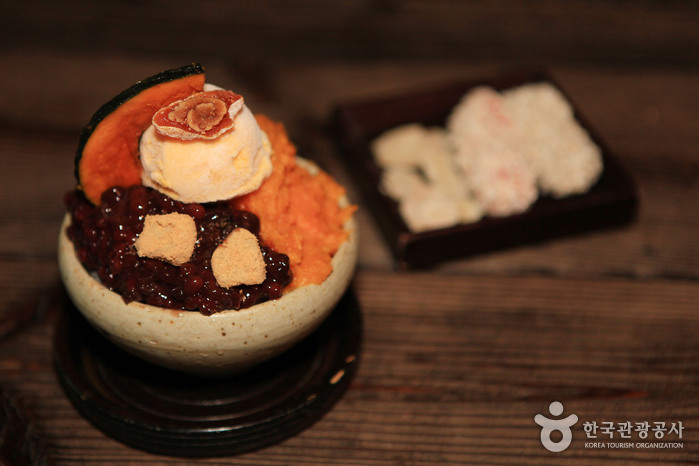
Sooyeon Sanbang (수연산방)
12.1Km 2025-10-23
8 Seongbuk-ro 26-gil, Seongbuk-gu, Seoul
Sooyeon Sanbang is a traditional tea house located in Seongbuk-dong. It was originally built during the Japanese colonial period and was the hanok of the literary figure Lee Taejun. Today, it is operated as a tea house by the writer's granddaughter. The name Sooyeon Sanbang means "a house where literati gather in the mountains." Visitors can enjoy traditional teas such as daechucha (jujube tea) and ssanghwacha (medicinal herb tea), along with snacks like injeolmi (bean-powder-coated rice cake).
![Namhansanseong Provincial Park [UNESCO World Heritage] (남한산성도립공원 [유네스코 세계문화유산])](http://tong.visitkorea.or.kr/cms/resource/56/2612856_image2_1.jpg)
Namhansanseong Provincial Park [UNESCO World Heritage] (남한산성도립공원 [유네스코 세계문화유산])
12.1Km 2024-02-29
731 Namhansanseong-ro, Namhansanseong-myeon, Gwangju-si, Gyeonggi-do
Namhansanseong was a fortress that protected the southern approaches to the capital during the Baekje kingdom (18 B.C. – 660 A.D.) and the Joseon dynasty (1392-1897). During the Qing invasion of Joseon in 1636, King Injo of Joseon (reigned 1623-1649) sought refuge here and constructed Haenggung, a temporary palace. Subsequently, it became the administrative center of the Gwangju region, and today, it is a site where many cultural properties are preserved.
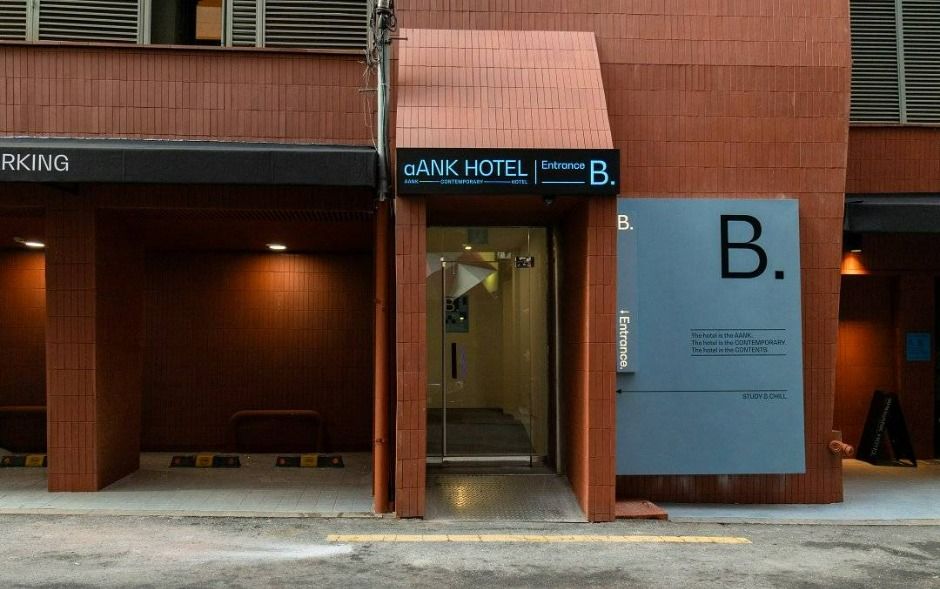
The Hyoosik Aank Hotel Sinchon (더휴식 아늑호텔 신촌점)
12.2Km 2025-04-09
49 Yonsei-ro 2-gil, Seodaemun-gu, Seoul
The Hyoosik Aank Hotel Sinchon welcomes guests with a neat and modern atmosphere. Each room is tailored to suit every guest's need with comfort as the main priority. The hotel's room types include a standard room, music room, multi-room equipped with Playstation 4, PC room, creative illust room equipped with a drawing tablet, creative piano room, and a business room. The hotel also has a parking lot, guest lounge, coin laundry, and a ping pong table.
Seodaemun Prison History Museum (서대문형무소역사관)
12.3Km 2024-12-02
251 Tongil-ro, Seodaemun-gu, Seoul
Seodaemun Prison was built under the Japanese administration to imprison independence movement activists. It first opened on October 21, 1908 under the name Gyeongseong Prison. Eventually, so many activists were imprisoned that the building had to be expanded. At that time, the name changed to Seodaemun Prison on September 3, 1912. Eighty years later, the prison was turned into Seodaemun Independence Park on August 15, 1992 to commemorate the Korean patriots who were tortured in prison, giving their lives for freedom. Of the many buildings, only seven were preserved for their historical significance, among which three prison buildings and the execution site were designated as a Historic Site. In 1998, the park underwent another transformation into today's Seodaemun Prison History Hall to educate the public on the importance of Korea's independence and the sacrifices of those who fought to achieve it.
Dongnimmun Gate (독립문)
12.3Km 2022-12-15
251, Tongil-ro, Seodaemun-gu, Seoul
Dongnimmun stands at the location originally known as Yeongeun, where envoys were once treated. When a Chinese envoy visited, the King would go out through this door to greet. In 1898, to announce the independence from Japan, Dongnimun was constructed with the fund collected by the citizens. The traces of the past still remain on Dongnimmun with two pillars in front of Dongnimmun being the remains of Yeongeunmun.
The Arc de Triomphe in France can be recalled in comparison to Dongnimmun. Dongnimmun was built using granite with a passageway x_height of 14.28 meters. On the top it is written ‘Dongnimmun’ in Korean with the national flag drawn on each side. On the inner-left side there are stone stairs leading to the attic. The national flower Mugunghwa are planted around Dongnimmun. Now it is surrounded by roads and it is eye-catching to view when passing by.
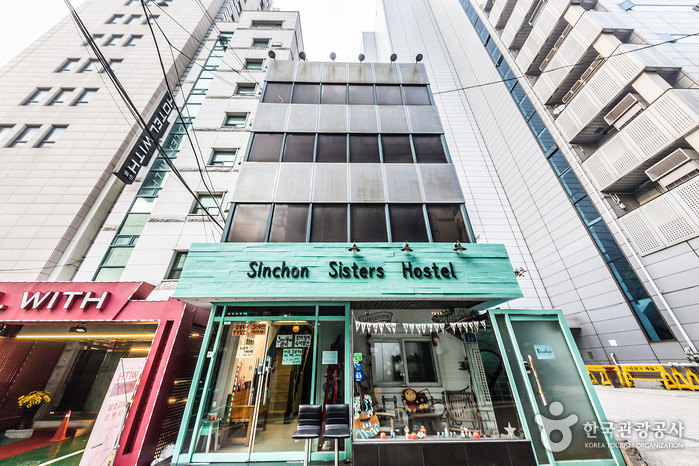
Sinchon Sisters Hostel (신촌 시스터즈)
12.3Km 2024-12-23
24 , Baekbeom-ro 2-gil, Mapo-gu, Seoul
Sinchon Sisters is a friendly guesthouse in Mapo-gu, Seoul, that caters for young travelers. Rooms are for two, three or four people, and each room has its own bathroom. There is no separate dining area, but you can bring food into your room and there’s a microwave for visitors’ use. Washing machines and dryers are also provided (payment needed). Transport is convenient: Sinchon Station and Sogang University Station are a 5 minutes’ walk away, and there are bus stops nearby - including for the airport express bus service. The Hongdae, Hapjeong, Mangwon, and Sangsu areas are all nearby.
Sinchon Dain Dental Hospital (신촌다인치과병원)
12.3Km 2025-10-23
(10th-11th Floors, Grand Plaza), 94 Sinchon-ro, Mapo-gu, Seoul
Our main dental hospital, spanning approximately 1,740 square meters, is conveniently located near Sinchon Station, just a 40-minute drive from both Gimpo International Airport and Incheon International Airport, making it easily accessible for international patients. We are staffed by around 60 specialized medical professionals and equipped with the latest technology, including an in-house laboratory for fast and precise dental work. Our team includes nine expert directors in orthodontics, prosthodontics, conservative dentistry, oral surgery, and periodontology, ensuring comprehensive and systematic care in each specialty. We offer a wide range of advanced procedures for our international patients, including implants, complex extractions, orthodontics, periodontal treatment, and prosthetic care, as well as high-quality neurological and aesthetic treatments.
 English
 한국어
한국어 日本語
日本語 中文(简体)
 Deutsch
 Français
 Español
 Русский


