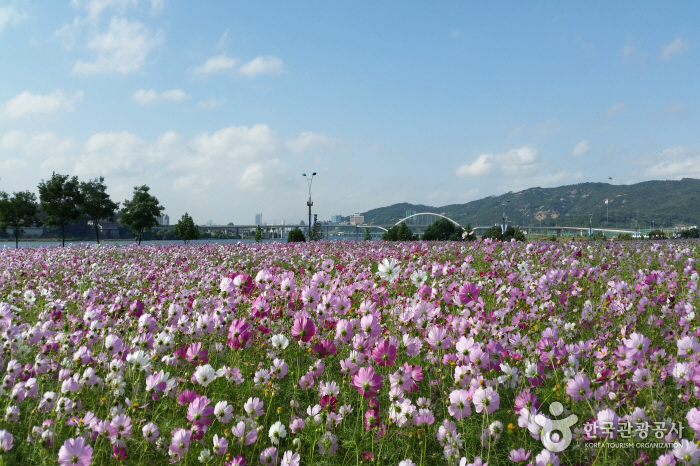
Guri Hangang Park (Cosmos Park) (구리시민한강공원 (코스모스공원))
7.5Km 2021-09-15
Topyeong-dong, Guri-si, Gyeonggi-do
+82-31-550-2474
Guri Hangang Park offers a perfect rest area for visitors where visitors can feel the cool breeze coming off the river and rest amidst the beautiful natural scenery. The park’s bounties of flowers are at their peak in May with field of canola flowers, and in September when the cosmos bloom.

K-medi Spring (한강애봄)
7.5Km 2025-12-09
6th Floor, 63 Dongsomun-ro, Seongbuk-gu, Seoul
HanGang AeBom is a certified agency specializing in attracting international patients, offering customized programs that combine Korea’s advanced medical services with tourism. The agency collaborates with medical institutions to arrange consultations, interpretation, accommodation, and travel itineraries.
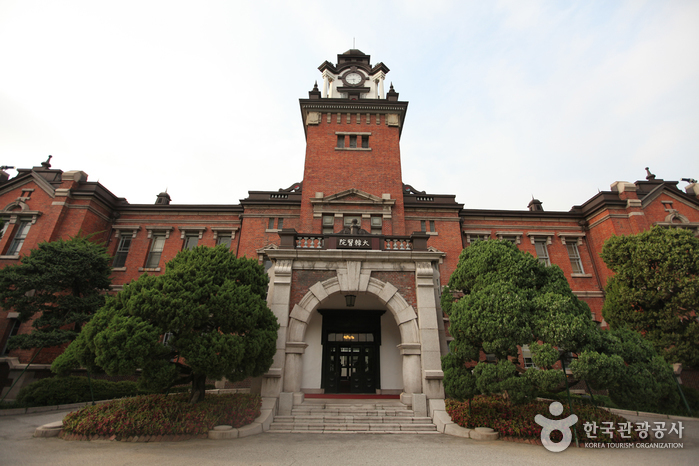
The Museum of Medicine (서울대학교병원의학박물관)
7.5Km 2024-03-18
101 Daehak-ro, Jongno-gu, Seoul
The Museum of Medicine is located in the building of the former Daehan Medical Center, the oldest modern hospital in Korea. It is a medical museum that provides a comprehensive view of the development of modern medicine in Korea, the history of medical devices, and the transformation of Seoul National University Hospital. Through permanent and special exhibitions, the museum showcases medical artifacts and documents related to the history of medicine.
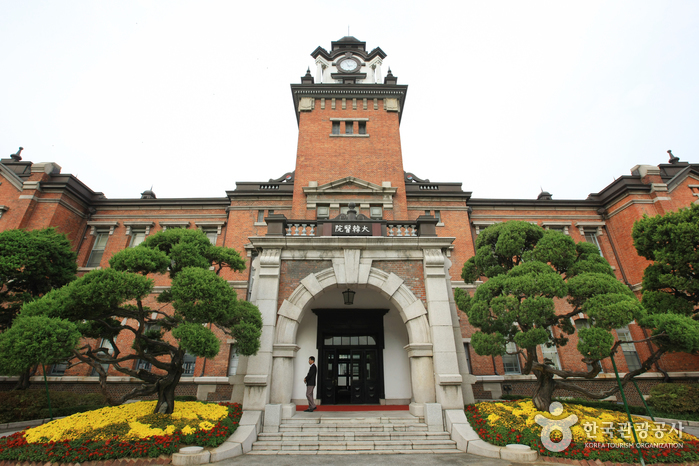
Seoul Daehan Hospital (서울 대한의원)
7.6Km 2021-12-23
101, Daehak-ro, Jongno-gu, Seoul
+82-2-2148-1842
Daehanuiwon (Daehan Medical Center) is an antique two-story brick building within the grounds of Seoul National University Hospital. It was established under the direct administration of the Uijeongbu (State Council), combining the Gwangjewon (under the Home Ministry), Gyeongseong Medical School and the Korean Red Cross Hospital (under the Royal Household).
Built in the Madubong Hill area, this location where Hamchunwon, the outer garden of Changgyeonggung Palace, once stood in 1484 (15th year of King Seongjong), was also once the site of Gyeongmogung Palace, where King Jeongjo enshrined the mortuary tablet of his birth father Crown Prince Sado Seja in 1776 (the year King Jeongjo ascended to the throne).
These places that held importance for the royal family were destroyed as the Japanese built Gyeongseong Empire University in its place. In 1907, with the announcement of the plan to establish Daehan Medical Center, construction began on the main building, seven wards and affiliated buildings. Construction was completed in November 1908.
The Daehan Medical Center opened in Gwangjewon, but upon Japanese colonization in 1910, its name was changed to the Japanese Viceroyalty Hospital. In 1926, it was included as a part of Gyeongseongjeguk University to become a university hospital. Since the liberation of Korea in 1945, it has been a hospital affiliated with Seoul National University.
 English
 한국어
한국어 日本語
日本語 中文(简体)
 Deutsch
 Français
 Español
 Русский


