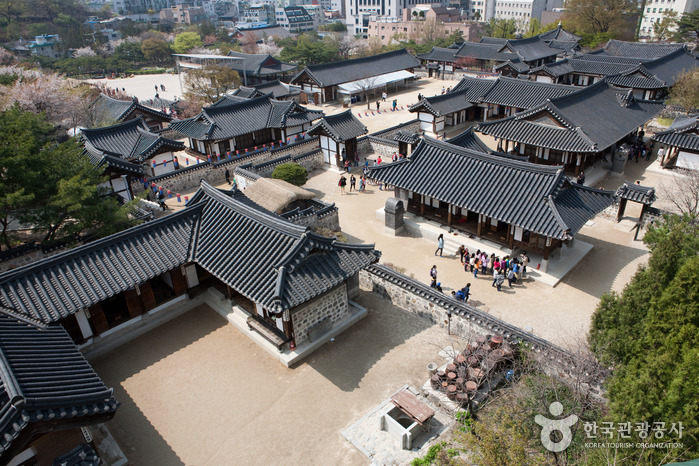
Myeong-dong, Namdaemun, Bukchang-dong, Da-dong and Mugyo-dong Special Tourist Zone (명동 남대문 북창동 다동무교동 관광특구)
11.2Km 2021-12-30
40, Sejong-daero, Jung-gu, Seoul
+82-2-3396-4622
Myeong-dong, Namdaemun, Bukchang-dong and Da-dong are widely known among international visitors as hot spots for shopping and food.
Myeong-dong is a popular destination for shopping, culture, arts and fashion. Major shopping malls such as Lotte Department Store, Shinsegae Department Store, Myeong-dong Migliore and Samik Fashion Town are located here. Shoppers can find a variety of products here from high-end items to relatively inexpensive clothes. There’s also no shortage of street food, traditional restaurants, coffee shops and fancy cafes.
Namdaemun Market is the biggest traditional market in Korea. Visitors can purchase souvenirs and local produce at an affordable price in the shopping complex crowded with stores and street stalls. The market sells a variety of clothes, kitchenware, toys, accessories, food, flowers and imported goods.
Bukchang-dong and Sogong-dong have high-end accommodations including Lotte Hotel Seoul and Westin Chosun Seoul, duty-free shops, and restaurants serving traditional dishes.
[Myeong-dong, Namdaemun Market and Bukchang-dong Special Tourist Zone]
Areas included: Myeong-dong, Bukchang-dong, Mugyo-dong and Da-dong, Seoul
Area size: 872,809 ㎡
Tourist attractions: Myeong-dong, Namdaemun Market and Bukchang-dong, Department Stores (Lotte Department and Shinsegae Department Store, etc.), Traditional Market, Duty-free Shop, Hanok Village, N Seoul Tower, etc.
Sungnyemun Gate (숭례문)
11.2Km 2024-11-27
40 Sejong-daero, Jung-gu, Seoul
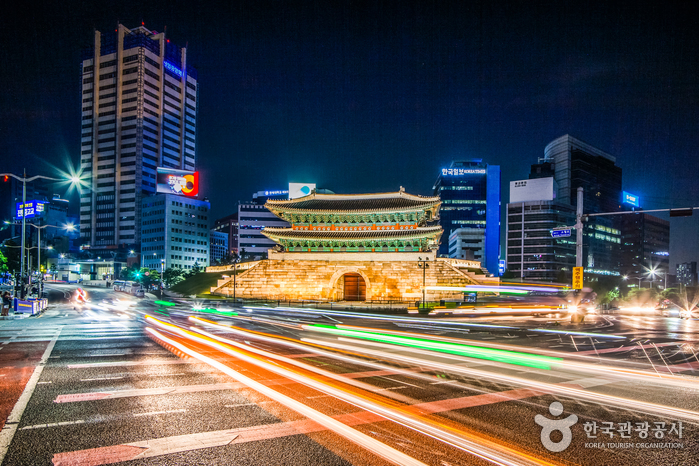
Sungnyemun Gate is Korea’s National Treasure No. 1, and its unofficial name is Namdaemun Gate. Sungnyemun Gate is the largest castle gate stone structure with an arched entrance in the middle. There’s a column on top of a platform, raising the roof, distinguishing the upper stories and lower stories of the building. Passageways for traffic are located at the east and west ends of the gate. Different from the other gates, Sungnyemun Gate’s tablet has its name written vertically.
On February 10, 2008, Sungnyemun was destroyed by fire. After a 5-year reconstruction work, the gate was re-opened to the public again on May 4, 2013.
ARKO Art Center (아르코미술관)
11.2Km 2025-06-05
3, Dongsung-gil, Jongno-gu, Seoul
+82-2-760-4850
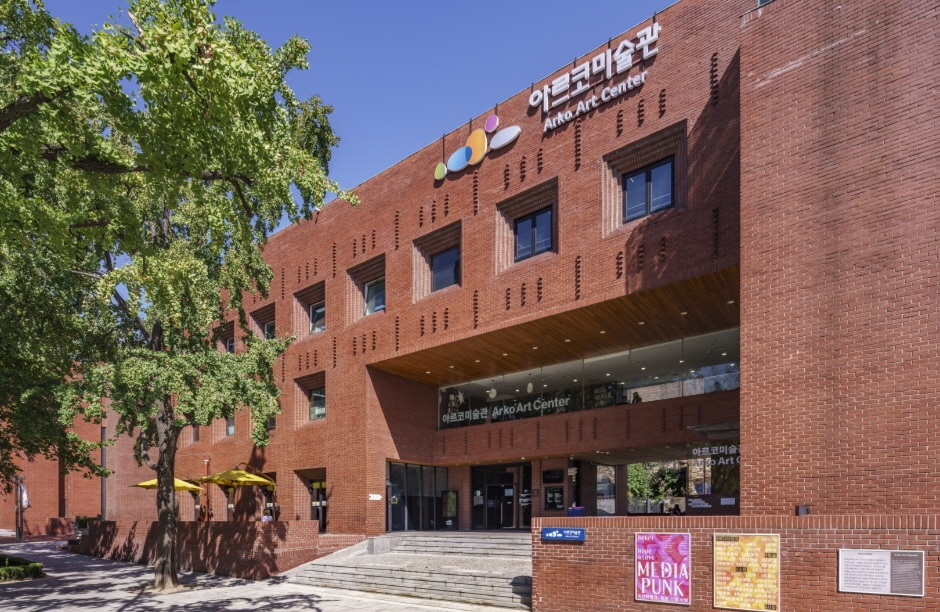
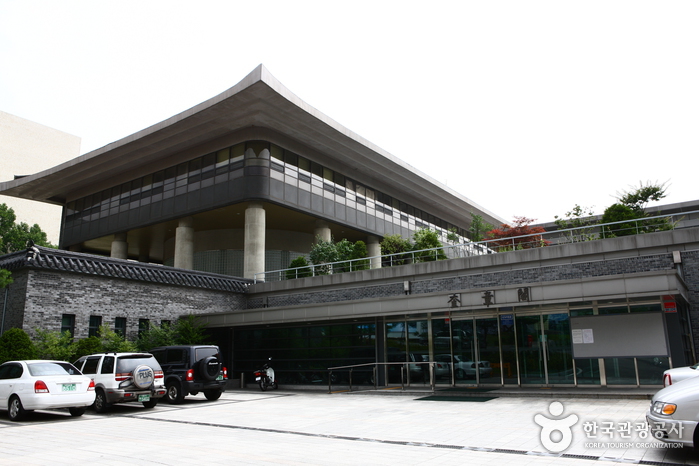
ARKO Art Center was founded in 1974 as Misulhoegwan in a building of former Deoksu Hospital in Gwanhun-dong, Jongno-gu to offer much-needed exhibition space for artists and arts groups. In 1979, Misulhoegwan moved to its present building, designed by preeminent Korean architect Kim Swoo-geun (1931-1986) and located in Marronnier Park, the former site of Seoul National University. The two neighboring brick buildings accommodating ARKO Art Center and ARKO Arts Theater are the major landmarks of the district of Daehakro.
As more public and private museums and commercial galleries came into the art scene in the 1990s, Misulhoegwan shifted to curating and presenting its own exhibitions. Renamed as Marronnier Art Center in 2002, ARKO Art Center assumed a full-fledged art museum system and played an increasingly prominent role as a public arts organization leading the contemporary art paradigm. When The Korea Culture and Arts Foundation was reborn as Arts Council Korea, Marronnier Art Center became ARKO Art Center named after the abbreviation for Arts Council Korea in 2005.
ARKO Art Center is committed to working as a platform where research, production, exhibitions and the exchange of creative activities grow and develop in connection with one another in addition to having a diversity of programs including thematic exhibitions addressing social agenda and public programs widely promoting various discourses in art.
![SAERAN OPTICAL[Korea Quality]/세란안경[한국관광 품질인증]](http://tong.visitkorea.or.kr/cms/resource/23/2498023_image2_1.JPG)
SAERAN OPTICAL[Korea Quality]/세란안경[한국관광 품질인증]
11.2Km 2024-06-25
30 , Eulji-ro, Jung-gu, Seoul
+82-10-8746-2715
Seran Optical Center is a specialty eyewear store on the 1st basement floor of the Lotte Hotel in Jung-gu, Seoul, and opened in 1979 along with the Lotte Department Store and Hotel in Myeong-dong. Drawing on long-standing expertise, Seran optometrists offer a 1:1 customer-centered service, providing high-quality glasses and precision processing to suit customers’ lifestyle. There is also post-tax exemption for foreigners, and thorough post-sales support. Featured brands include LINDBERG, Cartier, CHROME HEARTS, and Berlin.
Tapgol Park (탑골공원)
11.2Km 2024-03-04
99, Jong-ro, Jongno-gu, Seoul
+82-2-731-0534
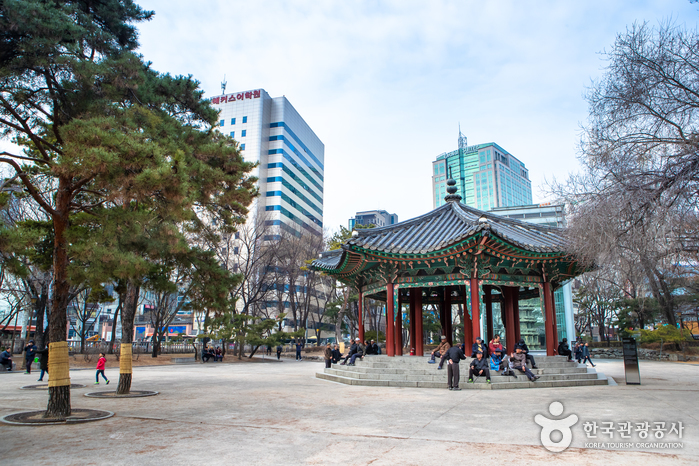
Tapgol Park is the first modern park in Seoul. Having been the site of the Buddhist temple of Wongaksa Temple since 1467, the land was turned into a park in 1897. The park has a significant presence in Korean history, being the place where the March 1 Independence Movement began in 1919. One can find historical sites that hearken back to the struggle, such as the Palgakjeong Pavilion, the center of the movement; cultural heritage sites such as the Ten-story Stone Pagoda of Wongaksa Temple Site and the Stele for the Construction of Daewongaksa Temple at Wongaksa Temple Site; and monuments such as the independence movement relief plate, murals, the statue of Son Byeong-hee, and the statue of Han Yong-un.
Gyujanggak Library of Seoul National University (서울대학교 규장각)
11.2Km 2022-07-27
1, Gwanak-ro, Gwanak-gu, Seoul
+82-2-880-6030
Gyujanggak Library was founded in 1776 during the reign of King Jeongjo, the 22nd ruler of the Joseon dynasty, at which time it was located within the Changdeokgung Palace grounds. It functioned as the royal library, which housed writings of the previous kings, their relics and books from home and abroad.
Today Seoul National University maintains the items of Gyujanggak in a traditional Korean building which is equipped with state-of-the-art facilities necessary for the preservation of cultural heritages. Moreover, Gyujanggak Library of Seoul National University collects and publishes books from a variety of sectors such as politics, economy and society.
Gyujanggak now houses more than 270,000 items including 7 national treasures, 8 treasures, 180,000-plus old books, about 50,000 documents and 18,000 printing blocks. Among them, Joseon Wangjo Sillok (the Annals of the Joseon Dynasty, a National Treasure), Seungjeongwon Ilgi (the Diaries of the Royal Secretariat, a National Treasure) and Uigwe (the Royal Protocols of the Joseon Dynasty) have been designated as UNESCO World Cultural Heritages.

Seoul National University (서울대학교)
11.2Km 2023-07-07
1, Gwanak-ro, Gwanak-gu, Seoul
+82-2-880-5114
Founded in 1946, Seoul National University is the most reputable university in Korea based on its long academic history and tradition. It was the first national university in Korea established by merging several institutions of higher education around the Seoul area, including Kyongsong University
Marronnier Park (마로니에공원)
11.2Km 2021-07-14
104, Daehak-ro, Jongno-gu, Seoul
+82-2-2148-4158
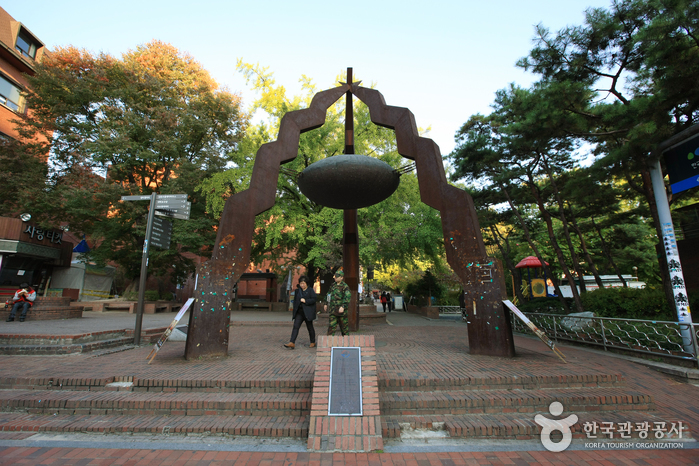
Marronnier Park was given its name due to the marronnier trees, or horse chestnut trees, growing within the area. The location where Seoul National University's College of Liberal Arts & Science and School of Law once stood, it is now a park dedicated to culture and arts open to the public. In addition to a variety of outdoor performances that take place throughout the area, exhibitions and cultural centers create a romantic atmosphere unique to the park.
 English
 한국어
한국어 日本語
日本語 中文(简体)
 Deutsch
 Français
 Español
 Русский


