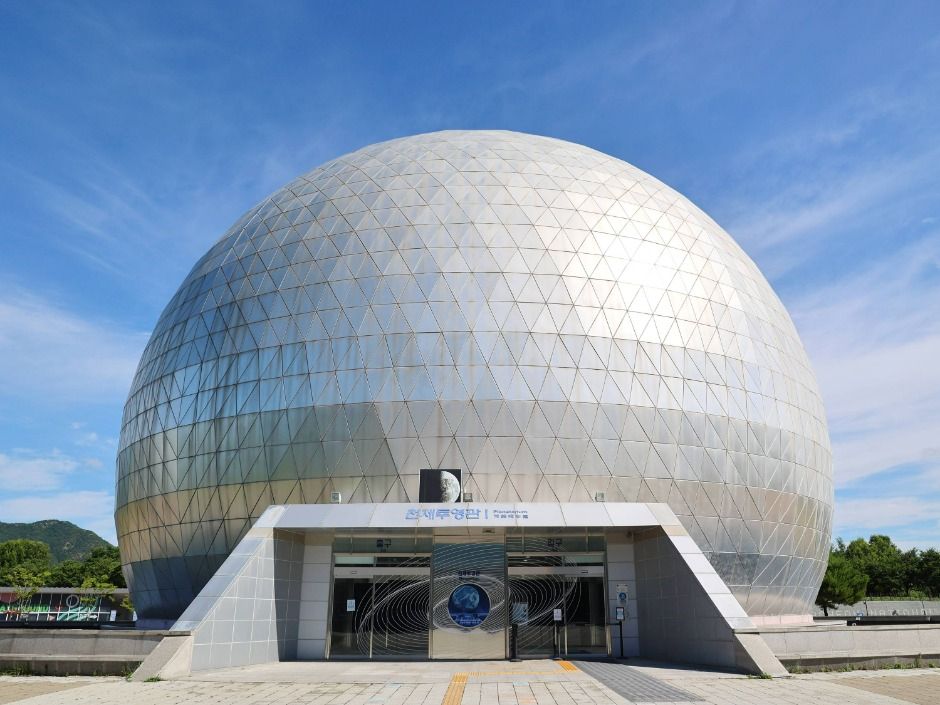
Gwacheon National Science Museum (국립과천과학관)
10.5Km 2025-07-14
110, Sanghabeol-ro, Gwacheon-si, Gyeonggi-do
As a landmark facility representing Korea’s advanced science and technology capabilities, Gwacheon National Science Museum strives to encourage young visitors to become interested in science and shares with the public scientific principles that govern daily life. The museum has permanent exhibition halls, special exhibition halls, a planetarium, outdoor exhibitions, and more. Over 50% of the exhibition items on display are interactive, allowing visitors to jump in and experience science first-hand using their minds and their imagination.

Ceramic Palace Hall (세라믹 팔레스 홀)
10.6Km 2024-03-04
90 Irwon-ro, Gangnam-gu, Seoul
Ceramic Palace Hall, situated on the second basement floor of the Milal Art Center, is adorned with aesthetically pleasing pastel-colored ceramic walls. Designed for acoustic excellence, it ensures that every instrument played is heard with clarity. Primarily, it serves as a venue for various concerts, with a particular emphasis on classical music, including piano recitals, chamber music festivals, and violin concerts. Additionally, it offers venue rental services, catering to a range of events.
Samsung Medical Center (삼성서울병원)
10.7Km 2025-10-23
81 Irwon-ro, Gangnam-gu, Seoul
Samsung Medical Center (SMC) has been at the forefront of change in the Korean medical field since its foundation in 1994. Guided by its new vision, "We aspire to be the frontier of future medicine," SMC is committed to delivering excellent treatment results for patients with severe and complex diseases by using the latest medical technologies. SMC's International Healthcare Center (IHC) operates an outpatient clinic dedicated exclusively to foreign patients.
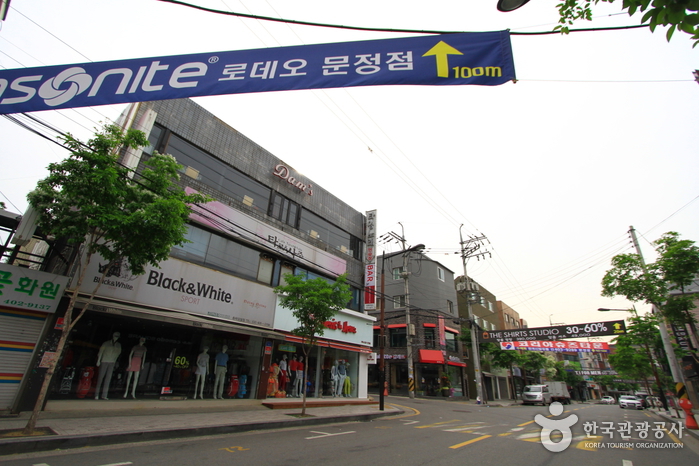
Munjeong-dong Rodeo Street (문정동 로데오거리)
10.7Km 2025-03-29
10, Dongnam-ro 4-gil, Songpa-gu, Seoul
+82-2-400-1633
Munjeong-dong Rodeo Street is a large shopping district containing over 200 brand-name discount stores. The street is T-shaped, with a 1-kilometer-long main street connected to a 400-meter-long alley, and the Munjeong 1-dong Resident Center located at the center. For shoppers’ convenience, there is a public parking lot (if visitors purchase goods at Rodeo Street, they can park here for free) and a parking lot for foreign tourists only (free of charge). Munjeong-dong Rodeo Street is one of Korea’s major shopping streets with customers ranging from teenagers to adults, since discount stores stocking sports wear, casual wear, shoes, men’s and ladies’ suits, and golf wear are all located on this street. Moreover, this is a great place to find deals on famous brands, at prices lower than at a department store. On some items you can get discounts of up to 70-80%.
Since most of the goods are stock from previous seasons, it might be better to purchase the more classic styles rather than the trendy fashions. In some cases, the goods might have been slightly crumpled or stained during the transfer from warehouse storage, but taking them to the dry-cleaners should fix most problems. However you should be careful when looking at the sewing quality, and check for missing buttons.
One more thing to bear in mind is the shopping season. Even discount stores have periods when stock runs low. The best time to shop is immediately after the stores in Rodeo Street restock their merchandise. This is done at about the same time as department stores. There is also an enormous variety of goods to choose from during the Rodeo Festivals in May and September. The purchased goods are exchangeable but non-refundable, so check the quality of the products carefully before purchasing.
In addition, Munjeong-dong Rodeo Street has a wide selection of restaurants and entertainment facilities. There are a number of pizza places, coffee shops, and food courts, as well as internet cafes and game rooms in the alleys behind the stores. Visitors can also relax in the surrounding parks. There’s a park with a 600-year-old zelkova tree right behind the Munjeong 1-dong Resident Center.
Munjeong Rodeo Street is not just a shopping district; it’s a cultural area. The ‘Munjeong-dong Cultural Festival’ takes place every year in May, and the ‘Munjeong-dong Rodeo Festival’ takes place in May every other year. During these festivals, visitors can watch traditional Korean performances, traditional wedding ceremonies, international fashion parades, hip-hop dancing, and more.
A charity sale is held on weekends and national holidays on the open-air stage of the Munjeong 1-dong Resident Center, and merchandise is sold for even bigger discounts.
Gwanggyosan Mountain (광교산)
10.9Km 2024-02-29
58 Sanggwanggyo-dong, Jangan-gu, Suwon-si, Gyeonggi-do
Gwanggyosan Mountain straddles the cities of Suwon and Yongin. Its summit, Shirubong Peak, stands at 852 meters above sea level. The mountain is located in a plain area with no large mountains around it, and the ridges are very gentle and lush with trees in all directions, so many people visit for forest bathing and hiking. Its winter snowscapes are particularly renowned. Notable cultural assets include the tomb and monument of General Kim Joon Ryong, built to commemorate his great victory during the Qing invasion of Joseon, and the tomb of Sim On who served as a civil minister in Joseon dynasty.
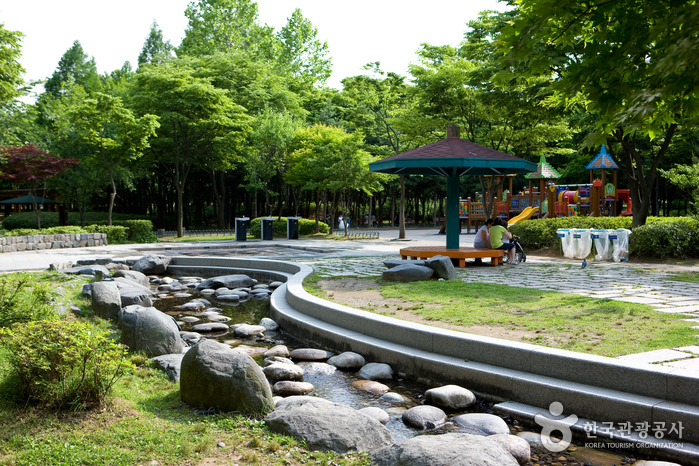
Maeheon Citizen's Forest (매헌시민의 숲)
11.0Km 2022-12-21
99, Maeheon-ro, Seocho-gu, Seoul
+82-2-575-3895
Maeheon Citizen's Forest, located near Yangjae Tollgate, was created in anticipation of the Seoul Asian Games in 1986 and the 24th Olympic Games in 1988. The forest provides a scenic habitat for 94,800 trees of 43 different species including pine, zelkova, purple bloom maple, horse chestnut, and nut pine. These trees are rarely seen in cities and the park is a popular date spot for couples. In the fall, the trees in the park bear an abundance of persimmons and quinces.
Amenities and facilities include an outdoor wedding hall, walking course, basketball court, volleyball court (also used for foot volleyball), tennis court, barefoot walking path, and outdoor workout equipment. Memorial sites and monuments like the memorial of Patriot Yun Bong-Gil can also be found scattered throughout the park grounds.
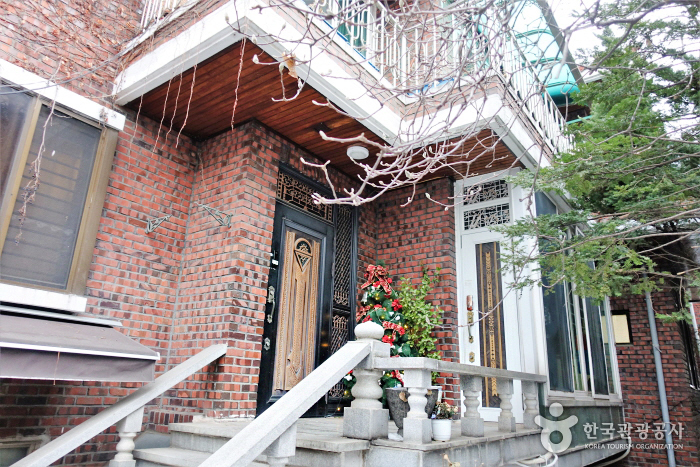
The House of Yehbon (예본의 집)
11.5Km 2024-08-05
64 , Gaepo-ro 118-gil, Gangnam-gu, Seoul
+82-10-3908-1617
Yebonui House is a detached house, in Gangnam-gu, Seoul, whose first floor is operated as a guest house. The space consists of two rooms plus living room, kitchen facilities, and two bathrooms, and is popular with visiting overseas Koreans and travelers from north America and Europe. Guests will find antique furniture, mother-of-pearl cabinets, and hand-knitted covers, all redolent of Korean history and culture. The Gangnam location makes it super convenient for transport.
Ononsa Guesthouse (온온사)
11.5Km 2023-07-17
58 Gwanaksan-gil, Gwacheon-si, Gyeonggi-do
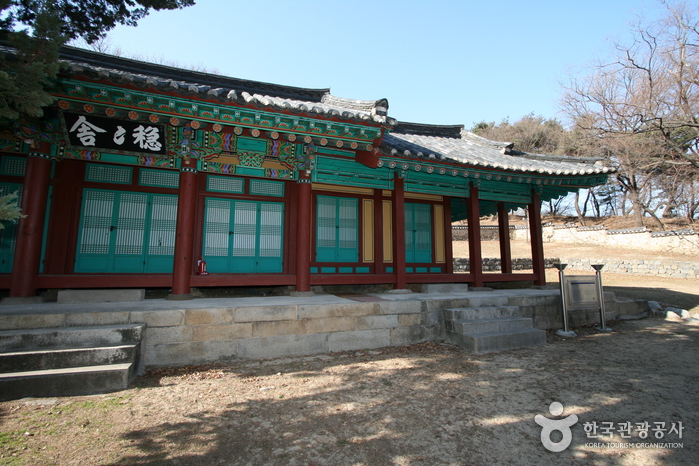
Though Ononsa, which was a guesthouse in Gwacheon, was constructed in the 27th year of King Injo's reign in the Joseon dynasty (1649), the name, "Ononsa," was given to this area during the reign of King Jeongjo. On February 11, 1790 during his royal procession to the tomb of his father, Crown Prince Sado, stayed at an inn in Gwacheon and, as he felt that it "has nice views and provides a comfortable stay," he bestowed upon the place plaques that he wrote himself - "Ononsa" to Seoheon and "Burimheon," which was the old nickname of Gwacheon, to Dongheon. This is how this place began to be called Ononsa.
It was designated as a Tangible Cultural Heritage of Gyeonggi-do on June 2, 1980, and it was restored on December 2, 1986 after being torn down.
![Namhansanseong Provincial Park [UNESCO World Heritage] (남한산성도립공원 [유네스코 세계문화유산])](http://tong.visitkorea.or.kr/cms/resource/56/2612856_image2_1.jpg)
Namhansanseong Provincial Park [UNESCO World Heritage] (남한산성도립공원 [유네스코 세계문화유산])
11.6Km 2024-02-29
731 Namhansanseong-ro, Namhansanseong-myeon, Gwangju-si, Gyeonggi-do
+82-31-746-1088
Namhansanseong was a fortress that protected the southern approaches to the capital during the Baekje kingdom (18 B.C. – 660 A.D.) and the Joseon dynasty (1392-1897). During the Qing invasion of Joseon in 1636, King Injo of Joseon (reigned 1623-1649) sought refuge here and constructed Haenggung, a temporary palace. Subsequently, it became the administrative center of the Gwangju region, and today, it is a site where many cultural properties are preserved.
Namhansanseong Trail (남한산성 탐방로)
11.6Km 2024-02-20
Sanseong-ri, Namhansanseong-myeon, Gwangju-si, Gyeonggi-do
Namhansanseong Trail is a historical-themed path designed to provide an experiential journey through the Namhansanseong Fortress, a UNESCO World Heritage site. This lengthy elliptical fortress is built on rugged terrain at an elevation of 500 meters, with walls spanning a circumference of 12.4 kilometers. Offering a total of five routes, the trail presents breathtaking scenery and adds charm with pathways that closely follow the fortress walls.
 English
 한국어
한국어 日本語
日本語 中文(简体)
 Deutsch
 Français
 Español
 Русский


