
Olive Young - Beomgye Town Branch [Tax Refund Shop] (올리브영 범계 타운)
14.4Km 2024-06-27
41, Pyeongchon-daero 223beon-gil, Dongan-gu, Anyang-si, Gyeonggi-do
-
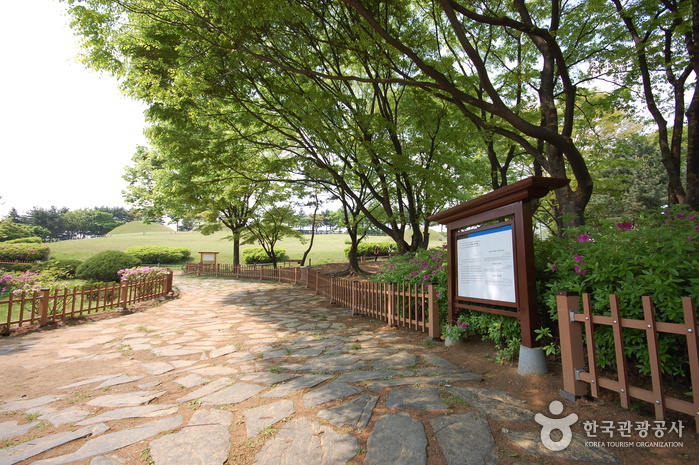
Seoul Bangidong Ancient Tombs (서울 방이동 고분군)
14.4Km 2022-12-29
219, Ogeum-ro, Songpa-gu, Seoul
+82-2-2147-2800
The ancient tombs in Bangi-dong were discovered during the land readjustment project of Jamsil-jigu District in 1975. A total of eight ancient tombs were excavated until 1976, and the site was restored into a park in 1983. The Bangi-dong area was originally a low line of hills with an altitude of 30-50 meters above sea level, but it has been made into flatland for urban development purposes. Tomb numbers 1 to 6 lie on the same hill, while tomb no. 7 and 8 are located on another hill a short distance away.
All eight tombs have circular burial mounds. The insides of the a tomb feature a square or rectangular-shaped burial chamber with earthen ground and stone walls, and a passage leading from the tomb entrance to the chamber. However, details of the burial chambers vary by tomb. Most of the tombs had been robbed before the investigation, but a few relics such as plates and pots have been excavated. At the time of excavation, the relics were presumed to have come from the Baekje dynasty (18 BC-660 AD), but it is now estimated that they date back to the Unified Silla Period (676-935 AD).
CheongKwanJang - Hanti Station Branch [Tax Refund Shop] (정관장 한티역)
14.4Km 2024-04-17
#101, 320, Seolleung-ro, Gangnam-gu, Seoul
-
Seoul Arts Center (예술의전당)
14.4Km 2025-01-17
2406 Nambusunhwan-ro, Seocho-gu, Seoul
The Seoul Arts Center is the representative art complex of Korea. It is comprised of the Opera House, Concert Hall, Art Gallery, Calligraphy Museum, Art Material Hall, and an outdoor stage. You can enjoy various performances and exhibitions all in one site.
The Opera House and Concert Hall consist of a total of five performance halls offering an average of 800 performances ever year, whereas the Art Gallery and Calligraphy Museum has seven exhibition halls providing various exhibitions throughout the year. The outdoor stage also provides various genres of performances all year round.
![Olive Young - Dongsuwon Branch [Tax Refund Shop] (올리브영 동수원)](http://tong.visitkorea.or.kr/cms/resource/49/2888049_image2_1.jpg)
Olive Young - Dongsuwon Branch [Tax Refund Shop] (올리브영 동수원)
14.5Km 2024-04-19
1F, 202, Gwongwang-ro, Paldal-gu, Suwon-si, Gyeonggi-do
-
![Innisfree - Suwon Yeongtong Branch [Tax Refund Shop] (이니스프리 수원영통)](http://tong.visitkorea.or.kr/cms/resource/99/2889699_image2_1.jpg)
Innisfree - Suwon Yeongtong Branch [Tax Refund Shop] (이니스프리 수원영통)
14.5Km 2024-04-19
6, Bandal-ro 7beon-gil, Yeongtong-gu, Suwon-si, Gyeonggi-do
-
![Lotte Mart - Yeongtong Branch [Tax Refund Shop] (롯데마트 영통점)](http://tong.visitkorea.or.kr/cms/resource/55/2887855_image2_1.jpg)
Lotte Mart - Yeongtong Branch [Tax Refund Shop] (롯데마트 영통점)
14.5Km 2024-04-22
1579, Bongyeong-ro, Yeongtong-gu, Suwon-si, Gyeonggi-do
-
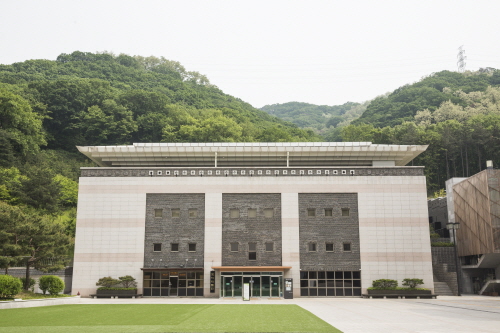
National Gugak Museum (국립국악박물관)
14.5Km 2021-08-13
2364, Nambusunhwan-ro, Seocho-gu, Seoul
+82-2-580-3130
The National Gugak Museum opened on February 23, 1995 as the first gugak museum in Korea, featuring approximately 6,000 pieces of gugak-related materials and relics which have both historical and cultural value. It is comprised of seven themed permanent exhibition halls that present 250 pieces of audio and video clips regarding gugak. In the 3D room, visitors can enjoy 3D animation at all times. The museum also hosts special exhibitions in unique and interesting themes.
National Gugak Center (국립국악원)
14.5Km 2025-01-17
2364 Nambusunhwan-ro, Seocho-gu, Seoul
The National Gugak Center is the governing body established to preserve and promote traditional Korean performing arts. The center can accommodate every type of traditional performing arts, such as palace music, court music, and all other genres including major productions of changgeuk (Korean musical drama). Originally opened in Busan in 1951, the center moved to its current location in Seoul in 1987. The center also opened branch locations in Namwon, Jindo, and Busan in 1992, 2004, and 2008 respectively.
 English
 한국어
한국어 日本語
日本語 中文(简体)
 Deutsch
 Français
 Español
 Русский


