
Suwon World Cup Stadium (수원월드컵경기장)
12.3Km 2021-05-26
310, World cup-ro, Paldal-gu, Suwon-si, Gyeonggi-do
+82-31-202-2002
Suwon World Cup Stadium boasts a massive seating capacity of 43,959. The concept of its roof was inspired by the image of a bird in flight. It hosted World Cup matches during the 2002 FIFA World Cup Korea/Japan, and is home to Suwon FC.
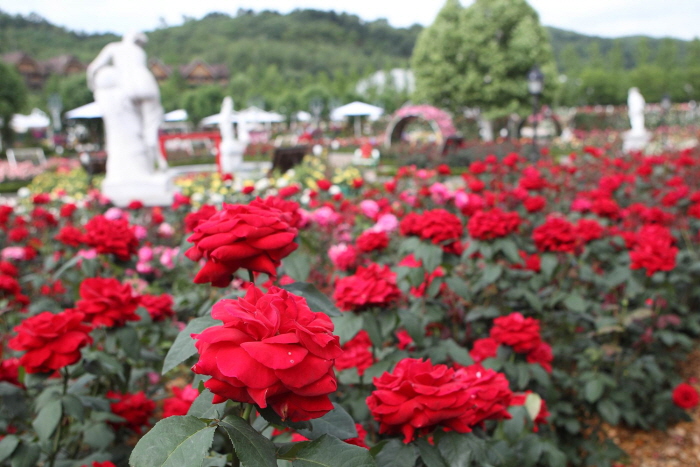
Everland Rose Garden (에버랜드 플라워 아트&마켓)
12.3Km 2025-04-16
199 Everland-ro, Cheoin-gu, Yongin-si, Gyeonggi-do
+82-31-320-5000
Everland Rose Garden blooms with beautiful flowers for one month. Started in 1985, a long running Rose Festival opens every year in May. With 20,000 m² size rose garden, visitors can see various kind of flowers while enjoying the amusement park.
Samsung Medical Center (삼성서울병원)
12.4Km 2025-10-23
81 Irwon-ro, Gangnam-gu, Seoul
Samsung Medical Center (SMC) has been at the forefront of change in the Korean medical field since its foundation in 1994. Guided by its new vision, "We aspire to be the frontier of future medicine," SMC is committed to delivering excellent treatment results for patients with severe and complex diseases by using the latest medical technologies. SMC's International Healthcare Center (IHC) operates an outpatient clinic dedicated exclusively to foreign patients.
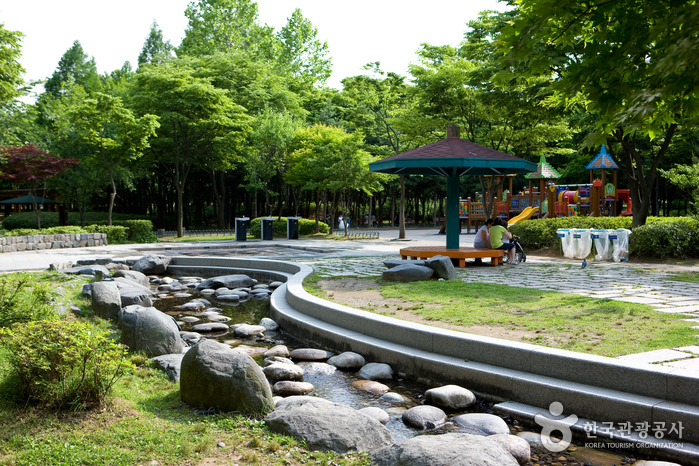
Maeheon Citizen's Forest (매헌시민의 숲)
12.5Km 2022-12-21
99, Maeheon-ro, Seocho-gu, Seoul
+82-2-575-3895
Maeheon Citizen's Forest, located near Yangjae Tollgate, was created in anticipation of the Seoul Asian Games in 1986 and the 24th Olympic Games in 1988. The forest provides a scenic habitat for 94,800 trees of 43 different species including pine, zelkova, purple bloom maple, horse chestnut, and nut pine. These trees are rarely seen in cities and the park is a popular date spot for couples. In the fall, the trees in the park bear an abundance of persimmons and quinces.
Amenities and facilities include an outdoor wedding hall, walking course, basketball court, volleyball court (also used for foot volleyball), tennis court, barefoot walking path, and outdoor workout equipment. Memorial sites and monuments like the memorial of Patriot Yun Bong-Gil can also be found scattered throughout the park grounds.
![Lotte Mart - Uiwang Branch [Tax Refund Shop] (롯데마트 의왕점 [사후면세점])](http://tong.visitkorea.or.kr/cms/resource/64/2882064_image2_1.jpg)
Lotte Mart - Uiwang Branch [Tax Refund Shop] (롯데마트 의왕점 [사후면세점])
12.6Km 2024-04-16
7, Gyewondaehak-ro, Uiwang-si, Gyeonggi-do
-
Lotte Mart - Uiwang Branch [Tax Refund Shop] (롯데마트의왕점)
12.6Km 2024-04-22
7, Gyewondaehak-ro, Uiwang-si, Gyeonggi-do
-
Artbox [Tax Refund Shop] (아트박스)
12.6Km 2024-04-19
1F Home Plus, 930, Gyeongsu-daero, Jangan-gu, Suwon-si, Gyeonggi-do
-
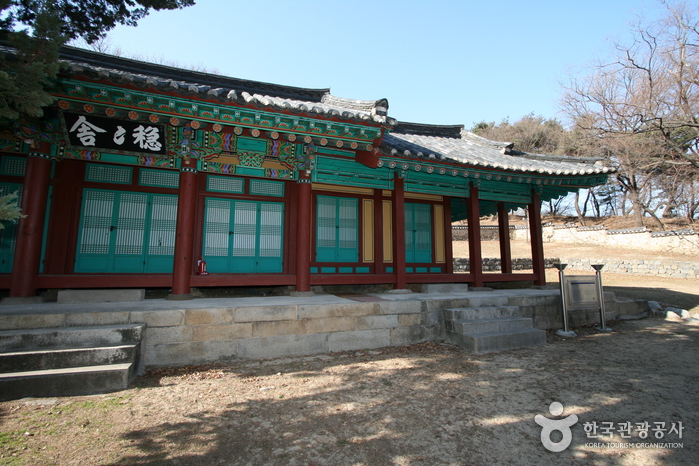
Ononsa Guesthouse (온온사)
12.6Km 2023-07-17
58 Gwanaksan-gil, Gwacheon-si, Gyeonggi-do
Though Ononsa, which was a guesthouse in Gwacheon, was constructed in the 27th year of King Injo's reign in the Joseon dynasty (1649), the name, "Ononsa," was given to this area during the reign of King Jeongjo. On February 11, 1790 during his royal procession to the tomb of his father, Crown Prince Sado, stayed at an inn in Gwacheon and, as he felt that it "has nice views and provides a comfortable stay," he bestowed upon the place plaques that he wrote himself - "Ononsa" to Seoheon and "Burimheon," which was the old nickname of Gwacheon, to Dongheon. This is how this place began to be called Ononsa.
It was designated as a Tangible Cultural Heritage of Gyeonggi-do on June 2, 1980, and it was restored on December 2, 1986 after being torn down.
![Namhansanseong Provincial Park [UNESCO World Heritage] (남한산성도립공원 [유네스코 세계문화유산])](http://tong.visitkorea.or.kr/cms/resource/56/2612856_image2_1.jpg)
Namhansanseong Provincial Park [UNESCO World Heritage] (남한산성도립공원 [유네스코 세계문화유산])
12.7Km 2024-02-29
731 Namhansanseong-ro, Namhansanseong-myeon, Gwangju-si, Gyeonggi-do
+82-31-746-1088
Namhansanseong was a fortress that protected the southern approaches to the capital during the Baekje kingdom (18 B.C. – 660 A.D.) and the Joseon dynasty (1392-1897). During the Qing invasion of Joseon in 1636, King Injo of Joseon (reigned 1623-1649) sought refuge here and constructed Haenggung, a temporary palace. Subsequently, it became the administrative center of the Gwangju region, and today, it is a site where many cultural properties are preserved.
![Himart - Buksuwon Branch [Tax Refund Shop] (하이마트 북수원점)](http://tong.visitkorea.or.kr/cms/resource/92/2889992_image2_1.jpg)
Himart - Buksuwon Branch [Tax Refund Shop] (하이마트 북수원점)
12.8Km 2024-04-19
4, Gyeongsu-daero 1008beon-gil, Jangan-gu, Suwon-si, Gyeonggi-do
-
 English
 한국어
한국어 日本語
日本語 中文(简体)
 Deutsch
 Français
 Español
 Русский


