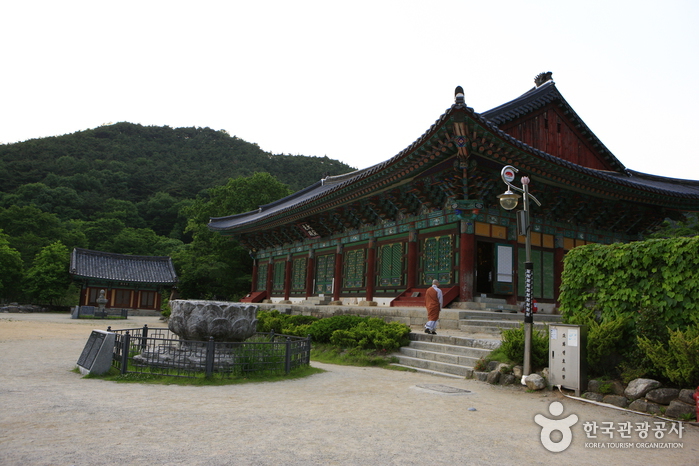
Gimje Geumsansa Temple (금산사(김제))
13.6Km 2024-04-07
1 Moak 15-gil, Geumsan-myeon, Gimje-si, Jeonbuk-do
+82-63-548-4441
Geumsansa Temple, which stands tall at the entrance to Moaksan Provincial Park, was founded in the first year of King Beop of Baekje (599). It was rebuilt by Jinpyo in 776, leading to the appearance of a great temple. The precinct has about ten designated cultural heritages, including the Mireukjeon Hall, which is designated as a National Treasure. Many other annexed buildings make it one of the best ancient temples in the southern region. The wooden Mireukjeon Hall is Korea's only three-story Buddhist temple with a full-story interior. In spring, many tourists visit to see the spectacular sight of cherry blossom trees stretching from the mountain entrance to Geumsansa Temple. Even in the middle of winter, believers come to visit the Maitreya Bodhisattva statue in Mireukjeon Hall, bowing or circling the pagoda. The Maitreya Bodhisattva statue in Mireukjeon Hall is considered the world's largest indoor standing Buddha statue. Among the three Buddha statues, the middle Maitreya Bodhisattva statue is 11.82 meters tall, and the left and right Buddha statues are 8.8 meters tall. Various cultural events are held at the 1400th Anniversary Memorial Hall, built in 1999.
* Major cultural properties: Mireukjeon Hall (National Treasure), Stone Pillar (Treasure), Stone Lotus Pedestal (Treasure), Stele for Royal Preceptor Hyedeok at Geumsansa Temple (Treasure), Five-story Stone Pagoda of Geumsansa Temple (Treasure), Bangdeung Stairs at Geumsansa Temple (Treasure), Hexagonal Multi-story Stone Pagoda of Geumsansa Temple (Treasure), Flagpole Supports of Geumsansa Temple (Treasure), Three-story Stone Pagoda at Simwonam Hermitage of Geumsansa Temple (Treasure), Daejangjeon Hall of Geumsansa Temple (Treasure), and Stone Lantern of Geumsansa Temple (Treasure)
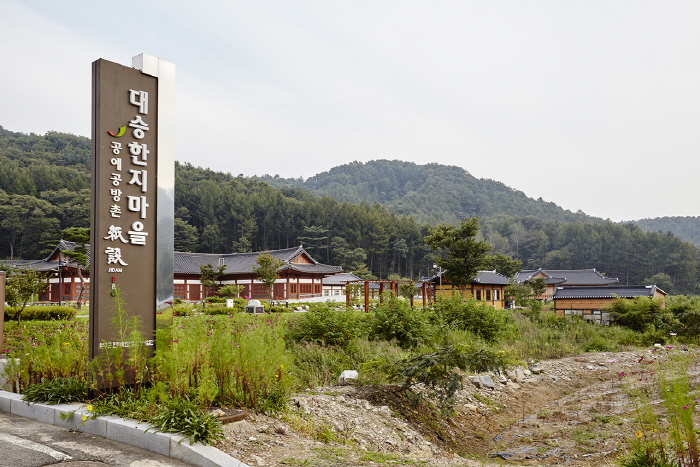
Daeseung Hanji Village & Hanok Traditional Culture Experience Center (대승한지마을한옥전통문화체험관)
13.8Km 2024-08-05
18-4 , Bogeom-gil, Wanju-gun, Jeonbuk-do
+82-63-242-1001
Daeseung Hanji Village in Wanju-gun, Jeollabuk-do, is where the famous Goryeoji (‘Goryeo Paper’) was first made in Goryeo 1,000 years ago. All guestrooms in the village are equipped with toilets, AC and water purifiers, plus pillows made of Korean paper and comfortable blankets. The dining hall kitchen can be used by guests, there is a large (60 sq metre) seminar room, and a yard where traditional games such as Geunae (swing) and Tuho (arrows) are played. The village runs a Hanji Experience Center, where you can learn about hanji history, manufacture and calligraphy.
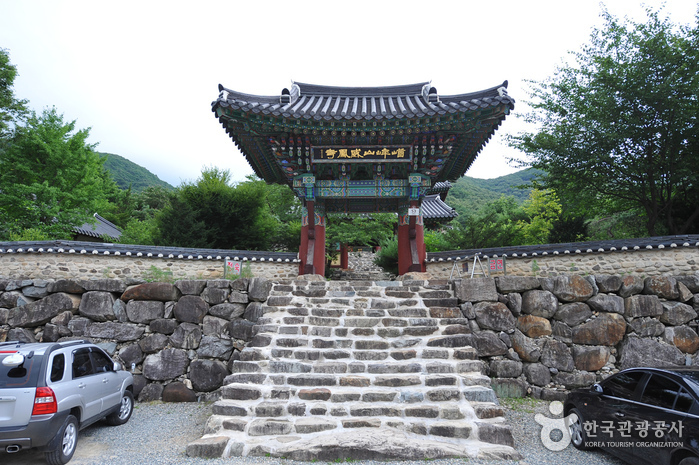
Wibongsa Temple - Wanju (위봉사 (완주))
14.1Km 2024-04-07
53, Wibong-gil, Wanju-gun, Jeonbuk-do
+82-63-243-7657
Wibongsa Temple is located past Mujigaemun Gate (Rainbow Gate) and Wibong Village and is a major temple in the Honam region that once oversaw 52 branch temples. Said to be built by Monk Seoam in 604 (the 5th year of King Mu of Baekje), the surviving buildings date back to the Joseon Era. Today, only Bogwangmyeongjeon Hall (Treasure No. 608), Yosa (Provincial Cultural Asset No. 698), and Samseonggak remain. The Baeguigwaneumbosal wall painting in particular is the pride of the temple.
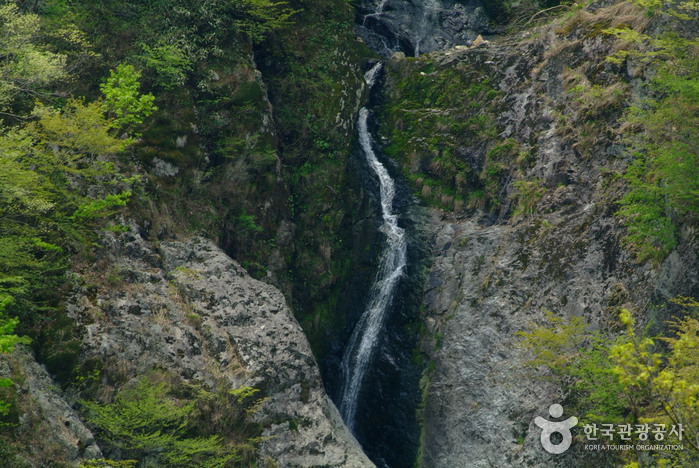
Wibongpokpo Falls (위봉폭포)
14.3Km 2024-04-07
Daeheung-ri, Wanju-gun, Jeonbuk-do
+82-63-290-3930
Located in the eastern section of Wibongsanseong Fortress, Wibongpokpo Falls is a two-tiered waterfall measuring 60 meters high. The strangely-shaped rocks and thick groves of trees that border the cascading falls make for such a magical scene that it comes as no surprise that the waterfall has long since been counted as one of the Eight Scenic Sights of Wansan. Attractions located nearby include a battlefield from the Imjin War (1592-1598), Songgwangsa Temple, Dongsang Reservoir, Daea Reservoir, and Hwasim Hot Springs.

Andeok Health and Healing Village (안덕 건강 힐링 체험마을)
14.5Km 2025-10-23
72 Jangpa-gil, Gui-myeon, Wanju-gun, Jeonbuk-do
Andeok Health and Healing Village is nestled near a valley at the foot of Moaksan Mountain in Wanju. As Korea's first health and healing experience village, it offers experience programs and health and wellness classes. Health experience programs and health and wellness classes are professionally designed in collaboration with a traditional Korean medicinal clinic in Andeok Village. Therefore, it offers visitors opportunities to learn quality information and experience specialized programs.
Andeok Health and Healing Village consists of a healing experience center, Yochodang House, a food experience center, a traditional sauna, a well-being restaurant, and a convention hall. For accommodations, seven Hwangtobangs (red-clay cottages) are available as well as studio-type rooms at Soo Pension. These accommodation facilities are open to visitors regardless of whether they participate in programs run by the village or not.
The village's signature experience programs include the red-clay sauna where the floor is heated in the traditional manner. The walls are made of red clay mixed with traditional herbal medicinal water. When heated, the sauna effectively removes waste from the body. Other signature programs include making injeolmi (bean-powder-coated rice cakes) by cooking rice and pounding the rice dough using a mallet; and harvesting seasonal crops (e.g., potatoes, sweet potatoes, and corn)
Gosan Recreational Forest (고산자연휴양림)
17.6Km 2024-04-07
246, Gosanhyuyangnim-ro, Wanju-gun, Jeonbuk-do
+82-63-263-8680
Located in Osan-ri, Gosan Recreational Forest is a popular family destination throughout all four seasons. Full of thick groves of larch trees, Korean white pines, rigida pines, and plenty of broad-leaved trees, the forest and its streams offer a cool and refreshing retreat. In spring, the forest is beautiful with wildflowers, azaleas and wild cherry blossom trees. In summer, families flock to the streams shaded by the thick forest canopy. As summer turns into fall, the whole area transforms into a rainbow of bright yellow, red, and orange. With the coming of winter, the snow covers the trees and blankets the ground, turning the forest in a winter dreamland.
![Archaeological Site in Wanggung-ri [UNESCO World Heritage] (익산 왕궁리유적 [유네스코 세계문화유산])](http://tong.visitkorea.or.kr/cms/resource/97/2514197_image2_1.jpg)
Archaeological Site in Wanggung-ri [UNESCO World Heritage] (익산 왕궁리유적 [유네스코 세계문화유산])
18.4Km 2024-04-07
666, Gungseong-ro, Iksan-si, Jeonbuk-do
+82-63-859-4631
Archaeological Site in Wanggung-ri, designated as Historic Site No. 408 on September 17, 1998, has a surface area of 216,862 square meters. The site has various structures and artifacts from Baekje dynasty to unified Silla period. Artifacts were found within the rectangular-shaped fortress site that surrounds Wanggungri Five-story Stone Pagoda, National Treasure No. 289.
Samcheok Cheokjudonghaebi & Pyeongsutochanbi Monuments (삼척 척주동해비 및 평수토찬비)
18.6Km 2023-04-18
13-7, Heomok-gil, Samcheok-si, Gangwon-do
+82-33-859-5708
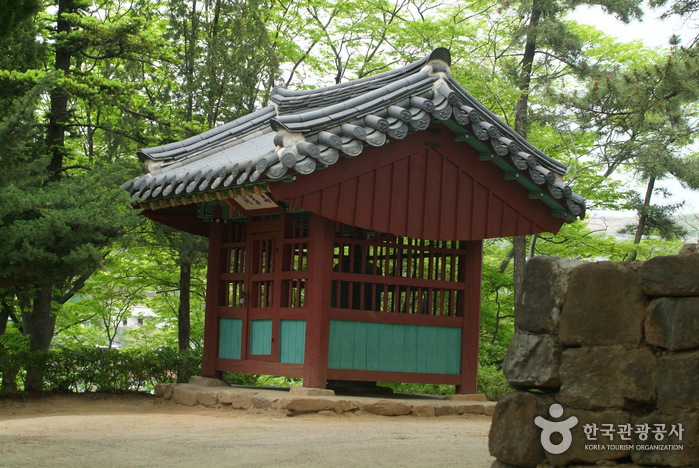
Erected by Heo Mok, the governor of Samcheok during the second year of King Hyeonjeong's reign (1661), Cheokjudonghaebi Monument is 170 centimeters tall. It was originally built to protect the village on Mallido Island that had been frequently inundated by heavy rain and rough waves. It is believed that the mystical inscription, penned by Heo Mok, on the monument calmed the rough sea waves. Today, the monument stands to prove the wisdom and distinguished penmanship of the former Samcheok City Governor.
Pyeongsutochan-bi Monument is 145 centimeters tall. It was erected by Heo Mok's successor and former governor of Samcheok, Jung Un-cheol, in reverence for his wise forebear. The monument contains
48 ancient Chinese characters that describe many achievements of Heo Mok.
Wanggung Five-story Stone Pagoda (익산 왕궁리 오층석탑)
18.6Km 2024-04-07
San 80-1, Wanggung-ri, Wanggung-myeon, Iksan-si, Jeonbuk-do
+82-63-859-5708
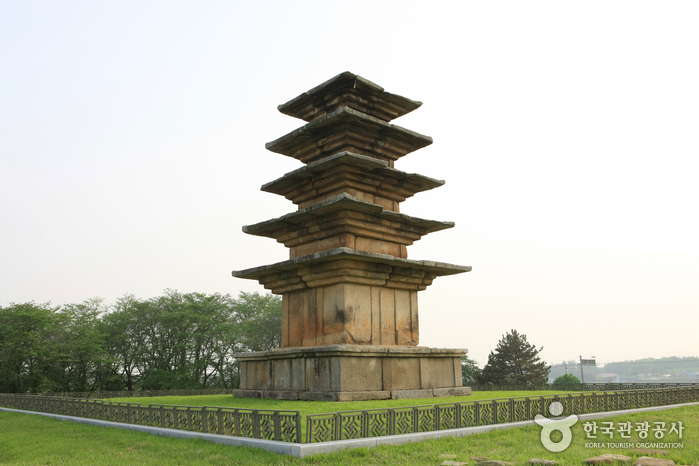
The Wanggung Five-story Stone Pagoda is located on a hill about 2 kilometers south of Wanggung-myeon in Iksan, which is believed to have been the capital of the nation during the Mahan Era. The pagoda stands tall at 8.5 meters and was officially designated as a National Treasure. Relics from the Goryeo dynasty that were found inside the pagoda were designated as a National Treasure and are currently housed in the National Museum of Korea. Of the excavated relics, the most famous; the Sarijangeomgu, a magnificent container of Buddha’s Sarira; the green glass Sarira bottle topped with a lotus-shaped stopper; and the Sungeumgeumganggyeongpan, which contains the 19 golden plates of the Diamond Sutra.
Iksan Godori Standing Stone Buddha (익산 고도리 석조여래입상)
19.4Km 2024-04-07
Donggodo-ri, Geumma-myeon, Iksan-si, Jeonbuk-do
+82-63-859-5792
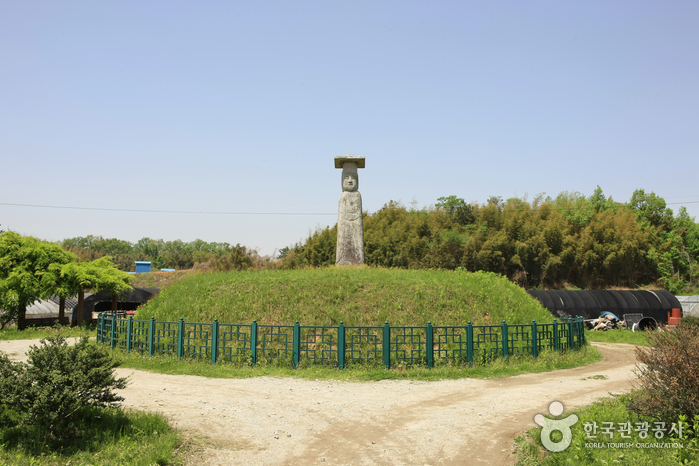
Iksan Godori Standing Stone Buddha is Treasure No. 46. The two Buddha statues (each measuring 424 cm) stand face-to-face at a distance of 200 meters apart and tell the story of an eternal, but unrequited love.
According to legend, the two Buddhas (one male, one female) are lovers that can only meet for one night in the twelfth month of the lunar calendar. After the sunset on that special day, the lovers are allowed to meet, but must return to their respective positions before the rooster crows at dawn.
The two statues are very representative of the Goryeo era, which produced many stone statues with minimal expression of the physical body. True to the era, each Buddha has almost no curves and is depicted with plain clothing and barely distinguishable arms.
On their heads, the Buddhas wear a crown topped with another square hat. With their square faces, small eyes, pug noses, and small lips, the Buddhas are reminiscent of guardian deities typically placed at the entrance of villages.
 English
 한국어
한국어 日本語
日本語 中文(简体)
 Deutsch
 Français
 Español
 Русский


