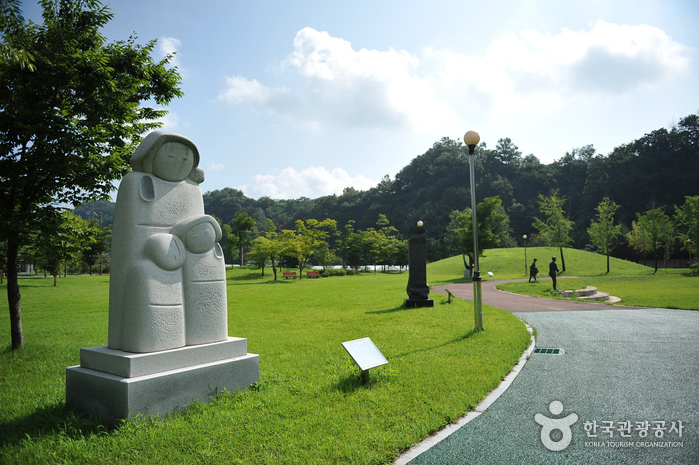
Saseondae Tourist Resort & Sculpture Park (사선대관광지&조각공원)
18.7Km 2024-04-07
68-7, Saseon 2-gil, Imsil-gun, Jeonbuk-do
Saseondae Tourist Area was established around the upper region of the Seomjingang River. The pine trees are dense, cherry blossoms bloom in spring, and autumn leaves are spectacular in fall in this area. At the Sculpture Park next to the Saseondae Tourist Area, visitors can enjoy sculptures by local sculptors and international artists from the nearby Ogung-ri Art Village.
![Archaeological Site in Wanggung-ri [UNESCO World Heritage] (익산 왕궁리유적 [유네스코 세계문화유산])](http://tong.visitkorea.or.kr/cms/resource/97/2514197_image2_1.jpg)
Archaeological Site in Wanggung-ri [UNESCO World Heritage] (익산 왕궁리유적 [유네스코 세계문화유산])
19.9Km 2024-04-07
666, Gungseong-ro, Iksan-si, Jeonbuk-do
Archaeological Site in Wanggung-ri, designated as Historic Site No. 408 on September 17, 1998, has a surface area of 216,862 square meters. The site has various structures and artifacts from Baekje dynasty to unified Silla period. Artifacts were found within the rectangular-shaped fortress site that surrounds Wanggungri Five-story Stone Pagoda, National Treasure No. 289.

Gimje Munsusa Temple (문수사(김제))
20.0Km 2024-04-07
158, Hwangsan 5-gil, Gimje-si, Jeonbuk-do
Munsusa Temple, located in Hwangsan-dong, Gimje, is a branch temple of Geumsansa Temple. The temple is located in the heart of nature atop Bonghwangsan Mountain (alt. 100 meters), which is surrounded by the seemingly endless Mangyeong Plains. The temple was built by the great monk Hyedeok Seonsa in the 25th year of King Mu of Baekje after he was visited in his dreams by Munsu Bosal (a Buddhist Saint). The temple was named ‘Munsu’ after ‘Munsugol,’ the original name of the neighborhood in which the temple is located.
In front of the temple stands an ancient zelkova tree whose giant girth measures well over 5 meters. The tree, which is called gwimok (meaning holy, miraculous tree), was recently designated a specially protected tree and is now the focus of preservation efforts. Every January 14th (according to the lunar calendar), local lovernment of Gimje holds a sacred ritual for the tree while the temple holds a ritual to honor the mountain spirit.
 English
 한국어
한국어 日本語
日本語 中文(简体)
 Deutsch
 Français
 Español
 Русский


