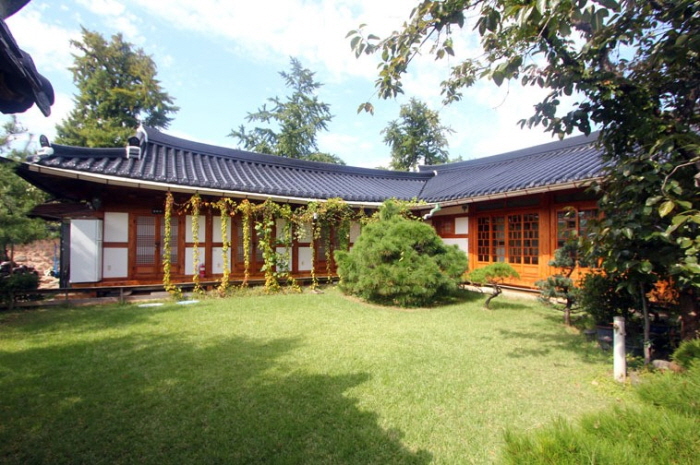
Bu Yong Heon / 부용헌
375.2M 2025-03-04
149-3 , Hyanggyo-gil, Wansan-gu, Jeonju-si, Jeonbuk-do
+82-10-8875-8587
Buyongheon is a Hanok stay in Jeonju Hanok Village, Jeollabuk-do, right next to the Jeonju Hyanggyo Confucian School. Accomodation is comprised of Toenmaru Bang, Daecheong Maru Bang, Large Daecheong Maru Bang and Big Sarangchae. The room is neat and feels the beauty of blank space. A culture experience program includes traditional etiquette and hanji making, while the Jeonju Hanbyeok Cultural Center and the Confucian school are reachable on foot. Jeonju Station and Jeonju Express Bus Terminal are 10 to 15 minutes away by car.
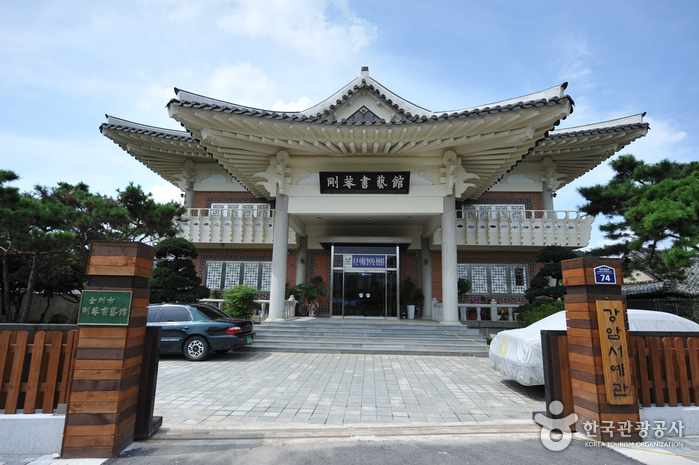
Gangam Calligraphy Museum (강암서예관)
397.1M 2024-04-07
74, Jeonjucheondong-ro, Wansan-gu, Jeonju-si, Jeonbuk-do
+82-63-285-7442
The Gangam Calligraphy Museum (est. 1995) in Jeonju Hanok Village has on display over 1,000 works from famous artists such as Kim Jeong-hee (1786-1856, calligrapher, painter, & scholar), Lee Sam-man (1770-1847, calligrapher), Kim Hong-do (1745-?, artist), and Jeong Yak-yong (1762-1836, scholar). This museum also houses a seminar room for calligraphy-related events and educational programs.

Hanok Garden in Jeonju / 전주한옥마당
407.3M 2025-03-05
80-13 , Jeonjucheondong-ro, Wansan-gu, Jeonju-si, Jeonbuk-do
+82-10-9494-4579
Jeonju Hanok Garden in Jeonju Hanok Village, Jeollabuk-do, is a guesthouse combining traditional hanok charm with modern comfort. All guestrooms have a modern bathroom and toilet and a toenmaru wooden porch, while two rooms (Hope and Faith) have an additional inner floors attached to it. The room interiors have exposed wooden beams and hanji-covered walls and doors. From any room, guests enjoy a view of the beautiful yard with its jangdokdae jar store, flower pots and young pine trees.
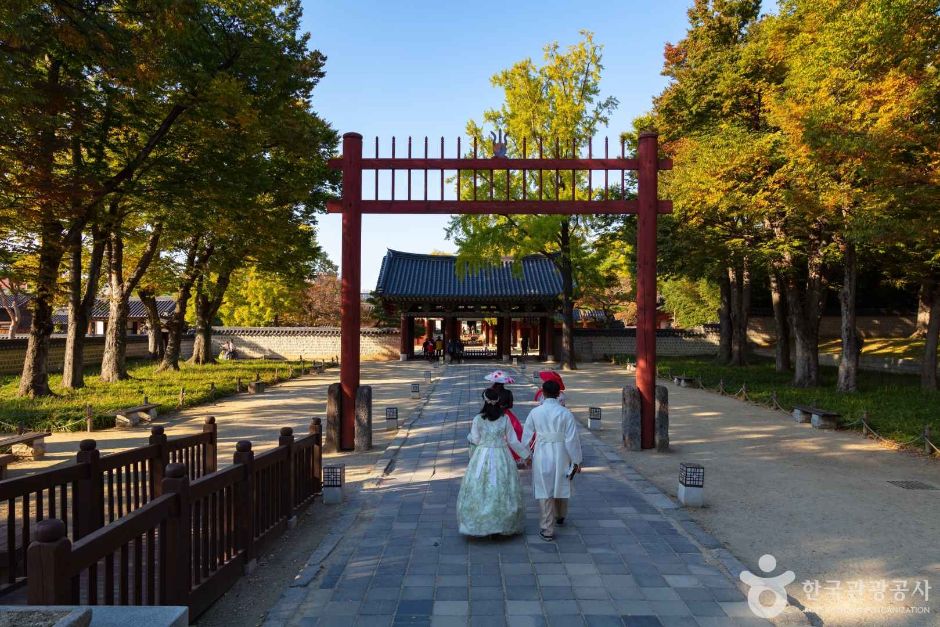
Gyeonggijeon Shrine (경기전)
429.9M 2025-10-23
44 Taejo-ro, Wansan-gu, Jeonju-si, Jeonbuk-do
A registered Historic Site, Gyeonggijeon Shrine was founded in 1410 and holds the portrait of King Tae-jo, the founder of the Joseon dynasty. The shrine was originally given the name Eoyongjeon, but was changed to its current name in 1442, the 24th year of King Sejong the Great. The structure was partially destroyed during the Imjin War (1592-1598), and was restored in 1614. Gyeonggijeon Shrine is beloved by the locals and tourists for its elegance and the lush tree groves in the middle of the city.
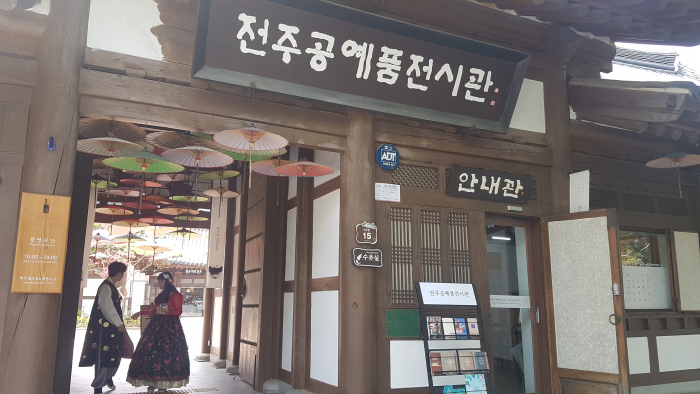
Jeonju Crafts Exhibition Hall (전주공예품전시관)
457.9M 2024-05-28
15 Taejo-ro, Wansan-gu, Jeonju-si, Jeonbuk-do
+82-63-281-1610
Jeonju Crafts Exhibition Hall promotes the beauty of traditional Korean crafts, and is made up of a Craft Hall, Special Exhibition Hall, and Experience Hall, Visitors can see traditional art works from master artisans as well as creative works from up-and-coming artists and designers. Visitors can also create their own handcrafted items in one of their many programs.
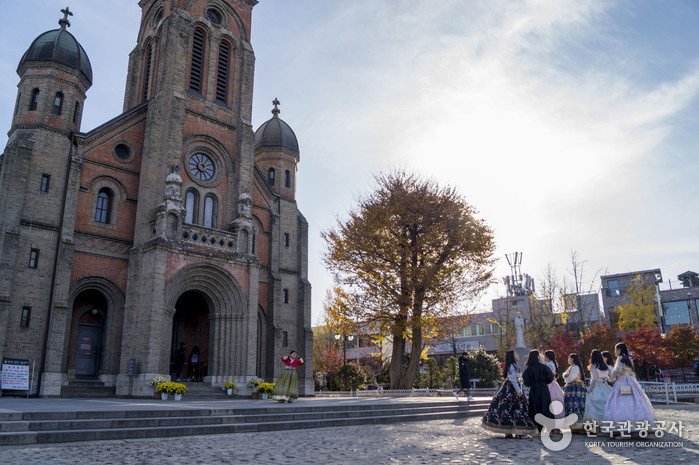
Jeonju Jeondong Catholic Cathedral (전주전동성당)
494.8M 2024-05-27
51 Taejo-ro, Wansan-gu, Jeonju-si, Jeonbuk-do
Jeondong Catholic Cathedral in Jeonju was built in honor of Roman Catholic martyrs of the Joseon dynasty on the very same spot the martyrs lost their lives. The land was purchased by French Priest Baudenet in 1891 (28th year of King Gojong), but construction of the church did not begin until 1908. Construction was completed in 1914, a time during which Korea was under Japanese rule. Though originally built just outside of Pungnammun Gate, the site of the martyrs, the church was later moved to its current location for expansion.
The first Romanesque building in the Honam region, Jeondong Catholic Cathedral is made of gray and red bricks and bears a striking resemblance to the Myeongdong Cathedral in Seoul, also designed by Priest Poinel. Not only considered one of the most beautiful Catholic churches in Korea, some even go so far as to say it is one of the most beautiful structures in all of Korea, citing the church’s unique combination of Byzantine and Romanesque architectural styles. The rectangular building is topped with three Byzantine bell towers (to the right, center, and left) and boasts arched ceilings, several of which meet in the form of a cross.
It is interesting to note that some of the bricks used in construction of the church were made using materials from the Jeonjueupseong Walled Town, which was torn down by the Japanese. It is also said that the cornerstone of the church came from a wall of Jeonjueupseong Walled Town near Pungnammun Gate.
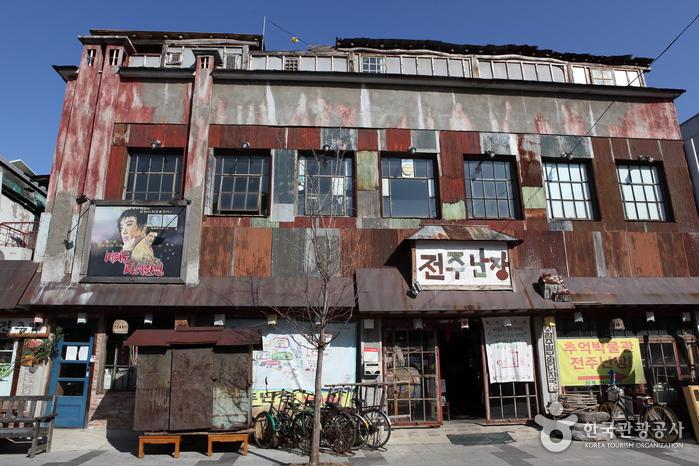
Jeonju Nanjang (전주난장)
494.8M 2024-04-06
33-20 Dongmun-gil, Wansan-gu, Jeonju-si, Jeonbuk-do
Jeonju Nanjang is a theme park style museum with over 25 years of materials for an attraction within Jeonju Hanok Village perfect for photo shoot and experience programs. There are more than 70 theme zones as well as a water well that is over 110 years old. Visitors can enjoy the retro feel as they roam around a museum filled with history.
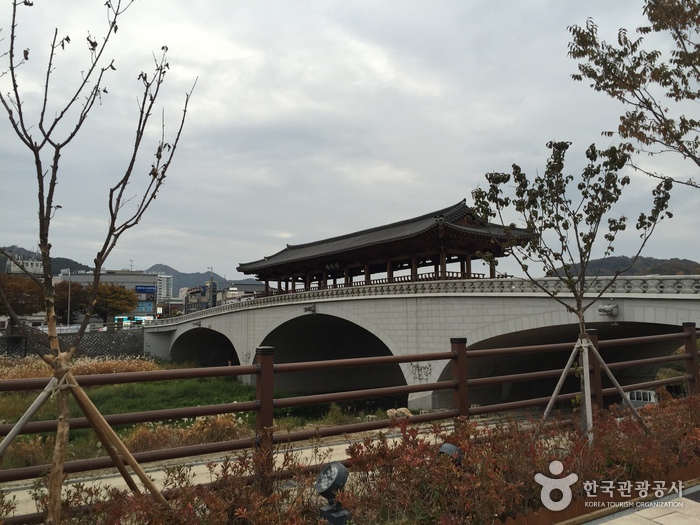
Namcheongyo Bridge Cheongyeonru (남천교 청연루)
495.1M 2024-04-07
40 , Cheongyeong-ro, Wansan-gu, Jeonju-si, Jeonbuk-do
+82-63-281-5361
Namcheongyo Bridge is the main bridge to the entrance of Jeonju Hanok Village. Through "Jeonju Namcheongyo Luxury Project," the area went through renovation strengthening infrastructure and adding Cheongyeonru Pavilion to the bridge. Visitors can enjoy a panoramic view of the area from the hanok pavilion or rest from the heat.
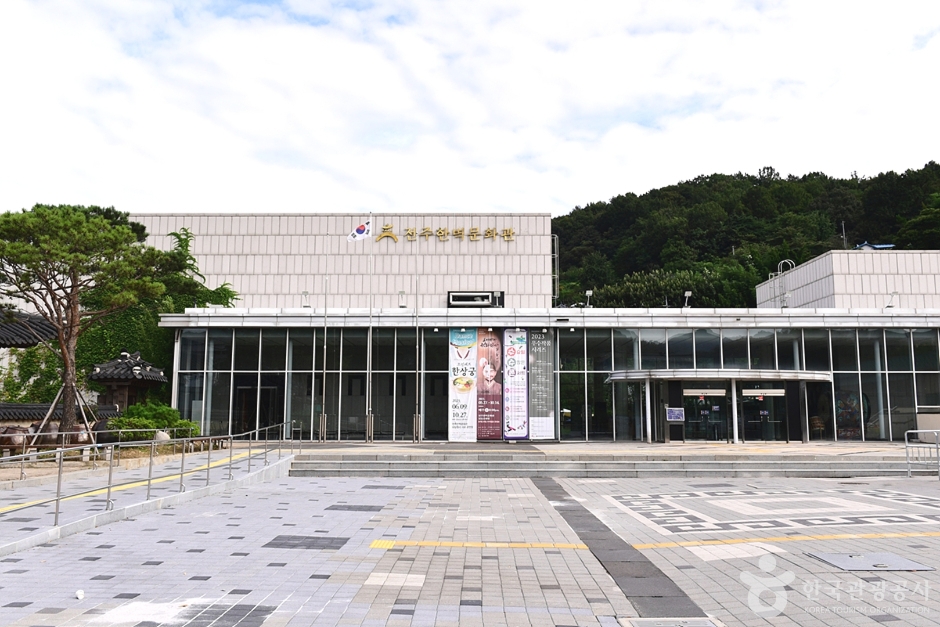
Jeonju Hanbyuk Cultural Center (전주한벽문화관)
502.4M 2024-04-06
20 Jeonjucheondong-ro, Wansan-gu, Jeonju-si, Jeonbuk-do
Jeonju Hanbyuk Cultural Center is a complex cultural space for performances and exhibitions located in Jeonju Hanok Village. Visitors can see Jeonju Madang Changgeuk and the "FANTASIE" series of performing arts, which is a genre-neutral performance of Eastern and Western works. The exhibition room displays paintings, sculptures, and engravings. The center provides traditional cultural experience programs, such as traditional food cooking, hanji (traditional Korean paper) crafts, tea ceremonies, and folk paintings. Traditional weddings are also available in the center.
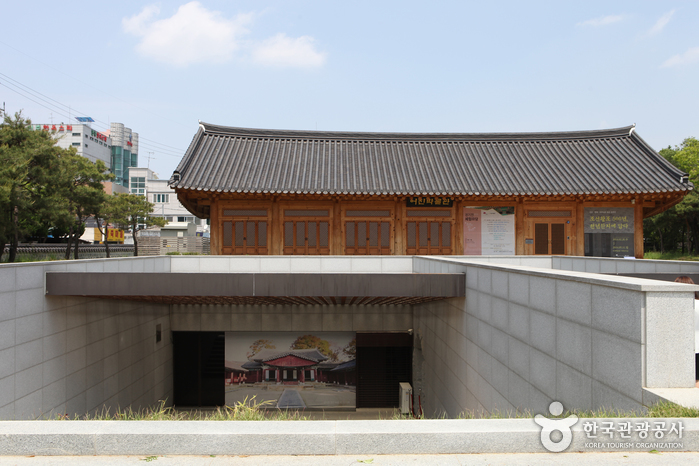
Royal Portrait Museum (어진박물관)
506.8M 2024-04-07
44, Taejo-ro, Wansan-gu, Jeonju-si, Jeonbuk-do
+82- 63-231-0090
Opened on November 6, 2010, the Royal Portrait Museum is one of the newest attractions of Jeonju, located within the Gyeonggijeon Shrine. Royal Portrait Museum is a valuable museum as a new tourism resource of Jeonju as well as Gyeonggijeon Shrine and the Portrait of King Taejo, as well as other various high-class exhibitions to preserve, manage, and enhance the glorious cultural assets of Joseon royal family. The museum is comprised of one above-ground level and one underground level with an area of 1,193.71 square meters. The Portrait of King Taejo and six other king’s portraits (Portrait of King Sejong, King Yeongjo, King Jeongjo, King Cheoljong, King Gojong, and King Sunjong) are exhibited on the first floor. The portraits are preserved in temperature- and humidity-controlled cases. In addition, the museum houses History Hall, Palanquin Hall, a planned exhibition hall, resting area, management office and storage room for relics. Palanquin Hall exhibits Hyangjeong (Palanquin for Incense Burner and Case), Sinyeon (Palanquin for Royal Portrait and Palanquin for Mortuary Tablet), Chaeyeo (Palanquin for High Officials), Gagyo (Palanquin for Ritual Items) featuring Korea’s sole preserved palanquin. History Hall houses approximately 80 relices related to Gyeonggijeon Shrine and Jogyeong Shrine, ancestral ritual ceremony, building, and others relics. Since the museum's opening, it makes continual efforts to become a central place for Jeonju residents to fulfill their cultural feelings. The museum operates various program like exploring famous historic sites in Gyeonggijeon Shrine, hands-on programs such as a guard experience to protect the shrine, and duplicating Gyeonggijeon Shrine’s relics using traditional portrait-making techniques.
 English
 한국어
한국어 日本語
日本語 中文(简体)
 Deutsch
 Français
 Español
 Русский


