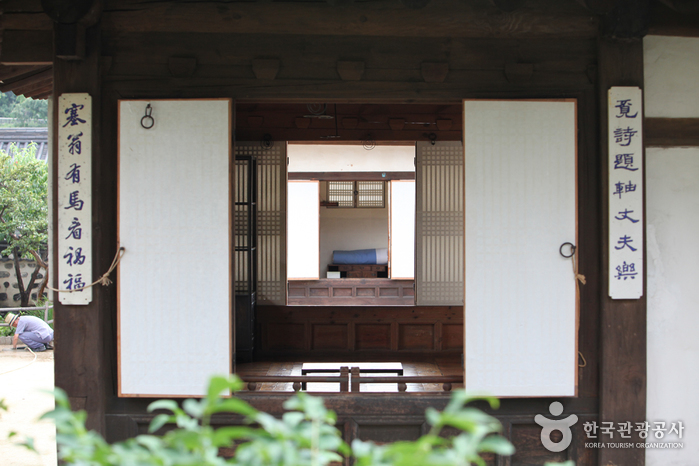
Haepungbuwongun Yun Taekyeong's Jaesil (해풍부원군윤택영댁재실)
14.3Km 2021-11-10
28, Toegye-ro 34-gil, Jung-gu, Seoul
+82-2-3396-5882
Haepungbuwongun Yun Taekyeong's Jaesil is a shrine house built by the father-in-law of King Sunjong of Joseon dynasty in 1906 when his daughter was proclaimed the crowned princess of Joseon and entered Changdeokgung Palace to later become Queen Sunjeong. Red pine trees salvaged from the demolition of Gyeongungung Palace were used to construct the house. It was originally located in Jegi-dong, Dongdaemun-gu, but was later restored and moved to its present location. The shrine of the house that was destroyed in 1960 was also restored.
Because the house is more of a shrine rather than residential living quarters, it has many unique features. For example, unlike other houses, it has the anchae (women’s quarters) located across from sarangbang (men’s quarters) with daecheong (living room) positioned between them.

Sewoon Plaza (세운상가)
14.4Km 2025-12-16
159 Cheonggyecheon-ro, Jongno-gu, Seoul
Makercity Sewoon is Korea's first comprehensive electronics market, established in 1968 and has a 40-year history. As a mecca in the urban electronics industry area located in Jongno, the center of Seoul, you can purchase various electronic products here.
Since 2014, Seoul's urban regeneration project has been underway, and a pedestrian overpass, rooftop observatory, plaza, and Makers Cube, where you can experience the 4th industrial revolution, have been created to provide unique attractions.
◎ Travel Information to Discover Hallyu’s Charm - K-Drama "Vincenzo (2021)"
"Vincenzo" depicts the story of Vincenzo (Song Joong-ki), an Italian mafia lawyer who teams up with the tenants of “Geumga Plaza” to protect a hidden stash of gold in the building from a powerful force. The building appearing as “Geumga Plaza” in the drama is none other than Seoul's Sewoon Plaza. Its retro-style aesthetic adds a unique ambience to the show and makes its scenes even more memorable.
Itaewon Special Tourist Zone (이태원 관광특구)
14.4Km 2024-11-27
196 Itaewon-ro, Yongsan-gu, Seoul
Itaewon was the first special tourist zone in Seoul, designated in 1997. It is a multicultural place where over 20,000 foreigners live and is widely recognized by international visitors.
The name Itaewon started to spread worldwide in the 1980s when Korea hosted the 1986 Seoul Asian Games and the 1988 Seoul Olympic Games, as well as many international conferences. Since then, Itaewon has become a popular travel destination. Clothes and accessories with unique designs, and leather products in particular are famous. This is a go-to place for both shopping and entertainment. The street is crowded with shops selling clothes and bags, as well as hotels, restaurants, entertainment facilities and travel agencies. With about 2,000 shops and stores lining every street, visitors can experience a multicultural atmosphere. Also famous in the district is Antique Furniture Street where more than 100 shops selling furniture and antiques stretch from Hamilton Hotel toward Bogwang-ro.
Travelers can taste authentic cuisine and experience culture from around the globe on World Food Street where there are 40 restaurants operated by foreigners. Since the late 1990s, an increase in the number of tourists from Southeast Asia and the Middle East has transformed the streets from being US Army-oriented into culturally diverse. Various performances and events are held in the area. In particular, Itaewon Global Village Festival, held every October, is a famous festival. Tourists can pay in US dollars, Japanese yen, or another currency freely. In addition, visitors can use various languages like English, Japanese, and Chinese with the sellers.
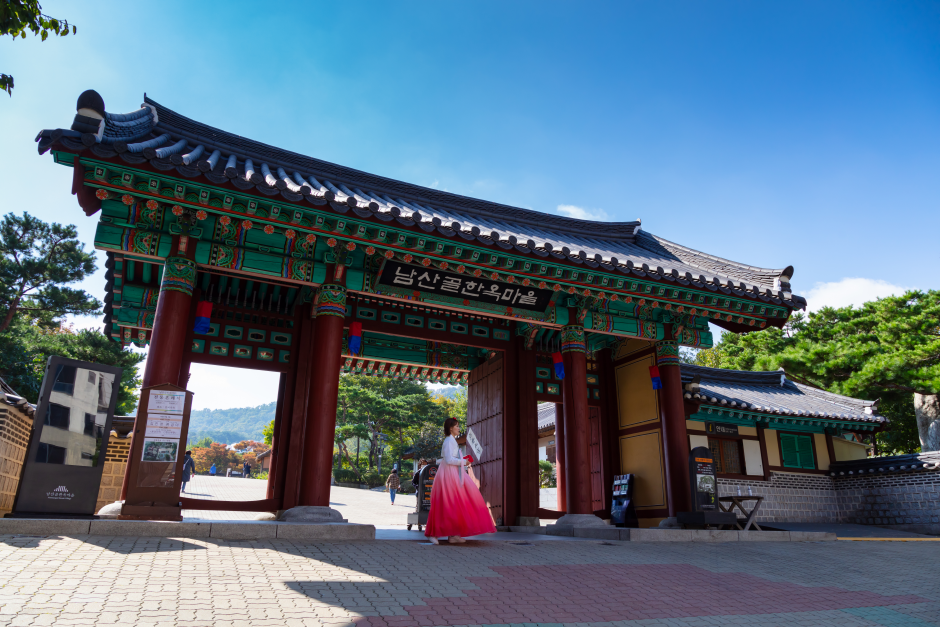
Namsangol Hanok Village (남산골한옥마을)
14.4Km 2025-07-14
28 Toegye-ro 34-gil, Jung-gu, Seoul
Namsangol Hanok Village opened in 1998 on the northern side of Namsan Mountain in the center of the capital. This village has five restored hanok (traditional Korean house) premises, a pavilion, a traditional garden, a performance art stage, and a time capsule plaza, making it a perfect spot for locals and tourists to take a leisure walk. Upon entering from the front gate, visitors will get a taste of Korea's traditional life while escaping from bustling city life. The traditional garden with its pavilion and old houses creates a peaceful ambiance before the forested Namsan Mountain. A time capsule commemorating Seoul’s 600th anniversary was buried in 1994 at the highest point of the village and is scheduled to be reopened 400 years later in 2394.
The five hanok premises at Namsangol Hanok Village once belonged to aristocrats and government officials of the Joseon dynasty. Each house was originally located in a different neighborhood, but they were all moved to this area and restored to their original form. The houses were rebuilt using their original materials, except for one house, where the materials were too old and deteriorated to be reused. The premises were carefully restored and replicated according to their original form to depict the owners’ social class and personality. These buildings are now used as an exhibit to portray the living environment during the Joseon dynasty and as a venue for educational and cultural programs for children and tourists.
Some of the unique programs and activities to participate in include wearing hanbok, folding hanji (traditional Korean paper), writing in Korean, traditional tea ceremony, traditional etiquette school, and herbal medicine experience. There are also taekwondo demonstrations and other various performances held around the village. Visitors can also try traditional games such as yunnori (traditional board game), or understand more about the area through a guided tour.
MS Eye Clinic (엠에스안과의원)
14.4Km 2025-10-23
2F, 189 Sinbanpo-ro, Seocho-gu, Seoul
MS Eye Clinic has attracted international patients by establishing MOUs with several countries. The clinic has nine branches across Korea, with potential for further development.
The clinic offers improved K-medical services through non-discriminatory treatments and prices for both domestic and overseas patients. It takes pride in its medical expertise and technological power with its university and general hospital partners, which have MOUs with the clinic and refer patients who require surgery to the clinic.
To provide better medical services, the clinic has examination and surgical equipment and surgical staff members of university hospital-level or higher. One of the merits of the clinic is that it provides general outpatient care in addition to treatments for presbyopia/cataract surgery, Silk SMILE LASIK, Dream Lenses, dry eye syndrome, retinal diseases, and oculoplastic surgery.
Kervan Turkish Restaurant (케르반레스토랑)
14.4Km 2025-03-15
192 Itaewon-ro, Yongsan-gu, Seoul
Kervan is a Turkish restaurant located in Itaewon, offering authentic kebab, pidé, and Turkish desserts. It faithfully recreates the Turkish culture and food through its interior, decorated with traditional tiles, and dishes prepared by a chef from Türkiye. Main menus include Chicken steak, Rich pidé, and Chicken shish kebab.
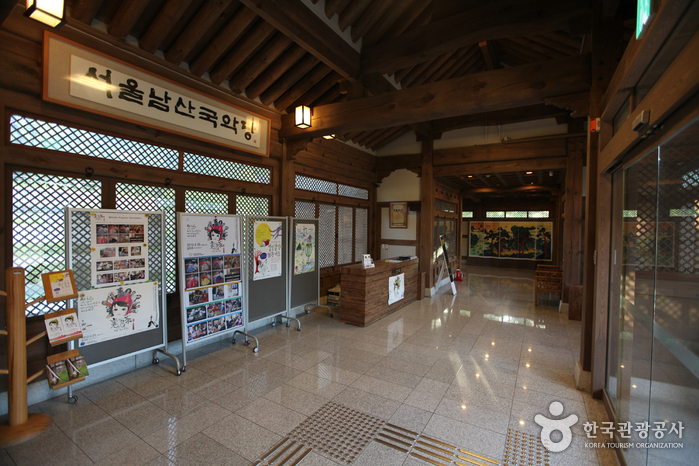
Seoul Namsan Gugakdang (서울 남산국악당)
14.4Km 2021-08-02
28, Toegye-ro 34-gil, Jung-gu, Seoul
+82-2-2261-0500
Seoul Namsan Gukakdang was established by Seoul Metropolitan Government as a representative traditional art-centered performance hall in 2007. It is comprised of one ground and two basement levels. The performance hall is located on the basement floor with 300 seats, equipped with facilities that deliver pansori sounds and gayageum music to every seat. Visitors can make a reservation at the Namsangol Hanok Village website.
Healthpedia Co., Ltd. (㈜헬스피디아)
14.4Km 2025-10-23
#1014, 2 Toegye-ro 36-gil, Jung-gu, Seoul
HealthPedia is a medical tourism service that connects foreign patients with specialized clinics in Korea, such as dermatology and plastic surgery. We collaborate with partner hospitals by specialty to assist with appointment booking, interpretation, accommodation guidance, as well as pre- and post-treatment consultations and recovery programs. Multilingual support is available in English, Chinese, Vietnamese, and more for a convenient reservation experience.
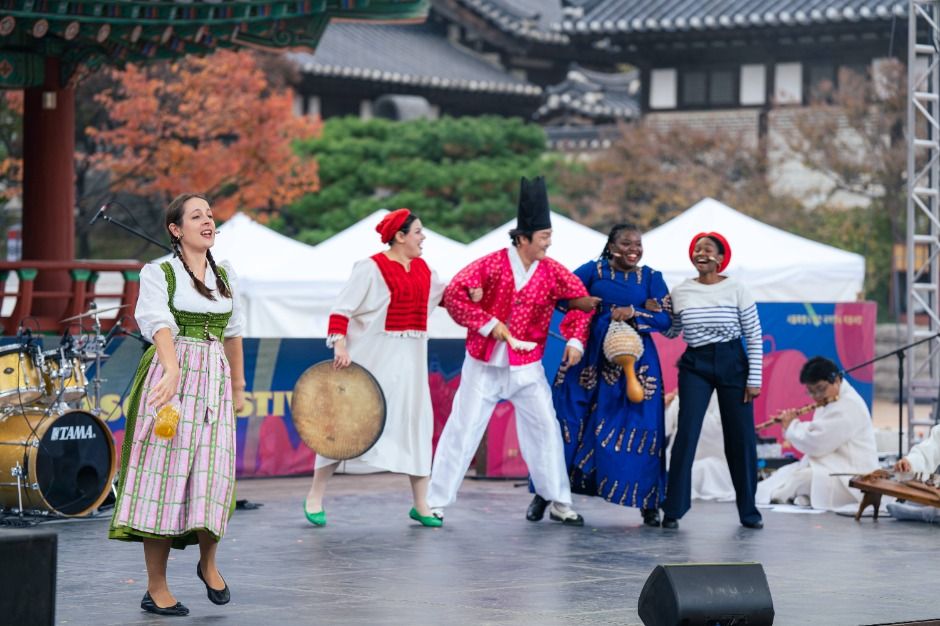
World Pansori Festival (월드판소리페스티벌)
14.4Km 2025-07-30
28 Toegye-ro 34-gil, Jung-gu, Seoul
+82-2-904-2835
World Pansori Festival is an international music festival that aims to promote pansori, the traditional Korean epic chant, and its values. The festival consists of a variety of performances and concert programs based on its yearly theme. In addition, the festival also has interactive activities for the attendees, such as a free pansori lesson and arts-and-crafts, to make pansori and traditional Korean music more accessible to the public.
 English
 한국어
한국어 日本語
日本語 中文(简体)
 Deutsch
 Français
 Español
 Русский


