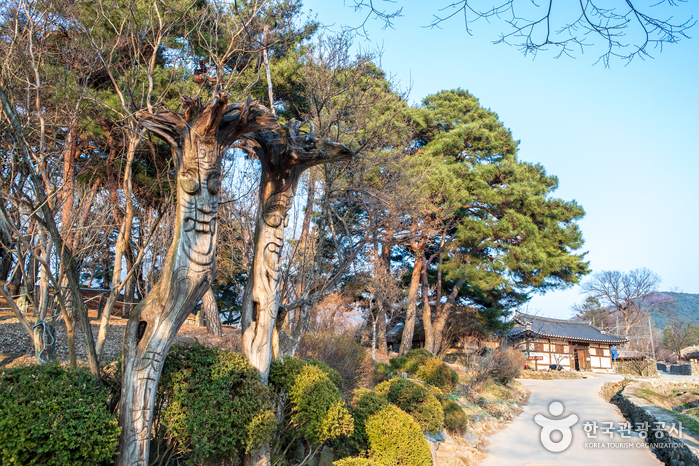
Oeam Folk Village (외암민속마을)
16.0Km 2025-12-16
13-2 Oeamminsok-gil 9beon-gil, Songak-myeon, Asan-si, Chungcheongnam-do
+82-41-540-2110
Oeam Folk Village, located in Asan, boasts a history spanning over 500 years. This agricultural village has preserved its ancient houses and cultural heritage remarkably well. At the entrance, visitors are greeted by a recreation of a traditional market. The village offers Hanokstay programs, allowing guests to stay in traditional Korean houses, and provides interactive experiences that recreate traditional Korean agricultural practices and crafts.
◎ Travel Information to Discover Hallyu’s Charm - K-Drama "Missing: The Other Side 2 (2023)"
The main filming location for the K-Drama "Missing: The Other Side 2" is Oeam Folk Village. As the protagonists investigate the truth in a village of souls that only they can see, the peaceful scenery of Oeam Folk Village provides a mysterious backdrop, adding depth and immersion to the series.
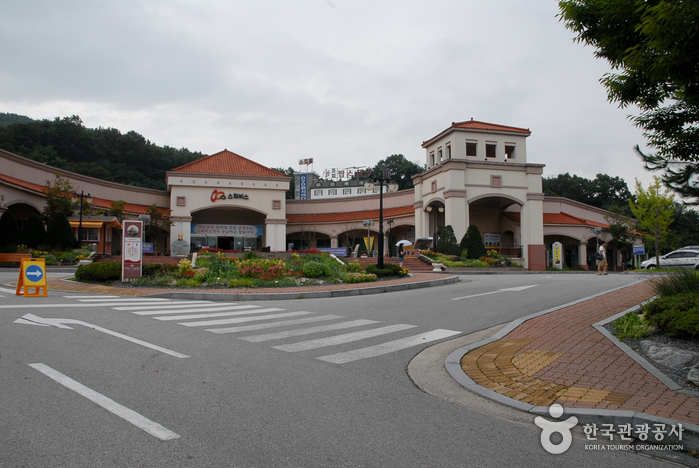
Asan Spavis (아산스파비스)
16.2Km 2024-06-05
67 Asanoncheon-ro 157beon-gil, Eumbong-myeon, Asan-si, Chungcheongnam-do
Asan Spavis, a comprehensive hot springs resort established in July 2008, offers a diverse range of relaxation and entertainment options. Guests can enjoy both indoor and outdoor pools, various sauna facilities, and a unique event pool that features twenty-three distinct themes throughout the year, including tangerine, herbs, and rose. Additionally, the resort boasts a theme park equipped with a 75-meter-long wave pool and multiple slides, providing fun and excitement for all ages.
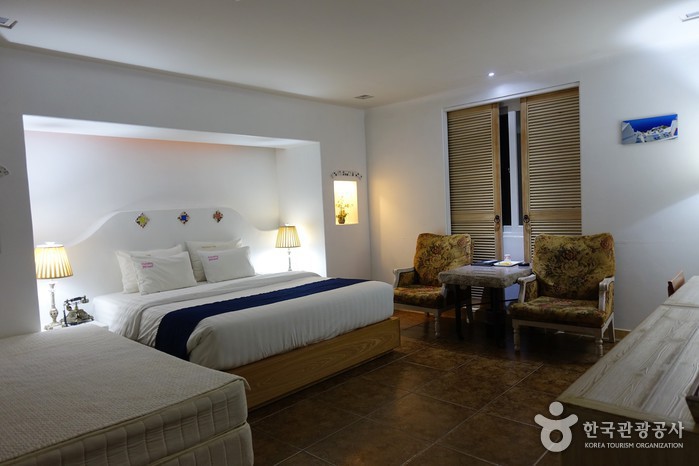
Paradise (파라다이스)
16.7Km 2024-12-23
7-7 , Asanoncheon-ro 157beon-gil, Asan-si, Chungcheongnam-do
+82-41-543-4900
Located in Asan, Chungcheongnam-do, Paradise Hotel is surrounded by mountains and has a spacious and convenient parking lot. All rooms have a Mediterranean-style layout and interior, while the popular VIP rooms come with either jacuzzi, bath tub or sauna. The hotel is clean and well managed, and all rooms are suitable for families.

Unjusanseong Fortress (운주산성)
16.9Km 2021-08-31
Migok-ri, Sejong-si
+82-44-300-3423
Unjusanseong Fortress, also known as Gosansanseong Fortress, is a cultural heritage of the Baekje dynasty. This is a mountain fortress built along the surrounding three mountain peaks in the westernmost and southernmost parts of Unjusan Mountain. The stone fortress wall, which borders three villages in Jeondong-myeon and two villages in Jeonui-myeon, is 3,210 meters long and two meters wide with a x_height that ranges from two to eight meters. The walls follow the natural geographical features of the mountain range, with the southern walls surrounding the mountain's peak.
Remnants of a village can still be observed within the fortress walls, such as the fortress gate and a ritual site. Pieces of earthenware from the Baekje period, porcelain from the Goryeo and Joseon periods, and broken tiles from the Baekje, Goryeo and Joseon periods have been discovered around the site as well.
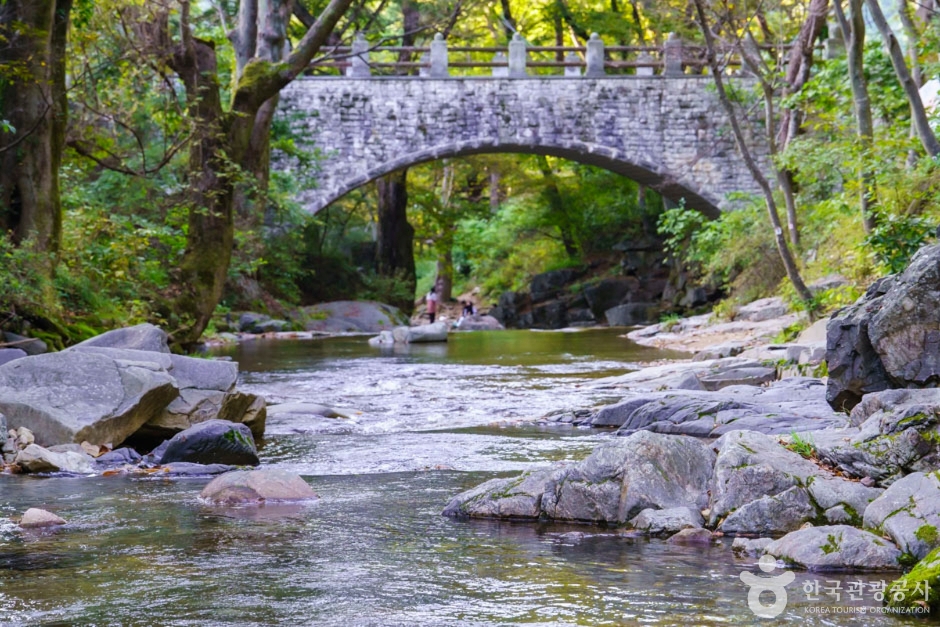
Gangdanggolgyegok Valley (강당골계곡)
17.4Km 2024-02-22
510, Gangdang-ri, Songak-myeon, Asan-si, Chungcheongnam-do
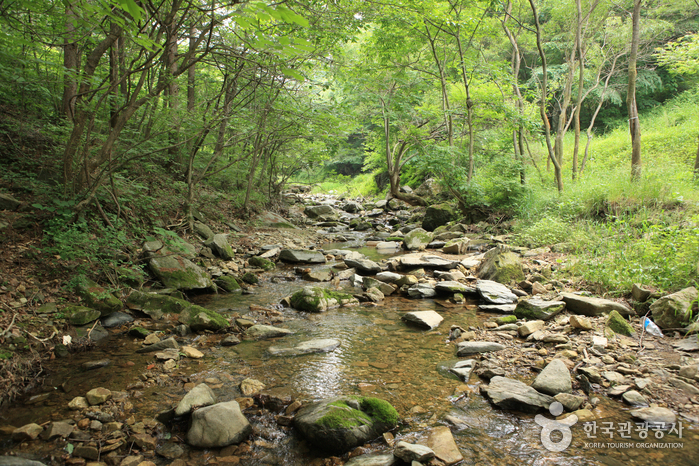
Gangdanggolgyegok Valley is located at the northern foot of Gwangdeoksan Mountain at the boundary between Asan and Cheonan, through which the Oeamcheon Stream flows. The valley has clear water and a lush forest, making it a great place for forest bathing and summertime swimming. Gwangdeoksan Mountain also has excellent hiking trails. The village has campgrounds and pensions for accommodations, along with several restaurants.
Yeongok Valley (연곡계곡)
17.9Km 2024-05-28
Sanggye-ri, Jincheon-eup, Jincheon-gun, Chungcheongbuk-do
Yeongok Valley, situated south of Malloesan Mountain in Jincheon, is adjacent to a picturesque lake formed by damming the Seongamcheon Stream. This verdant, forested valley, with its clear water sounds, birdsongs, and refreshing breeze, offers a serene escape, perfect for cooling both body and mind during the summer. Additionally, nearby shops and restaurants, pensions, and Malloesan Ecological Park provide further opportunities for exploration and enjoyment.
Sejong Traditional Paste Museum (세종전통장류박물관)
18.4Km 2025-05-20
90-43 Baeil-gil, Jeondong-myeon, Sejong-si
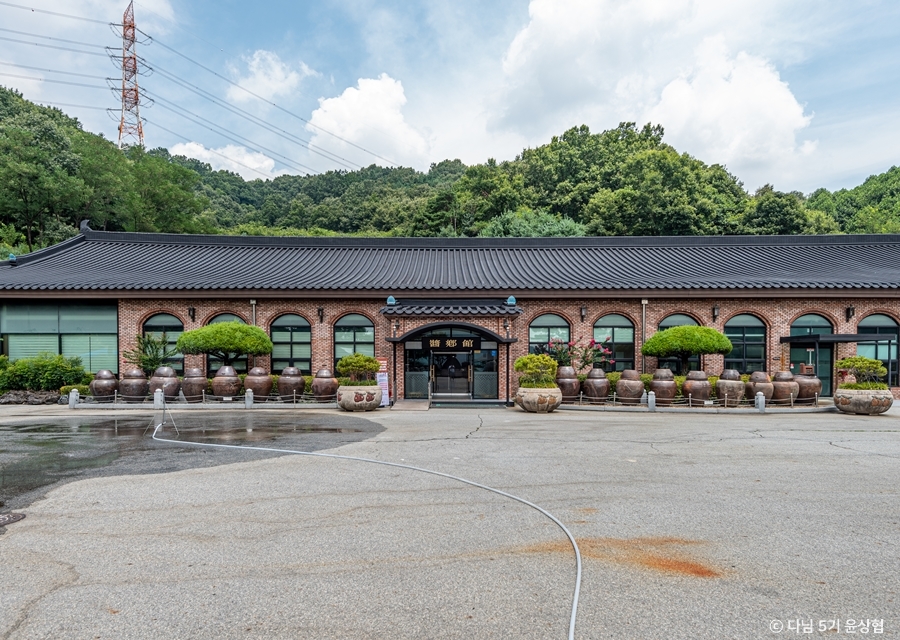
The Sejong Traditional Paste Museum highlights Korea’s traditional sauce culture, featuring staples like soybean paste, red chili paste, and soy sauce. Its garden, with over 1,000 pots, is a standout attraction. The museum includes indoor exhibition halls, an outdoor exhibit area, a fermentation experience center, a Korean restaurant specializing in fermented sauces, and a paste shop. Visitors can participate in activities such as making grain soap shaped like meju (fermented soybean blocks) or creating their own fermented pastes. In November, visitors can also observe the process of making soybean paste and red chili paste.
Yeonginsan Recreational Forest (아산 영인산자연휴양림 숲속야영장)
18.5Km 2022-09-07
16-26, Asanoncheon-ro, Asan-si, Chungcheongnam-do
+82-41-538-1958
Yeonginsan Recreational Forest is situated on Yeonginsan Mountain in Asan-si, Chungcheongnam-do. The summit of the mountain provides a panoramic view of the surroundings including the west sea, Sapgyocheon Stream, and more. Various facilities are also available including accommodations and water play site. There are many tourist attractions nearby for visitors to enjoy.
Anseong Seoknamsa Temple (석남사(안성))
18.9Km 2024-01-03
3-120 Sangchonsaemal-gil, Anseong-si, Gyeonggi-do
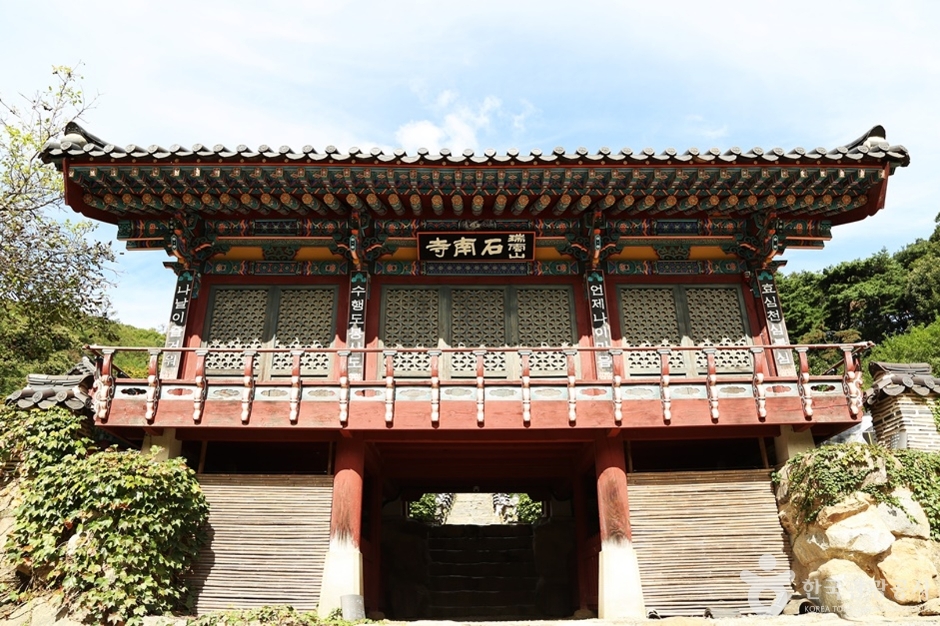
Seoknamsa Temple is located at the northeastern foot of Seounsan Mountain, 12 kilometers from Anseong. It’s a small temple but the view of stone steps leading up from the temple entrance to the Daeungjeon Hall is worth seeing. Seoknamsa Temple is known to have been presided by prominent monks such as Monk Hyegeo in the Goryeo dynasty. It is also where hundreds of monks in training stayed and practiced Buddhism at the time. The Daeungjeon Hall, which has three rooms on the front and three rooms on the sides, looks simple yet imposing with its gabled roof with double-layer eaves. The building with a hipped and gable roof resembling a crane flying right below the Daeungjeon Hall harmonizes with the Yeongsanjeon Hall. Seoknamsa Temple, which looms over the site, exudes a charm that immerses visitors with the energy of Seounsan Mountain. The Yeongsanjeon Hall also has a hipped and gable roof and three rooms in front and two rooms on the side. The sharp end of the roof is gently hidden in the forest, adding an elegant atmosphere. This building has great architectural significance because its bracket demonstrates the typical design of the early and middle Joseon dynasty. The temple also houses many cultural heritages such as the Yeongsanjeon Hall, where 16 Nahan are enshrined, the Daeungjeon Hall, and Rock-carved Stone Buddha, as well as local relics such as stone pagodas and stupas.
Cheonan Gwangdeoksa Temple (광덕사(천안))
18.9Km 2021-12-01
30, Gwangdeoksa-gil, Dongnam-gu, Cheonan-si, Chungcheongnam-do
+82-41-567-0050
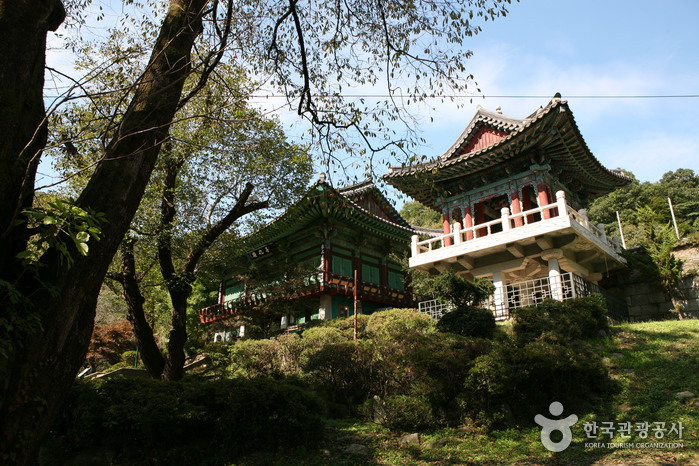
Gwangdeoksa Temple is said to be established in 637 by Monk Jajang Yulsa during the Silla Kingdom and was refurbished during the reign of King Heungdeok (832). The temple sits in the southeast of Gwangdeoksan Mountain, which borders Asan-si and Cheonan-si, and the southwest of Taehwasan Mountain. It was the biggest temple within Chungcheong and Gyeonggi regions before the Japanese invasion. However, it was burnt down during the Japanese invasion and the main buildings such as Daeungjeon, Myeongbujeon and Cheonbuljeon Halls are relatively new compared to the other original facilities.
 English
 한국어
한국어 日本語
日本語 中文(简体)
 Deutsch
 Français
 Español
 Русский


