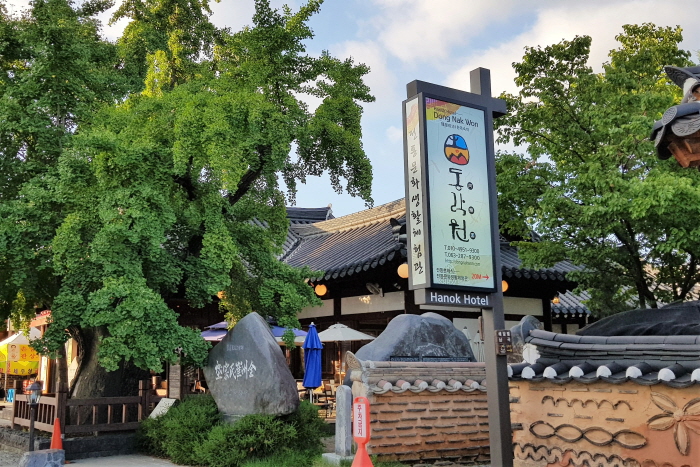
Dong Nak Won / 동락원
702.8M 2025-03-05
33-6 , Eunhaeng-ro, Wansan-gu, Jeonju-si, Jeonbuk-do
+82-63-287-9300, +82-10-4951-9300
Dongnagwon is a hanok hotel in Jeonju Hanok Village, Jeollabuk-do. It was built as a memorial hall for the missionary William Junkin, who founded a school mission in Jeonju in 1895. Now refurbished as a hotel and venue for traditional performances, wedding ceremonies and seminars, visitors will find old-style interiors with antique furniture and folding screens. Guests can play traditional games in the yard, and there is a red clay room to relieve the fatigue of travel, free of charge. Mountain bikes can be borrowed to ride around the Hanok Village or on the banks of the Jeonjucheon Stream.
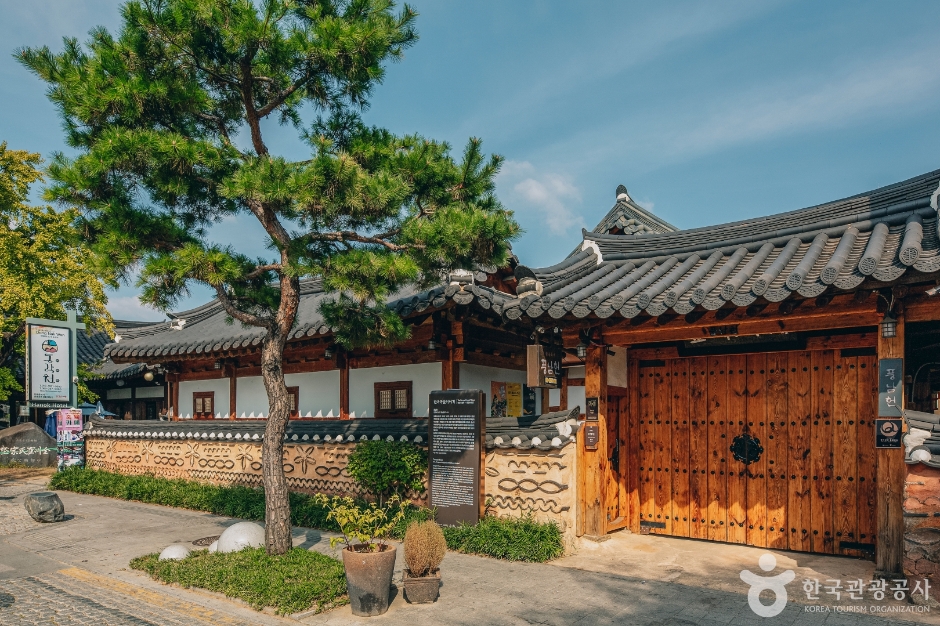
PoongNamheon (풍남헌)
716.4M 2024-08-05
35 , Eunhaeng-ro, Wansan-gu, Jeonju-si, Jeonbuk-do
+82-63-286-7673, +82-10-2757-7673
Pungnamheon is a hanok stay in a traditional nobleman's house in Jeonju, Jeollabuk-do. Next to the house stands a 600-year-old ginkgo tree, the guardian spirit of Jeonju Hanok Village. Two unusual features of this hanok is that there is no wood-floored hall or daecheong, and the toenmaru wooden porch is extra wide, and has a window. The floors are finished with laquered hanji (Korean paper), and the roof tiles were made in Goryeong. Old folding screens and Korean paintings complete the atmosphere of a traditional yangbang house. Guests have a chance to taste wild green tea gathered and made by the owner.
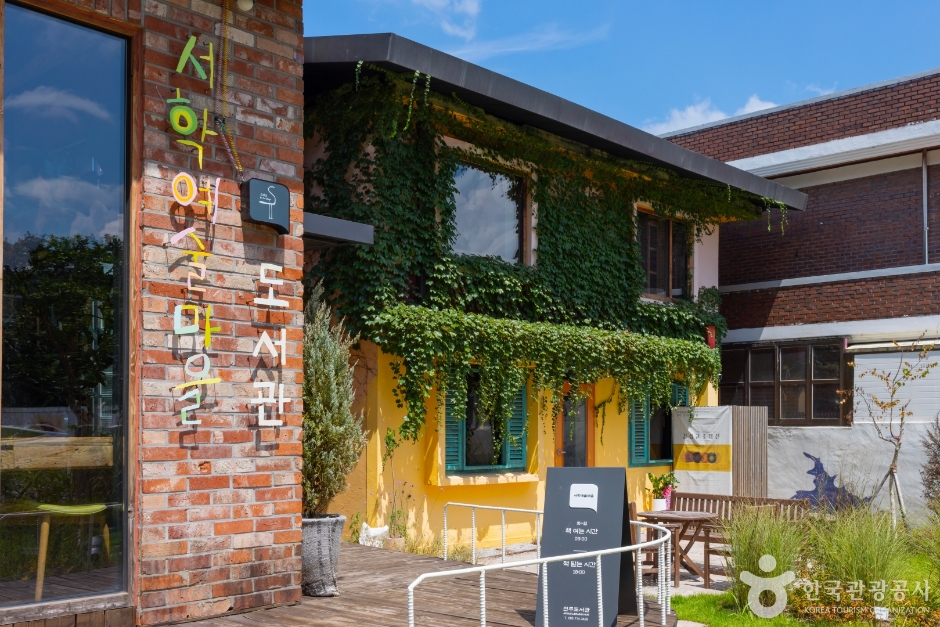
Seohak Art Village Library (서학예술마을도서관)
746.7M 2024-04-06
12-1 Seohak-ro, Wansan-gu, Jeonju-si, Jeonbuk-do
Seohak Art Village Library opened June 2022 in Jeonju, Jeollabuk-do. The library consists of nearly 1,000 books, making it rather small. However, the library makes up for its size with pretty decorations, making visitors want to stay longer. The library is located in an old building that was previously a cafe and gallery, so the library feels more like a book cafe.
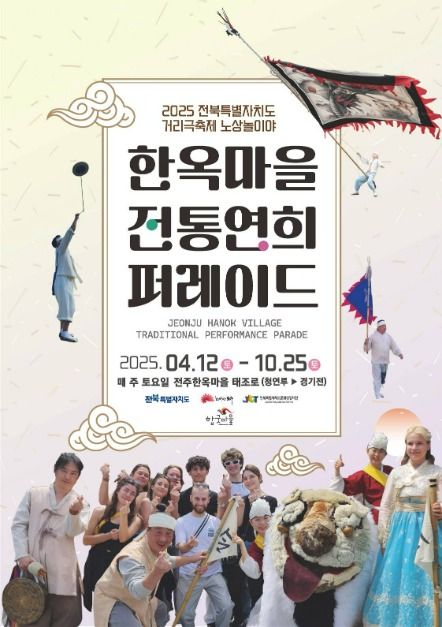
Jeonju Hanok Village Traditional Performance Parade (한옥마을전통연희 퍼레이드-노상놀이야)
763.1M 2025-04-24
44 Taejo-ro, Wansan-gu, Jeonju-si, Jeonbuk-do
+82-63-236-1577
The Jeonju Hanok Village Traditional Performance Parade is packed with various street performances, allowing visitors to experience Jeonju’s folk culture on the streets. During the parade, visitors can witness Jeonju Gijeopnori, a representative traditional performance of Jeonju, Madang-nori, a traditional performance featuring dance, music, and storytelling through various forms, or sing along to folk labor songs.
Gyeonggijeon Shrine (경기전)
811.8M 2025-10-23
44 Taejo-ro, Wansan-gu, Jeonju-si, Jeonbuk-do
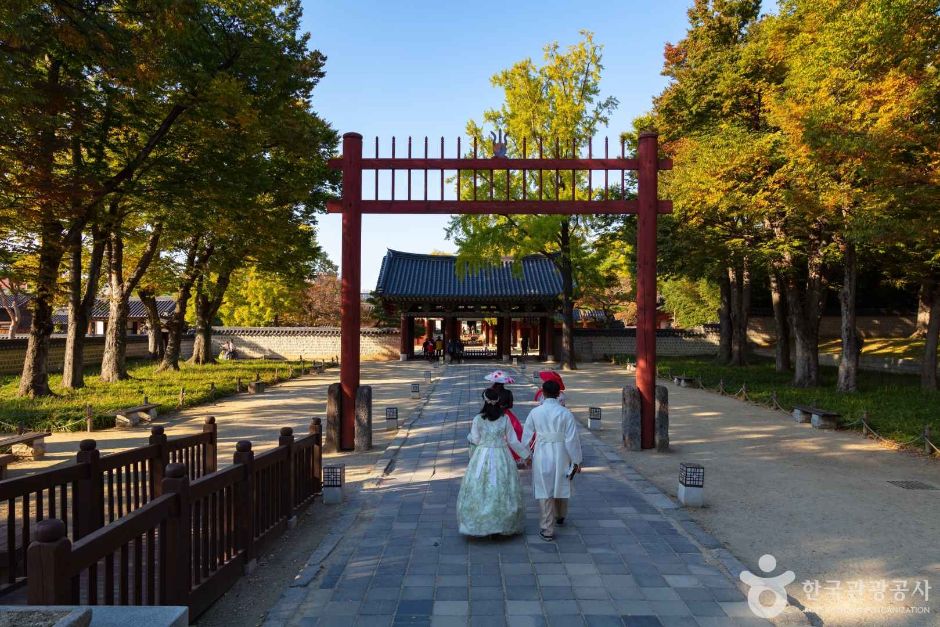
A registered Historic Site, Gyeonggijeon Shrine was founded in 1410 and holds the portrait of King Tae-jo, the founder of the Joseon dynasty. The shrine was originally given the name Eoyongjeon, but was changed to its current name in 1442, the 24th year of King Sejong the Great. The structure was partially destroyed during the Imjin War (1592-1598), and was restored in 1614. Gyeonggijeon Shrine is beloved by the locals and tourists for its elegance and the lush tree groves in the middle of the city.
Jeonju Jeondong Catholic Cathedral (전주전동성당)
817.0M 2024-05-27
51 Taejo-ro, Wansan-gu, Jeonju-si, Jeonbuk-do
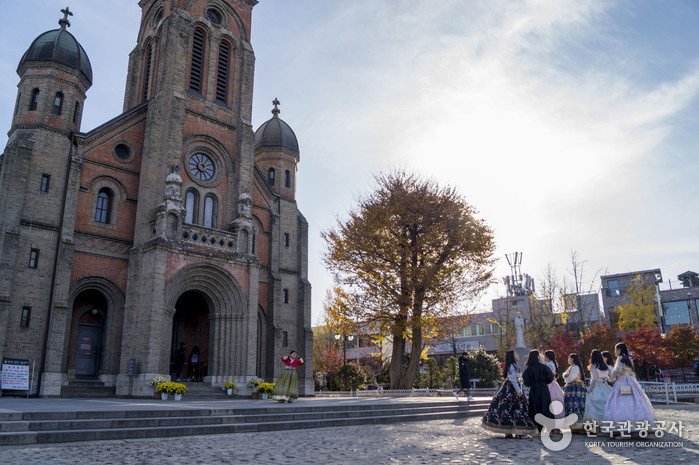
Jeondong Catholic Cathedral in Jeonju was built in honor of Roman Catholic martyrs of the Joseon dynasty on the very same spot the martyrs lost their lives. The land was purchased by French Priest Baudenet in 1891 (28th year of King Gojong), but construction of the church did not begin until 1908. Construction was completed in 1914, a time during which Korea was under Japanese rule. Though originally built just outside of Pungnammun Gate, the site of the martyrs, the church was later moved to its current location for expansion.
The first Romanesque building in the Honam region, Jeondong Catholic Cathedral is made of gray and red bricks and bears a striking resemblance to the Myeongdong Cathedral in Seoul, also designed by Priest Poinel. Not only considered one of the most beautiful Catholic churches in Korea, some even go so far as to say it is one of the most beautiful structures in all of Korea, citing the church’s unique combination of Byzantine and Romanesque architectural styles. The rectangular building is topped with three Byzantine bell towers (to the right, center, and left) and boasts arched ceilings, several of which meet in the form of a cross.
It is interesting to note that some of the bricks used in construction of the church were made using materials from the Jeonjueupseong Walled Town, which was torn down by the Japanese. It is also said that the cornerstone of the church came from a wall of Jeonjueupseong Walled Town near Pungnammun Gate.
Inyeon Hanok (인연)
841.7M 2024-07-01
36 , Hanji-gil, Wansan-gu, Jeonju-si, Jeonbuk-do
+82-10-2911-9349
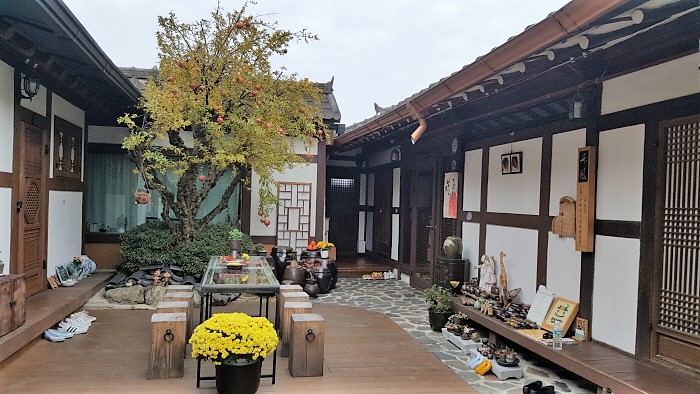
Inyeon is a hanok stay positioned near the public parking lot in Jeonju Hanok Village, Jeollabuk-do - a little away from the bustling main streets and so a quiet place to stop. (The name Inyeon means ‘a special relationship’.) As well as bathrooms and AC, all guestrooms have bare-beam ceilings, lacquered hanji flooring and traditional household items evoking old-time village life. In the yard stands a 200-year-old pomegranate tree and a table made of reclaimed wood where visitors can rest. Free traditional games such as Yutnori and Jegichagi are provided.
Jeonju Nanjang (전주난장)
847.9M 2024-04-06
33-20 Dongmun-gil, Wansan-gu, Jeonju-si, Jeonbuk-do
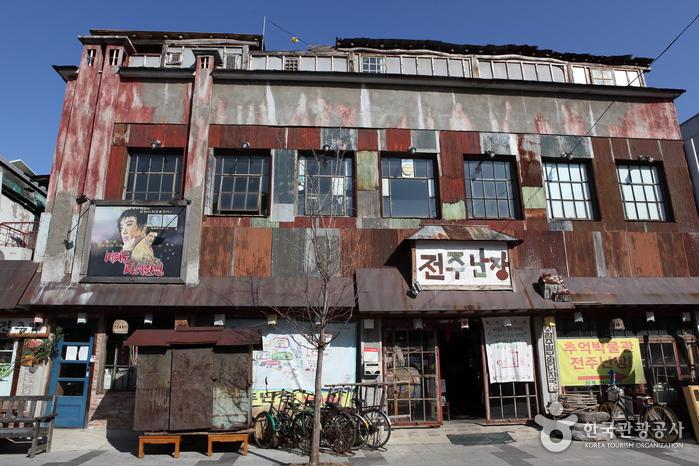
Jeonju Nanjang is a theme park style museum with over 25 years of materials for an attraction within Jeonju Hanok Village perfect for photo shoot and experience programs. There are more than 70 theme zones as well as a water well that is over 110 years old. Visitors can enjoy the retro feel as they roam around a museum filled with history.
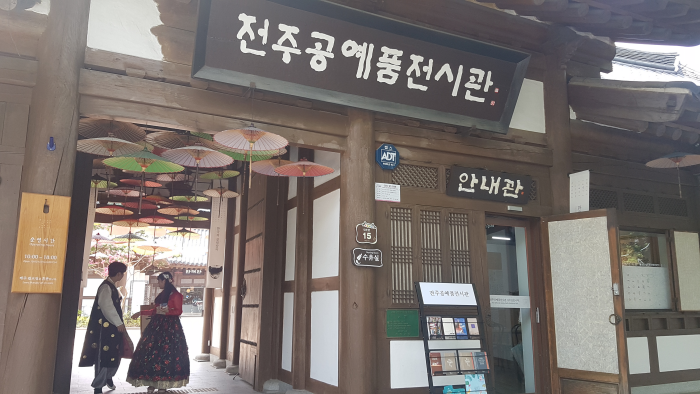
Jeonju Crafts Exhibition Hall (전주공예품전시관)
848.3M 2024-05-28
15 Taejo-ro, Wansan-gu, Jeonju-si, Jeonbuk-do
+82-63-281-1610
Jeonju Crafts Exhibition Hall promotes the beauty of traditional Korean crafts, and is made up of a Craft Hall, Special Exhibition Hall, and Experience Hall, Visitors can see traditional art works from master artisans as well as creative works from up-and-coming artists and designers. Visitors can also create their own handcrafted items in one of their many programs.
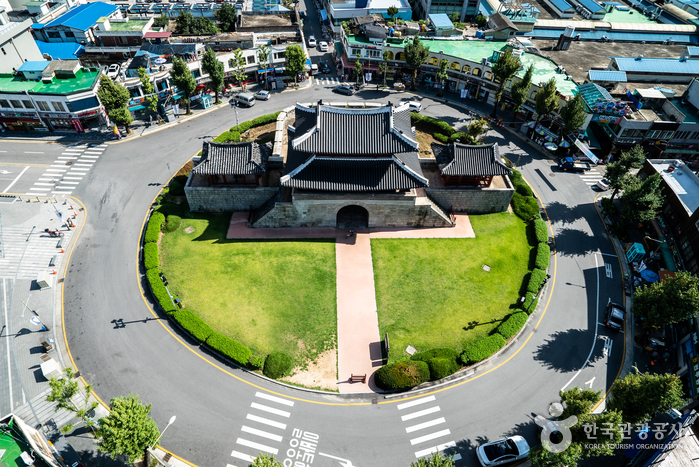
Jeonju Pungnammun Gate (전주 풍남문)
871.2M 2024-05-27
1 Pungnammun 3-gil, Wansan-gu, Jeonju-si, Jeonbuk-do
+82-63-287-6008
Pungnammun Gate was built during the Joseon dynasty in 1734 and is a designated Treasure. Pungnammun Gate was the southernmost gate among the four city gates of Jeonju. The structure was severely damaged by fire in 1767, followed by the restoration of the gate tower afterward. The gate was burnt down once again during the Imjin War and was restored to the gate that is seen today.
 English
 한국어
한국어 日本語
日本語 中文(简体)
 Deutsch
 Français
 Español
 Русский


