![E-Mart - Asan Branch [Tax Refund Shop] (이마트 아산)](http://tong.visitkorea.or.kr/cms/resource/05/2883305_image2_1.jpg)
E-Mart - Asan Branch [Tax Refund Shop] (이마트 아산)
15.6Km 2024-04-22
1678, Oncheon-daero, Asan-si, Chungcheongnam-do
-
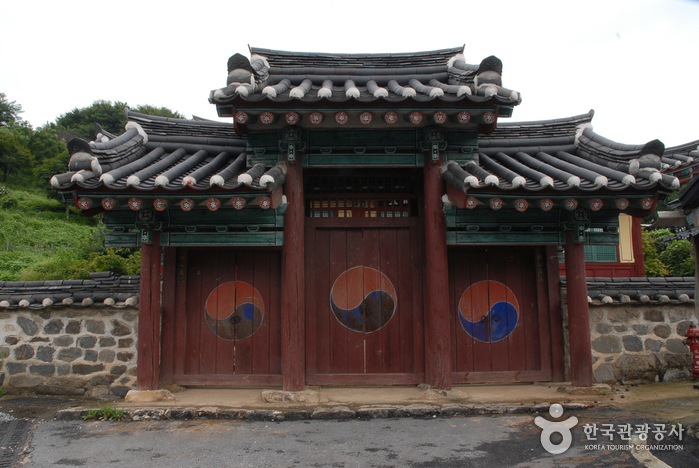
Jeonuihyanggyo Confucian School (전의향교)
15.8Km 2025-05-20
5-18, Bukchon 1-gil, Sejong-si
+82-44-211-4022
Jeonuihyanggyo Confucian School is thought to have been built in 1413 during the 13th year of King Taejong’s reign. The school features a simple spatial arrangement with only Myeongnyundang and Daeseongjeon Study Halls, each with three gates in the front. Outside the western wall of Myeongnyundang Hall is Sujiksa Temple.
Several books - Jaeimnok, Seonan, several texts on rituals, and Eojeyuneum (1782-1783), which was published in 1782 (6th year of King Jeongjo’s reign) and 1783, have been found at Jeonui Hyanggyo.

Lotte Mart - Asan Terminal Branch [Tax Refund Shop] (롯데마트 아산터미널점)
15.8Km 2024-04-16
225, Beonyeong-ro, Asan-si, Chungcheongnam-do
-
![Olive Young - Asan Terminal Branch [Tax Refund Shop] (올리브영 아산터미널)](http://tong.visitkorea.or.kr/cms/resource/94/2883294_image2_1.jpg)
Olive Young - Asan Terminal Branch [Tax Refund Shop] (올리브영 아산터미널)
16.0Km 2024-04-18
216, Beonyeong-ro, Asan-si, Chungcheongnam-do
-
Unjusanseong Fortress (운주산성)
16.2Km 2021-08-31
Migok-ri, Sejong-si
+82-44-300-3423
Unjusanseong Fortress, also known as Gosansanseong Fortress, is a cultural heritage of the Baekje dynasty. This is a mountain fortress built along the surrounding three mountain peaks in the westernmost and southernmost parts of Unjusan Mountain. The stone fortress wall, which borders three villages in Jeondong-myeon and two villages in Jeonui-myeon, is 3,210 meters long and two meters wide with a x_height that ranges from two to eight meters. The walls follow the natural geographical features of the mountain range, with the southern walls surrounding the mountain's peak.
Remnants of a village can still be observed within the fortress walls, such as the fortress gate and a ritual site. Pieces of earthenware from the Baekje period, porcelain from the Goryeo and Joseon periods, and broken tiles from the Baekje, Goryeo and Joseon periods have been discovered around the site as well.
![Mokhwa Banjeom (Asan) [목화반점(아산)]](http://tong.visitkorea.or.kr/cms/resource/99/3050399_image2_1.jpg)
Mokhwa Banjeom (Asan) [목화반점(아산)]
16.4Km 2024-02-21
7-3, Onju-gil 26beon-gil, Asan-si, Chungcheongnam-do
Mokhwa Banjeom is a Chinese restaurant in Asan enjoying a loyal following. Its expertise is evident in the popularity of customers’ favorites such as tangsuyuk (deep-fried pork with sweet and sour sauce), jjajangmyeon (black bean sauce noodles), and jjamppong (spicy seafood noodle soup). Many people visit this restaurant, so waiting is the norm. Mokhwa Banjeom’s signature dish is tangsuyuk (deep-fried pork with sweet and sour sauce), made with egg batter for a rich, crispy, yet fluffy texture.
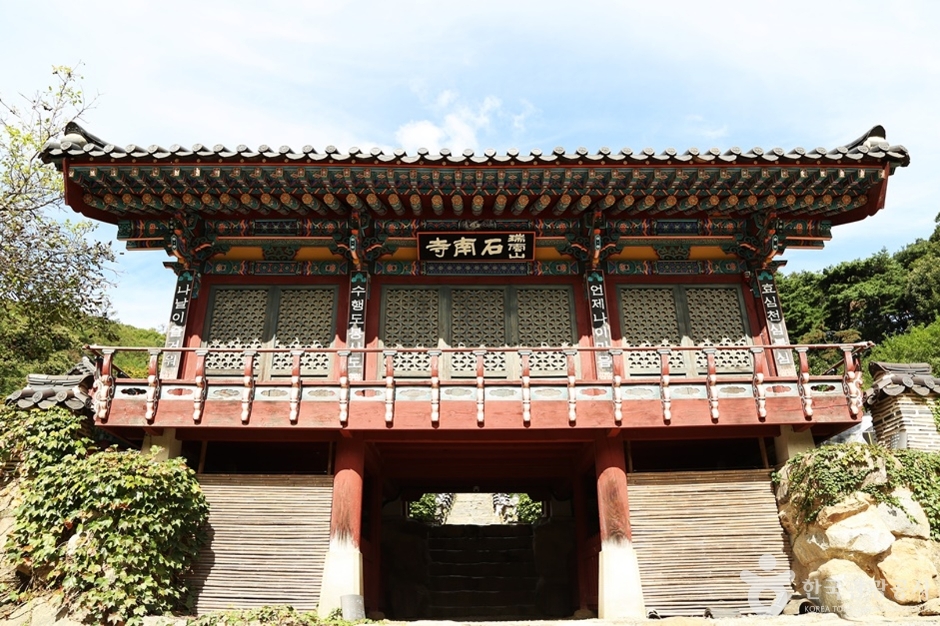
Anseong Seoknamsa Temple (석남사(안성))
16.8Km 2024-01-03
3-120 Sangchonsaemal-gil, Anseong-si, Gyeonggi-do
Seoknamsa Temple is located at the northeastern foot of Seounsan Mountain, 12 kilometers from Anseong. It’s a small temple but the view of stone steps leading up from the temple entrance to the Daeungjeon Hall is worth seeing. Seoknamsa Temple is known to have been presided by prominent monks such as Monk Hyegeo in the Goryeo dynasty. It is also where hundreds of monks in training stayed and practiced Buddhism at the time. The Daeungjeon Hall, which has three rooms on the front and three rooms on the sides, looks simple yet imposing with its gabled roof with double-layer eaves. The building with a hipped and gable roof resembling a crane flying right below the Daeungjeon Hall harmonizes with the Yeongsanjeon Hall. Seoknamsa Temple, which looms over the site, exudes a charm that immerses visitors with the energy of Seounsan Mountain. The Yeongsanjeon Hall also has a hipped and gable roof and three rooms in front and two rooms on the side. The sharp end of the roof is gently hidden in the forest, adding an elegant atmosphere. This building has great architectural significance because its bracket demonstrates the typical design of the early and middle Joseon dynasty. The temple also houses many cultural heritages such as the Yeongsanjeon Hall, where 16 Nahan are enshrined, the Daeungjeon Hall, and Rock-carved Stone Buddha, as well as local relics such as stone pagodas and stupas.
![Artbox - Asan Branch [Tax Refund Shop] (아트박스 아산)](http://tong.visitkorea.or.kr/cms/resource/82/2883282_image2_1.jpg)
Artbox - Asan Branch [Tax Refund Shop] (아트박스 아산)
17.0Km 2024-04-17
3, Chungmu-ro, Asan-si, Chungcheongnam-do
-
![Shoe Marker - Onyang Branch [Tax Refund Shop] (슈마커 온양)](http://tong.visitkorea.or.kr/cms/resource/86/2883286_image2_1.jpg)
Shoe Marker - Onyang Branch [Tax Refund Shop] (슈마커 온양)
17.0Km 2024-04-22
23, Ongung-ro, Asan-si, Chungcheongnam-do
-
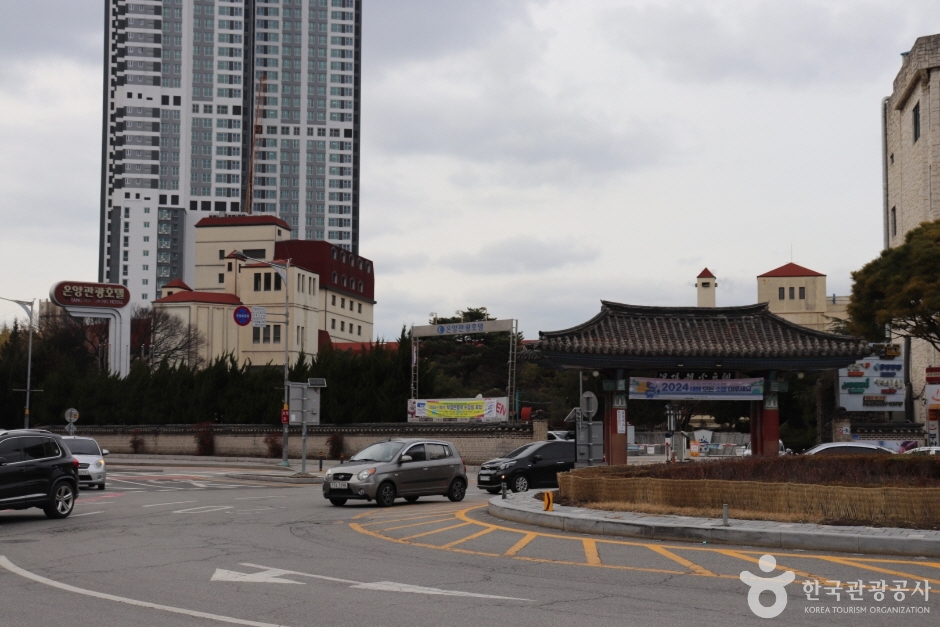
Onyang Hot Springs (온양온천지구)
17.3Km 2024-03-28
1459 Oncheon-daero, Asan-si, Chungcheongnam-do
+82-41-540-1234
Onyang Hot Springs is the oldest hot springs complex in Korea, a place where the kings of Joseon (1392-1897) recuperated and bathed, thanks to its proximity to Seoul. In the 1970s and 1980s, it was a popular honeymoon destination. The water here has a temperature of about 44-60℃ and contains substances that are beneficial for the human body. The area boasts a large number of hotels and water parks.
 English
 한국어
한국어 日本語
日本語 中文(简体)
 Deutsch
 Français
 Español
 Русский


