
Dongdaemun Design Plaza (동대문디자인플라자 (DDP))
16.5Km 2024-10-24
281 Eulji-ro, Jung-gu, Seoul
Dongdaemun Design Plaza (DDP) has a meaning of Dream, Design, and Play. It holds various exhibitions, fashion shows, forums, conferences, and other domestic and international events. The building complex is divided into sections, which are named Allimteo, Beaumteo, Sallimteo, DDP Design Museum, Design Market & Eoullim Plaza, and Dongdaemun History & Culture Park. Designed by world-renowned architect Zaha Hadid, the building's exterior attracts the attention of many photographers with its delicate curves and bold shapes.
DM Plastic Surgery (디엠성형외과)
16.5Km 2025-12-09
(2nd Floor), 158 Apgujeong-ro, Gangnam-gu, Seoul
DM Plastic Surgery is a clinic run by a doctor from Yonsei University College of Medicine, the first university in Korea to establish a plastic surgery department.
As a former professor of plastic surgery at Severance Hospital of Yonsei University College of Medicine for 16 years and a board member of the Korean Society of Plastic and Reconstructive Surgeons, the chief director of DM is always striving to be a model in the medical industry. We promise to spare no effort, guided by the tenet of diligence and sincerity, to advance plastic surgery technology in Korea and to fulfill our responsibilities as plastic surgeons.
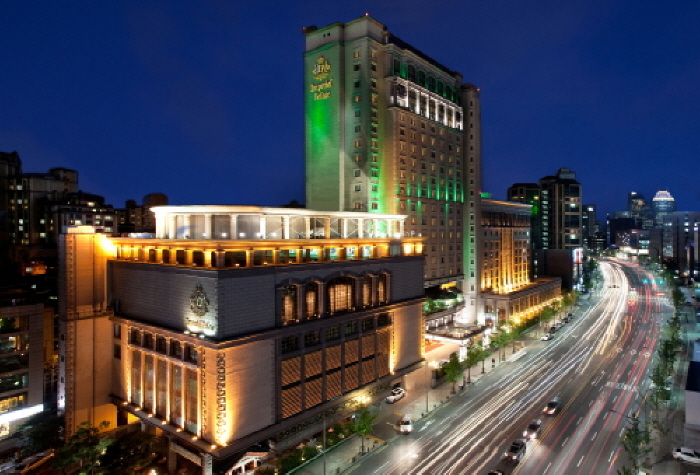
Imperial Palace Hotel (임피리얼 팰리스 호텔)
16.5Km 2025-08-22
640 Eonju-ro, Gangnam-gu, Seoul
Imperial Palace Hotel first opened on September 18, 1989, starting as a deluxe hotel and becoming a superior deluxe hotel after 10 years in June 1999. The hotel has remained the pride of the Korean hotel industry thanks to its effective management and improving domestic capital. In 2005, it carried out a large-scale remodeling project to enlarge its size to resemble luxurious European hotels, including a large-sized lobby, convention center that can accommodate over 1,000 visitors, classical wedding hall, and 405 guestrooms. The hotel is part of a chain, along with Imperial Palace Boutique Hotel in Itaewon and Imperial Palace Hotel – Fukuoka in Japan.

Leather Craft Shop (손놀림공방)
16.5Km 2025-10-30
19-1 Naksanseonggwakseo 1-gil, Jongno-gu, Seoul
The leather workshop featured in the drama 'Boyfriend'
It is a leather workshop that appeared in the scene where Cha Soohyeon (Song Hyekyo) and Kim Jinhyeok (Park Bogum) reunite in the drama 'Boyfriend'. It is run by leather craft artist Kim Yeongae and is known for its many cute items. You can experience making leather knotted string bracelets and rings at a low cost.
Glovi Plastic Surgery (글로비성형외과의원)
16.5Km 2025-10-23
(6th Floor, EGI Building), 843 Nonhyeon-ro, Gangnam-gu, Seoul
"Glovi Plastic Surgery strives to understand the hearts of our clients."
While standards of beauty have varied across eras and individuals, true beauty remains timeless. At Glovi Plastic Surgery, we are dedicated to discovering and delivering enduring beauty by continuously researching and refining our techniques to ensure the highest level of satisfaction for each patient.
With extensive experience and exceptional technical expertise, Glovi Plastic Surgery offers personalized cosmetic surgery programs tailored to individual characteristics. Our dedicated stem cell research lab, certified by the Ministry of Science, ICT and Future Planning as an R&D department, showcases our differentiated technological capabilities. Additionally, we provide customer satisfaction programs that prioritize patient safety and convenience.
Glovi Plastic Surgery's commitment to rewarding your choice with beauty and confidence continues every day.
Faceline Plastic Surgery (페이스라인 성형외과의원)
16.5Km 2025-10-23
(1st Floor, Wonbang Plaza), 838 Nonhyeon-ro, Gangnam-gu, Seoul
Faceline Plastic Surgery has operated with an accident-free record for 20 years, adhering to the motto "A place where I and my family can safely undergo plastic surgery".
The medical team at Faceline Plastic Surgery includes Dr. Lee Tae-Hee and Dr. Lee Jin-Su, both alumni of Seoul National University College of Medicine, alongside Dr. Lee Shin-Jeong, a graduate of Seoul National University School of Dentistry. They have been working together since the clinic's establishment in Apgujeong in 2005. They regularly present their accumulated clinical experience and expertise at international conferences and have showcased numerous surgical cases through various makeover programs.
Clients of Faceline Plastic Surgery demonstrate unwavering trust over the years, returning for additional procedures. For instance, a client who underwent facial contouring surgery may return for a face lift after 10 years, or a child of a patient who had double jaw surgery might seek similar treatment 20 years later. Similarly, a parent of a patient who had ophthalmoplasty might return for upper blepharoplasty surgery.
In this manner, Faceline Plastic Surgery maintains long-term relationships based on client trust and satisfaction, continuously providing high-quality medical services. The clinic guarantees optimal results based on its extensive experience and skills accumulated over the years.
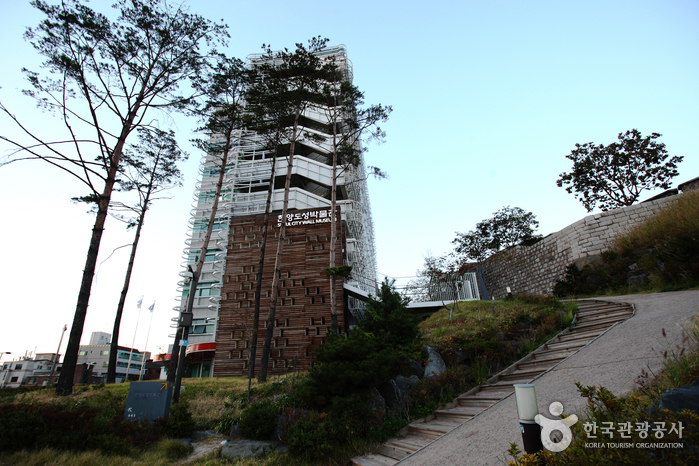
Seoul City Wall Museum (한양도성박물관)
16.5Km 2023-12-22
283, Yulgok-ro, Jongno-gu, Seoul
Hanyangdoseong, the Seoul City Wall, built in 1396, was the city fortress wall that protected the capital city Seoul for over 600 years. The fortress wall was built along the terrains and although it became partially damaged during the modernization process, its original form remains well to this day, making it a cultural heritage that coexists with the modern city. The Seoul City Wall Museum, located in Heungjinjimun Park, is a museum containing the history and culture of city wall from the Joseon dynasty to the present. It is a cultural space with a permanent exhibition hall, special exhibition hall, city wall information center, and study room.
DRAnh Hairplant Clinic (닥터안헤어플란트의원)
16.5Km 2025-10-23
(2nd Floor), 647 Eonju-ro, Gangnam-gu, Seoul
Dr. Ahn Hair Plant Clinic is a hair loss treatment center established in 2004, specializing in hair transplantation.
The clinic uses cutting-edge technology, including the KNU Implanter, to perform hair transplants. We are committed to ongoing research to improve graft survival rate in hair transplantation. The success of the surgery depends on precise follicle separation, so Dr. Ahn Hair Plant Clinic provides regular training for the staff on follicle separation and all aspects of hair transplantation. Dr. Ahn Hair Plant Clinic is dedicated to achieving the highest surgical success and patient satisfaction. The clinic pledges to set a new standard as a specialized institution for hair loss treatment based on these efforts.
Grand Plastic Surgery (그랜드성형외과의원)
16.6Km 2025-10-23
(#601, 6th Floor, JB Miso Building), 841 Nonhyeon-ro, Gangnam-gu, Seoul
With top-notch multidisciplinary medical staff
and a one-stop total healthcare system,
we lead the world in aesthetic medicine.
Grand Plastic Surgery opened its doors in 2004.
In its 19-year history, we established ourselves as Korea's leading aesthetic medicine group.
We are the hospital of choice for more than 30,000 international patients, attracting patients from more than 100 countries around the world with a top-tier specialized medical consultation system, a well-organized safety system, and distinguished services tailored to both domestic and international patients.
Grand Plastic Surgery promises satisfactory surgical results to our patients with our long-standing surgical experience and know-how, and aims to become a medical group capable of leading not only Korea but also Asia and the world.
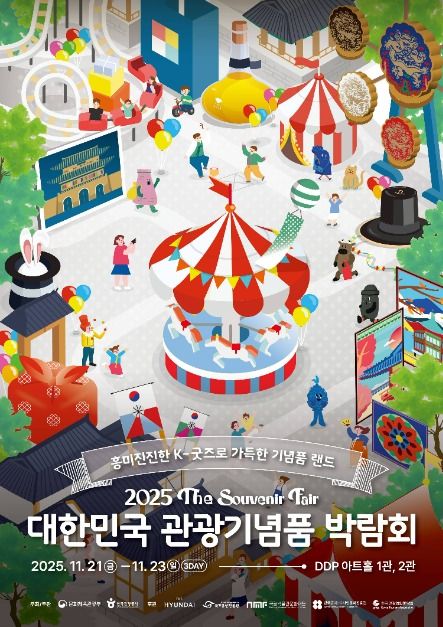
The Souvenir Fair (2025 대한민국 관광기념품 박람회)
16.6Km 2025-10-27
281 Eulji-ro, Jung-gu, Seoul
+82-10-8315-5434
The Souvenir Fair brings together various companies and local governments to showcase a variety of souvenirs, both traditional and trendy. Visitors can freely explore the exhibition space, enjoy souvenir shopping, and take part in various programs. Highlights of the fair include an exhibition of competition-winning works, a zone featuring outstanding local souvenirs, and a special exhibition of overseas souvenirs.
 English
 한국어
한국어 日本語
日本語 中文(简体)
 Deutsch
 Français
 Español
 Русский


