![Saera - Daehangno Branch [Tax Refund Shop] (세라제화 대학로)](http://tong.visitkorea.or.kr/cms/resource/85/2878185_image2_1.jpg)
Saera - Daehangno Branch [Tax Refund Shop] (세라제화 대학로)
18.8Km 2024-04-19
123-1, Daehak-ro, Jongno-gu, Seoul
-

Dongdaemun Design Plaza (동대문디자인플라자 (DDP))
18.8Km 2024-10-24
281 Eulji-ro, Jung-gu, Seoul
+82-2-2153-0000
Dongdaemun Design Plaza (DDP) has a meaning of Dream, Design, and Play. It holds various exhibitions, fashion shows, forums, conferences, and other domestic and international events. The building complex is divided into sections, which are named Allimteo, Beaumteo, Sallimteo, DDP Design Museum, Design Market & Eoullim Plaza, and Dongdaemun History & Culture Park. Designed by world-renowned architect Zaha Hadid, the building's exterior attracts the attention of many photographers with its delicate curves and bold shapes.
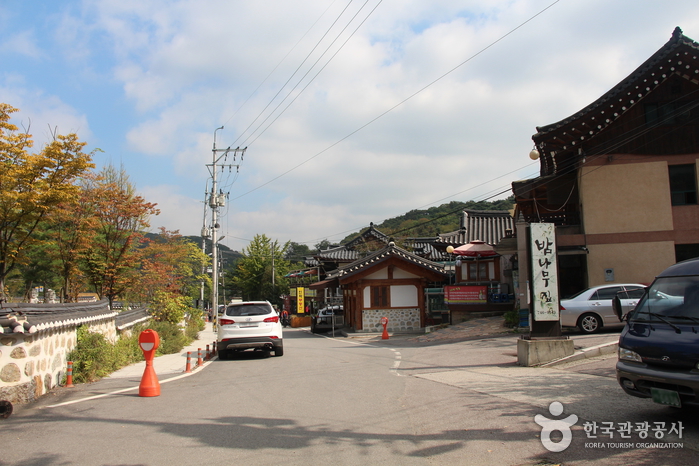
Traditional Food Town around Namhansanseong Fortress (남한산성 전통음식마을)
18.8Km 2021-03-17
731, Namhansanseong-ro, Gwangju-si, Gyeonggi-do
+82-31-762-3010
The Traditional Food Town around Namhansanseong Fortress has many restaurants offering rice, dotorimuk (acorn jelly salad), tojongdak (whole chicken) dishes, and other traditional dishes. The area embraces almost 300 years of Korean history and the restaurants were built in traditional hanok-style buildings around Namhansanseong Fortress, a military stronghold from the Joseon dynasty.
![Namhansanseong Provincial Park [UNESCO World Heritage] (남한산성도립공원 [유네스코 세계문화유산])](http://tong.visitkorea.or.kr/cms/resource/56/2612856_image2_1.jpg)
Namhansanseong Provincial Park [UNESCO World Heritage] (남한산성도립공원 [유네스코 세계문화유산])
18.8Km 2024-02-29
731 Namhansanseong-ro, Namhansanseong-myeon, Gwangju-si, Gyeonggi-do
+82-31-746-1088
Namhansanseong was a fortress that protected the southern approaches to the capital during the Baekje kingdom (18 B.C. – 660 A.D.) and the Joseon dynasty (1392-1897). During the Qing invasion of Joseon in 1636, King Injo of Joseon (reigned 1623-1649) sought refuge here and constructed Haenggung, a temporary palace. Subsequently, it became the administrative center of the Gwangju region, and today, it is a site where many cultural properties are preserved.
Dongdaemun History & Culture Park (동대문역사문화공원)
18.8Km 2024-11-27
281 Eulji-ro, Jung-gu, Seoul
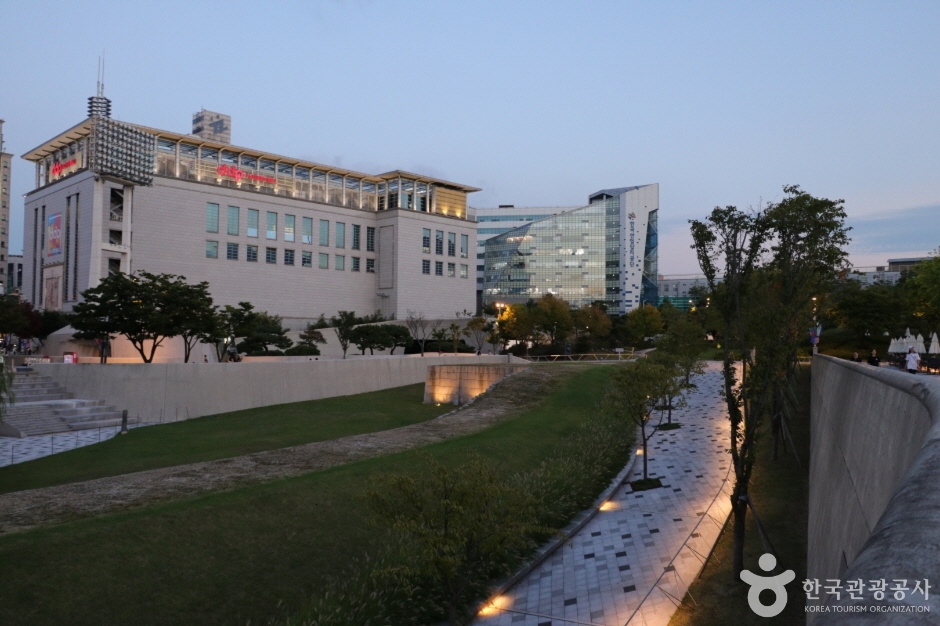
Dongdaemun History & Culture Park is a park established on the former site of the Dongdaemun Stadium. It serves as a thematic park showcasing the history and culture of Seoul, while also providing a space to experience modern design and culture. During the park's development in 2008, numerous artifacts from the Joseon dynasty, including The Two Floodgates, the Chiseong Castle, Military Training Agency, and over 1,000 relics from the Joseon era, were excavated. Alongside the park, there is the Dongdaemun Design Plaza (DDP) and the Relic area.
ARKO Art Center (아르코미술관)
18.8Km 2025-06-05
3, Dongsung-gil, Jongno-gu, Seoul
+82-2-760-4850
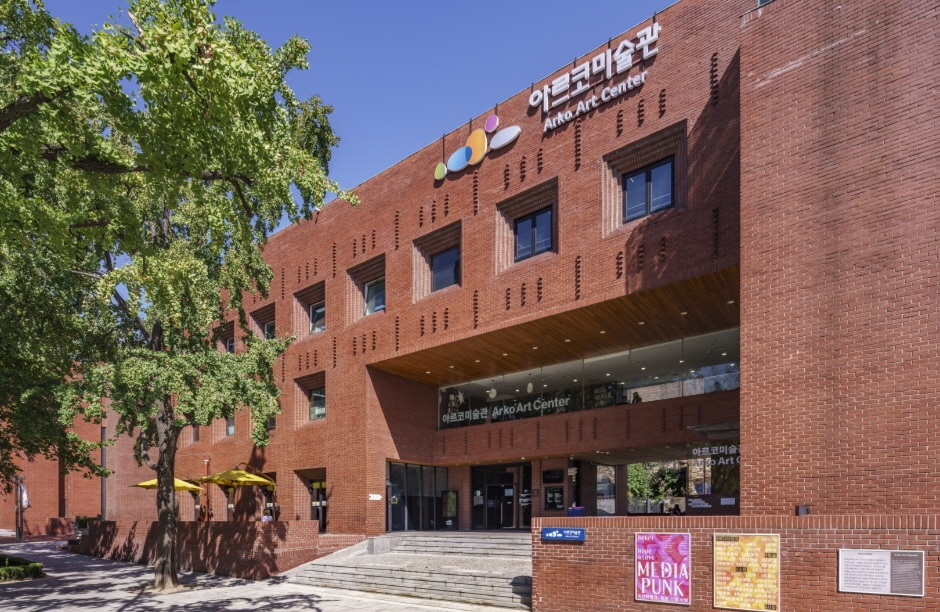
ARKO Art Center was founded in 1974 as Misulhoegwan in a building of former Deoksu Hospital in Gwanhun-dong, Jongno-gu to offer much-needed exhibition space for artists and arts groups. In 1979, Misulhoegwan moved to its present building, designed by preeminent Korean architect Kim Swoo-geun (1931-1986) and located in Marronnier Park, the former site of Seoul National University. The two neighboring brick buildings accommodating ARKO Art Center and ARKO Arts Theater are the major landmarks of the district of Daehakro.
As more public and private museums and commercial galleries came into the art scene in the 1990s, Misulhoegwan shifted to curating and presenting its own exhibitions. Renamed as Marronnier Art Center in 2002, ARKO Art Center assumed a full-fledged art museum system and played an increasingly prominent role as a public arts organization leading the contemporary art paradigm. When The Korea Culture and Arts Foundation was reborn as Arts Council Korea, Marronnier Art Center became ARKO Art Center named after the abbreviation for Arts Council Korea in 2005.
ARKO Art Center is committed to working as a platform where research, production, exhibitions and the exchange of creative activities grow and develop in connection with one another in addition to having a diversity of programs including thematic exhibitions addressing social agenda and public programs widely promoting various discourses in art.
![Olive Young - Doota Branch [Tax Refund Shop] (올리브영 두타)](http://tong.visitkorea.or.kr/cms/resource/99/2878699_image2_1.jpg)
Olive Young - Doota Branch [Tax Refund Shop] (올리브영 두타)
18.8Km 2024-04-19
4F-51, Doosan Tower Bldg., 275, Jangchungdan-ro, Jung-gu, Seoul
-
![Arirang 331 - Doota Branch [Tax Refund Shop] (아리랑331 두타)](http://tong.visitkorea.or.kr/cms/resource/00/2878700_image2_1.jpg)
Arirang 331 - Doota Branch [Tax Refund Shop] (아리랑331 두타)
18.8Km 2024-04-18
4F-028, 275, Jangchungdan-ro, Jung-gu, Seoul
-
![National Geographic - Doota Branch [Tax Refund Shop] (내셔널지오그래픽 두타)](http://tong.visitkorea.or.kr/cms/resource/04/2878704_image2_1.jpg)
National Geographic - Doota Branch [Tax Refund Shop] (내셔널지오그래픽 두타)
18.8Km 2024-04-18
B1F #05, 275, Jangchungdan-ro, Jung-gu, Seoul
-
![CK - Doota Branch [Tax Refund Shop] (CK 두타)](http://tong.visitkorea.or.kr/cms/resource/07/2878707_image2_1.jpg)
CK - Doota Branch [Tax Refund Shop] (CK 두타)
18.8Km 2024-04-22
147, Gijanghaean-ro, Gijang-eup, Gijang-gun, Busan
-
 English
 한국어
한국어 日本語
日本語 中文(简体)
 Deutsch
 Français
 Español
 Русский


