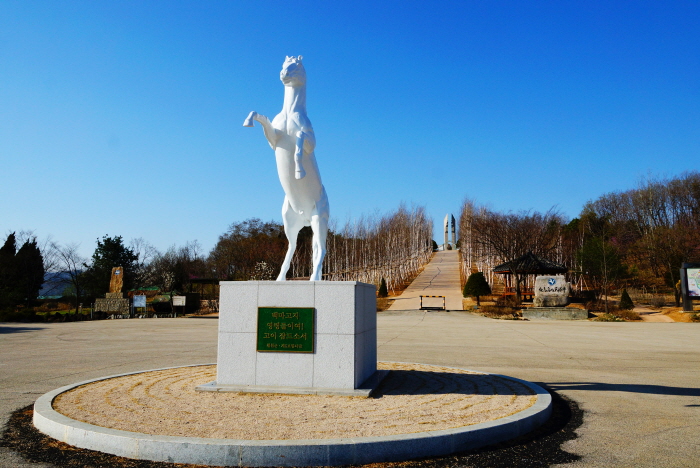
Memorial Tower of Baengmagoji Battlefield and Memorial Museum (백마고지 위령비와 기념관)
19.2Km 2025-10-23
72, Daema 1-gil, Cheorwon-gun, Gangwon-do
+82-33-450-5559
Located in the northern area of South Korea, Baengmagoji Battlefield was one of the bloodiest battlefields during the Korean War. The communist Chinese army launched a major offensive attack for 10 days on October 6, 1952 during the Battle of Baengmagoji, which can be translated into the Battle of White Horse Highlands. Due to this battle, the communist Chinese army suffered around 14,000 casualties and the army completely collapsed while the 9th Infantry Division won the Battle of Baengmagoji and got the nickname “White Horse.”
After the battle, the area gave off a bad smell because of the dead bodies. The mountain area lost its original shape due to the severe battle and as a result the area was named “Baengmagoji” as it was said to resemble a white horse (baengma) lying down.
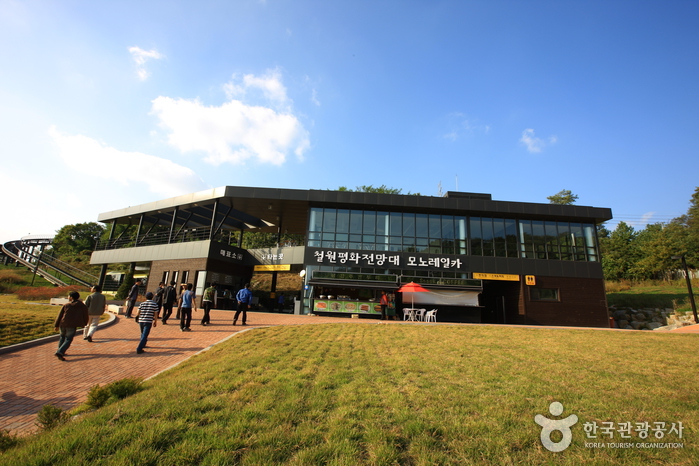
Cheorwon Peace Observatory (철원평화전망대)
19.6Km 2022-10-25
588-14, Junggang-ri, Cheorwon-gun, Gangwon-do
+82-33-450-5558
Cheorwon Peace Observatory offers a panoramic view of the DMZ (Demilitarized Zone separating North and South Korea) in the central forward area of Cheorwon-gun, Gangwon-do. From this observatory, one can see the Cheorwon plain, areas of the DMZ, and even North Korea. Photos of the 2nd Tunnel, military barracks, checkpoints, and the DMZ are exhibited here. Visitors can easily get to the observatory using the 50-person monorail, see the remains of the ancient Taebongguk (nation), and even see the faces of North Korean soldiers through binoculars.

Cheorwon Plain (Migratory Bird Habitat) (철원평야(철새도래지))
19.7Km 2021-11-29
Cheorwon-eup, Cheorwon-gun, Gangwon-do
+82-33-450-5558
After the fall harvest season, the fields of Cheorwon Plain are littered with fallen grains, providing an abundant source of food for migratory birds. Moreover, the well-preserved ecosystem of the Demilitarized Zone provides clean water and a healthy habitat, making the Cheorwon area a paradise for migratory birds.
Cranes stalking around the fields and birds taking off en masse from the reservoir make bird watchers exclaim in awe. In Cheorwon, which boasts the biggest white-fronted goose population in Korea, visitors can see observe 110 species of birds, some of which are protected as national treasures. Examples include red-crowned cranes, vultures, white-tailed sea eagles, and golden eagles as well as mallards and spot-billed ducks, which migrate to Korea for the winter.
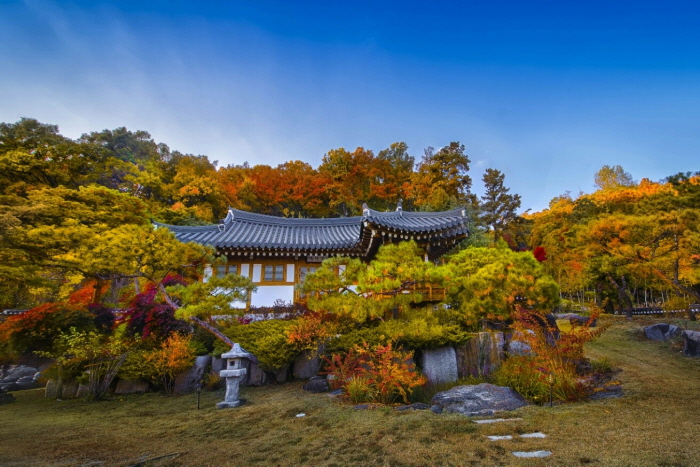
Joseon Wangga/ 조선왕가(농업회사법인 조선왕가 주식회사)
20.0Km 2025-03-05
339-10 , Hyeonmun-ro, Yeoncheon-gun, Gyeonggi-do
+82-31-834-8383
Joseon Wangga (‘royal house’) in Yeoncheon, Gyeonggi-do, was once the home of Yi Geun, grandson of the Emperor Gojong. Originally called Yeomgeundang and located in Jongno-gu, Seoul, it was dismantled and rebuilt here in 1935. Now it’s a hotel where guests can feel what it was like to live in a Joseon royal house. There are 15 guestrooms, each with a bathroom and a traditional tea set provided free of charge. A pay-for breakfast is provided with advance reservations. Guests can experience traditional crafts such as herbal soap-making and smoke therapy. It is possible to hire the hotel for workshops and traditional weddings. There is also a luxury camping site in which barbecues and campfires are allowed.
 English
 한국어
한국어 日本語
日本語 中文(简体)
 Deutsch
 Français
 Español
 Русский


