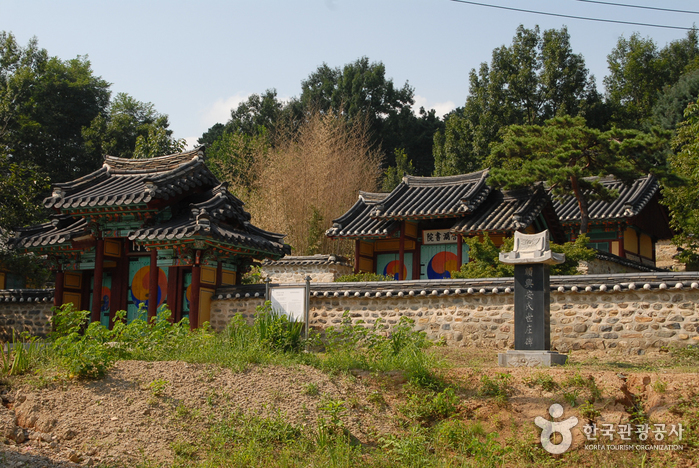
Haposeowon Confucian Academy (합호서원)
18.4Km 2025-05-20
262-6, Wonhapgang 1-gil, Yeondong-myeon, Sejong
+82-44-330-5832
Registered as Cultural Heritage Material, Haposeowon Confucian Academy is where the spiritual tablet of An Hyang, a respected scholar during the Goryeo period, is enshrined. The academy was founded in 1716 by the scholar's descendants, who held regular memorial services until a royal order to close down most seowon institutions was made in the late Joseon dynasty. In 1949, Haposeowon Confucian Academy was rebuilt as an affiliated institution with the consent of 218 local Confucian schools nationwide.

Boeun White Dandelion Eco-Village (보은 하얀민들레한옥마을)
18.5Km 2025-07-11
111-2 Busu-gil, Hoein-myeon, Boeun-gun, Chungcheongbuk-do
Boeun White Dandelion Eco-Village is located in Boeun-gun. The hanok building comprises two floors. The upper part of the hanok is used for accommodation and dining, while the lower part of the building serves as both a gallery and lodging. In addition to accommodation, visitors can enjoy various hands-on experience programs, including embroidery, natural dyeing, printmaking, puffed grain making, and a Joseon-era lifestyle experience. It has recently gained popularity after being featured in a variety show with K-pop idols.

La Foresta (라포레스타)
18.7Km 2025-05-20
130 Daecheop-ro, Yeonseo-myeon, Sejong-si
La Foresta is a café with a spacious outdoor garden. The interior has a cozy atmosphere with wood tones. The garden is adorned with various types of trees and flowers, creating a park-like ambiance. Signature drinks include foresta double latte, made with hazelnut milk and espresso, blood orange featuring blood orange infused tea, and dewy cherry mango, a refreshing blend of cherry tea with mango puree and coconut jelly.
Sejong Yeonhwasa Temple (연화사 (세종))
19.0Km 2025-05-20
28-1, Yeonhwasa-gil, Sejong-si
+82-44-862-8620
Yeonhwasa Temple is said to have been built by Hong Mun-seop. After having a dream, Hong dug the current site of Yeonhwasa Temple to find two stone Buddha statues and built a temple there. It was designated a traditional temple in 1988. The temple features Muryangsujeon Hall, Samseonggak Hall, and Yosachae (monks’ residence).
There used to be a building with a tile roof, but following the discovery of a stele with the inscription of “Muin Year” and a pedestal, the roof was improved. The side of the stele is in a trapezoid shape with a wider bottom. It is thought to date back to the Unified Silla era. The temple is also home to a stele with seven relief Buddhist images. Together with the stone images of Biamsa and Jeonganmyeon, this stele is considered to have cast a new light on the Ancient Art.
 English
 한국어
한국어 日本語
日本語 中文(简体)
 Deutsch
 Français
 Español
 Русский


