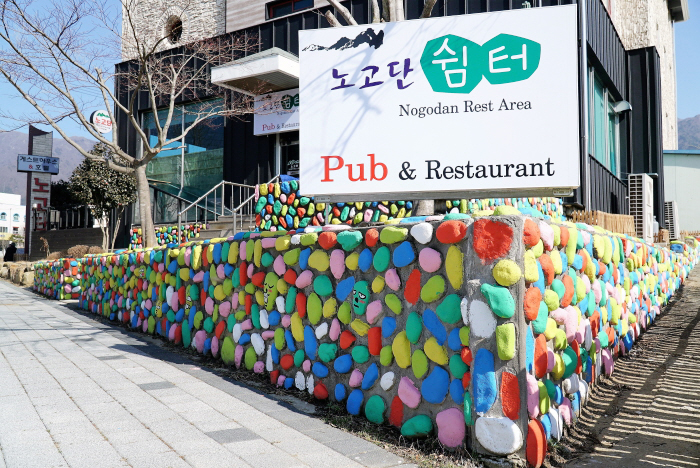
Nogodan Guesthose (노고단 게스트하우스&호텔)
19.0Km 2024-08-01
40 , Hagwan 1-gil, Gurye-gun, Jeollanam-do
+82-61-782-1507
Nogodan Guesthouse & Hotel is located in Gwansan-ri, Gurye-gun, Jeollanam-do, and is popular with weekend trippers and family vacationers visiting Jirisan National Park. Local hot spring water (high in traces of germanium) is provided in all rooms, so residents can relieve their fatigue in a hot spring bath after hiking; while from the hotel’s rooftop garden residents can enjoy fine views of Jirisan Mountain. A shuttle service to Nogodan, where the Jirisan trail starts, costs 20,000 won per person for the round trip. And at the 1st floor Buen Camino Restaurant & Pub l you can enjoy Jirisan black pork barbecue, Jirisan zucchini pancake, and seasonal vegetable side dishes.
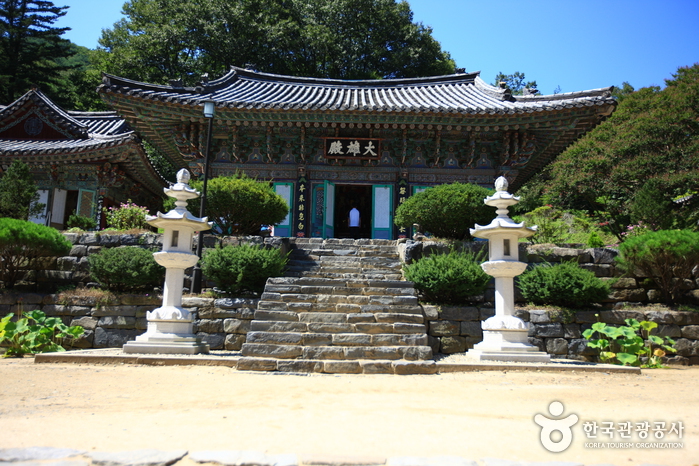
Sancheong Daewonsa Temple (대원사(산청))
19.1Km 2021-08-13
453, Pyeongchonyupyeong-ro, Sancheong-gun, Gyeongsangnam-do
+82-55-972-8068
Located at the eastern foot of Jirisan Mountain, Daewonsa Temple was first built in 548 during the Silla dynasty, but it remained closed for over thousand years until it was renovated and made bigger with the name Daewon. Unfortunately, the entire premises were lost to a big fire during the night of January 12, 1914, and all the halls and pavilions, including Yosachae, totaling 184 rooms in 12 buildings, were rebuilt in 1917. However, they were damaged once again during the Korean War and were abandoned until the war ended where the temple was rejuvenated and made even bigger. Located nearby are Geoyeonjeong and Gunjajeong Halls that are believed to have been the studying venue of scholars.
* Daewonsa Valley
The two-kilometer-long valley that stretches from the parking lot at the entrance to Daewon Temple to the temple itself is surrounded by high hills and curious-looking rocks. The clean water that oozes out through craters between the rocks generates unusual scenery. Associated with Yongso Pond is the legend that a dragon lived in it for hundreds of years before it finally flew away. Somakgol Valley is known to be the place where the last king of Garak Kingdom came to feed his cows and horses.
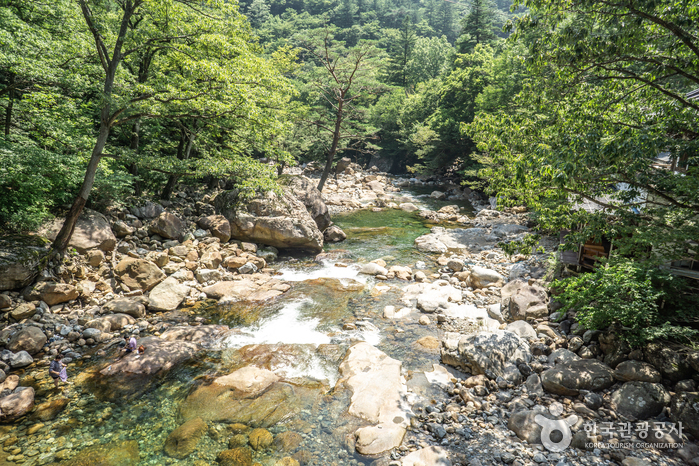
Daewonsagyegok Valley (대원사계곡)
19.4Km 2021-02-24
Samjang-myeon, Sancheong-gun, Gyeongsangnam-do
+82-55-970-7201
Daewonsagyegok Valley is a place where one can be appreciate nature's musical harmony of stream water, wind brushing against the leaves, and the chirping of birds. The nearly 12-kilometer-long Daewonsagyegok Valley's stream water originates from the highest peak of Jirisan Mountain called Cheonwangbong Peak, and flows through Jungbong and Habong Peaks, as well as Ssukbatjae Pass, Saejae Pass, Wangdeungjae Pass, Bammeorijae Pass, and Ungseokbong Peak. Before reaching the valley, the water joins the currents from Sinbatgol, Jogaegol, and Bambatgol Valleys. The volume of water increases as it passes Saejae and Oegok Village and reaches Yupyeong-ri where Daewonsa Temple is located. The incessant sound of running water fills the silence of the forest as if Buddhist nuns were chanting blessings.
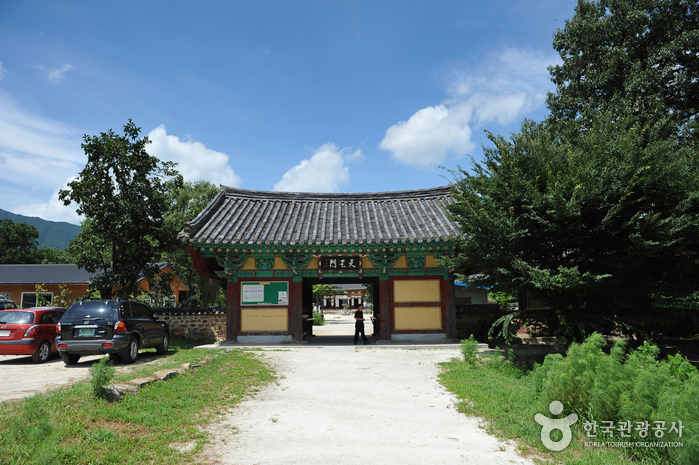
Namwon Silsangsa Temple (실상사(남원))
19.9Km 2024-04-07
94-129, Ipseok-gil, Namwon-si, Jeonbuk-do
+82-63-636-3031
Silsangsa Temple was constructed by Monk Jeunggak, as one of nine special temples in the year 828. The temple was established because of the theory of divination, based on topology. The belief held that Korea’s good spirit would be taken away to Japan, bringing bad luck if the temple was not constructed at this particular location. The temple was reconstructed in the 26th year of King Sukjong’s reign (1700) after it was completely destroyed during the Imjin War (1592-1598). However, it was almost burnt down in the 19th year of King Gojong’s reign (1882).
It is presently preserved just as it was during the Unified Silla Kingdom, with its three-story pagoda and its 11 treasures with a total of 17 cultural assets. The entrance of the temple lies in the middle of a rice field and the temple has a pastoral view, surrounded by trees. From the entrance, visitors can cross the half-moon shaped stone bridge to find a remarkable totem pole.
 English
 한국어
한국어 日本語
日本語 中文(简体)
 Deutsch
 Français
 Español
 Русский


