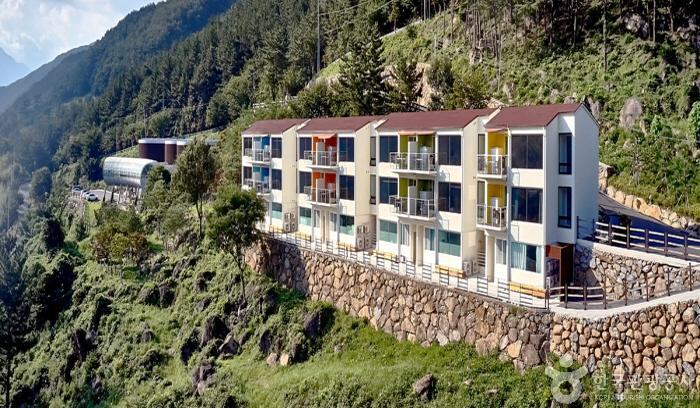
Starway Hadong Healfort (힐포트하동)
.0M 2024-12-13
3352-1 , Seomjingang-daero, Hadong-gun, Gyeongsangnam-do
Hadong Healfort, situated halfway up the mountain in Akyang-myeon, Hadong, Gyeongsangnam-do, is located near Pyeongsa-ri, which is the setting of the novel Toji, and offers a panoramic view of the Seomjingang River. In the living room, the view from the window is as lovely as a framed picture. There are 13 guestrooms, divided into three types: double, twin, and ondol (underfloor heated), each with a living room, bedroom, bathroom, and private terrace. This is an ideal location for couples to relax and enjoy the view.
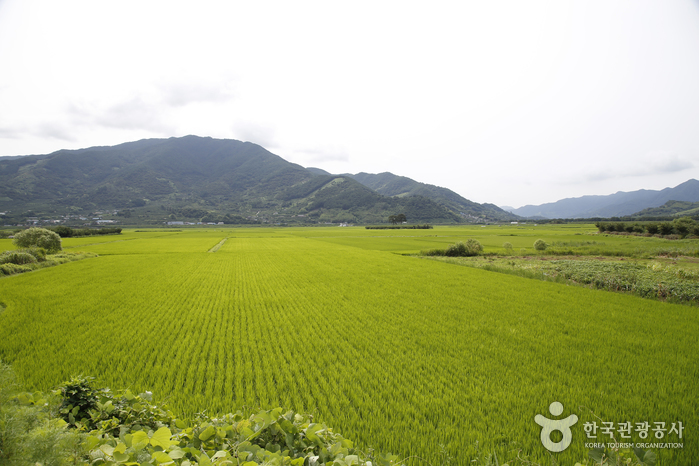
Pyeongsari Field (평사리들판)
928.1M 2022-08-26
Pyeongsari-gil, Hadong-gun, Gyeongsangnam-do
+82-55-880-2651
Pyeongsari Field was created by Seomjingang River flowing through the canyon which attracted people to form a village. The field served as the central farming field and fed the villagers for many years and appeared as a setting in Park Kyongni's novel "Land." Pyeongsari field is one of the largest fields found along Seomjingang River, boasting a size of 2,743,801 ㎡.
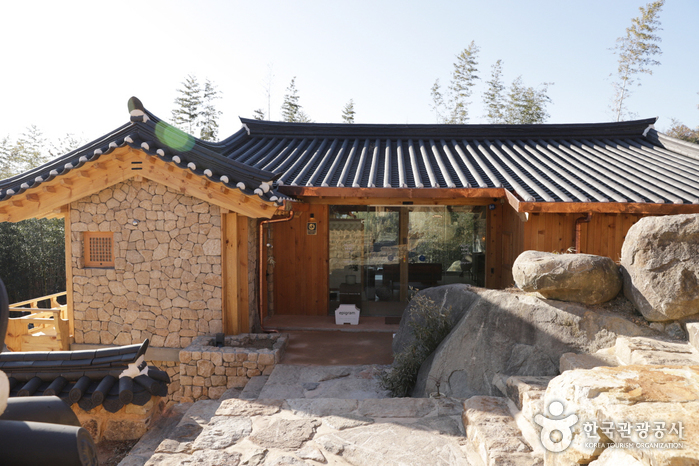
House of Choi Champan (최참판댁 한옥숙박시설)
1.1Km 2024-12-19
75 , Pyeongsari-gil, Hadong-gun, Gyeongsangnam-do
+82-10-2086-5330
House of Choi Champan is a hanok stay in Pyeongsa-ri, Akyang-myeon, where the Seomjin River flows down from Jirisan Mountain, Jeollanam-do. The accomodation is in several different configurations: the two-storey Ilyeongjae and Wolyeongjae are both rented out as houses; Yeonhajae and Hoeramjae, which are single-storey with numaru(a raised open floor); while Unrakjae and Hoegyeongjae have several rooms with bathrooms, each rented out. Only the "Hoegyeongjae-1" room is equipped with Numaru. Cooking strong-smelling food in guestrooms is not allowed.
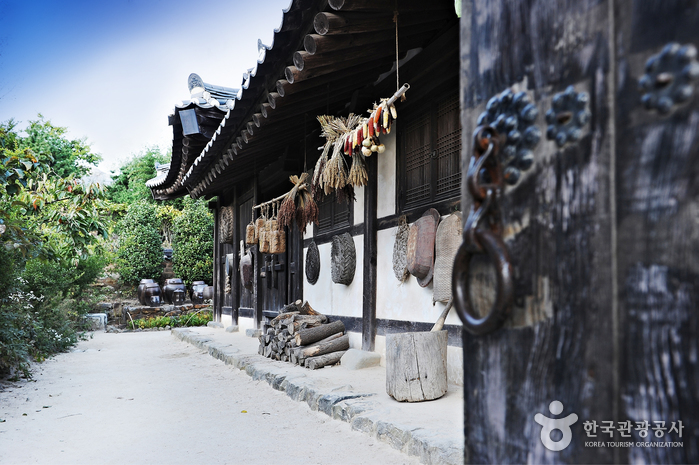
Choi Champandaek (House of Choi Champan) (최참판댁)
1.3Km 2021-12-16
66-7, Pyeongsari-gil, Hadong-gun, Gyeongsangnam-do
+82-55-880-2651
The House of Choi Champan is known as the setting of the famous novel "Toji" ("The Land") by noted novelist Park Kyongni. Located in a small folk literature village in Agyang-myeon, Pyeongsa-ri along the Seomjingang River at the foot of Jirisan Mountain, Choi Champandaek consists of fourteen hanok (traditional Korean house) buildings.
Also used as the main set of the drama version of "Toji" (2004), Choi Champandaek gives visitors a look at the life of Korean people in the late Joseon era. The house has not only made its appearance in many films, but is also a valuable cultural asset of Hadong-gun.
The Daecheong Maru (wooden-floored hall) connected to the Sarangchae (men’s quarters in a hanok) offers a wide view of the vast field of Pyeongsa-ri and gives an opportunity to meditate and reflect while appreciating the beautiful surroundings. Located in the vicinity are numerous tourist attractions including the Pyeongsari Literature Center, Hwagae Market, and Ssanggyesa Temple. During fall season every year, Choi Champandaek hosts the Toji Literature Festival.
![[Hadong Pak Kyongni Toji-gil Trail 1] Seomjingang Pyeongsa-ri Park to Hwagae Market ([하동 박경리 토지길 1코스] 섬진강 평사리공원~화개장터)](http://tong.visitkorea.or.kr/cms/resource/89/3070389_image2_1.JPG)
[Hadong Pak Kyongni Toji-gil Trail 1] Seomjingang Pyeongsa-ri Park to Hwagae Market ([하동 박경리 토지길 1코스] 섬진강 평사리공원~화개장터)
1.8Km 2024-02-08
Agyang-myeon, Hadong-gun, Gyeongsangnam-do
Hadong Pak Kyongni Toji-gil Trail 1 offers a scenic route around the Pyeongsa-ri fields, famously depicted in the novel Toji (The Land) by prominent Korean novelist Pak Kyongni. Spanning 18 kilometers from Pyeongsa-ri to Hwagae Market, this trail allows visitors to stroll alongside the Seomjingang River, immersing themselves in the world of the novel. Additionally, it is celebrated as a magnificent spot for cherry blossom viewing in spring.
Pyeongsari Park (평사리공원)
2.1Km 2022-08-22
3145-1, Seomjingang-daero, Hadong-gun, Gyeongsangnam-do
+82-55-883-9004
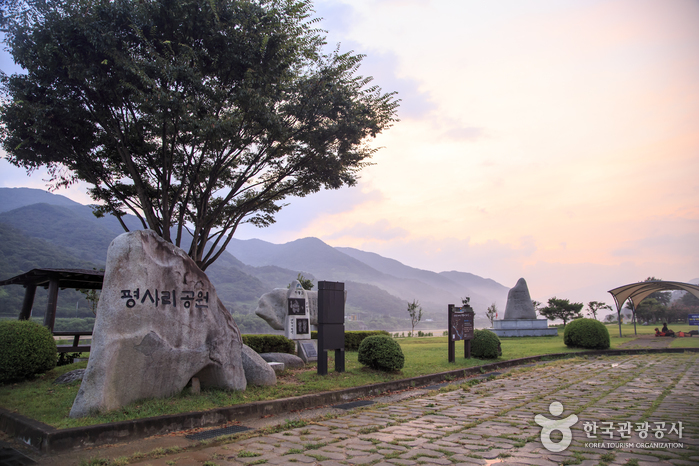
Situated along Seomjingang River between Gurye and Hadong, Pyeongsari Park was built for the enjoyment of summer tourists to the area. In addition to the beautiful river, the park is home to campgrounds, numerous shaded rest spots, basketball courts, soccer fields, and an abundance of parking space. Decorated with Jangseung (totem poles, which used to be set at the entrance of villages), the spacious park is full of excellent amenities: barbecue grills, benches, drinking fountains, and clean bathrooms. The sandy banks of the river offer a unique opportunity to catch marsh clams.
Pyeongsari Park and its nearby attractions appeared in Toji (The Land), the epic historical novel by Park Kyung-ni. Visitors may want to tour the group of houses that have been reproduced to commemorate the novel, including the famous Choi Champan House.
Nearby attractions include Hwagae Market, Ssanggyesa Temple, and Seomjingang Maehwa Village, host of the Gwangyang Maehwa Festival.
Hwanggeum Jaecheop Sikdang (황금재첩식당)
5.2Km 2025-04-22
3915 Seomjingang-daero, Hwagae-myeon, Hadong-gun, Gyeongsangnam-do
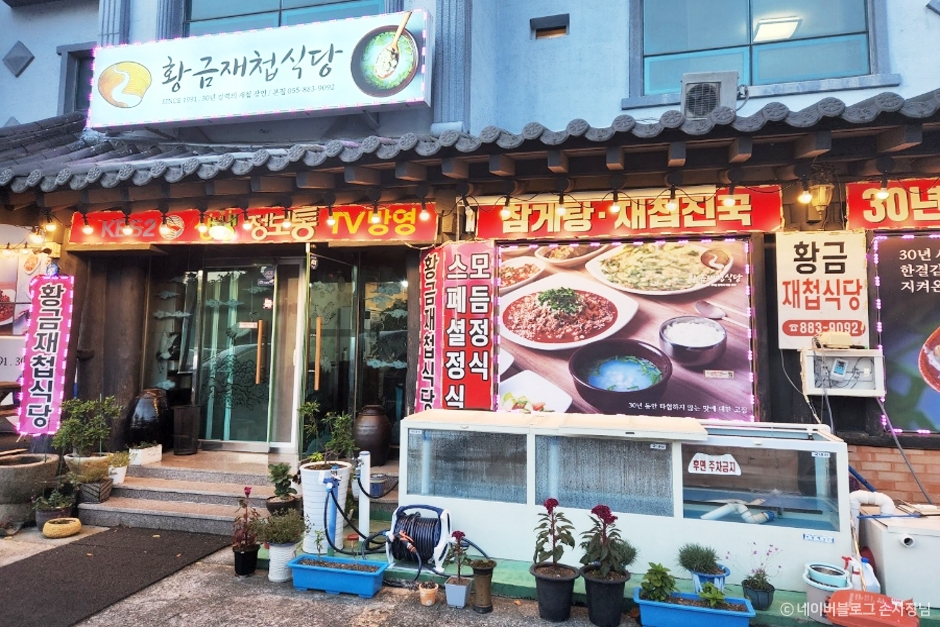
This jaecheop (Freshwater Marsh Clam) restaurant overlooks the Seomjingang River. Its signature menu is the Jaecheop Special Jeongsik (freshwater marsh clam special set menu), a sumptuous table with freshwater marsh clam and hairy crab caught from the Seomjingang River. The food here is particularly fresh as all ingredients are prepared on the morning of the day. It is also quite close to Hwagae Market, Simni (10-ri) Cherry Blossom Road, and other famous springtime tourist sites in Hadong, so you don’t have to head to the center of the township.

Dosimdawon (도심다원)
8.1Km 2025-10-23
51-2 Sinchondosim-gil, Hadong-gun, Gyeongsangnam-do
Hadong's tea fields, which are known as the thousand-year-old tea fields, are characterized by being wild rather than cultivated. Among the many tea gardens in Hadong, the one with the most beautiful and peaceful scenery is Dosimdawon. In “House on Wheels,” actor and singer Yim Si-wan and Girls' Generation Yoona sat in a pavilion and sipped green tea while looking out at the green tea fields stretched out below. Tea utensils and tea leaves in a picnic basket are available for rent so that you can brew your own tea.
Gwangyang Maehwa Village (광양 매화마을)
8.5Km 2025-01-08
1563-1 Seomjingangmaehwa-ro, Gwangyang-si, Jeollanam-do
+82-61-772-9494
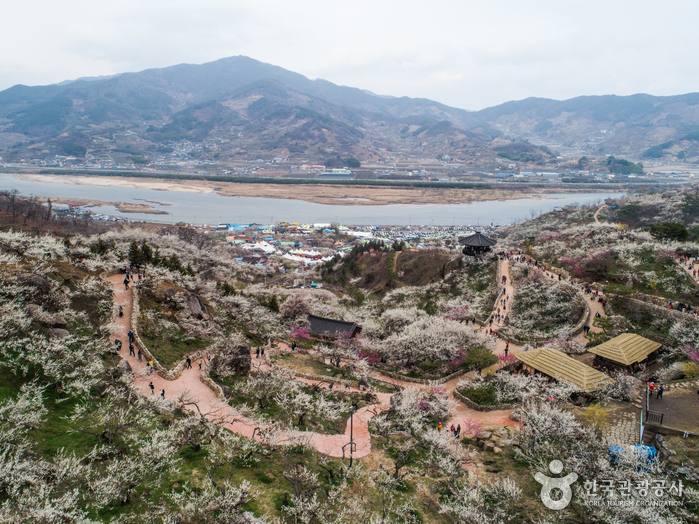
Following the Seomjingang River flowing down the outskirts of Jirisan Mountain is a village filled with plum trees. This village, Seomjin Village, is also known as the Maehwa (plum) Village for its abundant number of plum trees. Instead of crops and grains, plum trees are cultivated on farmlands, boasting white snow-like blossoms in March and bearing ripe plums in June. The annual Plum Blossom Festival takes place in the village every March when the plum blossoms are in full bloom.
Seomjingang Jaecheop Guksu (섬진강재첩국수)
8.5Km 2024-12-27
전라남도 구례군 토지면 섬진강대로 4276
This restaurant has gained fame on social media for its “scenic jaecheop-guksu.” Here, you can truly experience the natural flavors and aromas of jaecheop (Freshwater Marsh Clam). The rich jaecheop broth blends perfectly with thin noodles, filling your mouth with umami. The crispy jaecheop-jeon is a delightful treat that pairs perfectly with makgeolli (rice wine).
 English
 한국어
한국어 日本語
日本語 中文(简体)
 Deutsch
 Français
 Español
 Русский


