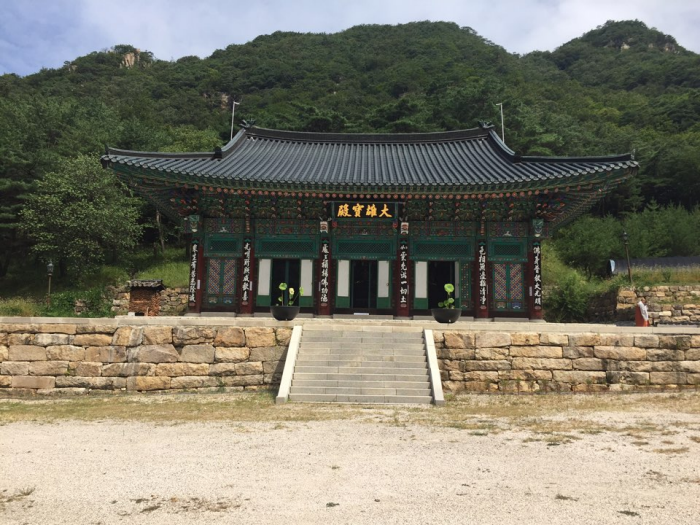
Jecheon Deokjusa Temple (덕주사(제천))
11.2Km 2021-12-03
87, Mireuksonggye-ro 2-gil, Jecheon-si, Chungcheongbuk-do
+82-43-653-1773
Deokjusa Temple is a branch temple of Beopjusa Temple, the head temple of the 5th district of the Jogye Order. The temple is believed to have been established in 597 AD by Princess Deokju, the last princess of the Silla Kingdom. According to legend, Princess Deokju stayed at the site with Prince Ma-ui and built the temple, naming it after herself, along with the cave nearby. However, there are no records to confirm or refute these claims.
The temple once stood in front of the Rock-carved Standing Buddha of Deokjusa Temple (a Treasure), but was burned down during the Korean War. The present temple building stands about 1.7 kilometers from the original temple site and is the result of reconstruction efforts conducted in the 1970s.
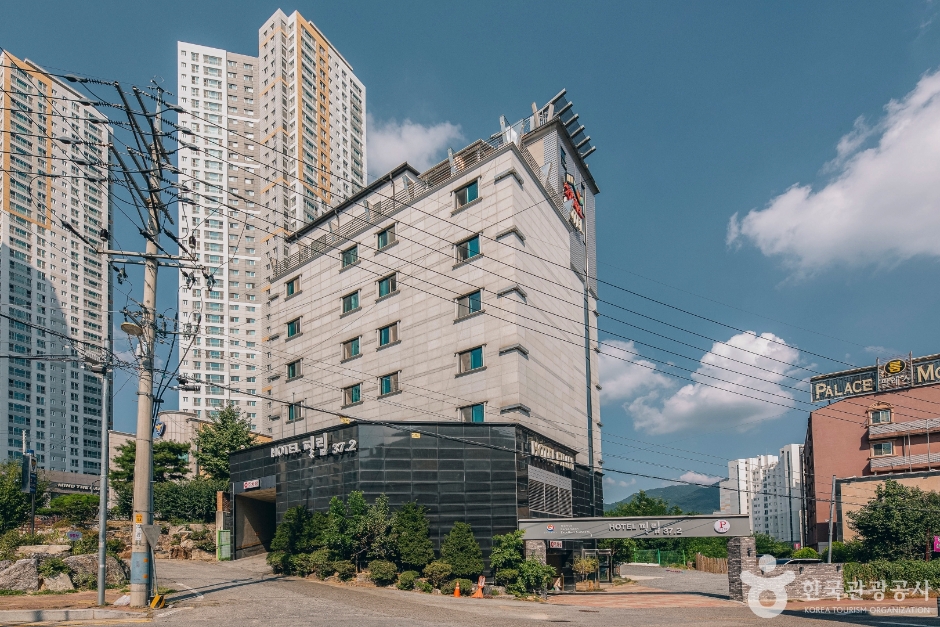
Hotel Film 37.2 (호텔 필림37.2)
11.3Km 2024-12-23
17 , Yeonwon-ro, Chungju-si, Chungcheongbuk-do
+82-43-842-0515
Hotel Film 37.2, located in Chungju, Chungcheongbuk-do, is conveniently located near Chungju City Hall. Rooms are mediculously decorated in three different styles - Korean, European, and Japanese - depending on which floor they are on. Especially, the Korean-style room has a door in the shape of a traditional Korean gate, and the paper ornaments and muntin-style windows give it a warm, old-fashioned feel.
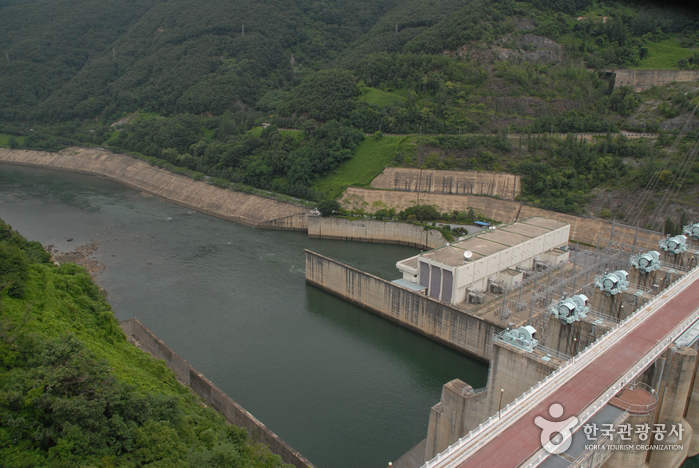
Chungju Dam (충주댐)
12.1Km 2021-04-29
737, Chungjuhosu-ro, Chungju-si, Chungcheongbuk-do
+82-43-840-1207
Chungju Dam is the nation’s largest multipurpose concrete dam and plays a role in water resources planning and management, prevention of flood damage, and electric power production. The dam area features various facilities like the Water Exhibition Hall, Memorial Tower, a resting area, and a tour boat dock. As for the structure, the dam is 97.5 meters high and 447 meters long. Beneath the main dam, there is a balancing reservoir dam which is 21 meters high and 480.7 meters long.

Chungjuho Lake (충주호)
12.3Km 2024-03-08
Jodong-ri, Dongnyang-myeon, Chungju-si, Chungcheongbuk-do
+82-43-850-5114
Chungjuho Lake is the nation’s largest lake, and was formed after the construction of Chungju Dam. When constructing the dam, an area of approximately 66.48 ㎢ was submerged throughout three regions in Chungju, Danyang and Jecheon. Even though nearly 50,000 people lost their hometown, the lake became a famous regional tourist spot, along with Woraksan National Park, Songgye Valley, Cheongpung Culture Center, Eight Sceneries of Danyang, Gosu Cave, Guinsa Temple, Suanbo Hot Springs, Nodong Cave and other spots.
Tourists can enjoy the scenic area on five ferry docks from Chungjunaru, main ferry dock of Chungju Dam, Cheongpungnaru, Janghoenaru where Gudambong Peak and Oksunbong Peak are located, Danyangnaru in Danyang-eup, and Woraknaru located near the beautiful scenery of Woraksan Mountain. From Chungju Dam to Janghoenaru, it takes approximately 1 hour 30 minutes, making it a long-distance course and offers special sightseeing on board. This course also holds great views of Chungjuho Lake and Yeongbong Peak of Woraksan Mountain, the surrounding scenery of Woraknaru, and two scenic spots of Danyang which are Gudanbong and Oksunbong Peak featuring uniquely-shaped rocks and peaks. This course is the most attractive among Chungjuho ferry excursion routes.

Chungju Tangeumdae Height & Park (충주 탄금대와 탄금대공원)
12.6Km 2021-07-21
105, Tangeumdaean-gil, Chungju-si, Chungcheongbuk-do
+82-43-848-2246
Tangeumdae x_height was originally a mountain named Daemunsan Mountain. The scenery is amazing with rocky cliffs, the nearby Namhangang River, and lush pine forests. The place was named Tangeumdae because it was where Ureuk, the celebrated musician of the Silla dynasty (57 BC-AD 935), used to play the gayageum (traditional stringed instrument).
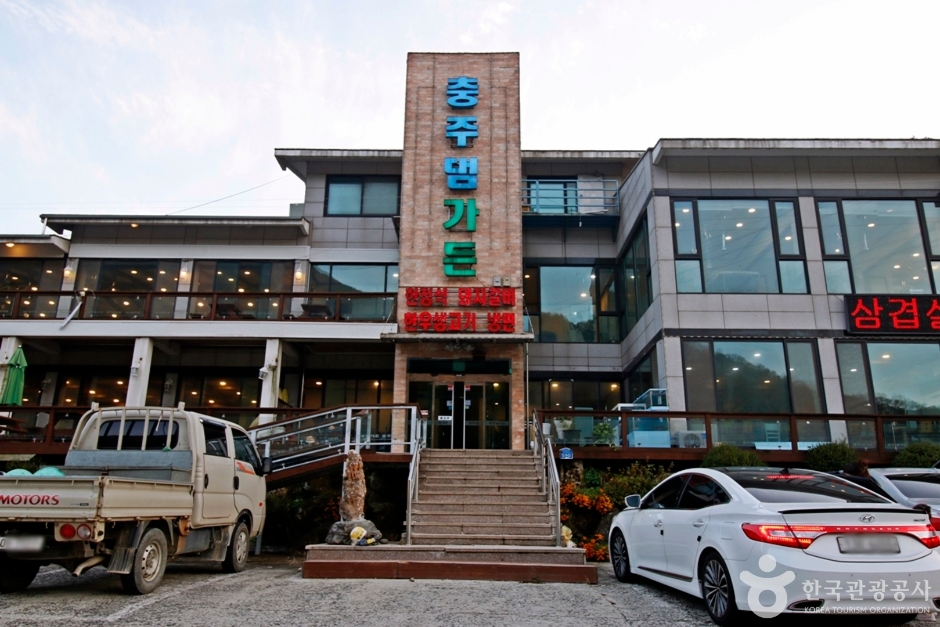
Chungju Dam Garden (충주댐가든)
12.8Km 2024-02-22
590 Chungjuhosu-ro, Chungju-si, Chungcheongbuk-do
Chungju Dam Garden is renowend for its minmul hoe (sliced raw freshwater fish) and maeuntang (spicy fish stew). The menu also features a bulgogi set menu, Korean table d'hote, gamasot galbitang (galbi soup in cast-iron pot), yukhoe (beef tartare), kkotdeungsim (grilled ribeye), dwaeji galbi (grilled pork galbi), and samgyeopsal (pork belly). Reservations are required a day in advance for ilpum hanjeongsik (special Korean table d'hote) and sura hanjeongsik (Korean sura table d'hote). Additionally, the outdoor terrace offers stunning views of the Namhangang River.
Chungju Mireukdaewon Stone Temple Site (충주 미륵대원지)
13.0Km 2021-03-19
150, Mireungnisaji-gil, Chungju-si, Chungcheongbuk-do
+82-43-850-6724
Mireukdaewon Stone Temple Site, Historic Site No. 317, faces south in the basin of the Haneuljae Pass between Chungcheongbuk-do and Gyeongsangbuk-do. It is said that Mauitaeja, the last prince of the Silla Kingdom, had a dream one night as he was traveling to Geumgangsan Mountain where the Avalokitesvara Bodhisattva instructed him to erect a statue of Buddha. As a result, he built a temple to honor the goddess’ wish at the current site of Mireuk-ri. The temple name was discovered through excavation research in 1977 and 1978 by Cheongju University, while the temple grounds were more thoroughly investigated by a team of researchers from Ewha Woman's University in 1980.
Yeonpung Sanctuary (연풍성지)
14.7Km 2024-02-26
14, Jungang-ro hongmun 2-gil, Yeonpung-myeon, Goesan-gun, Chungcheongbuk-do
After the nationwide repression of Catholicism in 1791, a group of Catholics came to what is today known as Yeonpung Sanctuary to practice their religion in secret before they were discovered and executed in 1801. Today, Yeonpung Sanctuary is a Catholic sanctuary dedicated to the martyrs. Yeonpung Sanctuary has a Catholic church, a crucifix, and a sculpture and tomb of Hwang Seokdu (Luke; 1813-1866), a saint born in Yeonpung and martyred as a Catholic.
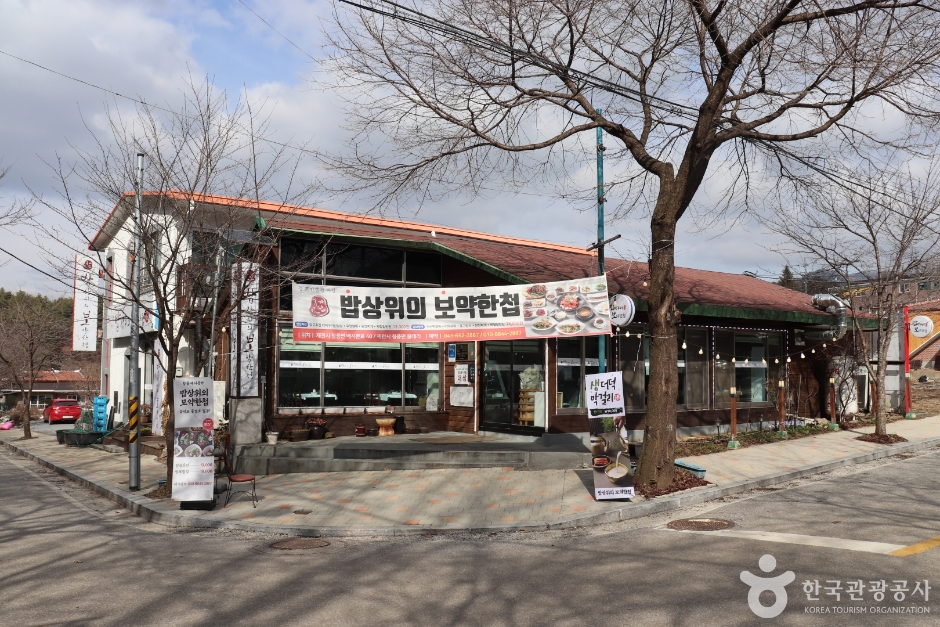
Bapsang Wiui Boyak Hancheop (밥상위의보약한첩 청풍)
16.4Km 2024-03-25
40 Baesiron-ro, Cheongpung-myeon, Jecheon-si, Chungcheongbuk-do
+82-43-647-0065
Bapsang Wiui Boyak Hancheop is a notable restaurant located near the Multae-ri cable car station, renowned for its dedication to serving traditional Jecheon dishes. The restaurant is particularly famous for offering side dishes prepared with local specialties such as deodeok and various types of namul. Its flagship offering, the Boyak Hancheop, is a grilled marinated eel set menu. The restaurant has garnered significant acclaim, having won the Grand Prize in the Chungbuk Traditional Cuisine Contest. Nearby attractions such as the scenic Chungjuho Lake and the Cheongpung Cultural Heritage Complex enhance the dining experience with cultural enrichment and natural beauty.
Chungju Tangeumho Rainbow Road (충주 탄금호 무지개길)
16.9Km 2024-02-22
Ruam-ri, Jungangtap-myeon, Chungju-si, Chungcheongbuk-do,
Tangeumho Rainbow Road is a floating bridge constructed for the 2013 World Rowing Championships. Dazzling with colorful lights at night, it now serves as a path for walking and cycling. Each section offers a unique night view, music and photo spots. Visitors can enjoy diverse activities such as cultural performances and stamp tours.
 English
 한국어
한국어 日本語
日本語 中文(简体)
 Deutsch
 Français
 Español
 Русский


