SONANGGOO (소낭구펜션)
18.5Km 2024-08-05
83 , Majeon 1-gil, Geoje-si, Gyeongsangnam-do
+82-10-6776-6054
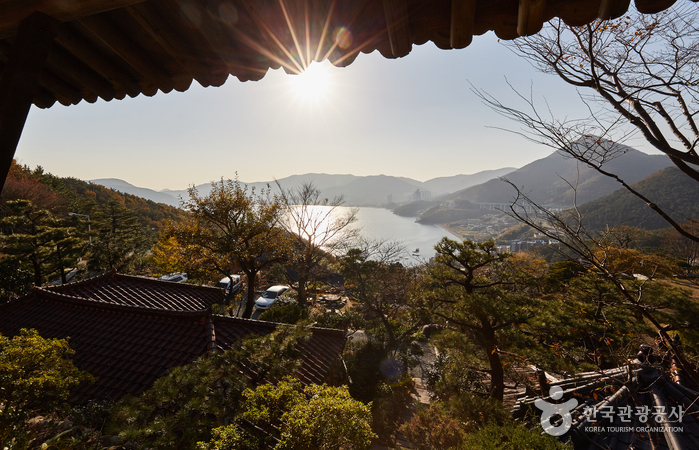
Sonanggu Pension stands on a high point overlooking Jisepohang Port in Geoje, Gyeongsangnam-do. It’s a 2-storey building of timber and red clay with a terraced garden full of flowers, trees, and wild grasses, plus a resting area and a gazebo with fine views. Each room is equipped with modern kitchen facilities and toilets, and in the yard there’s a hot-stone grill for Korean-style barbecues.
Sinseondae Observatory (신선대 전망대)
18.5Km 2022-11-17
San 21-19, Galgot-ri, Geoje-si, Gyeongsangnam-do
+82-55-639-3000
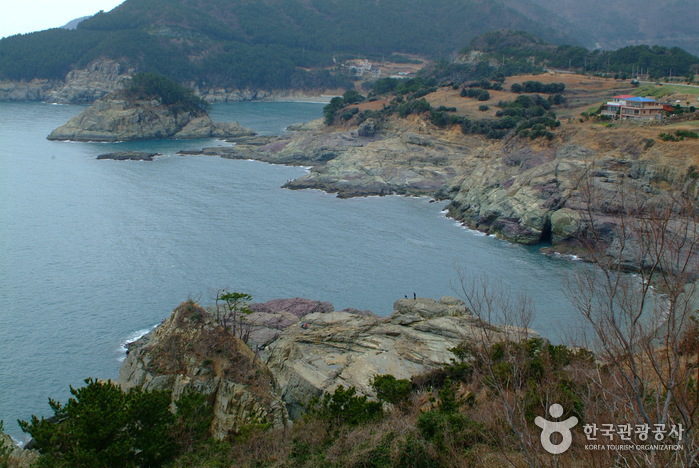
Sinseondae Observatory, located between Dojangpo Maeul and Haegeumgang, offers picturesque views of the fantastically shaped rocks against the deep-blue ocean hues. "Sinseon" in Korean means supernatural beings; the beauty of this spot is said to attract such beings to come frolic. The blue and yellow colors layered on the rocks tell a unique history of the terrain. A stairway from the road leads directly to the lookout point.
Just past a gas station along the coastal highway, Sinseondae Observatory reveals itself. Walking out onto the rocks of Sinseondae, views of the surrounding islands and incredible landscape open up to viewers. Many commercials and TV shows have been filmed here taking advantage of this amazing setting. April and May are the perfect times to see the bright-yellow canola flowers across the island.

Hallyeohaesang National Park (Geoje District) (한려해상국립공원(거제))
18.8Km 2021-01-21
Jangseungpo-dong, Geoje-si, Gyeongsangnam-do
+82-55-860-5800
Hallyeohaesang National Marine Park was designated as the first national marine park in 1968 and covers the area between Jisimdo Island in Geoje and Odongdo Island in Yeosu with six separate districts including Geoje, Tongyeong, Sacheon, Hadong, Namhae and Odongdo Island. It spans over an area of 535.676 ㎢ and the ocean accounts for 76% of the total area. The outstanding view created by the sea and land attracts over 1 million visitors every year.
Geoje is made up of 10 inhabited islands and 50 uninhabited islands. Two-thirds of the area is included in Hallyeohaesang National Marine Park, featuring Haegeumgang Islets, designated as Scenic Site No. 2, and Daebyeongdaedo Island & Sobyeongdaedo Island, one of the most stunning points of Hallyeo Waterway. Also, the drive on the coastal road between Yeocha and Hongpo offers a breathtaking view of Dadohae Islets unfolding from the peak of Cheonjangsan Mountain and Nojasan Mountain.
Haegeumgang Cruise (해금강유람선)
19.0Km 2024-03-20
270 Haegeumgang-ro, Nambu-myeon, Geoje-si, Gyeongsangnam-do
Haegeumgang Cruise is a tour boat offering sightseeing trips around Haegeumgang Islets, also known as the Geumgangsan Mountain of the Sea, renowned for its stunning scenery in Geojedo Island. The cruise departs from a quay in Galgot-ri, Nambu-myeon, near Haegeumgang Village by the seaside. The Haegeumgang Islets, located approximately 500 meters offshore, allow tourists to view various natural attractions from the sea, such as Sipjadonggul Cave, Sajabawi Rock, and Chotdaebawi Rock. A valid ID is required to board the cruise.
Woojebong Observatory (거제 우제봉전망대)
19.7Km 2025-10-27
23 Haegeumgang 3-gil, Nambu-myeon, Geoje-si, Gyeongsangnam-do
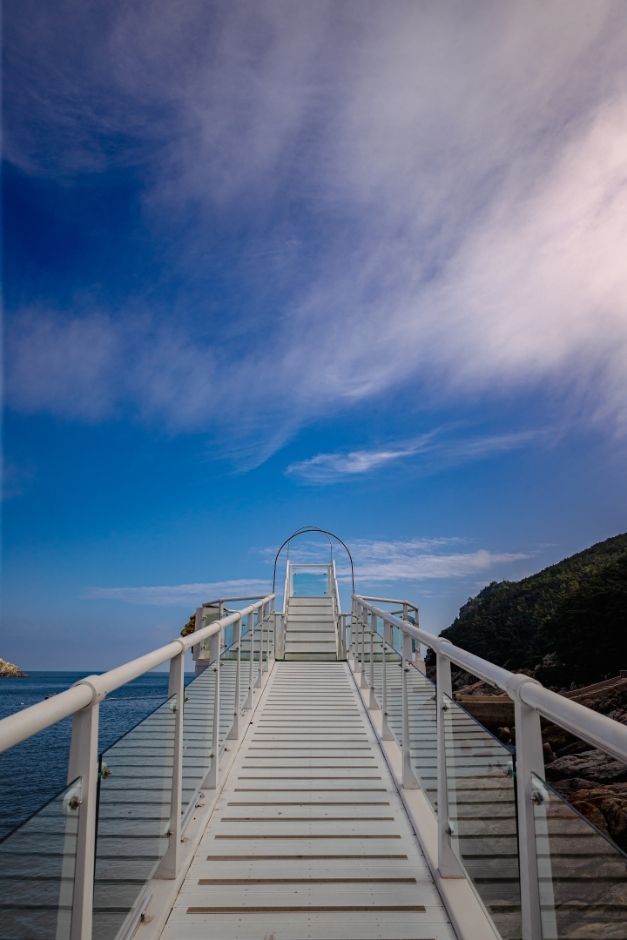
At Woojebong Observatory, which offers a panoramic view of Woojebong and Haegumgang, you can see the actual backdrop of the final scene where the character Park Pyeong-ho meets his fate in the movie "Hunt." The picturesque Haegumgang, which is one of Korea's 40 scenic spots, and the dense camellia forest path, create the trademark scenery of Woojebong Observatory.
Oedo-Botania (외도 보타니아)
19.7Km 2025-12-16
17, Oedo-gil, Geoje-si, Gyeongsangnam-do
+82-55-681-4541
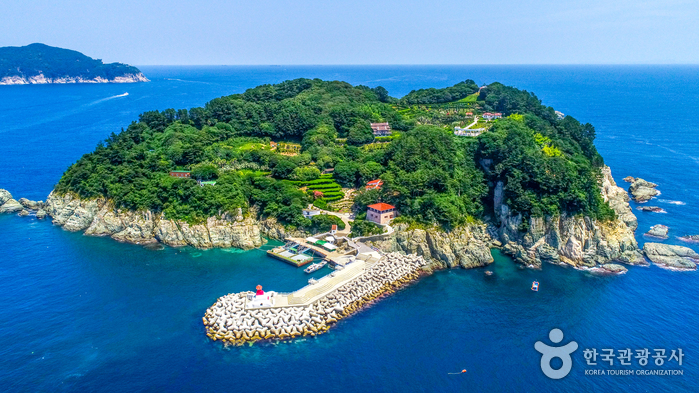
“Botania” is a portmanteau of "botani-" (plants) and "utopia" (paradise), and Oedo-Botania represents a paradise for plants on the sea. It is surrounded by the blue and clear seas of Geoje, and you can see the Haegeumgang Islets, Hongdo Island, and Tsushima Island in the distance. The total area is 148,760㎡ (45,000 pyeong), divided into Seodo Island and Dongdo Island. The former was developed into Oedo-Botania, while the latter (22,017㎡) is preserved in its natural state, home to 64 native plant species and over 1,000 rare subtropical plants from around the world.
Oedo-Botania was designed with Buckingham Palace Garden as its motif, and the Venus Garden—the signature attraction of Oedo-Botania—features twelve Venus statues harmoniously integrated with the plants.
The second Hill of Love observatory is home to a 300-year-old guardian tree where residents once held ceremonies for the village’s well-being and bountiful fishing. From here, you can enjoy panoramic views of the Venus Garden, Lee House, and the Flower Garden.
The “Stairway to Heaven” was originally created by planting 3,000 tangerine trees on land where residents once cultivated fields, along with 8,000 cypress trees planted as windbreaks against the fierce sea winds. However, due to damage from Typhoon Maemi, it is now composed of various ornamental trees, including pagoda trees, arranged in a tapestry-like pattern.
The lighthouse, designed to resemble the shape of Oedo Island, is the only one of its kind to allow visitors to explore its maze-like interior, adding to the fun of exploration.
◎ Travel Information to Discover Hallyu’s Charm
Oedo-Botania appears as the island that Jun-sang, who had lost his sight after a traffic accident, created for his first love, Yoo-jin, in the final episode of the K-Drama "Winter Sonata(2002)." The “Lee House” in particular—the place where the two leads meet in the show—appears as a Mediterranean-style house when viewed from the Venus Garden, but is actually built in the traditional Korean style, divided into anchae and sarangchae.
Neungpohang Port (능포항)
19.9Km 2025-02-03
Neungpo-dong, Geoje-si, Gyeongsangnam-do
Neungpohang Port, located in Geoje, spans 1.7 km until Yangjiam and is connected to Jangseungpo by road. Designated as a national port in 1971, it was revamped in 2016 into a multifunctional port. Today it serves not only as an infrastructure for fisheries industries, but is also gaining popularity for marine leisure, cultural activities, and tourism. Its breakwaters and waterside park make it a favored destination, attracting families and other tourists alike.
 English
 한국어
한국어 日本語
日本語 中文(简体)
 Deutsch
 Français
 Español
 Русский


