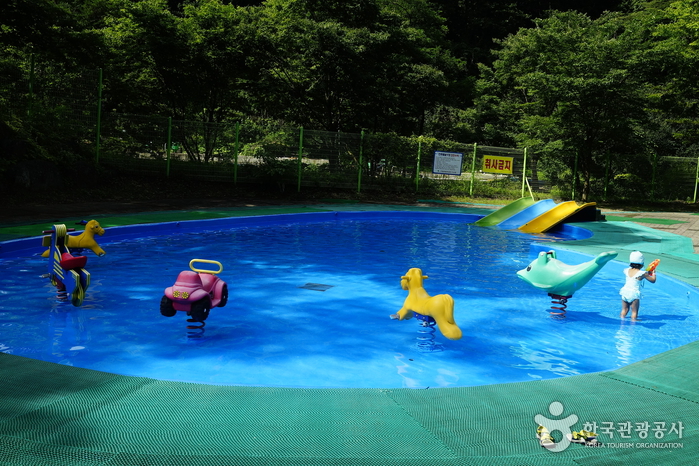
Cheondong Tourist Area Water Park (천동관광지 물놀이장)
14.8Km 2024-02-26
534, Darian-ro, Danyang-eup, Danyang-gun, Chungcheongbuk-do
Cheondong Tourist Area’s Water Park is an outdoor water park that opens temporarily in July and August. It has separate pools for adults and children, a lazy river, and a high slide pool. The campground within the Cheondong Tourist Area allows visitors to stay overnight. Nearby tourist sites include Dodamsambong Peaks, Ondal Tourist Area, and Mancheonha Skywalk.
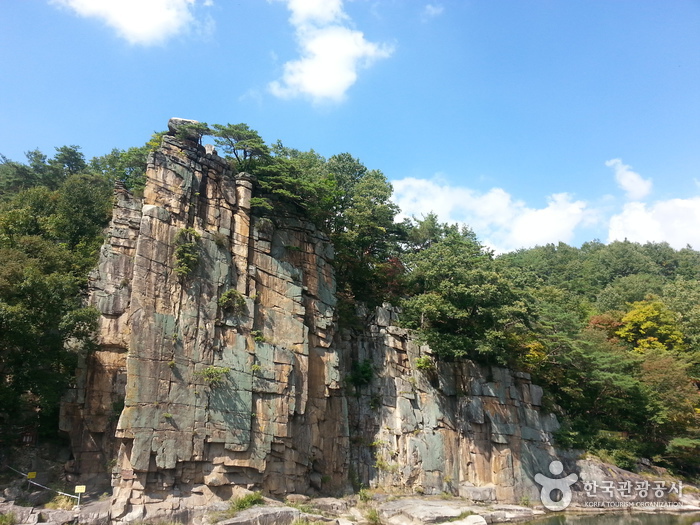
Sainam Rock (단양 사인암)
16.1Km 2025-01-14
42, Sainam 2-gil, Danyang-gun, Chungcheongbuk-do
+82-43-422-1146
Sainam Rock, located in Sainam-ri, Daegang-myeon, is one of eight scenic areas in Danyang, and is located in the southeast side of Danyang-gun, along with Sangseonam Rock, Jungseonam Rock, and Haseonam Rock of Seonam Valley.
The Sainam Rock is a rugged outcropping with an inspiring x_height of 70 meters, and the deep blue Namjocheon Stream passes in front of it, located in the southern part of Danyang-gun.
Most visitors to Danyang Eight Scenic Views tend to come to the rock as their first destination due to the good condition of the road. Also, Unseongugok Valley flows in front of Sainam Rock. The rock was picked as the most picturesque place among the Eight Scenic Views. On the cliff, there is a phrase carved by Utak’s own handwriting, as well as old pine trees on a rock floor that is reminiscent of the Haegeumgang River.
Sainam was named after the great scholar Yeokdong Utak during Goryeo Period. He had taken up a public service to assist a king in a position called sain (사인), and then he retired to his hometown of Danyang, starting out teaching young students. For this story, a governor of Danyang named the rock Sainam to commemorate his achievement during King Seongjong of the Joseon Dynasty.
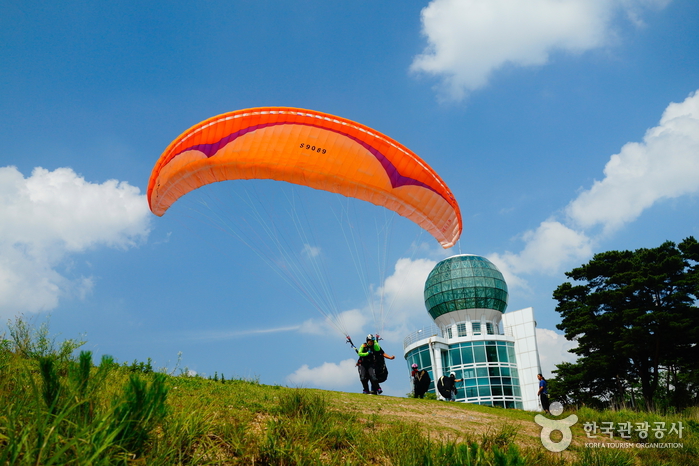
Yangbangsan Paragliding Site (양방산활공장)
16.6Km 2021-06-16
350, Yangbangsan-gil, Danyang-gun, Chungcheongbuk-do
+82-43-420-3035
Yangbangsan Paragliding Site is situated 664 meters above sea level at the top of Yangbangsan Mountain. Upon arrival at the site, one can get a panoramic view of Danyang, including the meandering Namhangang River. While serving as the main venue for major gliding sports competitions, the site is also frequented by tourists and extreme sports enthusiasts who want to experience hang gliding and paragliding.
![Sogang House [Korea Quality] / 소강고택 [한국관광 품질인증]](http://tong.visitkorea.or.kr/cms/resource/80/2803880_image2_1.jpeg)
Sogang House [Korea Quality] / 소강고택 [한국관광 품질인증]
17.4Km 2024-10-30
22, Baraemi-gil, Bonghwa-eup, Bonghwa-gun, Gyeongsangbuk-do
+82-10-9189-5578
Located in Baraemi Village, Bonghwa, Gyeongsangbuk-do, Sogang House is a hanok that is over 100 years old. Baraemi Village, the Uiseong Kim clan village, has lots of old houses remaining, but Sogang House has an outstanding history and ambiance. The house was built around 1910 by Namho Kim Roi-sik, a renowned wealthy patriot in Gyeongsang-do, for his second son, Sogang Kim Chang-gi when he was married. Kim Roi-sik is a figure who donated the money secured on his whole possession when the Provisional Government of Korea in Shanghai was raising contributions, and received the Order of Merit for National Foundation. Sogang House is a D-shaped hanok with the adjoining sarangchae and anchae. Even the door frame of the house is built with the chunyang pine, showing the elaboration put in its building. As it is not easily twisted or rotten, chunyang pine is the best pine for architecture that was used for building the palace, the temple, and houses of aristocrats in the Joseon period. There are six guest rooms, including Sarangbang and Eosabang. Sarangbang contains two rooms and veranda, Seonbibang is the room that sunshine comes in the earliest in the morning, and Doryeongbang is the only ondol (floor-heated) room that is built with red clay. Every room has an air-conditioner and the lovely garden with a flower tree is seen through the open window.
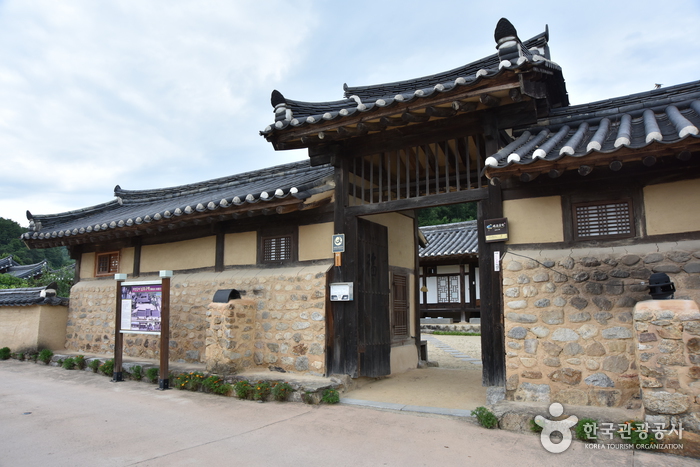
The Namho house (남호구택)
17.4Km 2024-12-19
21 , Baraemi-gil, Bonghwa-gun, Gyeongsangbuk-do
+82-54-673-2257, +82-10-2311-3488
Bonghwa Namho Old House in Bonhwa-gun is a Gyeongsangbuk-do cultural treasure with a history going back 140 years - but the original materials were of such high-quality that the Old House has hardly detiorated at all. The toilet is shared, but has recently been renovated to a high standard. In the spacious yard you can enjoy traditional games such as Tuho, Neolttwigi, and Jegichagi. The house is convenient for transport, with Bonghwa Station (on the Yeongdong Line) just a 15-minute walk away, and a city bus stop in the village.
![Manjukjae House[Korea Quality] / 만죽재 고택[한국관광 품질인증]](http://tong.visitkorea.or.kr/cms/resource/55/3016955_image2_1.jpg)
Manjukjae House[Korea Quality] / 만죽재 고택[한국관광 품질인증]
17.6Km 2024-10-30
11-10 , Museom-ro 234beon-gil, Yeongju-si, Gyeongsangbuk-do
+82-54-638-1127
Manjukjae House is the oldest hanok in Museom Village, Yeongju, Gyeongsangbuk-do, with a history dating back 360 years. Originally built by Park Su to live the life of a reclusive gentleman after the Manchu Invasion of Korea, the house has been passed down from generation to generation through 13 generations. There are four guest rooms, Seomgye Chodang, Sarangchae (detached building), Anchae (main building), and Chaekbang (study), all of which can accommodate two people. Among them, Seomgye Chodang offers the best view, from where guests can enjoy the scenery of the log bridge in Museom Village, the Naeseongcheon Stream, and the white sandy beach. With the windows wide open, you can enjoy the cool breeze and the soothing sounds of nature.
Tohyang traditional house (토향고택)
17.7Km 2024-12-19
43 , Baraemi 1-gil, Bonghwa-gun, Gyeongsangbuk-do
+82-10-8575-9036
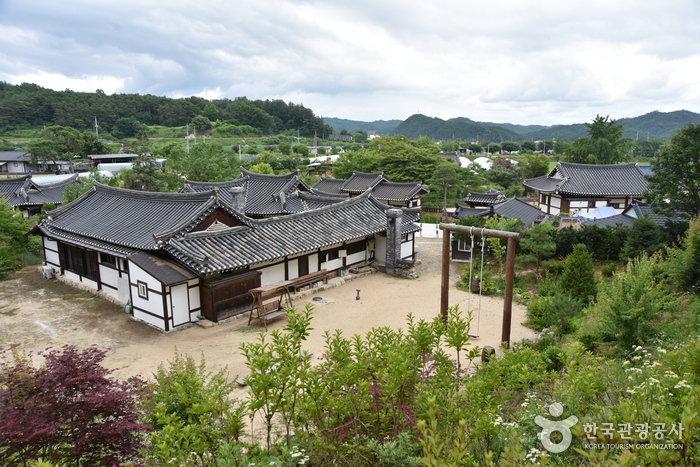
Tohyang Old House is a grand old house in Bonghwa, Gyeongsangbuk-do, formerly the home of eleven generations of the same family. The main house is estimated to be over 350 years old, and is a place where past and present harmonize. The garden contains flower beds, a lotus tree, a walking path, and a wood-fired pottery kiln, where you can take part in a traditional pottery experience.
Yeongju Museom Village (영주 무섬마을)
17.7Km 2021-08-24
31-12, Museom-ro 234beon-gil, Yeongju-si, Gyeongsangbuk-do
+82-54-638-1127
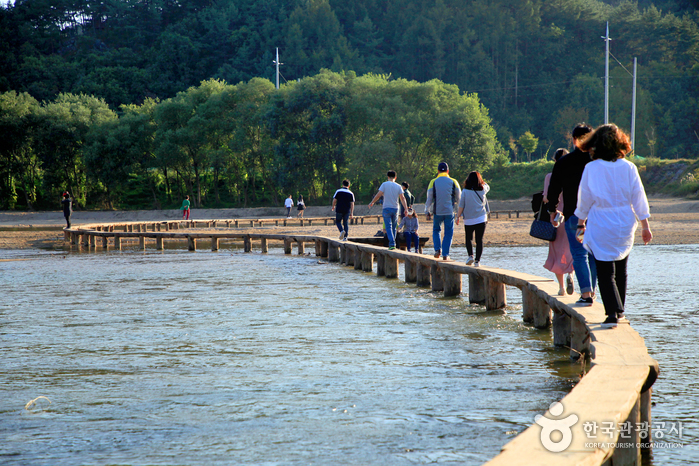
Located in Sudo-ri in Yeongju, Gyeongsangbuk-do, Museom Village is a charming hanok village surrounded by water. Flowing down from Sobaeksan Mountain and Taebaeksan Mountain, Naeseongcheon Stream and Yeongjucheon Stream converge and loop around Museom Village, surrounding the village on three sides with water. This peninsula-like village is not only the center of traditional Korean culture, but also has a gorgeous natural landscape complete with a wide sandy riverside and a lush inland forest.
Known for Haeudang and Manjukje Houses (two of the most historical hanok houses in the area), the village is also home to other outstanding traditional houses such as the Kim Gyu-jin House and the Kim Wi-jin House. Manjukje House is located at the heart of the village and the oldest traditional house in this hanok village. Manjukje was built in 1666 (7th year of King Heonjong's reign) by Bak Su (the father of the Bannam Bak Family).
Nearby Manjukje is Manun House, built in the early 19th century and named after Kim Hwi-geol (penname “Manun”). The house later became the home of the wife of the famous poet Jo Ji-hun, author of “Byeolli,” a poem expressing the beauty of Museom Village.
Other notable houses include the Kim Wi-jin House (a house belonging to aristocrats), the Kim Jeong-gyu House (a house without the traditional outer fencing), and the Bak Jae-yeon House, where the writings of Bak Gyu-su (a respected scholar during the Joseon period) still remain today.
Another famous attraction in the village is the Single Log Bridge, which was the village’s only connection to the outside world for over 350 years before the construction of Sudo Bridge in 1979. It is a tiny bridge in terms of x_width (30 cm), but it stretches for over 150 meters. It is said that the bridge was rebuilt annually after being destroyed each rainy season. With the construction of Sudo Bridge, the Single Log Bridge was no longer needed, but was rebuilt some time later in its original form. To celebrate the bridge’s impressive history, the village hosts the Single-Log Bridge Festival every October.
Danchonsewongotak / 단촌서원고택
17.7Km 2025-03-05
103-10 , Buksanghari-gil, Danyang-gun, Chungcheongbuk-do
+82-10-7230-5415
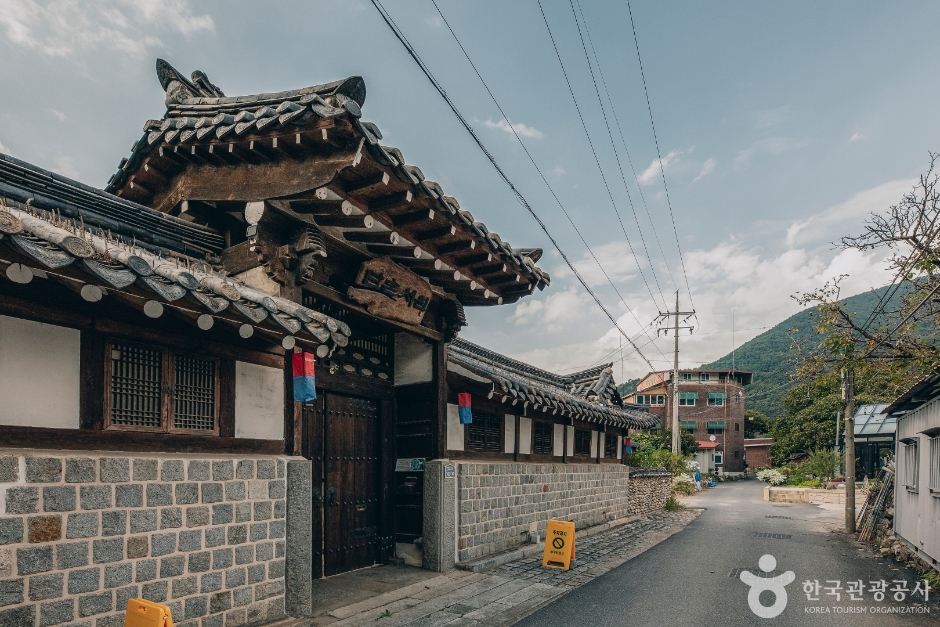
Danchon Seowon Old House is an elegant hanok in Danyang, Chungcheongbuk-do. Guestrooms are named after flowers and blossoms, such as Mountain Peony, White Dandelion and Plum. Some rooms have antique furniture and pictures on the wall while others have exposed rafters and beams. Narcissus and Ocher are smaller and share a kitchen and bathroom; these are cheaper than the others. There’s a cafe in the yard, where visitors will hear music from the owner’s collection of vinyl LPs. There’s a pleasant walk to the village, and fine views of the stars at night. Danyang Gugyeong Market is 20 minutes away by car, and Suyangjaebit Tunnel is 8 minutes away.
Manhoegotaek (만회고택)
17.7Km 2024-12-19
51 , Baraemi 1-gil, Bonghwa-gun, Gyeongsangbuk-do
+82-54-673-7939, +82-10-8079-7939
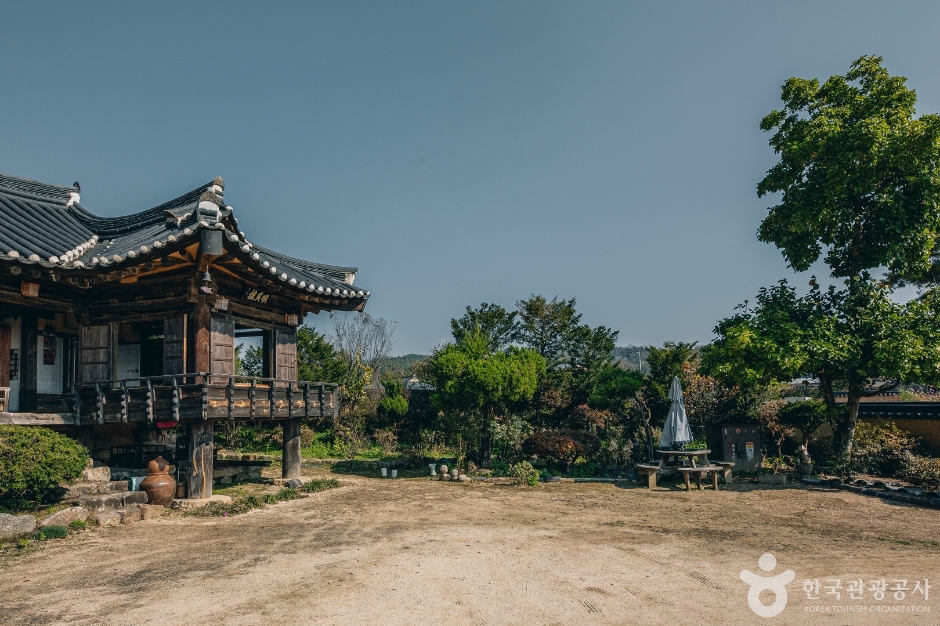
The prestigious Manhoe Old House in Baraemi Village, Bonghwa, Gyeongsangbuk-do, is a nationally designated folk cultural asset, because of its 300 year history and its association with both Korean literature and the March 1st independence movement. It is said that a thousand poems were written in Myeongwolru, the Old House’s pavilion; and the 1919 Independence Petition was also written here. There are 7 guestrooms, one with an attic with exposed roofbeams, and most but not all rooms have individual toilets. Guests can take part in traditional activites such as folk games.
 English
 한국어
한국어 日本語
日本語 中文(简体)
 Deutsch
 Français
 Español
 Русский


