
Charmdaun Korean Medical Clinic (참다운 한의원)
4.2Km 2025-10-23
3rd Floor, Jasam Building, 50 Hwarang-ro, Suseong-gu, Daegu
Charmdaun Korean Medical Clinic, opened in 2017, is a Korean medicine clinic located in Suseong-gu, Daegu. It is led by a board-certified specialist in Korean gynecology (Doctor of Korean Medicine) and offers treatments such as anti-aging acupuncture, weight loss, constitutional diagnosis, women’s health care, and pain teatments (e.g., acupuncture, moxibustion).
E-World (이월드)
4.3Km 2024-07-05
200 Duryugongwon-ro, Dalseo-gu, Daegu
In October 1987, E-World began construction on a tower and theme park, completed the master plan for the construction in 1993, and opened it in March 1995. It is a European-style city park decorated with waterfalls, fountains, lights, and flowers, with rides, exhibitions, art spaces, and restaurants that all ages can enjoy. There are theme plazas to provide novelty and enjoyment for visitors at E-World. Representative plazas include the entrance plaza near the ticket office, the central plaza located in Fantasy World, Children's Square with a playground for kids, and Youngtown Square for young people.
E-World Illumination (이월드 일루미네이션)
4.3Km 2025-11-25
200 Duryugongwon-ro, Dalseo-gu, Daegu
+82-70-7549-8112
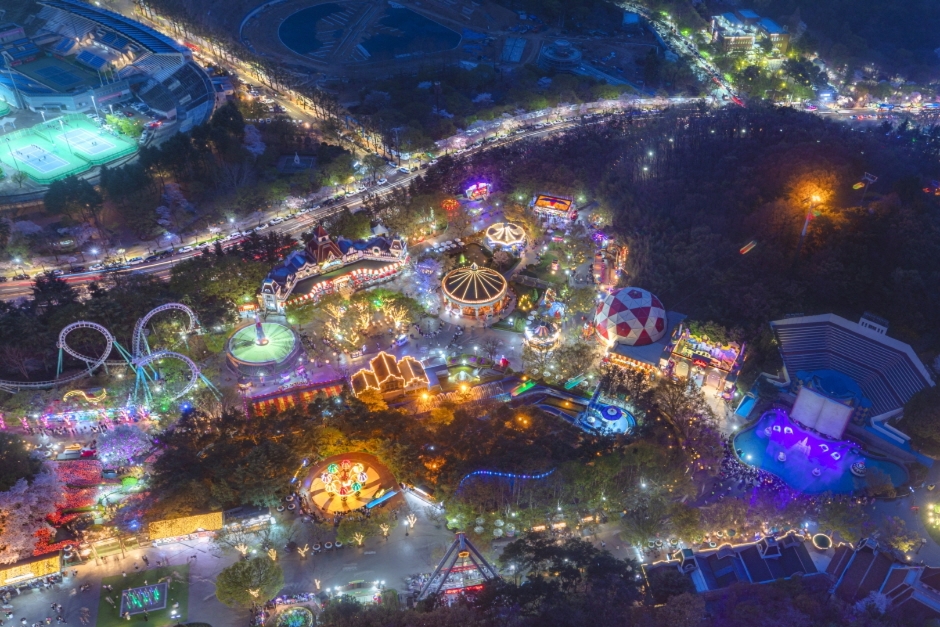
E-World Illumination is a lighting festival that decorates E-World and 83 Tower with ten million lights. Visitors can also take memorable photos at romantic and attractive photo zones that light up the evening.
E-World 83 Tower (이월드 83타워)
4.4Km 2025-08-06
200 Duryugongwon-ro, Dalseo-gu, Daegu
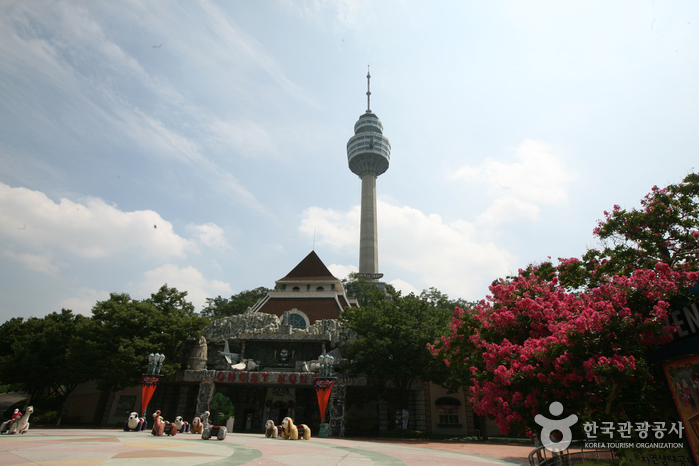
83 Tower is a symbol of Daegu and offers an incredible view of the entire city. The tower also has a revolving restaurant and Sky Lounge, offering top cuisine and night views of the city.
Dowoo Health Care (주식회사 도우티앤비)
4.6Km 2025-10-23
(2nd Floor), 7 Bongdeok-ro 1-gil, Nam-gu, Daegu
With a branch in Hanoi, Vietnam, we have been engaged in the medical tourism business for Vietnamese patients since 2010, specializing in attracting patients from Hanoi, Danang, and Ho Chi Minh City. We also lead medical volunteer activities in Vietnam with Korean hospitals every year, and our local subsidiary in Vietnam is licensed to import Korean medical devices from Vietnam. We are evolving into a company that specializes not only in medical tourism but also in total healthcare. Since 2010, we have been leading cooperation between hospitals in Vietnam and Korea through hospital-to-hospital program exchanges, physician training, etc.
MRNW Miraenongwon (MRNW)
4.8Km 2023-11-09
300-22 Hoguk-ro, Buk-gu, Daegu
MRNW, standing for Miraenongwon, was started with the idea of creating a space one dreams about but does not exist in real life. Locating in nature, MRNW provides a space to enjoy exhibitions, culture, art, and dining all at once.
Daegu Duryu Park (대구두류공원)
4.8Km 2023-01-05
161, Duryugongwon-ro, Dalseo-gu, Daegu
Daegu Duryu Park was built near Duryusan and Geumbongsan mountains in 1977. The park encompasses the area of Duryusan Mountain including E-World all the way to Geumbongsan Mountain behind Daegu Culture and Arts Center. The name Duryusan came from the fact that the mountain is spread out in a circular form. The total size of the park is approximately 1.7 million ㎡ at a x_height of 135 meters above sea level. Various statues and memorials including 2ㆍ28 Memorial Tower that commemorates the high school students who started the 4ㆍ19 Revolution, as well as a statue of Yi Sang-hwa and more can be found along the Duryu Park circular road. After the opening on October 1977, the park added a soccer field, a baseball field and other recreational facilities as well as private libraries that provide convenience to the citizens.
Ttangttang Chicken Land (치킨체험 테마파크 땅땅치킨랜드)
5.6Km 2023-11-17
220-2 Palgong-ro, Dong-gu, Daegu
Ttangttang Chicken Land opened its doors on September 1, 2018 in Daegu, the center of Chimac (chicken and beer). At Korea's first chicken theme park, visitors can enjoy seeing, making, and tasting different types of chicken.
Anjirang Gopchang Alley (안지랑 곱창골목)
5.8Km 2023-11-17
67 Anjirang-ro 16-gil, Nam-gu, Daegu
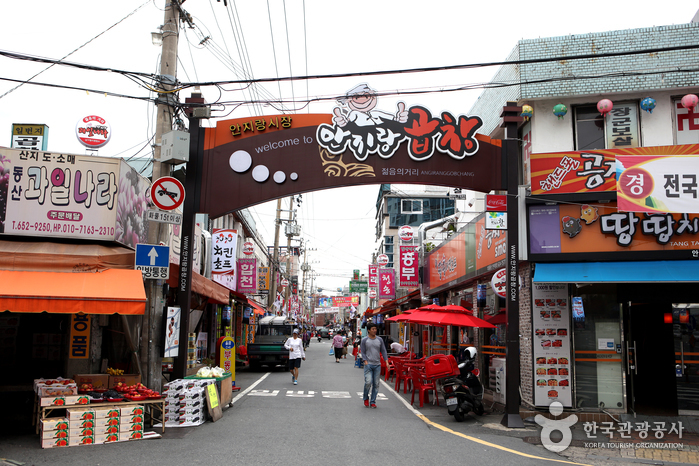
Anjirang Market, located halfway between Anjirang Five-way Intersection and Anjiranggol-ro Street, is now more widely known for the alley filled with restaurants serving marinated gopchang (intestines). The area started with Chungbuk Restaurant opening in 1979 and expanded until the end of the IMF crisis in 1998. Locals enjoy coming to the area because of the affordable prices. Recently, the area is also trying to draw in a younger demographic by targeting the younger population. In 2012, Anjirang Gopchang Alley was selected as one of the top five food themed streets in the nation by the Ministry of Culture, Sports and Tourism.
Apsan Cafe Street (앞산카페거리)
5.8Km 2023-11-17
191 Daemyeongnam-ro, Nam-gu, Daegu
Apsan Cafe Street is filled with cafes of all different types. From houses modified into a cafe, restaurants, and gallery cafes, there are more than 40 coffee shops along the street. Most are cafes serving coffee, sandwichs, and desserts, but there are also restaurants serving pizza, pasta, and steak as well as Japanese food, pubs and pie shops. The street is perfect for couples going on a date or families looking for sweets. Attractions nearby include Apsan Park and Anjirang Gopchang Alley for a place to eat, drink and rest. Anjirang Station (Daegu Subway Line 1) is also 5-10 minutes away on foot.
 English
 한국어
한국어 日本語
日本語 中文(简体)
 Deutsch
 Français
 Español
 Русский


