Apsan Mountain Haeneomi Observatory (앞산 해넘이전망대)
4.9Km 2023-08-28
Daemyeong-dong, Nam-gu, Daegu
+82-53-664-2783
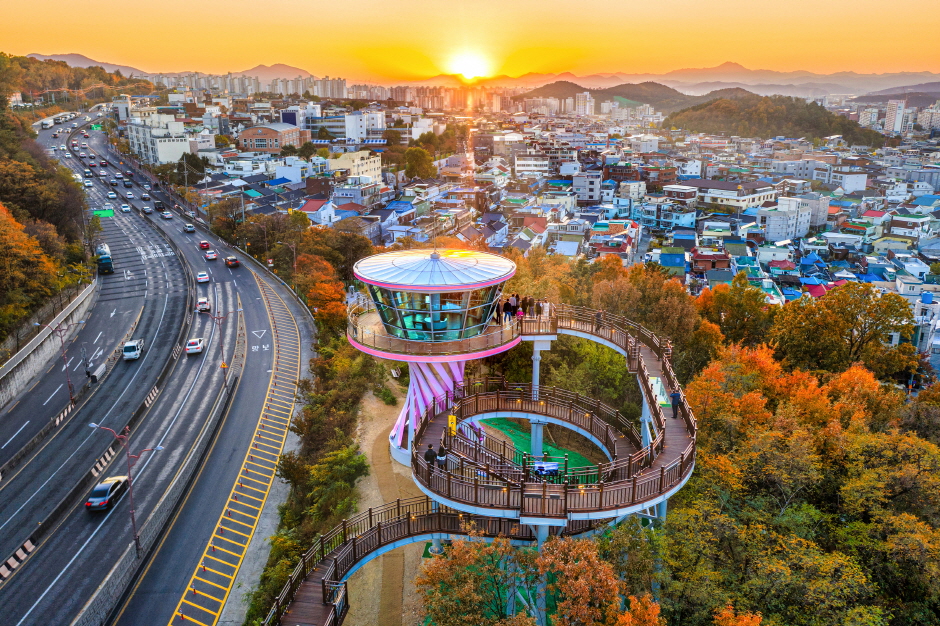
Apsan Mountain Haeneomi Observatory, where you can see the scenery of Daegu along with the sunset, is located in Apsan Ppallaeteo Park in Nam-gu. Incorporating the history and symbolism of Apsan Ppallaeteo Park, the observatory's design embodies laundry wring. The ramp leading to the observatory is perfect for walking as you can see the panoramic view of Apsan Mountain and the surrounding landscape.
Suseongmot Lake Resort (수성못 유원지)
4.9Km 2025-10-23
35-5 Yonghak-ro, Suseong-gu, Daegu
+82-53-666-2863
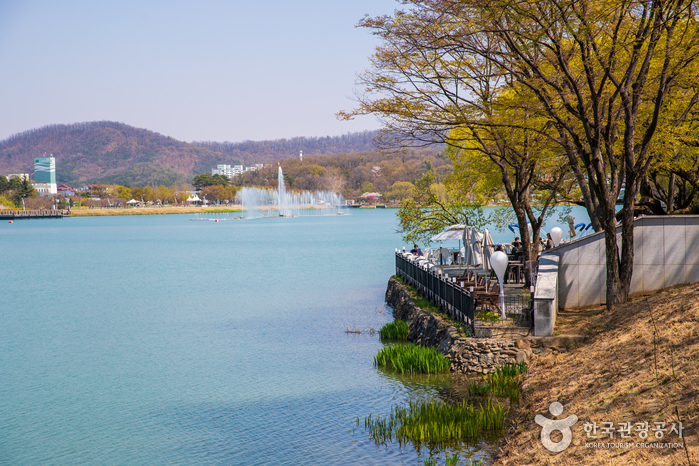
Suseongmot Lake Resort is located at the foot of the northwest side of Yongjibong Peak (altitude 629 meters) in Beommul-dong and offers outstanding scenery including gently sloping mountains along with Suseongmot Lake. The resort is centered around Suseongmot Lake, established in 1925 with 700,000 pondage in a circumference of 2,020 meters. The total area of the park is 218,000 ㎡.
Suseongmot Lake is an artificial lake created in 1925 during the Japanese colonial period to supply water for agriculture to rural areas. Today, it is no longer used for agricultural purposes, but has been turned into a resting area. Nearby the lake is Suseong Land which houses benches, walking paths, a ferry dock, and entertainment facilities such as a Viking ship, bumper cars, and merry-go-round. In addition, visitors can enjoy a duck boat ride, view of Dusanpokpo Falls and other exciting places perfect for excursions. The lake has a music fountain that operates four times a day from May to October.
◎ Travel information to meet Hallyu’s charm - TV series"Hyde Jekyll, Me"
Suseongmot Lake Resort, where Ha-na prepares to send Robin off, is one of the most popular hangouts in Daegu. It is particularly beautiful at night, when the lake and the fountain shows are illuminated by the lights of the city.
Suseong Light Art Festival (수성빛예술제)
4.9Km 2025-11-25
112 Muhak-ro, Suseong-gu, Daegu
+82-53-668-1504
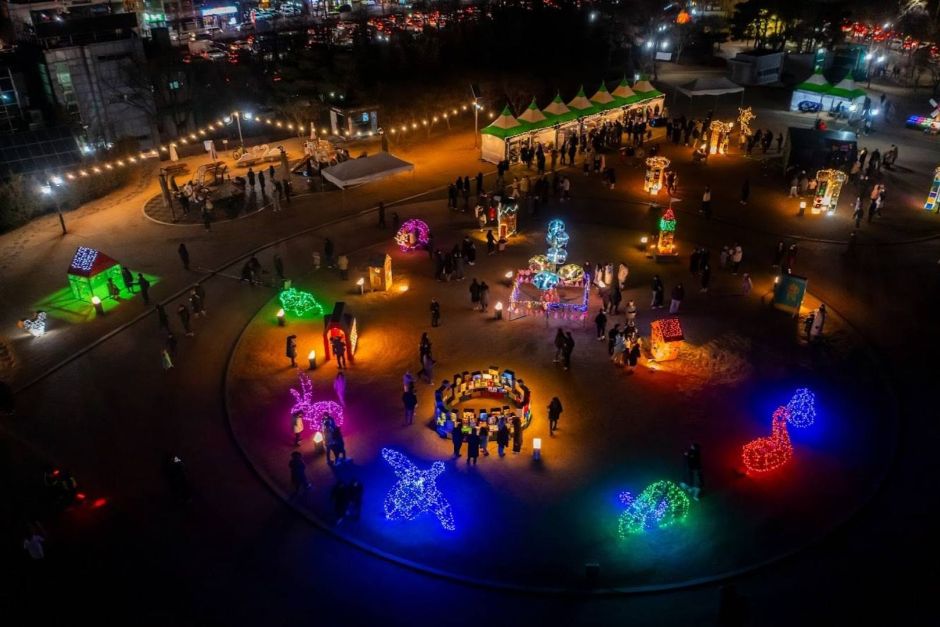
The Suseong Light Art Festival unfolds a feast of light every year with different themes, adorning Suseongmot Lake with colorful illuminations. It also features a variety of events, including an artwork exhibition and a drone art show.
Apsan Cable Car (Apsan Observatory) (앞산 케이블카(앞산 전망대))
5.0Km 2025-10-23
574-114 Apsansunhwan-ro, Nam-gu, Daegu
+82-53-656-2994
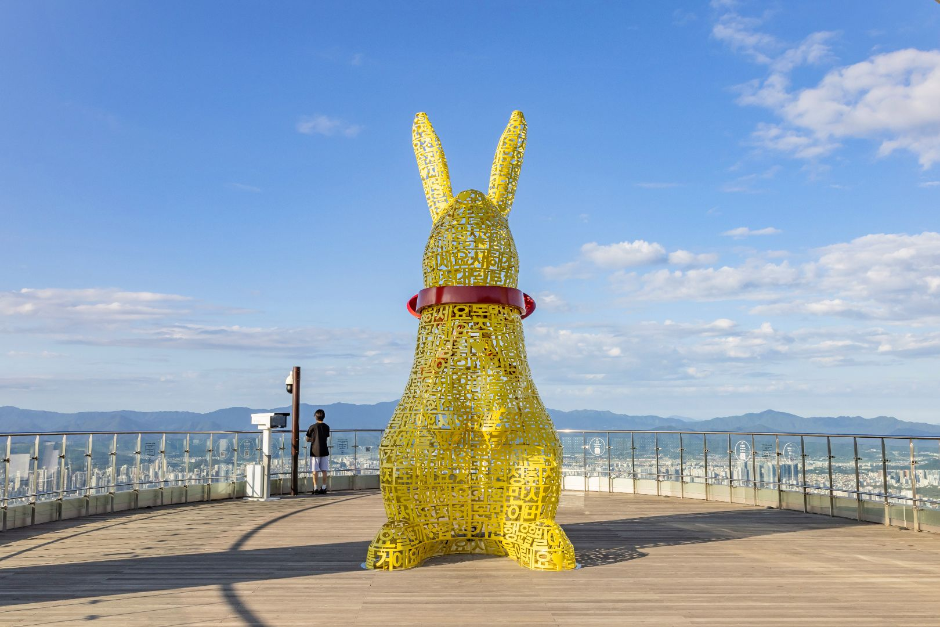
Apsan Observatory, located in Nam-gu, is a famous tourist attraction in Daegu that offers a panoramic view of the city. Apsan Observatory's architecture has been praised for combining the city, nature, history, and future. Besides being a tourist attraction, it also serves as a place where Daegu citizens learn about their city.
◎ Travel information to meet Hallyu’s charm - TV series"What's Wrong with Secretary Kim"
When the news of their romance is made public to the rest of the company, Young-joon takes Mi-so out to this observatory to help her recover. The view from the observatory was enough to cheer Mi-so up right away. Apsan Café Street is located nearby, so it is a popular date spot for lovers.
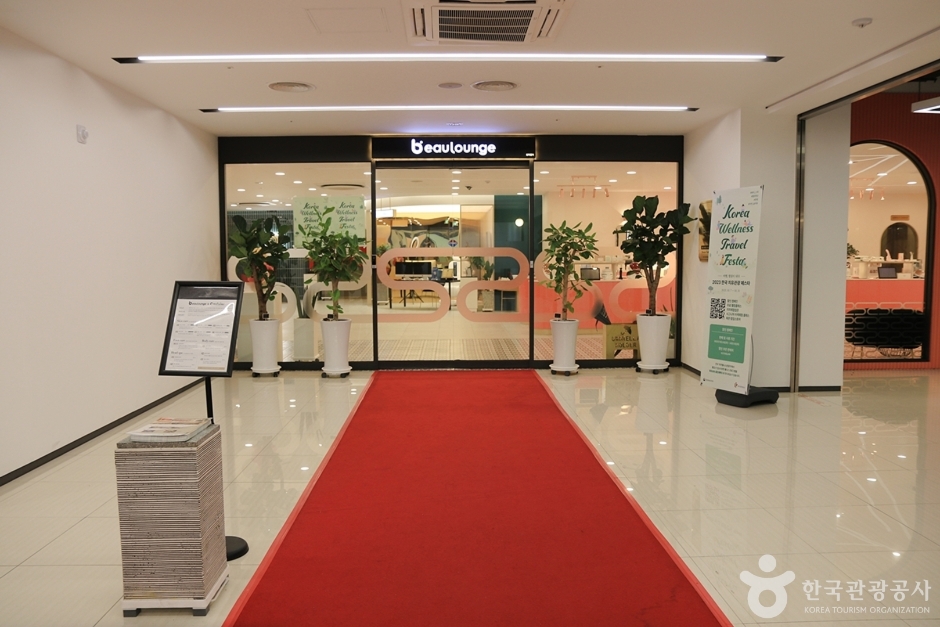
Beaulounge (뷰라운지)
5.1Km 2025-10-23
2F, Kang-san Bldg., Suseong University, 15 Dalgubeol-daero 528-gil, Suseong-gu, Daegu
+82-53-752-5235
Beaulounge, located within Suseong University, provides premium aesthetic and professional skin care services. Customized treatment solutions are offered based on data obtained through smart technology, which diagnoses and analyzes customers' skin and scalp conditions. The skin care program includes multi-care, anti-aging care, brightening care, hormone care, balance care, and moisture care to help customers get healthy and younger-looking skin. Head spa services promote blood circulation in the scalp area and relax the muscles to support lymphatic flow. This helps clear toxins and waste from the scalp, nourishing it and enhancing health and elasticity for both the scalp and skin. The body care service includes relaxing, slimming, and detox therapies.
Beaulounge, a place for professional premium skincare, is a new type of tourist destination that promotes the excellence of K-beauty and has helped the beauty industry develop into a tourism resource. Additionally, the facility collaborates with the Korea Tourism Organization, the Daegu Medical Tourism Development Institute, and the Medi Beauty Leader Center of Suseong University to provide special interest tourism and beauty/wellness tourism to foreigners. Beaulounge also introduces beauty products made by companies in Daegu, targeting general customers as well as overseas tourists. As a result, Beaulounge was designated as an excellent wellness tourist destination by the Korea Tourism Organization in 2022.

Ayang Art Center (아양아트센터(구, 동구문화체육회관))
5.1Km 2021-04-24
24, Hyodong-ro 2-gil, Dong-gu, Daegu
+82-53-951-3300
With the aim of enriching the lives of Dong-gu district’s residents, Ayang Art Center is equipped with a wide range of facilities for hosting performances, exhibitions, culture classes, sport events, and more. Available facilities include a grand performance hall, variable black box theater, an outdoor performance hall, recreation ground, exhibition hall, culture and arts educational facilities, a wedding hall, sports center with a swimming pool, and a fitness center. As of March 1, 2013, the center's name has been changed from Donggu Arts & Sports Center to Ayang Art Center.
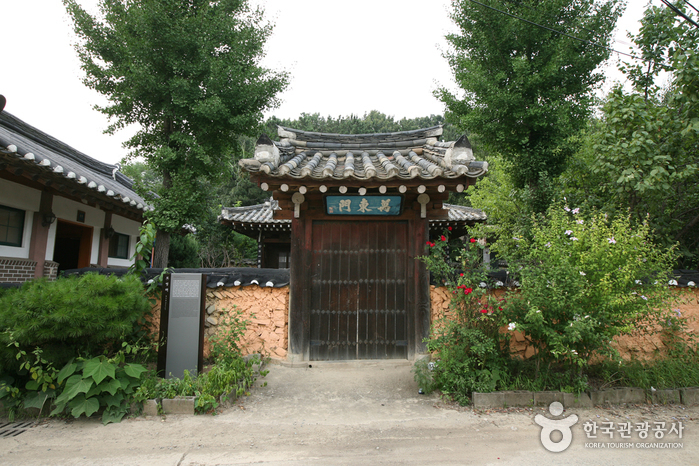
Korean Traditional Culture Center (한국전통문화체험관)
5.2Km 2025-10-23
13-5 Dalgubeol-daero 527-gil, Suseong-gu, Daegu
+82-53-666-4930
Momyeongjae is an ancestral shrine built by the Dureung Doo clan to honor Doo Sa-chung, who had joined the Ming Dynasty's reinforcement troops during the Imjinwaeran (Japanese invasion of Korea, 1592) and later became naturalized in Joseon Dynasty. The name 'Momyeongjae' means 'longing for the Ming Dynasty,' expressing Doo Sa-chung's affection for his home country.
Doo Sa-chung, who was from Duling, China, went to Joseon under the command of General Li Rusong from the Ming Dynasty. Doo Sa-chung took the position titled Suryuk Jihoek Jusa and was responsible for selecting locations to establish a stronghold in consideration of the terrain. As a senior adviser to Li Rusong, he closely discussed strategies and tactics with the Joseon army as well.
When the war was over, Doo Sa-chung returned to China but went to Joseon again during the Jeongyujaeran (Japanese invasion of Korea, 1597). He brought his two sons -- Doo San and Doo Il-geon -- along with his brother-in-law, Admiral Chen Lin. When the war was over, Doo Sa-chung and his two sons naturalized in Joseon. The government of Joseon granted him land, which is the current Gyeongsang Gamyeong Park area.
When the Gyeongsang Gamyeong (Gyeongsang provincial office) was relocated to this area, Doo Sa-chung offered his land to the government and moved to Gyesan-dong.
Longing for his wife and brothers he had left in China, he moved again to a village near Daedeoksan Mountain (then Choejeongsan Mountain) and named the area Daemyeong-dong (meaning the Great Ming). He built a platform and on the first day of every month, he would bow in the direction of the Forbidden City in China, where the Emperor of the Ming Dynasty resided.
Momyeongjae is built on a rectangular plot and faces south. It features a hip-and-gable roof with double-layer eaves and has four rooms in the front and two rooms on the side. The daecheongmaru (wooden floor hall) has two ondol (floor heated) rooms on each of its side, with a half-sized bay at the front. Momyeongjae exemplifies the early 20th-century ancestral shrine style commonly found in the Daegu area.
The building was originally constructed in 1912 when Doo Sa-chung’s descendants moved wooden materials from the dismantled Gyeongsangaeksa (local government building) and used them to build Momyeongjae in front of Doo Sa-chung's tomb. The shrine was later renovated in 1966 as it was in poor condition.
Momyeongjae is one of the first destinations visited by Chinese tourists in Daegu. It was recently renovated as part of a redevelopment project. The Korean Traditional Culture Center opened nearby, where visitors can experience tea ceremonies, hanbok (traditional Korean clothing), archery, and cooking dishes based on Donguibogam, a traditional Korean medical encyclopedia. Joining a program at the center will be a valuable experience.
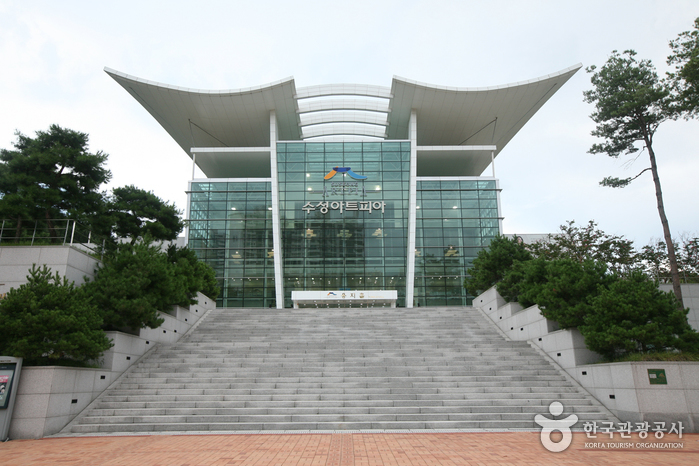
Suseong Artpia (수성아트피아)
5.3Km 2025-01-13
180, Muhak-ro, Suseong-gu, Daegu
+82-53-668-1800
Suseong Artpia, opened in May 2007, is a major art center in Daegu. It has specialized, independent spaces for housing performances, exhibitions, and art camps. The art center’s facade was designed to resemble a crane flying away with its wings stretched out in order to promote the image of Muhaksan Mountain (named as such because its shape is reminiscent of a flying crane or hak), the mountain on which the center is located. When viewed from the sides however, the center is shaped like a ship, as it was once the site of a large pond. With such an impressive exterior further highlighted by impressive lighting at night, water fountains, and landscaping, Suseong Artpia has become a rising attraction of Daegu. The center is equipped with a mega concert hall that can accommodate diverse genres of performing arts such as an opera, musical, ballet, theater, dance, music concert, and more.
![Enjoy the World Hotel Inter-Burgo [Tax Refund Shop] (즐거운세상인터불고호텔)](http://tong.visitkorea.or.kr/cms/resource/38/2884138_image2_1.jpg)
Enjoy the World Hotel Inter-Burgo [Tax Refund Shop] (즐거운세상인터불고호텔)
5.7Km 2024-04-22
212, Palhyeon-gil, Suseong-gu, Daegu
-
![ER Donga - Suseong Branch [Tax Refund Shop] (ER 동아 수성)](http://tong.visitkorea.or.kr/cms/resource/46/2884146_image2_1.jpg)
ER Donga - Suseong Branch [Tax Refund Shop] (ER 동아 수성)
6.7Km 2024-04-23
191, Jibeom-ro, Suseong-gu, Daegu
-
 English
 한국어
한국어 日本語
日本語 中文(简体)
 Deutsch
 Français
 Español
 Русский


