
Apsan Cafe Street (앞산카페거리)
8.7Km 2023-11-17
191 Daemyeongnam-ro, Nam-gu, Daegu
Apsan Cafe Street is filled with cafes of all different types. From houses modified into a cafe, restaurants, and gallery cafes, there are more than 40 coffee shops along the street. Most are cafes serving coffee, sandwichs, and desserts, but there are also restaurants serving pizza, pasta, and steak as well as Japanese food, pubs and pie shops. The street is perfect for couples going on a date or families looking for sweets. Attractions nearby include Apsan Park and Anjirang Gopchang Alley for a place to eat, drink and rest. Anjirang Station (Daegu Subway Line 1) is also 5-10 minutes away on foot.
Daegu Gyesan Cathedral (대구 계산동성당)
8.7Km 2024-07-31
10 Seoseong-ro, Jung-gu, Daegu
Daegu Gyesan Cathedral is one of Daegu's main churches, designed by Father Poisnel, who also designed Myeongdong Cathedral and imported stained glass for the windows directly from France. Being located in the city center, the cathedral is especially beautiful when seen at night.
March 1st Independence Movement Road (3·1만세운동길)
8.8Km 2023-01-20
Dongsan-dong, Jung-gu, Daegu
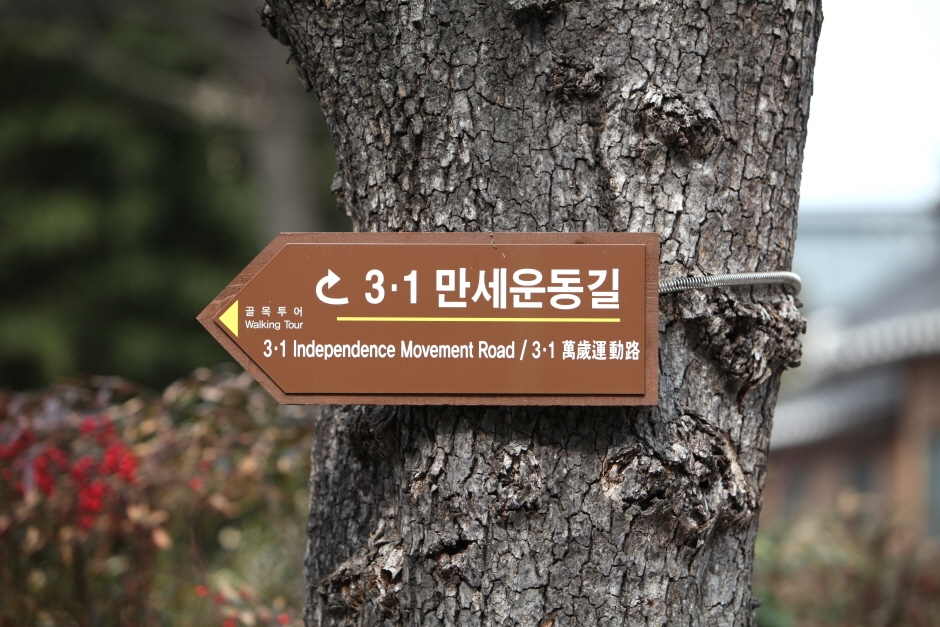
March 1st Independence Movement Road is a historical location where Daegu citizens gathered for the independence movement on March 8, 1919, and the midpoint of Daegu Modern Alley Tour Course 2. Passing Cheongna Hill Missionary's House and Jeil Church, you will come to a road with murals of the independence movement. The March 1st Independence Movement Road is a hilly road leading to Gyesan Cathedral. It is also called 90 Stairs because there are 90 steps. On the wall of the stairs, there is an augmented reality (AR) experience zone along with site photos from history. By scanning the QR code is a 3D video that vividly reproduces the independence movement, enabling a realistic experience of history. Follow the signs of the Daegu March 8th Independence Movement marching road to reach the main road and it will lead to the the 100th anniversary monument of the March 1st Movement and the starting point of the March 8 Movement. A guided alley tour is available for free with an online reservation on the official website.
Dongsan Cheongna Hill (동산청라언덕)
8.8Km 2025-10-24
2029 Dalgubeol-daero, Jung-gu, Daegu
Cheongna Hill is the place where Christian missionaries resided during the early 20 century, planting many ivies along the site. It is also called Dongsan Cheongna Hill for being on the eastern side of Daegu's center. There are many attractions in this beautiful garden including Chamness’ House, Switzer’s House, Blair’s House, 90 stairs, Daegu 3.1 Independence Movement Road, Daegu's first western apple tree, a memorial stone inscribed with the song "Thinking of My Friend” , and the cemetery of the missionaries and their family. Cheongna Hill is also the starting point of Daegu's Street Tour Course 2 as well as a popular drama film location.
House of Missionary Switze (선교사스윗즈주택)
8.8Km 2024-08-05
2029 Dalgubeol-daero, Jung-gu, Daegu
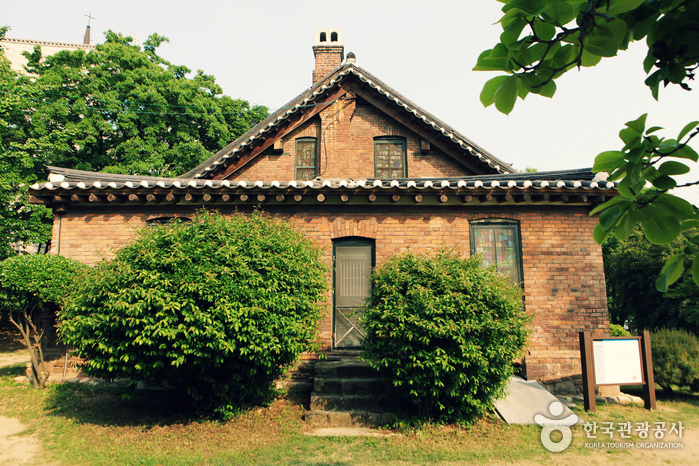
The House of Missionary Switze served as home for a host of American missionaries. Built between 1906 and 1910, the home is a Western-style structure with two above-ground floors and one basement level. In 1981, the house was used as company housing for doctors at the nearby Dongsan Hospital, at which point changes were made to the interior and exterior of the house. It was later changed into a missionary museum, displaying items used by the missionaries who lived in.
House of Missionary Chamness (선교사챔니스주택)
8.9Km 2022-09-06
2029, Dalgubeol-daero, Jung-gu, Daegu
House of Missionary Chamness was the home of American Christian missionary Chamness and his family. It was built in the Western-style and provides a glimpse into the daily life of American missionaries in Korea. The house, a simple building in comparison with the houses of America at the time, is now considered a very important treasure of Korea's modern history. The building has been converted into a small museum using artifacts from the missionaries to bring the past to life.
Anjirang Gopchang Alley (안지랑 곱창골목)
9.1Km 2023-11-17
67 Anjirang-ro 16-gil, Nam-gu, Daegu
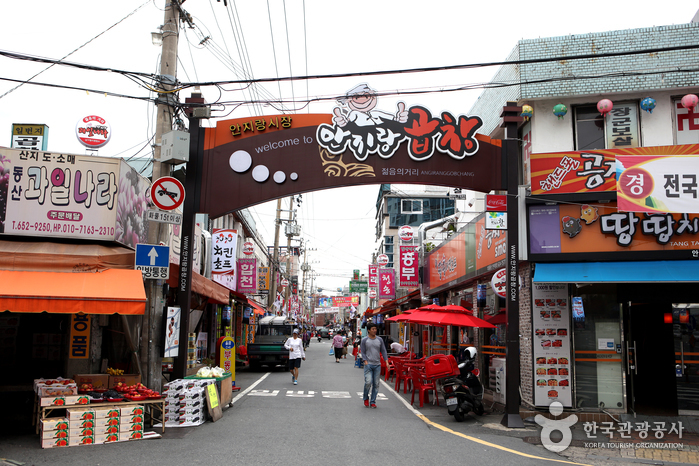
Anjirang Market, located halfway between Anjirang Five-way Intersection and Anjiranggol-ro Street, is now more widely known for the alley filled with restaurants serving marinated gopchang (intestines). The area started with Chungbuk Restaurant opening in 1979 and expanded until the end of the IMF crisis in 1998. Locals enjoy coming to the area because of the affordable prices. Recently, the area is also trying to draw in a younger demographic by targeting the younger population. In 2012, Anjirang Gopchang Alley was selected as one of the top five food themed streets in the nation by the Ministry of Culture, Sports and Tourism.
Hanok 1957 (한옥1957)
9.2Km 2024-12-13
20-2 , Gukchaebosang-ro 101-gil, Jung-gu, Daegu
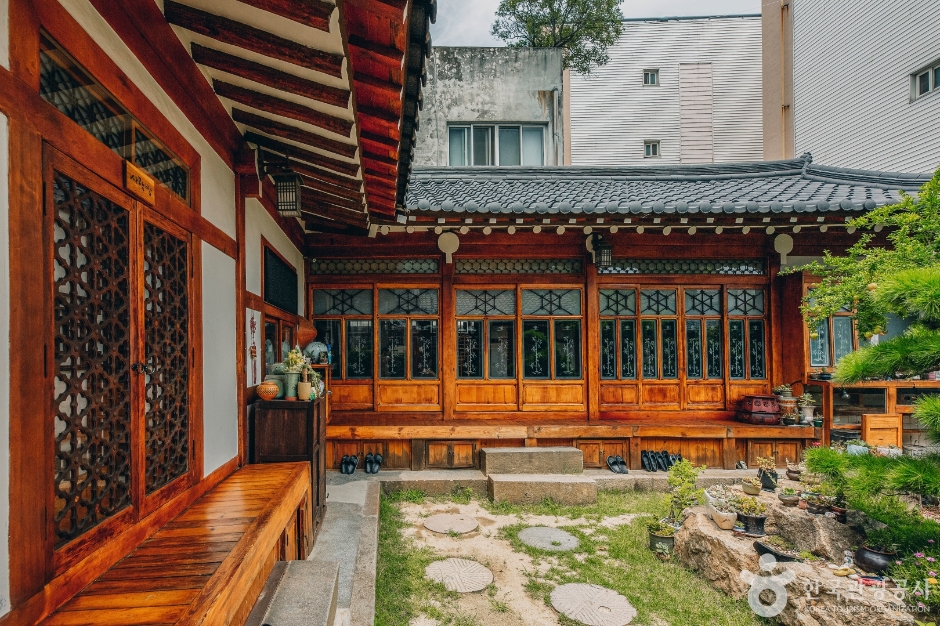
Located downtown Daegu, Hanok 1957 is a traditional Korean hanok built with red pine and woven with clay and straw roof tiles. The rafters, beams, and cabinets inlaid with mother-of-pearl add comfort and tranquility to the interior. There are five guest rooms, all of which are ondol (underfloor heated) rooms with bathrooms. There is a shared kitchen where you can cook simple meals. Seomun Market Station and Daegu Station are within walking distance, and nearby attractions include Dalseong Park and Seomun Market are also nearby.
Keisung Middle School (계성중학교)
9.2Km 2025-11-06
35 Dalseong-ro, Jung-gu, Daegu
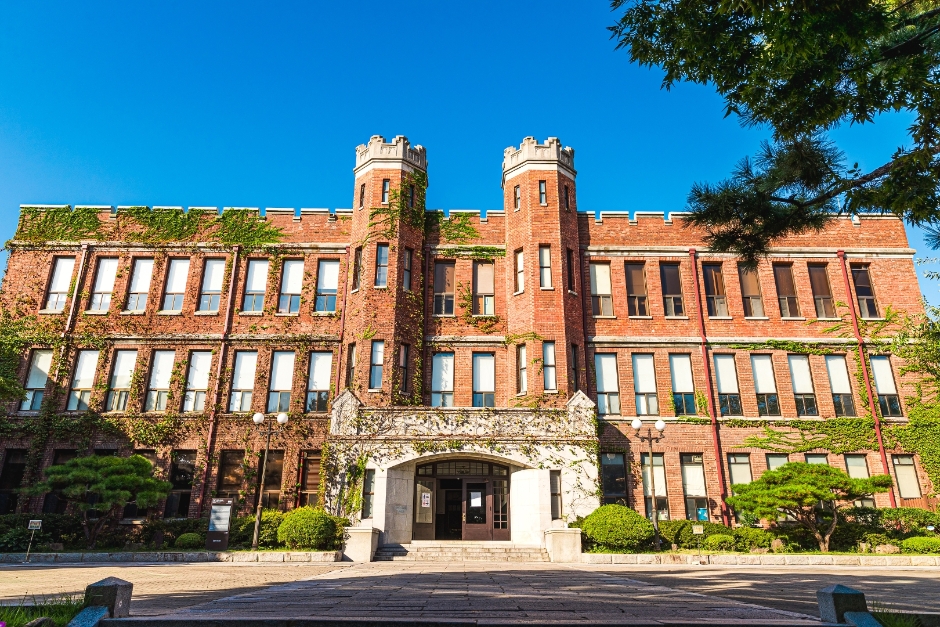
The hit song “DITTO” by NewJeans encapsulates a nostalgic old camcorder sentiment in its music video. The place that contributed to this feeling is one of the primary filming locations: Keisung Middle School. It’s a functioning school where students regularly attend, but it’s also renowned for its historical cultural buildings, making it a tourist attraction. Why not go on a NewJeans music video tour at the historically rich Keisung Middle School?
Daegu Opera House (대구오페라하우스)
9.3Km 2021-11-09
15, Hoam-ro, Buk-gu, Daegu
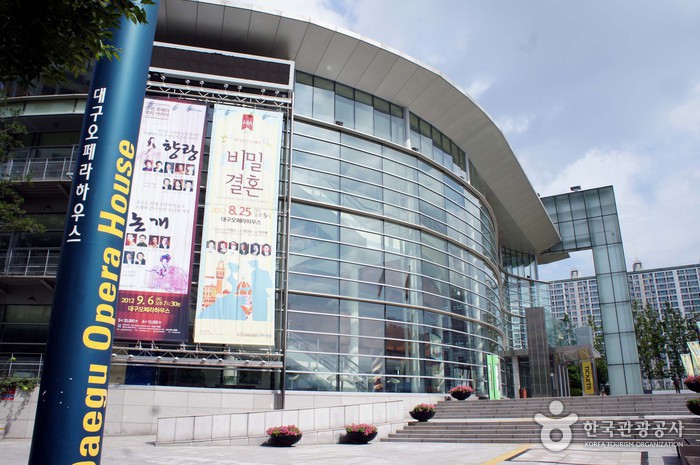
Daegu Opera House is the first municipal opera house that opened in Korea. It is equipped with high-tech audio and lighting system, a revolving stage and an audience seats arranged in a horseshoe shape. The exterior of building is also quite exquisite, with a curvy glass roof designed to resemble a grand piano. The opera house holds a wide range of programs that are entertaining and affordable. There are also special performances for international visitors to ensure all who spend a night out at the opera have an enjoyable evening.
 English
 한국어
한국어 日本語
日本語 中文(简体)
 Deutsch
 Français
 Español
 Русский


