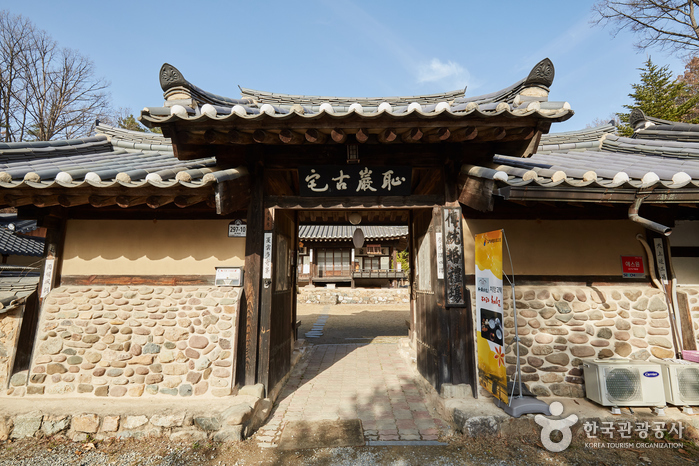
CHIAMGOTAEK (치암고택)
14.6Km 2024-12-20
297-10 , Toegye-ro, Andong-si, Gyeongsangbuk-do
Chiam Old House in Andong, Gyeongsangbuk-do, was the home of Chiam Lee Man-hyeon, a Joseon official in the time of King Gojong, and is now a Gyeongsangbuk-do cultural treasure. Five of the buildings - Anchae, Sarangchae, Daemunchae, Byeoldangchae, and Byeolchae - have guestrooms, and reserving two or three rooms together enables visitors to feel they’re staying in a Joseon yangban’s house. Daemunchae has the best views over the house and surrounding landscape. The flower garden is a nice place to stroll and ponder the beauty of nature.

Confucian Land (유교랜드)
14.7Km 2024-05-30
346-30 Gwangwangdanji-ro, Andong-si, Gyeongsangbuk-do
Confucian Land, located within Andong Culture & Tourism Resort, is a themed exhibition hall that focuses on Korea's Confucian culture. The facility uses the edu-tainment method to make a difficult subject matter easy to understand for young children. Exhibitions include the teachings of famous Confucian scholars like Toegye Yi Hwang and Yulgok Yi I, traditional musical instruments such as the gayageum and haegeum, as well as a video hall with 3D film capabilities and a children's game area with motion-tracking.
Zootopium (주토피움)
15.1Km 2024-05-29
346-95 Gwangwangdanji-ro, Andong-si, Gyeongsangbuk-do
Zootopium is the largest animal & plant themed park in Gyeongsangbuk-do, home to over 200 species. The park provides the perfect environment for children to learn more about nature and living organisms. The park features both indoor and outdoor sections, as well as amenities such as a restaurant and play areas for children.
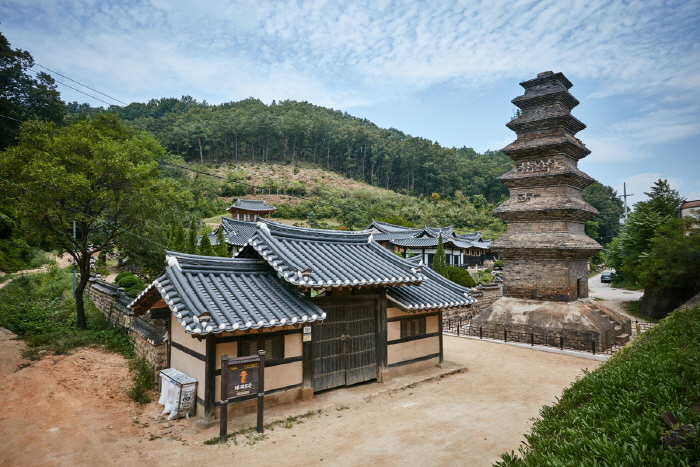
Head House of the Tapdong Branch of the Goseong Yi Clan (법흥동 고성이씨탑동파종택)
15.9Km 2022-12-21
103, Imcheonggak-gil, Andong-si, Gyeongsangbuk-do
Head House of the Tapdong Branch of the Goseong Yi Clan, located in Andong, serves as a residential house of the Yi descendents even to this day. Constructed in 1685, this house has all of the beautiful features that represent Joseon-style architecture. After this period, additional structures were added periodically. Across from the house is the Seven-story Brick Pagoda at Beopheungsa Temple Site.
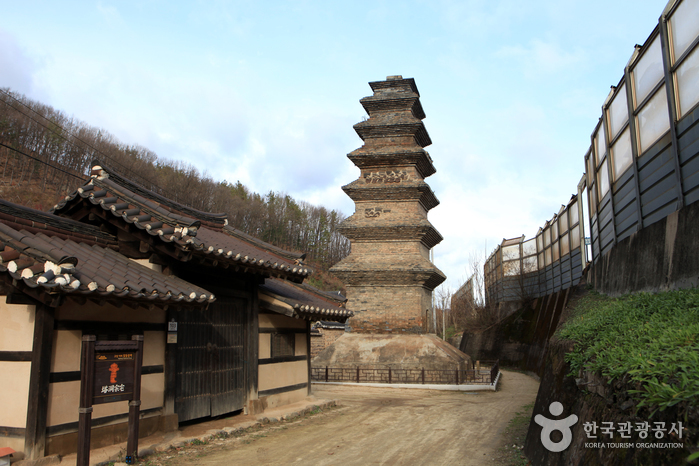
Sinsedong Chilcheung Jeontap - Sinsedong 7 stories Brick Pagoda (안동 법흥사지 칠층전탑)
15.9Km 2021-07-13
Beopheung-dong, Andong-si, Gyeonsangbuk-do
Designated National Treasure No.16, Sinsedong Chilcheung Jeontap is Korea's oldest and largest stone pagoda.
The pagoda measures 16.8 meters high with a x_width of 7.75 meters. The pagoda was originally built at Beopeungsa Temple during the eighth century of the Unified Silla Kingdom [654-935] and is the only remaining relic from the temple.
The pagoda is presently located on the estate of the head house of the Goseong Lee family. The sangryunbu, the ornamental top portion of the pagoda, has been totally lost, but the lower tiered portions are intact with beautiful carvings of Buddhist tutelary deity. Traces of tiled roof were found on each story of the tower. Historical records show that the tower was rebuilt in 1487 and that around the same period, three parts of the temple remained.
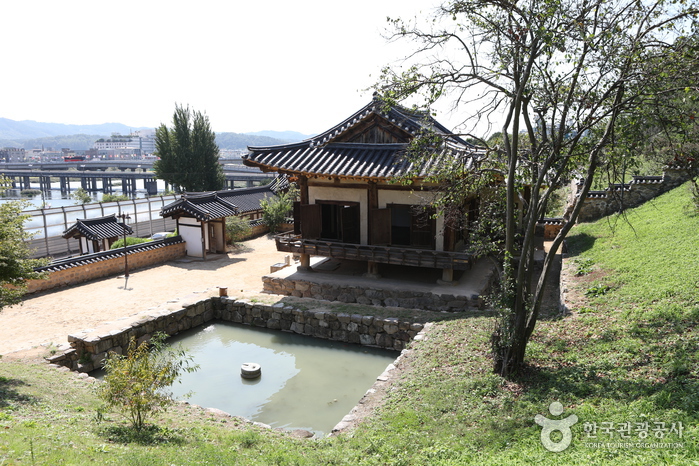
Imcheonggak House (안동 임청각)
16.1Km 2021-11-09
63, Imcheonggak-gil, Andong-si, Gyeongsangbuk-do
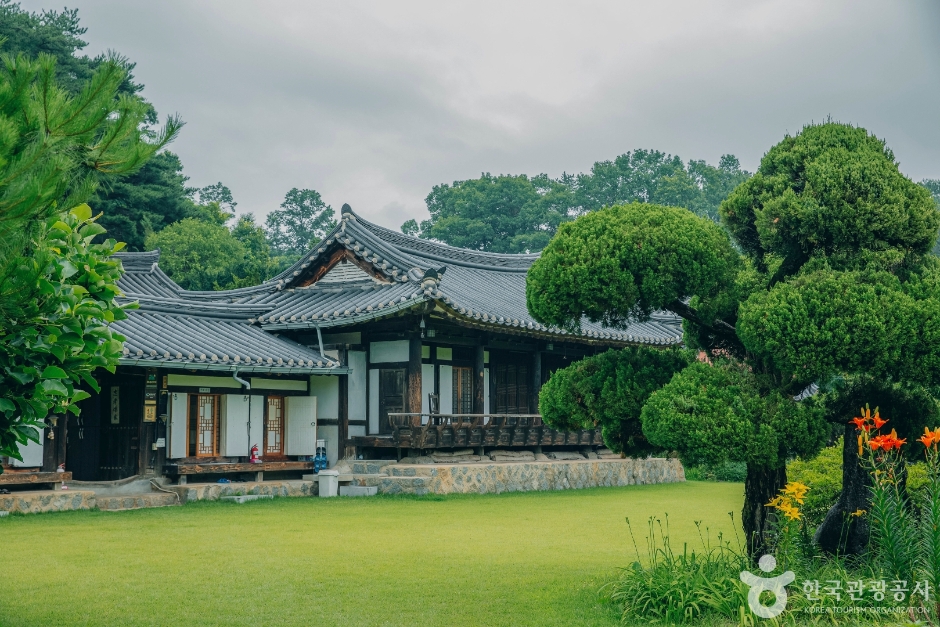
Imcheonggak House is the largest remaining household from the Joseon dynasty, holding a history of over 500 years. The house was built for one aristocratic family’s love of the scenic beauty in the surrounding area. It was originally built with a total of 99 kan (traditional measurement of space between pillars) but only 70 remain. The most famous structure on this property is the annexed pavilion, Gunjajeong. An autograph of the famous Confucian scholar Lee Hwang can be found hanging outside the pavilion.
Hakbongjongtaek (학봉종택)
16.2Km 2024-12-20
2830-6 , Pungsantaesa-ro, Andong-si, Gyeongsangbuk-do
Hakbong Head House in Andong, Gyeongsangbuk-do, is the head house of the Uiseong Kim Clan. Originally built by Joseon scholar and educator Hakbong Kim Seong-il, it was moved to its present location in 1964. As a head house it has an unusually wide daecheong, as well as a large yard and garden with various trees and oddly shaped rocks. Concerts are regularly held at the old house. Hakbong’s descendants inherited not just this historic house, but also his patriotic spirit, many of them devoting themselves to the anti-Japanese independence movement.
Sinse-dong Mural Village (신세동 벽화마을)
16.3Km 2023-10-24
78, Taesa-gil, Andong-si, Gyeongsangbuk-do
Sinse-dong Mural Village is located in Dongmun-dong, Andong. Originally an informal settlement, the introduction of the Maeulmisul Art Project in 2009 and subsequent urban renewal projects transformed the village into one of Andong’s most famous tourist sites. Today’s village is home to numerous murals and monthly flea markets like the Geurimae Market and Woryeong Market.
Traditional Culture Contents Museum (전통문화콘텐츠박물관)
16.3Km 2023-07-07
203, Seodongmun-ro, Andong-si, Gyeongsangbuk-do
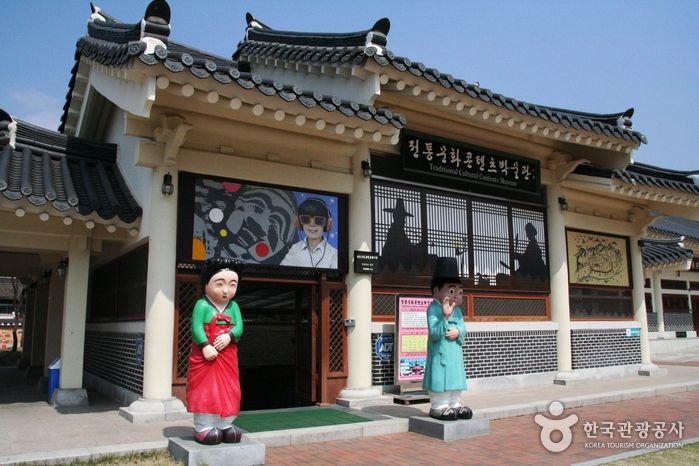
Andong's Traditional Culture Contents Museum is the first digital culture museum in Korea, exhibiting digitalized content only, called "digital relics." The state-of-the-art digital museum provides information as well as hands-on activities related to traditional Korean culture.
Traditional Culture Contents Museum suggests a new standard for a museum. This museum is a counterpart to NEWSEUM (News+Museum) in the U.S., and Sigureden, a digital museum/exhibition center in Japan. The museum uses interactive computer technology to interpret traditions of the past, and give visitors the chance to learn the values and fundamental principles behind traditional Korean customs.
The North Face White Label - Andong Branch [Tax Refund Shop] (노스페이스 화이트라벨 안동점)
16.6Km 2025-10-28
21, Nammun-ro, Andong-si, Gyeongsangbuk-do
 English
 한국어
한국어 日本語
日本語 中文(简体)
 Deutsch
 Français
 Español
 Русский


