16.9Km 2024-06-27
83, Daean-ro, Andong-si, Gyeongsangbuk-do
-
17.0Km 2024-12-26
54, Dangbuk-gil, Andong-si, Gyeongsangbuk-do
+82-10-9642-4602
This restaurant is famous for its jjorimdak, which has a concentrated flavor thanks to slow-braising the chicken until the sauce is almost dry.
17.1Km 2025-07-29
200 Chukjejang-gil, Andong-si, Gyeongsangbuk-do
+82-54-840-3400
Held in Andong Hahoe Village, a UNESCO World Heritage site, the Andong Maskdance Festival offers a vibrant experience of traditional culture and mask dance performances. This festival will be particularly intriguing to those who are already familiar with the Andong mask dance. The festival showcases mask dance performances, such as Hahoe Byeolsingut Tallori (Mask Dance Drama of Hahoe), which is an Intangible Cultural Heritage of Korea, and mask dances from around the world. The main event is the Tallori Daedongnanjang Parade, in which locals, tourists, and international troupes dance together wearing various masks. Visitors can also see situational plays and play folk games such as Chajeon Nori (Chariot Battle) and Notdari Bapgi (Walking over a Human Bridge).
◎ Hahoe Mask
The Hahoe Mask is a wooden mask traditionally used for Hahoe Byeolsingut Tallori in Hahoe Village. As the oldest mask in Korea, it is designated as a national treasure.
17.2Km 2023-07-10
273, Yuksa-ro, Andong-si, Gyeongsangbuk-do
Grasswon Park is located on the banks of the Nakdonggang River as it cuts through downtown Andong. The park, north of Yeonggadaegyo Bridge, features walking trails thorugh a variety of flowers and grasses. The park is attractive all year round, but is especially popular in fall when the muhly grass turns the whole field into a lovely shade of pink. The walking and bicycle paths also connect with Baekjo Park to the south of the bridge, making this the perfect place to enjoy the pure environment of the Nakdonggang River.
17.3Km 2021-08-24
31-12, Museom-ro 234beon-gil, Yeongju-si, Gyeongsangbuk-do
+82-54-638-1127
Located in Sudo-ri in Yeongju, Gyeongsangbuk-do, Museom Village is a charming hanok village surrounded by water. Flowing down from Sobaeksan Mountain and Taebaeksan Mountain, Naeseongcheon Stream and Yeongjucheon Stream converge and loop around Museom Village, surrounding the village on three sides with water. This peninsula-like village is not only the center of traditional Korean culture, but also has a gorgeous natural landscape complete with a wide sandy riverside and a lush inland forest.
Known for Haeudang and Manjukje Houses (two of the most historical hanok houses in the area), the village is also home to other outstanding traditional houses such as the Kim Gyu-jin House and the Kim Wi-jin House. Manjukje House is located at the heart of the village and the oldest traditional house in this hanok village. Manjukje was built in 1666 (7th year of King Heonjong's reign) by Bak Su (the father of the Bannam Bak Family).
Nearby Manjukje is Manun House, built in the early 19th century and named after Kim Hwi-geol (penname “Manun”). The house later became the home of the wife of the famous poet Jo Ji-hun, author of “Byeolli,” a poem expressing the beauty of Museom Village.
Other notable houses include the Kim Wi-jin House (a house belonging to aristocrats), the Kim Jeong-gyu House (a house without the traditional outer fencing), and the Bak Jae-yeon House, where the writings of Bak Gyu-su (a respected scholar during the Joseon period) still remain today.
Another famous attraction in the village is the Single Log Bridge, which was the village’s only connection to the outside world for over 350 years before the construction of Sudo Bridge in 1979. It is a tiny bridge in terms of x_width (30 cm), but it stretches for over 150 meters. It is said that the bridge was rebuilt annually after being destroyed each rainy season. With the construction of Sudo Bridge, the Single Log Bridge was no longer needed, but was rebuilt some time later in its original form. To celebrate the bridge’s impressive history, the village hosts the Single-Log Bridge Festival every October.
17.3Km 2024-10-30
11-10 , Museom-ro 234beon-gil, Yeongju-si, Gyeongsangbuk-do
+82-54-638-1127
Manjukjae House is the oldest hanok in Museom Village, Yeongju, Gyeongsangbuk-do, with a history dating back 360 years. Originally built by Park Su to live the life of a reclusive gentleman after the Manchu Invasion of Korea, the house has been passed down from generation to generation through 13 generations. There are four guest rooms, Seomgye Chodang, Sarangchae (detached building), Anchae (main building), and Chaekbang (study), all of which can accommodate two people. Among them, Seomgye Chodang offers the best view, from where guests can enjoy the scenery of the log bridge in Museom Village, the Naeseongcheon Stream, and the white sandy beach. With the windows wide open, you can enjoy the cool breeze and the soothing sounds of nature.
17.8Km 2024-12-19
60-16 , Gangnam 2-gil, Andong-si, Gyeongsangbuk-do
+82-54-857-0007
The Kase Hotel is 15 minutes by car from both Andong Station and Andong Bus Terminal.The hotel, located inside the Nakdonggan River, offers guests an opportunity to take a walk along the river. All rooms have Netflix installed, and the Family Room, Suite Party Room, and Luxury Party Room all have kitchen facilities and mini swimming pools. A 10-minute drive away is the famous Imcheonggak House and Wolyeonggyo Bridge - not to mention Andong Braised Chicken Street!
18.0Km 2024-12-20
2661-8 , Gyeongdong-ro, Andong-si, Gyeongsangbuk-do
+82-54-822-6205
Jeongjae Head House is the head house of Joseon scholar Jeongjae Ryu Chi-myeong, a colleague of the famous Toegye Lee Hwang. The house overlooks Imha Lake in Andong-si, Gyeongsangbuk-do, and is 300 years old. The long endurance of the stone foundations, roof tiles and wooden beams and porch gives the place a solid, calming feel. The house consists of a daemunchae (gate house) jeongchim (square-shaped building), haengnangchae (servants’ quarters), sadang or shrine, and a pavilion called Manujeong which houses a lecture hall but can also be used for lodging. Guests can learn how to brew songhwaju spirit and tarak fermented milk liquor, and listen to gayageum or folk song performances.
18.1Km 2024-10-15
42, Bokju-gil, Andong-si, Gyeongsangbuk-do
+82-54-841-8292
Jokbal (pig’s feet) is a representative food loved by Koreans. This restaurant's signature menu is braised pigs' feet. This Korean dishes restaurant is located in Andong-si, Gyeongsangbuk-do.
19.0Km 2024-12-20
1714-11 , Sugogyonggye-ro, Andong-si, Gyeongsangbuk-do
+82-54-822-6661
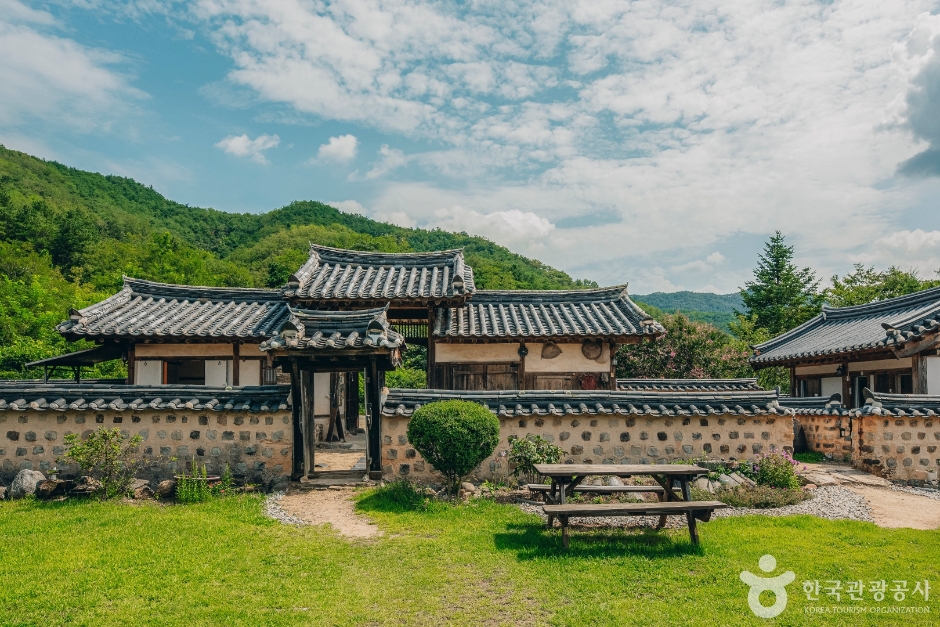
Suaedang House in Andong, Gyeongsangbuk-do, was built in 1939 by independence activist Soo Ae Yu Jin-geol, and is a Gyeongsangbuk-do cultural asset. The hipped-and-gabled pavilion and the ㄱ-shaped gobangchae (female servants’ quarters) face each other across the courtyard, and the house has a 10-metre lofty gate. Suaedang was moved to its current location in 1987 due to the construction of the Imha Dam. The room and Daecheongmaru are red clay-walled and natural painted. The view of the lake from Suaecang is very beautiful.