![Gimhae Korean-style house [Korea Quality] / 김해한옥체험관 [한국관광 품질인증]](http://tong.visitkorea.or.kr/cms/resource/81/3016981_image2_1.jpg)
Gimhae Korean-style house [Korea Quality] / 김해한옥체험관 [한국관광 품질인증]
18.5Km 2023-10-25
40 , Wangneung-gil, Gimhae-si, Gyeongsangnam-do
+82-55-322-4735~6
The Hanok Experience Center in Gimhae, Gyeongsangnam-do, offers guests a taste of old-time hanok life. Rooms are furnished with traditional items, while the spacious wooden floor can be used as a meeting room. Rooms in the sarangchae are on the small side but have an upper floor with scenic views. The room in the annexe building has a traditional sleeping mat surrounded by a large folding screen, and feels like a scene from a historical drama. Each room has a modern bathroom, There is a traditional experience program, and information services in English and Japanese.

Tomb of King Suro (수로왕릉)
18.6Km 2024-01-23
26 Garak-ro 93beon-gil, Gimhae-si, Gyeongsangnam-do
+82-55-332-1094
King Suro founded the Garak Kingdom in AD 42 and married Heo Hwang-ok, a princess from the Indian country of Ayuta, in AD 48. He was the founder of the Gimhae Kim family. Heo Yeop, a Yeongnam governor, gave the tomb its current look in the 13th year of the reign of King Seonjo (1580). The tomb compound includes various buildings, including the Sungseonjeon (where the ancestral tablets of King Suro and his queen are kept), Anhyanggak, Jeonsacheong, and Jegigo, as well as stone structures, such as a sindobi (tombstone) and gongjeokbi (monument established to pay homage the deceased). The tombstone in front of the royal tomb was built in the 25th year of the reign of King Injo (1647) of the Joseon dynasty. The name Sungseonjeon was bestowed on the tomb by King Gojong in the 21st year of his reign (1884).
Sureungwon Garden (수릉원)
18.6Km 2024-01-23
35 Bunseong-ro 261beon-gil, Gimhae-si, Gyeongsangnam-do
Sureungwon Garden is a place themed around the meeting between King Suro, the founder of Gaya, and Queen Heo, who was the princess of Ayuta Kingdom, known as India. The name Sureungwon Garden also contains the meaning of an elegant forest where King Suro and Queen Heo walked together. An ecological park measuring 39,600 m2 has been created along a low ridge that connects the Tomb of King Suro, an important cultural heritage of the Gaya period; the Ancient Tombs in Daeseong-dong, the tombs of the Gaya kings; and the Bonghwang-dong Historic Site. It was created by representing the maritime kingdom of Gaya, imagining a pond of the garden where King Suro and Queen Heo used to walk, and planting prickly waterlilies and yellow floating hearts that are believed to have inhabited wetlands in the Gaya period. Trails along the cozy forest and pond make it easy to look around comfortably.
Gimhae Astronomical Observatory (김해천문대)
18.6Km 2022-12-29
254, Gaya thema-gil, Gimhae-si, Gyeongsangnam-do
+82-55-337-3785
Gimhae Astronomical Observatory opened on February 1, 2002 as part of the Millennium Commemorative Project that started in December 1998. It was built to satisfy the general public’s curiosity about the universe and celestial bodies, inspire young people, and give everyone a unique, memorable experience. The observatory is shaped like an egg, in memory of the legend of King Kim Suro, the founder of the Garak Kingdom, according to which the king was born from an egg.
It is said that the queen of King Suro, Heo Hwang-ok, was a princess from the Indian country of Ayuta. Since sophisticated navigation equipment had yet to be invented, it can be assumed that she found her way to the Garak Kingdom by following the stars. It is also said that a prince of the Garak Kingdom built an observatory on the highest point of a mud fortress in Jinrye in order to make astronomical observations. The place is still referred to as Bibidan, which means a place to watch the stars.
These historical facts indicate the stars were very important to the Gaya, an ancient kingdom established mainly in the Gimhae area. The peak of Bunseongsan Mountain, where the observatory is located, offers sweeping views of the entire area of Gimhae. The night sky of Gimhae offers a breathtaking sight.
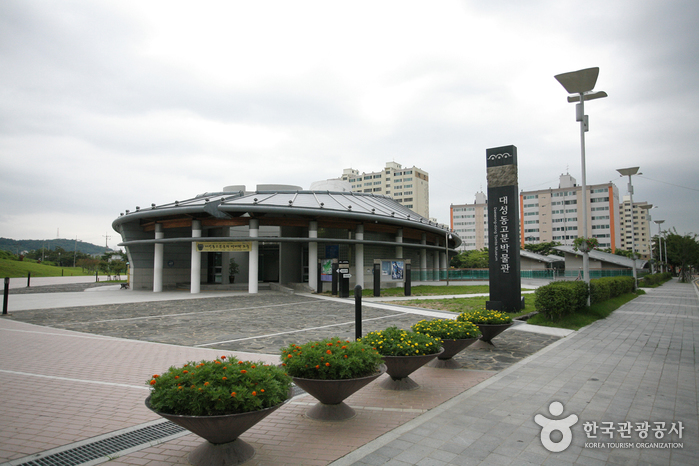
Museum of the ancient tombs in Daseong-dong (대성동고분박물관)
19.0Km 2023-01-02
126, Gayaui-gil, Gimhae-si, Gyeongsangnam-do
+82-55-350-0401
The Museum of the ancient tombs in Daseong-dong displays artifacts unearthed from the four excavations of the Daeseongdong Tumuli. Highlighting often overlooked relics of the Geumgwan Gaya, the museum has three ground-floor exhibit halls and several underground auxiliary facilities. The main exhibits include a life-sized statue of a mounted soldier and a warrior statue, both recreated based on bones excavated from the tumuli of Yean-ri. The museum relies heavily on videos and dioramas to help visitors explore all the museum has to offer.
Jangcheokgyegok Valley (장척계곡)
19.1Km 2021-08-02
544, Jangcheok-ro, Gimhae-si, Gyeongsangnam-do
+82-55-330-8741
Located at the foot of Sineosan Mountain in Gimhae, Gyeongsangnam-do, Jangcheokgyegok Valley is a natural recreation area that is surrounded by nature's beauty. The sound of running water coming from Dongbonggyegok Valley, the dense forest, and the huge rocks make this place a soothing place to relax. Located close to the valley are Jangcheok Village, Jangcheok Reservoir, and a site that's shaped like a wild boar descending from the mountain.
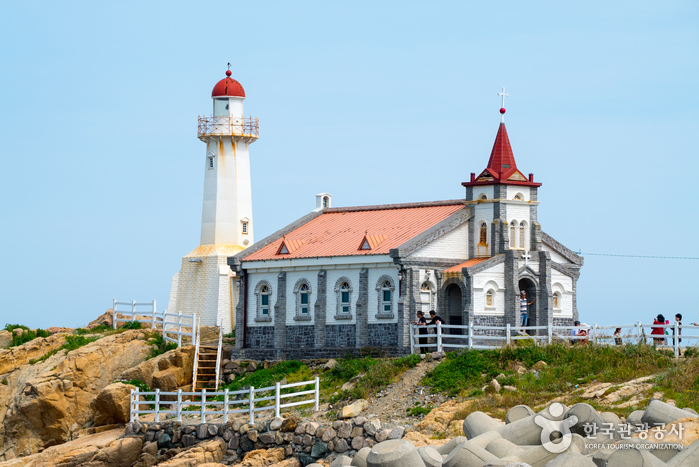
Jukseong Church (Filming Set) (죽성성당(드림세트장))
19.1Km 2024-04-29
Duho 1-gil, Gijang-eup, Gijang-gun, Busan
+82-51-709-4082
Located in Gijang-gun, Busan, Jukseong Church is a drama set built for the SBS drama "Dream (2009)." The drama aired a long time ago and is forgotten, but this well-made space has become a must-see for travelers visiting Gijang. The inside of the cathedral is operated as a gallery, and visitors can encounter a pleasant surprise when there is an ongoing exhibition. Perhaps thanks to its location in a small fishing village, it retains a unique atmosphere. The seaside landscape is like a painting from the Middle Ages. The white foam breaking over the rocks contrasts with the red roof of the church and catches the attention of those who visit this place at a glance. The place where most people wait in line at Jukseong Church is a photo spot decorated with a picture frame structure. The blue sea and sky in the frame create a beautiful background.
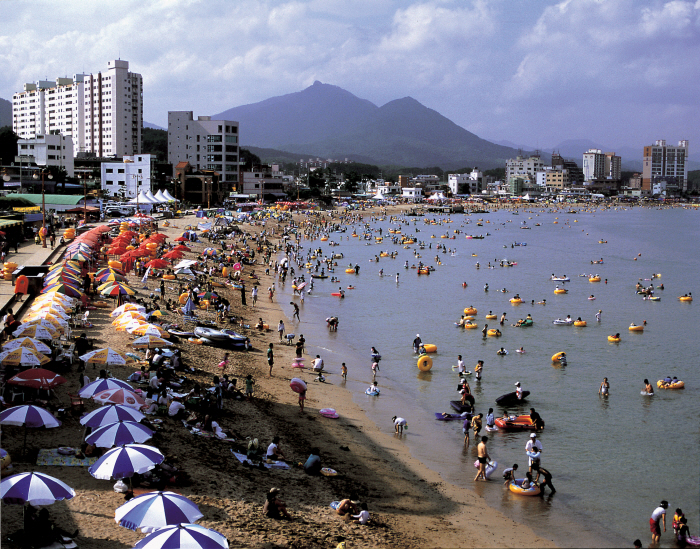
Ilgwang Beach (일광해수욕장)
19.2Km 2021-07-05
17, Samseong 3-gil, Gijang-gun, Busan
+82-51-709-4000
Ilgwang Beach is a popular beach for families with a white sandy beach and Gangsongjeong Pine Tree Forest. With shallow waters and a clear view of the ocean, there is also Samseongdae Pavilion built during the late Joseon dynasty. There are numerous accommodation, dining and convenience facilities near the beach as well as a place to fish. Moreover, Ilgwang Beach hosts a festival annually in late July or early August.
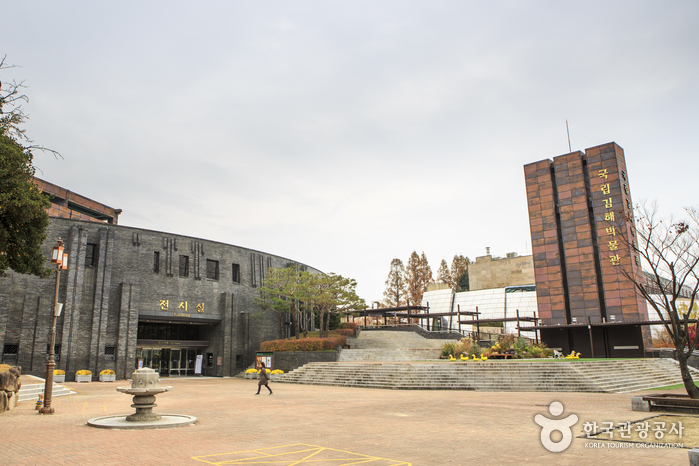
Gimhae National Museum (국립김해박물관)
19.3Km 2024-01-23
190 Gayaui-gil, Gimhae-si, Gyeongsangnam-do
The Gimhae National Museum was opened on July 29, 1998, in order to research and preserve the cultural heritage of the ancient kingdom of Gaya. The museum is at the foot of Gujibong Peak in Gimhae-si, the spot where the kingdom is believed to have been founded. The museum exhibits the cultural assets of Gaya, as well as cultural relics from the prehistoric age in the Busan and Gyeongsangnam-do areas, and the cultural heritage of Byeonhan, which was the foundation for the growth of Gaya.
The exterior of the museum is made using black bricks representing iron ore and charcoal famous during the Gaya Kingdom. There are two exhibition halls, while the walkway to the halls have approximately 1,300 artifacts in display.
![Mh Modern House - Homeplus Gimhae Branch [Tax Refund Shop] (MH 모던하우스 홈플러스김해)](http://tong.visitkorea.or.kr/cms/resource/56/2885956_image2_1.jpg)
Mh Modern House - Homeplus Gimhae Branch [Tax Refund Shop] (MH 모던하우스 홈플러스김해)
19.4Km 2024-04-23
2078, Gimhae-daero, Gimhae-si, Gyeongsangnam-do
-
 English
 한국어
한국어 日本語
日本語 中文(简体)
 Deutsch
 Français
 Español
 Русский


