
AREA6 (AREA6)
16.0Km 2023-02-03
37-3, Taejong-ro 105beon-gil, Yeongdo-gu, Busan
AREA6 is a multipurpose cultural space made to promote the artisans and artists of Busan as a part of an urban regeneration project. On the first floor, there are a total of nine spaces, including F&B brands, select shops, and information centers. The second floor is a co-working space and lounge, and the third floor consists of a rooftop and seminar room that anyone can freely use. It was designed sensibly by keeping the existing buildng's shape without compromising volume and scale. Each space, such as a small alley that leads from the yard like a maze, is full of individuality and is fun to look around. Busan's local brands, such as Ineoajimae, Busan Drinks, and Samjin Fish Cake are located here, and a flea market is also held irregularly.
Yeongdodaegyo Bridge (영도대교)
16.0Km 2023-04-22
46, Taejong-ro, Yeongdo-gu, Busan
Yeongdodaegyo Bridge, connecting Nampo-dong and Yeongdo Island, was the first bridge to connect the mainland to one of the nearby islands in Busan. The bridge lifted to allow ships to pass between the south and north ports, and made a passage for ships anywhere from two to seven times in one day. When the bridge was first constructed, many people would gather to watch the strange spectacle of a bridge rising up to point to the sky. The bridge remains a famous landmark of Busan even to this day.
Seunghaksan Mountain (승학산)
16.0Km 2024-02-26
1-4 Dangni-dong, Saha-gu, Busan
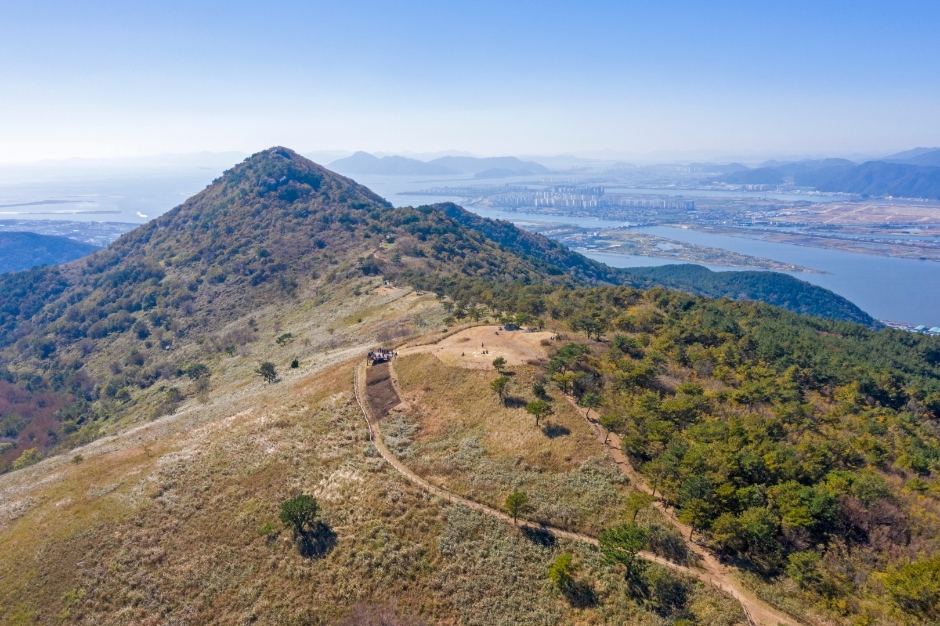
The 496-meter-tall Seunghaksan Mountain, named for its terrain's striking resemblance to a flying crane due to its steepness, offers five hiking trails. The mountain features diverse attractions including a silver grass habitat, a forest park, a cypress forest, and a cedar meditation and healing forest. Additionally, it boasts a weather station, a mineral spring, sports facilities, and an observatory. The silver grass at the summit, renowned for its beauty, becomes a major highlight during autumn, drawing numerous hikers.
KANGKANGEE Arts Village (깡깡이 예술마을)
16.1Km 2025-10-24
36 Daepyeongbuk-ro, Yeongdo-gu, Busan
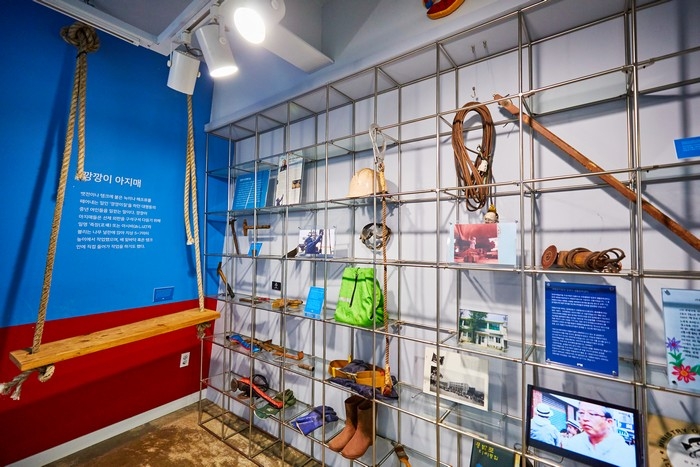
In the late 19th century, Korea's first modern shipyard was established, and there are still more than a dozen repair shipyards and about 200 industrial companies in the area. It is said that the name of the village was born from the sound of a hammer hitting the surface of a rusty boat. In "My Name," it appeared as Inchang-si, the main stage of gangsters, and the unique atmosphere harmonized well with the content, adding to the dramatic fun. There are also many cute cafes to explore, and it is fun to experience a tour program that runs three times a day on weekends.
Yeongdo Cheonghak Reservoir Observatory (영도 청학배수지 전망대)
16.2Km 2024-02-13
36 Wachi-ro, Yeongdo-gu, Busan
The observatory boasts stunning vistas of Busan's scenery. It is particularly renowned for the breathtaking night view of the Busan Port Bridge, making it a favorite spot for photography enthusiasts. Surrounding areas are well-equipped with a variety of exercise equipment, enhancing the outdoor experience. Additionally, visitors can explore the History Park, embark on the scenic Namparangil 2-course walking trail, or enjoy a leisurely walk or jog around the tranquil Bongnaesan Mountain.
Gimhae Gaya History Park (김해가야테마파크)
16.7Km 2025-10-23
161 Gaya thema-gil, Gimhae-si, Gyeongsangnam-do
Gimhae Gaya History Park is a resting area that provides comfortable relaxation in the daily lives of the busy people and also a cultural complex where you can experience various cultures with your family, lover and friends.
Interactive theme park combining Education + Entertainment Edutainment park where you can see, hear, touch and learn about the history of Gaya and the brilliant heritage of its people through plays, experiences and exhibits.
Bunsanseong Fortress (김해 분산성)
16.8Km 2023-01-18
210-162, Gaya-ro 405beon-gil, Gimhae-si, Gyeongsangnam-do
Bunsanseong Fortress was constructed in the 3rd year of the reign of Goryeo's King U (1377) by Magistrate Park Wi to defend against foreign enemies, but it was destroyed during the Japanese invasion of 1592. The fortress we see today was reconstructed by Magistrate Jeong Hyeon-seok in the 8th year of the reign of Joseon's King Gojong (1871). However, it is estimated that it was first built during the days of Gaya. It is a temoe-style fortress with rocks piled up like a long band at the peak of Bunsan from which downtown Gimhae, Gimhae Plains, the Nakdonggang River and the South Sea are all in a single, panoramic view. Today, fortress walls remain stretching for some 900 meters on the slope towards the city and, inside the fortress, there are two gate sites in the south and north, an auxiliary gate on the west, a well site and several other building sites. The exact length of the remaining fortress walls is 929 meters and the average x_width is about 8 meters.
Inside the fortress lies Haeeunsa Temple, which was built to pay respects to Queen Heo of Garak who had come from the sea, according to stories. The temple also enshrines portraits of King Suro and Queen Heo that were painted during the Joseon dynasty. During the Japanese invasion of 1592, monk soldiers were stationed at this temple.
The fortress is more popularly called "Manjangdae" by Gimhae locals, and this name originated from the description, "A tall tower 10,000 (man) gil in x_height," granted by Daewongun in the Joseon dynasty for this advanced base that defeats Japanese invaders. A writing of "Manjangdae" written by Daewongun himself as well as his stamp are engraved on a rock behind a beacon that was restored in 1999.
Huinnyeoul Culture Village (흰여울문화마을)
17.0Km 2025-10-23
Yeongseon-dong 4(sa)-ga, Yeongdo-gu, Busan
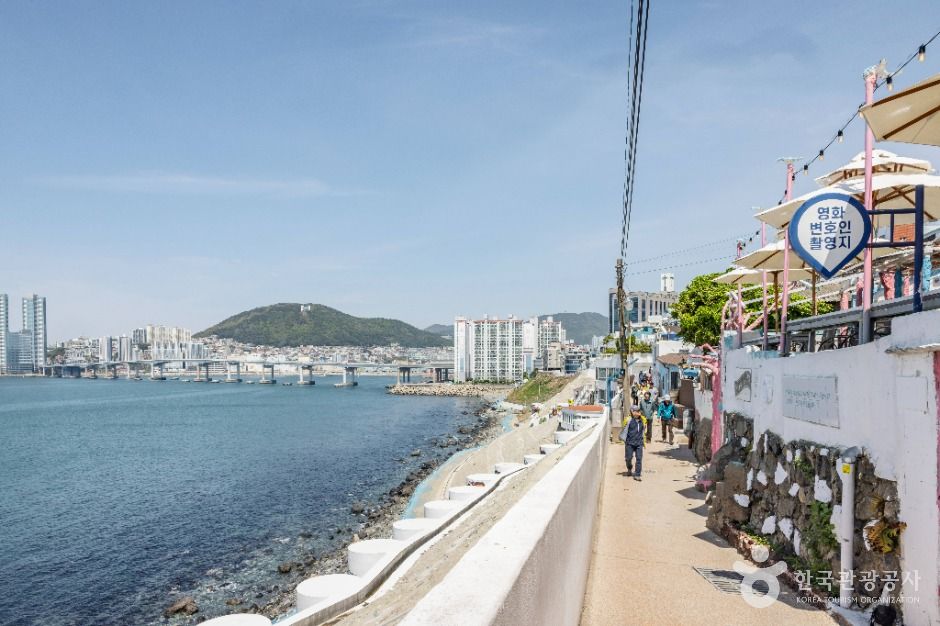
Huinnyeoul Cultural Village is a cultural community village. Huinnyeoul-gil, a representative original downtown area of Busan, was named for its meandering stream that resembles the appearance of white snowfall at the foot of Bongnaesan Mountain. In December 2011, old houses was remodeled and reborned as a unique culture and art village that exudes the energy of Yeongdo.
Gimhae Astronomical Observatory (김해천문대)
17.1Km 2022-12-29
254, Gaya thema-gil, Gimhae-si, Gyeongsangnam-do
Gimhae Astronomical Observatory opened on February 1, 2002 as part of the Millennium Commemorative Project that started in December 1998. It was built to satisfy the general public’s curiosity about the universe and celestial bodies, inspire young people, and give everyone a unique, memorable experience. The observatory is shaped like an egg, in memory of the legend of King Kim Suro, the founder of the Garak Kingdom, according to which the king was born from an egg.
It is said that the queen of King Suro, Heo Hwang-ok, was a princess from the Indian country of Ayuta. Since sophisticated navigation equipment had yet to be invented, it can be assumed that she found her way to the Garak Kingdom by following the stars. It is also said that a prince of the Garak Kingdom built an observatory on the highest point of a mud fortress in Jinrye in order to make astronomical observations. The place is still referred to as Bibidan, which means a place to watch the stars.
These historical facts indicate the stars were very important to the Gaya, an ancient kingdom established mainly in the Gimhae area. The peak of Bunseongsan Mountain, where the observatory is located, offers sweeping views of the entire area of Gimhae. The night sky of Gimhae offers a breathtaking sight.
National Maritime Museum (국립해양박물관)
17.2Km 2023-01-10
45 Haeyang-ro 301beon-gil, Yeongdo-gu, Busan
The National Maritime Museum is a comprehensive venue offering exhibitions on maritime culture, history, ocean life, science, and more. The exterior of the museum was designed to resemble a water droplet and is the third largest museum in Korea. The museum holds over 14,000 historic items and relics that have witnessed history and are relevant to the future of ocean life. These are on display in eight permanent exhibition halls, a special exhibition hall, and a children's exhibition hall. The museum also has a library, aquarium, grand auditorium, outdoor performance stage, and a 4D theatre for a multi-cultural experience.
 English
 한국어
한국어 日本語
日本語 中文(简体)
 Deutsch
 Français
 Español
 Русский


