
Taejongdae Spa (태종대온천찜질방)
18.7Km 2023-08-14
808 , Taejong-ro, Yeongdo-gu, Busan
Taejongdae Spa is located by the scenic Taejongdae Park. The nearby Yeongdo Island and Bongnaesan Mountain offer a beautiful view of the ocean and the mountains. The spa facility has hot springs and sauna facilities that offer therapeutic effects along with a fitness center with a variety of exercise equipment and a supervising trainer.
Gimhae Arts and Sports Center (김해문화의전당)
18.8Km 2022-12-29
2060, Gimhae-daero, Gimhae-si, Gyeongsangnam-do
The Gimhae Arts and Sports Center is a performance hall for high-class performances. Maru Hall is a multi-purpose theater that also contains a moving orchestra shell with a sound reflection board for a smaller concert hall inside the theater. Nuri Hall is an experimental theater for performances in a variety of themes. The center also features the outdoor theater Aedureum Madang, Yunseul Art Gallery, Media Center, Sports Center, and Aram Learning Center, as well as a café and restaurants.
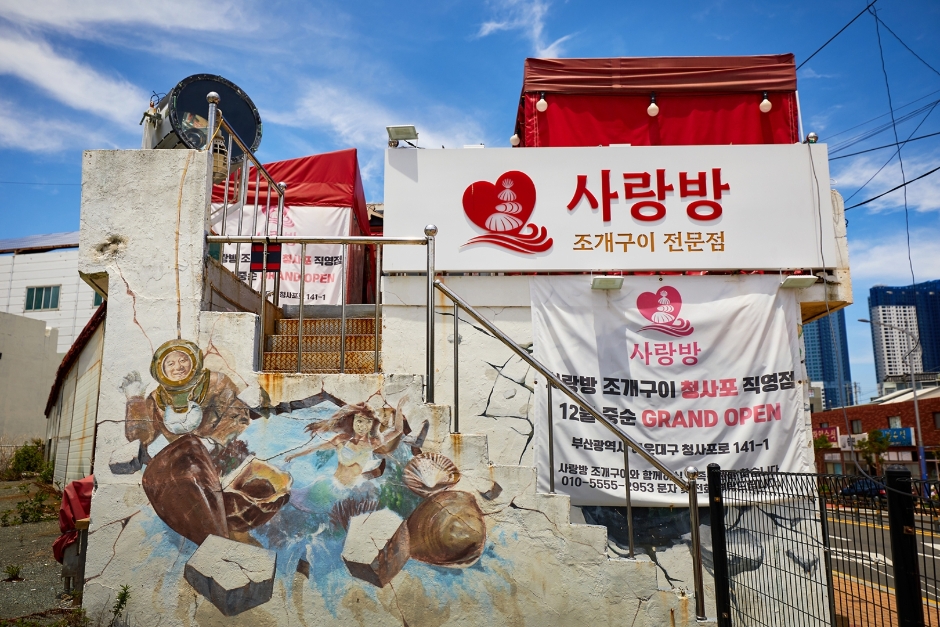
Sarangbang (사랑방)
18.9Km 2024-12-27
816 Taejong-ro, Yeongdo-gu, Busan
Sarangbang is a grilled seafood restaurant located in Taejongdae. The upstairs has an outdoor seating designed like a food stall. The restaurant also has a three-tiered fish tank on display inside with clams, abalones, and shells, so visitors can see how fresh they are. Various seafood such as clams, scallops, and shrimps are served on a three-tier tray. The ingredients are well prepared and served with instructions on how to eat them. If eating the seafood is not enough, visitors can opt to order Sandeomi Seafood Ramyeon.
Taejongdae Cliffed Coast [National Geopark] (태종대 (부산 국가지질공원))
19.5Km 2024-04-26
24 Jeonmang-ro, Yeongdo-gu, Busan
Taejongdae Cliffed Coast was formed by many layers of rock being forced together beneath a lake during the Cretaceous period, and then worn away over time by the sea. The coast features many geological formations, including sea caves and uniquely shaped rocks. Visitors can enjoy walking on the forested paths, or take the train course to easily access Taejongdae Observatory and Yeongdo Coastal Culture Space.
Sondo Yonggung Suspension Bridge (송도용궁구름다리)
19.7Km 2022-03-25
620-53, Amnam-dong, Seo-gu, Busan
Sondo Yonggung Suspension Bridge connects the renovated Songdo Cloud Bridge from Songdo Beach to Geobukseom Island and extended from Amnam Park to Dongseom Island. Visitors can enjoy the thrill of walking above the waters while enjoying the beautiful view in this 127 meters long bridge.
Songdo Sky Park (송도스카이파크)
19.8Km 2024-12-03
181 Amnamgongwon-ro, Seo-gu, Busan
The Songdo Marine Cable Car offers a captivating 15-minute ride from Songdo Base Station to Songdo Sky Park, treating visitors to picturesque views of Songdo Beach and Yeongdo Island. In the basement, visitors will find the Songdo Doppelmayr World, a museum dedicated to cable cars. The first floor comprises the ticket office, the cable car platform, and a convenience store. The second floor is where the Ocean Terrace and Café Human Art Hall are located, offering a space for relaxation and art. And the third floor is home to the Sky Harbor Observatory, a Little Prince-themed park that promises an enchanting experience.
Amnam Park (부산 암남공원)
19.9Km 2023-01-11
185, Amnamgongwon-ro, Seo-gu, Busan
The magnificent cliffs and tree-lined seaside views of Amnam Park bring the harmony of the bluish-green waters and the forested landscape together. Originally a protected area, entrance was not permitted until its opening to the public in 1996, when visitors could first experience the untouched landscape. Now, visitors can fish, explore the observatory, and enjoy the walking path and the elevated bridge. The abundunt pine trees along the walking path make for a pleasant stroll while the path up to the observatory offers great views. If it is fishing that you want, here you can fish on the ocean as well as off the fantastically shaped rocks. There is also a famous road to go for a drive, leading from Songdo Beach to Amnam Park. This drive takes approximately 5 minutes, but it takes about 20 minutes on foot.
 English
 한국어
한국어 日本語
日本語 中文(简体)
 Deutsch
 Français
 Español
 Русский


