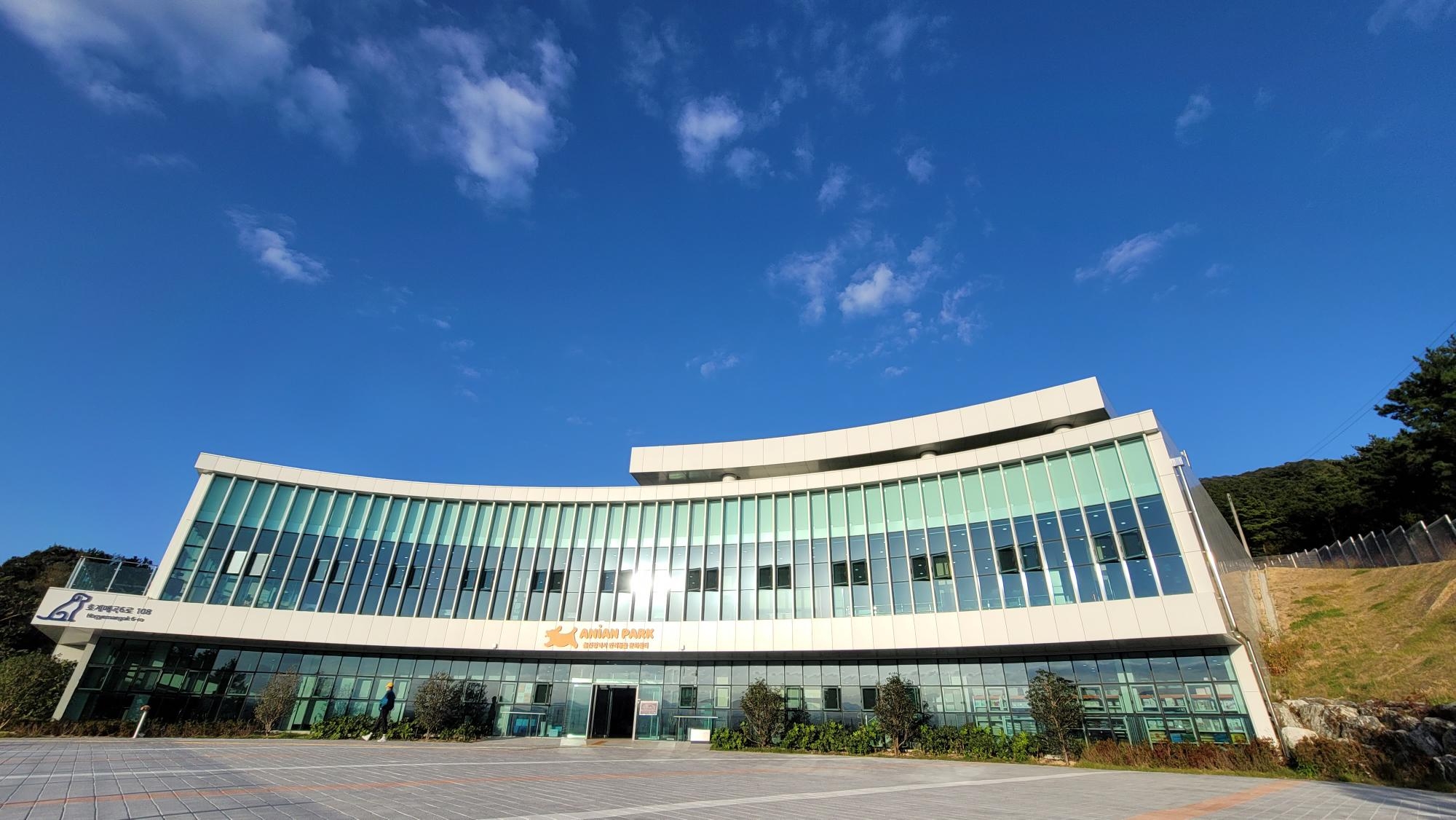
Anian Park (애니언파크(울산 반려동물 문화센터))
14.5Km 2024-10-30
108 Hogyemaegok 6-ro, Buk-gu, Ulsan
Anian Park is the first pet culture complex in the southeastern region of Korea, divided into separate sections for large and small breeds of dogs. The complex is complete with a playground, water play zone, pet bath and more. The facility also offers etiquette classes for pets and owners, as well as certification programs.

Hwangseong Park (황성공원)
14.5Km 2025-06-19
431-12 Wonhwa-ro, Gyeongju-si, Gyeongsangbuk-do
Situated near the Gyeongju Municipal Library and Gyeongju Arena, Hwangseong Park is notable for its dense forest populated with stunning pine trees and centuries-old trees. During summer, it becomes a haven for blooming Lilyturfs, while in autumn, ancient trees such as zelkova and oak showcase vibrant colors, enhancing the natural beauty of the area. Within the park, visitors can find the Statue of General Kim Yusin, a Korean archery range, and a Ssireum (Korean traditional wrestling) ring. Nearby attractions include Gyeongjueupseong Walled Town, Cheonmachong Tomb, Daereungwon Ancient Tombs, and Hwangnidan Street.
![Homeplus Stores - Ulsan Buk-gu Branch [Tax Refund Shop] (홈플러스스토어즈 울산북구)](http://tong.visitkorea.or.kr/cms/resource/71/2884171_image2_1.jpg)
Homeplus Stores - Ulsan Buk-gu Branch [Tax Refund Shop] (홈플러스스토어즈 울산북구)
14.5Km 2024-04-23
26, Sindap-ro, Buk-gu, Ulsan
-
Tomb of King Munmu (경주 문무대왕릉)
14.7Km 2025-06-12
1366-9, Donghaean-ro, Gyeongju-si, Gyeongsangbuk-do
A little rocky islet approximately 200 meters from the shore at Bonggil-ri is the Tomb of King Munmu (AD 661-681), who unified the three kingdoms and became the 30th ruler of the Silla Kingdom. The king gave specific instructions to be buried in the East Sea after his death so that he would become a dragon and protect Silla from foreign invaders. The rocky island, about 200 meters in circumference, is divided by a cross-shaped waterway, forming a pool at the center, at the bottom of which is a granite stone 3.6 meters long, 2.9 meters wide and 0.9 meters thick. Legend has it that the remains of King Munmu’s cremated body are buried under this rock. Historians still debate whether the ashes of the King Munmu were scattered or stored in an urn and placed under the rock.
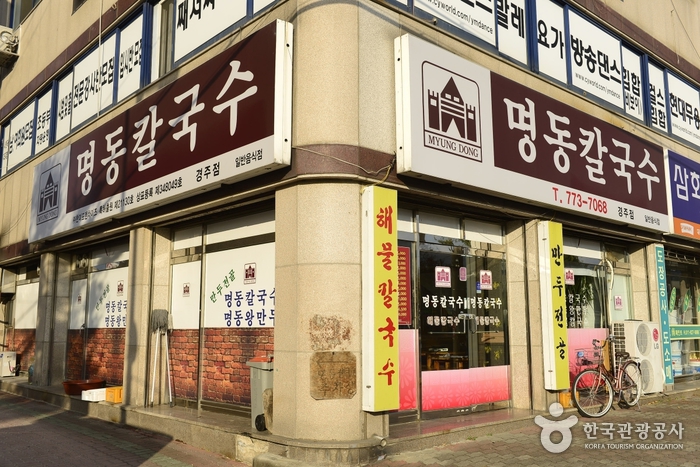
Myeongdong Kalguksu (명동칼국수)
14.7Km 2024-02-28
46-4 Yongdam-ro, Gyeongju-si, Gyeongsangbuk-do
Myeongdong Kalguksu is a noodle restaurant specializing in kalguksu (noodle soup), located near Gyeongju Hwangseong Park. It offers kalguksu, haemul kalguksu (noodle soup with seafood), mandu jeongol (mandu hot pot), and more, prepared with chewy noodles and rich anchovy broth. After your meal, you can explore nearby attractions such as Gyeongju Civic Stadium, Arts Center, and Bitnuri Garden, as this area is rich in the cultural and historical heritage of the Silla dynasty.
Bonggil Daewangam Beach (봉길대왕암해변)
14.7Km 2025-05-28
Bonggilhaean-gil, Yangbuk-myeon, Gyeongju-si, Gyeongsangbuk-do
Bonggil Daewangam Beach, located 32 kilometers east of downtown Gyeongju is a white sand beach with an average water temperature of 22℃. It is less crowded compared to other beaches on the East Coast, making it a perfect destination for a leisurely getaway. In summer, beach bungalows, tube rental shops, snack shops, and other convenience facilities are available. From the beach, visitors can also see the Tomb of King Munmu, which lies 200 meters offshore.
Olive Young - Gyeongju Yonggang Branch [Tax Refund Shop] (올리브영 경주용강점)
14.8Km 2025-10-28
46 Wonji-gil, Gyeongju-si, Gyeongsangbuk-do
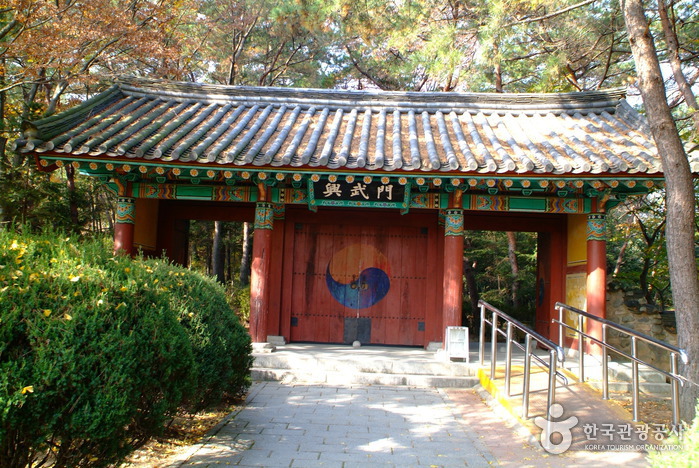
Gyeongju Tomb of Kim Yu-sin (경주 김유신묘)
14.8Km 2022-08-12
44-7, Chunghyo 2-gil, Gyeongju-si, Gyeongsangbuk-do
+82-54-749-6713
The tomb of General Kim Yu-sin (595-673) is located near the Gyeongju Express Bus Terminal at the end of a scenic lane, popular in spring for its walls of yellow forsythia and pink cherry blossom trees in bloom. The tomb itself is located in a scenic area thick with pine trees, on the eastern side of Songhwasan Mountain. The tomb of General Kim Yu-sin is a large tomb measuring roughly 30 meters in diameter, circled by a stone fence with 24 guard posts. The tomb base wall features relief carvings of the 12 Oriental zodiac gods standing guard over the tomb, brandishing weapons. The carvings are unique in that while their bodies face outwards, the heads are all turned to the right. The elaborately decorated tomb is second in grandeur only to those of royalty.
![Homeplus Mega Food Market - Gyeongju Branch [Tax Refund Shop] (홈플러스 메가푸드마켓 경주점)](http://tong.visitkorea.or.kr/cms/resource/40/2883740_image2_1.jpg)
Homeplus Mega Food Market - Gyeongju Branch [Tax Refund Shop] (홈플러스 메가푸드마켓 경주점)
15.2Km 2025-10-27
97, Gongdan-ro, Gyeongju-si, Gyeongsangbuk-do
-
Gyeongju Arts Center (경주예술의전당)
15.2Km 2025-06-19
1 Alcheonbuk-ro, Gyeongju-si, Gyeongsangbuk-do
Gyeongju Arts Center opened its doors to the public on November 6, 2010. Major facilities include a grand performance hall, small performance hall, exhibition chamber, outdoor performance stage, conference room, seminar room, and a toy library where a wide range of educational and participatory programs are held.
 English
 한국어
한국어 日本語
日本語 中文(简体)
 Deutsch
 Français
 Español
 Русский


