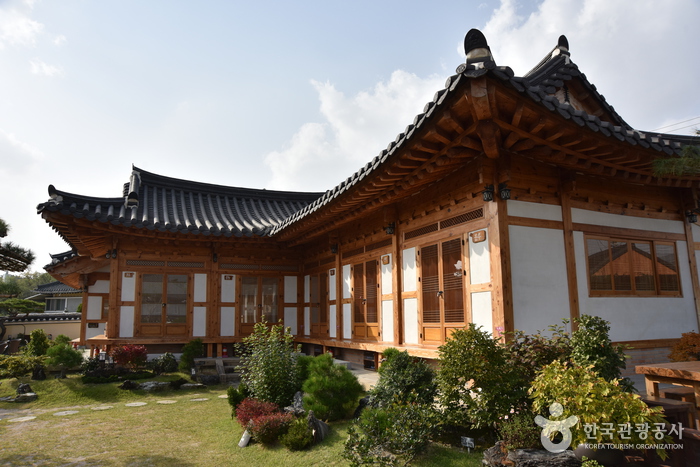
Cheonggong (청공한옥)
16.8Km 2024-12-19
5-6 , Igu 2-gil, Gyeongju-si, Gyeongsangbuk-do
+82-10-9009-6022
Cheonggong hanok stay is just 10-minutes’ walk from Gyeongju Bulguksa Station, on the Donghae Line, in Gyeongsangbuk-do. A traditional hanok built of timber and red clay bricks, this is a quiet and restful place. In the yard, visitors will find pine and other trees, garden plants and strangely-shaped rocks expressing harmony with each other, while beautiful flowers nestle in the field in front of the house. Each guestroom has a bathroom with toilet.
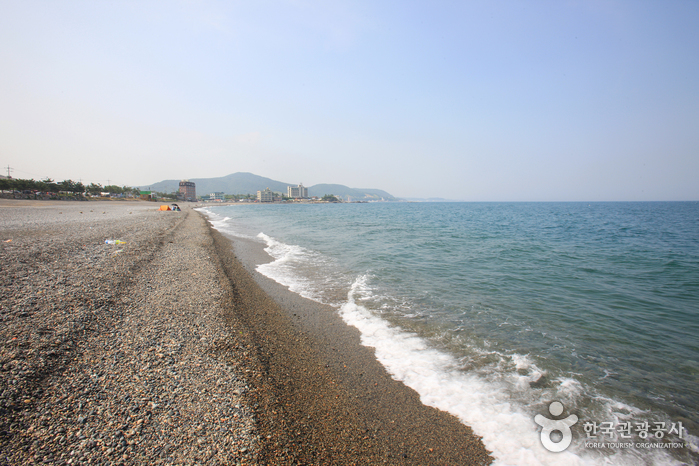
Gangdong Pebble Beach (강동몽돌해변)
17.4Km 2021-07-14
1650, Donghaean-ro, Buk-gu, Ulsan
+82-52-241-7751
For those hoping for a view of the winter sea, or those longing for the engulfing embrace of the clear dark-blue waves crashing into huge rocks, Gangdong Pebble Beach is the place to be. The coastal road, with its beautiful scenery of the sea and mountains, is a popular driving route. With diverse attractions nearby, many vacationers are attracted to this beach in winter.
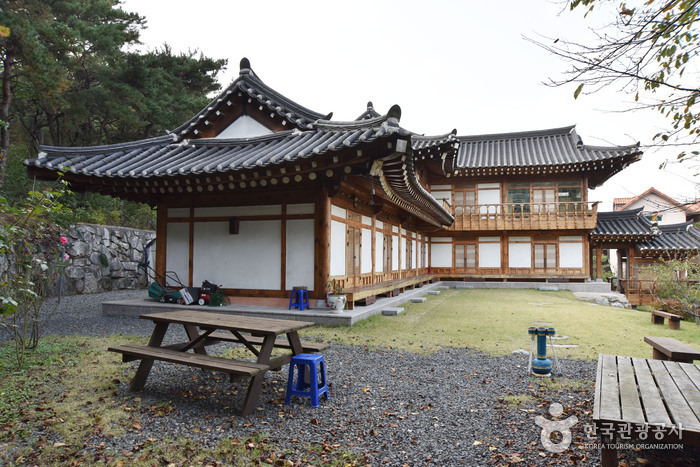
GyeongjuCheonnyeonhanok Pension (경주천년한옥펜션)
18.2Km 2024-08-01
86-61 , Sidong-ro, Gyeongju-si, Gyeongsangbuk-do
+82-10-9898-3995
Cheonnyeon Hanok Pension in Gyeongju, Gyeongsangbuk-do, is a modern two-storey hanok built of pinewood and red clay, and equipped with geothermal heating and double doors to keep out drafts. Rooms have individual toilets and cooking facilities, and there is a spacious yard where children can play and grown-ups can experience folk games such as Tuho and Jegichagi. There are fine views of Joyang Reservoir and Tohamsan Mountain, and an inviting pine forest trail next to the house. Nearby tourist attractions include Seokguram Grotto and Bulguksa Temple.
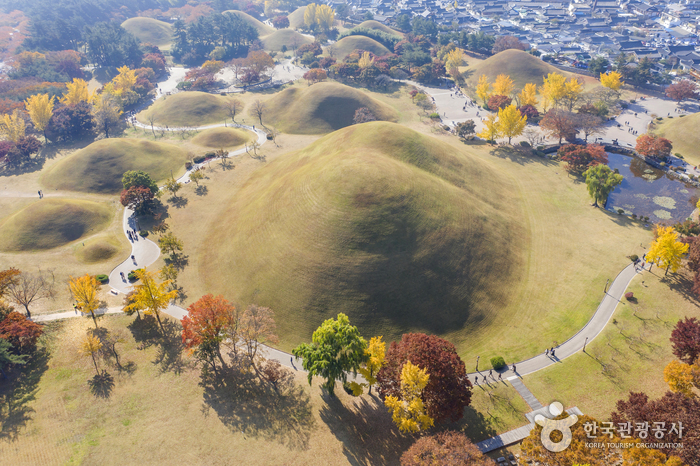
Gyeongju-si Special Tourist Zone (경주시 관광특구)
18.8Km 2025-03-25
614 Gyeonggam-ro, Gyeongju-si, Gyeongsangbuk-do
+82-54-779-6084
Gyeongju was the capital city of the ancient kingdom of Silla. The city is often referred to as a “museum without walls” because of the many cultural relics scattered throughout the city. Almost everything in this city, from the streets to the mountains, is rich in history. Gyeongju has roughly 300 sites that have been designated as a cultural heritage, with some of them being UNESCO-recognized World Heritage Sites.
The Gyeongju Special Tourist Zone includes the districts of Namsan, Wolseong, Daereungwon, Hwangryongsa, and Sanseong. This area has a total of 52 cultural assets registered on the World Heritage list. Many of the hills are actually royal tombs and fields of grass used to be sites of ancient temples.
The entire Namsan Mountain can almost be considered a cultural asset because of the many stone pagodas and Buddha statues that can be found here. The Bulguk district is home to many of Gyeongju’s most well-known attractions such as Bulguksa Temple, Seokguram Grotto, Gyeongju Folk Village, Silla Arts and Science Museum, and Goereung.
In the Bomun district, there are plenty of recreation facilities surrounding Bomunho Lake. Other attractions in the area include Gyeongju World Culture Expo Park, Gyeongju World, and Silla Millennium Park.
[Gyeongju Special Tourist Zone]
Areas included: Downtown area, Bomun Lake Resort, and Bulguksa Temple in Gyeongju-si, Gyeongsangnam-do
Area size: 32,650,000㎡
Tourist Attractions: Bulguksa Temple, Seokguram Grotto, Daereungwon Tomb Complex, Namsan Mountain, Bomunho Lake, Shilla Millennium Park, Gyeongju World Culture Expo Park, etc.

Gyeongju Expo Park (경주엑스포공원)
18.9Km 2024-11-11
614 Gyeonggam-ro, Gyeongju-si, Gyeongsangbuk-do
Gyeongju Expo Park is located in the Bomun Tourist Complex in Gyeongju, offering a thematic experience of Korean culture through exhibitions, performances, and hands-on activities showcasing the art and culture of the Silla dynasty (BC 57-AD 935). The park features various attractions such as Gyeongju Tower, Timeless Media Art, Solgeo Art Museum, Lumina Night Walk, Cheomseongdae Film Hall, and Asadal Sculpture Park.
Gyeongju Expo Solgeo Art Museum (경주솔거미술관(솔거미술관))
18.9Km 2025-05-19
614 Gyeonggam-ro, Gyeongju-si, Gyeongsangbuk-do
Gyeongju Expo Solgeo Art Museum is Gyeongju’s first public art museum, opened in 2015 with the donation of 830 works by the Korean painter Park Dae-sung. Designed by the renowned architect Seung H-Sang, the museum’s architecture blends people, space, and nature. It features a permanent exhibition of works by Park Dae-sung, along with special rotational exhibitions by invited artists. For visitors seeking deeper insight into the artwork, the museum offers a docent program. The window in the permanent exhibition hall has become a popular SNS spot and is often referred to as a moving painting.
Salon Heritage (살롱헤리티지)
18.9Km 2025-05-26
614 Gyeonggam-ro, Gyeongju-si, Gyeongsangbuk-do
Salon Heritage is a world cultural heritage media promotion hall, located inside the Gyeongju World Expo Memorial, which was designed by renowned architect Kengo Kuma, drawing inspiration from Daereungwon Ancient Tombs and columnar joints of Gyeongju. It features dynamic media walls, a media tunnel and a world heritage study, offering visitors an immersive digital experience to explore the rich heritage of Gyeongju.
Hwang Nyong Won (황룡원)
18.9Km 2025-03-14
40 Expo-ro, Gyeongju-si, Gyeongsangbuk-do
+82-54-760-0500
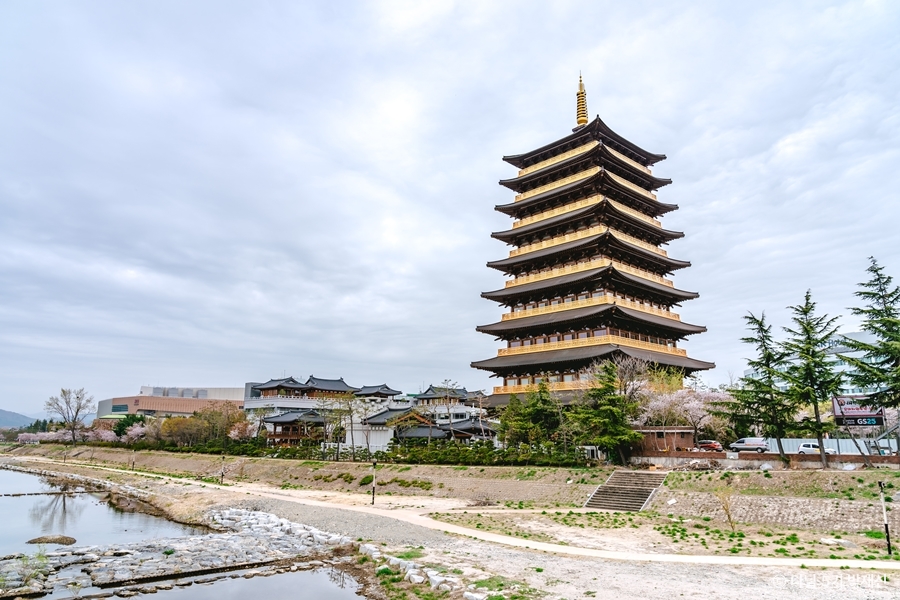
This unique architecture is a reinterpretation of the Hwangnyongsa nine-story pagoda format from the Silla period using modern science technology and architecture methods. The building has become a new landmark in Bomun Tourist Complex and is also used as a training institute that offers meditation programs. There are simple one-hour programs or overnight tour courses available through prior reservation.
Gang-dong Sea Water Spa (강동해수온천)
19.1Km 2024-02-20
1418 Donghaean-ro, Buk-gu, Ulsan
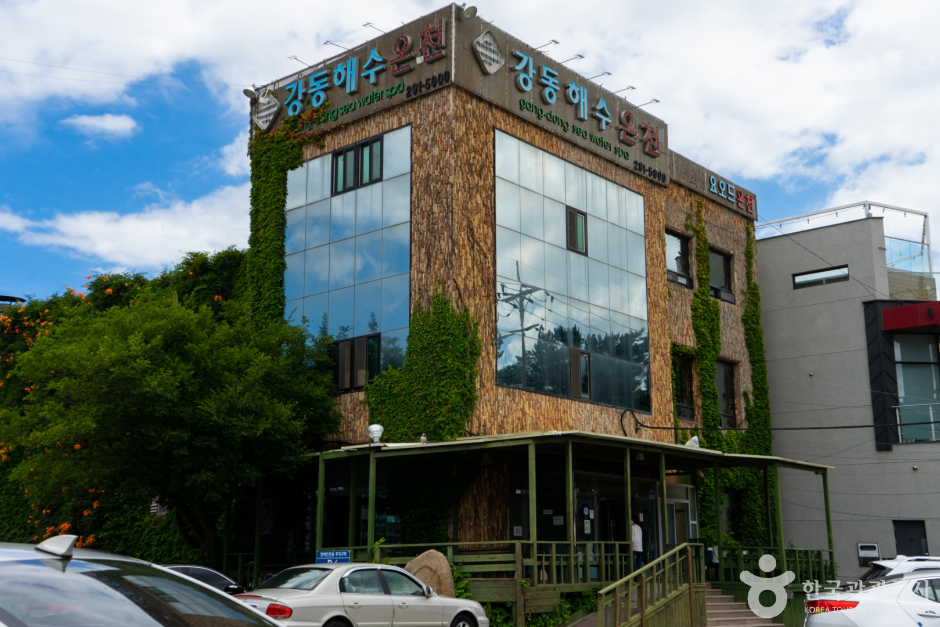
Gang-dong Sea Water Spa is a hotspring that utilizes seawater from the sea in front of Jeongja, boiling it at temperatures exceeding 100°C, resulting in high salinity and excellent sterilizing effects. The facility offers a range of baths, including Iodine Bath, Cold Seawater Bath, Hot Seawater Bath, and Trench Hot Bath. Renowned for the exceptional quality of its seawater, the hotspring attracts numerous visitors seeking its therapeutic benefits. The breathtaking view of the sea from the baths adds to the overall experience.
Gyeongju Bomunjeong Pavilion (보문정 (경주))
19.1Km 2022-05-06
Sinpyeong-dong, Gyeongju-si, Gyeongsangbuk-do
+82-54-745-7601
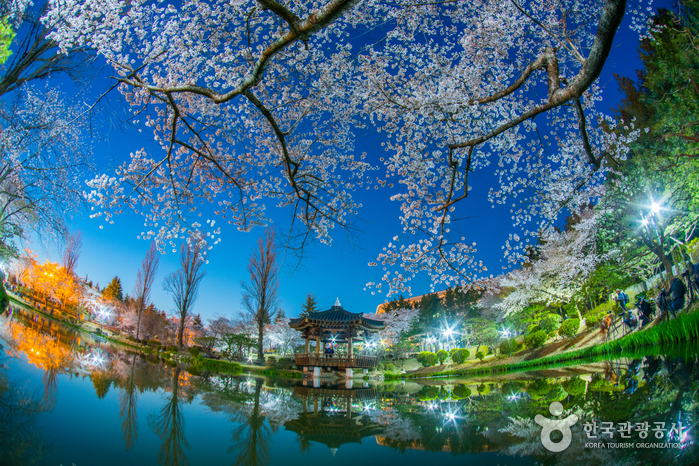
Bomunjeong Pavilion has a beautiful scenery and was listed on CNN's "50 Beautiful Places to Visit in South Korea." The octagonal pavilion and two ponds are surrounded by cherry blossom trees and maple trees making it a must-visit spot all year round.
 English
 한국어
한국어 日本語
日本語 中文(简体)
 Deutsch
 Français
 Español
 Русский


