Aldea Tradicional de Bukchon (북촌한옥마을)
4.5Km 2025-04-02
Gyedong-gil 37, Jongno-gu, Seúl
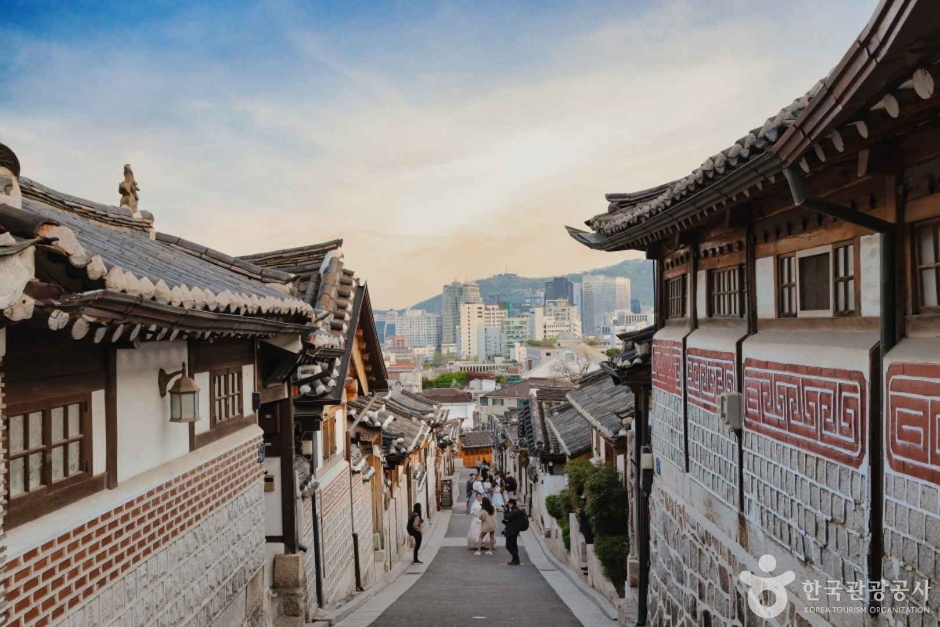
Bukchon era la aldea de la clase noble en la antigüedad. Todas las casas tradicionales de la clase alta siguen preservándose hasta el momento, conservando sus estilos arquitectónicos. Solo había unas treinta casas en la antigüedad, pero la zona se desarrolló tras la Guerra de Corea. La Aldea Tradicional de Bukchon es una zona de viviendas tradicionales, que ha compartido los 600 años de historia con los palacios que se encuentran en sus cercanías, como Gyeongbokgung y Changdeokgung, y el Santuario de la Realeza Jongmyo. Las calles del barrio son estrechas y curvadas como ramas de árboles, lo cual demuestra el paisaje urbano, típico del lugar. Hoy en día, estos lugares transmiten indirectamente un ambiente de la época de Joseon, mediante restaurantes de comida coreana, centros culturales, etc. El nombre de la aldea, Bukchon, en el que buk significa "norte" y chon significa "aldea"), fue acuñado por estar ubicado al norte del arroyo Cheonggyecheon y de Jongno. Está formada por las calles Wonseo-dong, Jae-dong, Gye-dong, Gahoe-dong e Insa-dong, y en tiempos antiguos residían allí los altos funcionarios o los miembros de la realeza.
Horario de acceso a la Red Zone (alrededores de la calle Bukchon-ro 11-gil, unos 34.000 ㎡):
- Horario de acceso prohibido: Desde las 17:00 hasta las 10:00 del día siguiente.
- En caso de infracción por acceso en horario prohibido, se impondrá una multa de 100.000 wones.
- Vigencia: A partir del 01/03/2025.
The Place Seoul (traditional Korean-style guesthouse) (복합한옥공간 곳)
4.5Km 2025-06-02
52-11, Gyedong-gil, Jongno-gu, Seoul
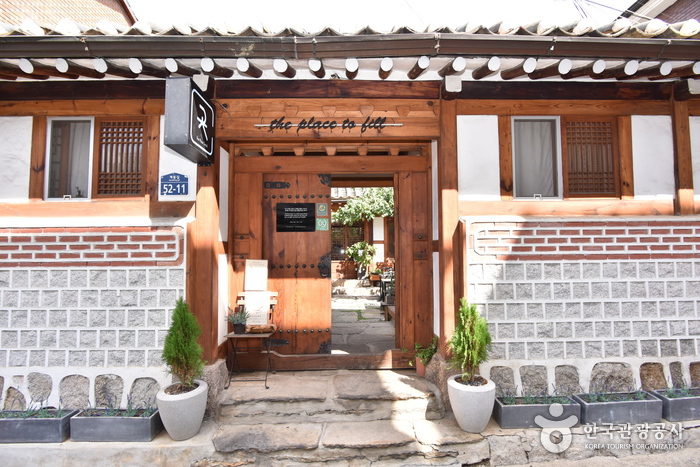
The Place Seoul in Gye-dong, Jongno-gu, Seoul, is a meeting place of traditional and modern Korea. It has a yard with a beautiful 80 year-old dogwood tree, and a small garden in which guests can enjoy the passage of the seasons. The Place Seoul is an environment-friendly place which uses eco-friendly consumables such as toilet paper and shampoo. Breakfast is simple and healthy. There are many good cafes in nearby Bukchon, and local tourist attractions include the National Palace Museum of Korea and the National Museum of Modern and Contemporary Art.
Puerta Gwanghwamun (광화문)
4.5Km 2025-08-08
Sajik-ro 161, Jongno-gu, Seúl.
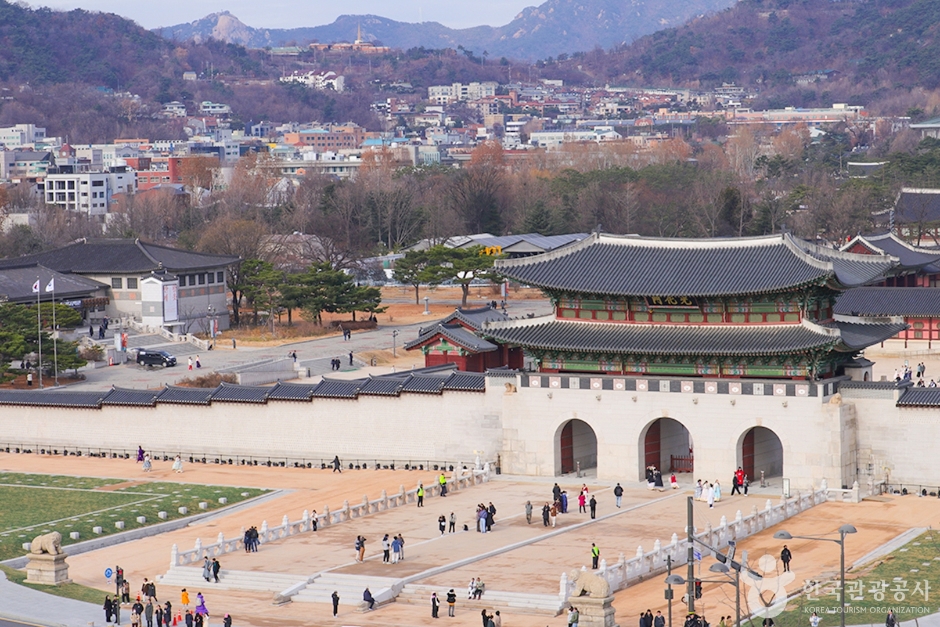
La puerta Gwanghwamun es la entrada principal del palacio Gyeongbokgung, levantada en 1395 por Taejo, el primer rey de la dinastía Joseon. Es la puerta sur de las cuatro puertas de la antigua ciudad de Hanyang (Seúl), levantadas sobre los cuatro puntos cardinales. Su nombre significa “la luz de la civilización iluminará el mundo”, y contiene los altos propósitos que la dinastía Joseon tuvo al ser establecida. Gwanghwamun había sido construida de granito. En el centro se halla una entrada que se asemeja al arco iris, denominado Hongyemun, y arriba está la torre del portal. Gwanghwamun guarda un recuerdo amargo de la historia de Corea. Durante la ocupación de Corea por los japoneses (1910-1945), el gobierno de ocupación destruyó la puerta con el objetivo de suprimir la nación coreana, y en su emplazamiento levantó el Edificio de la Gobernación de Corea. Hacia el año 1968, el gobierno coreano construyó de nuevo la puerta Gwanghwamun, pero usando concreto. Sin embargo, en el año 2010 se completaron los trabajos de restauración total en madera, que es la que se ve actualmente.
Tour bajo las Estrellas del Palacio Gyeongbokgung (경복궁 별빛야행)
4.5Km 2025-10-23
Sajik-ro 161, Jongno-gu, Seúl
1522-2295
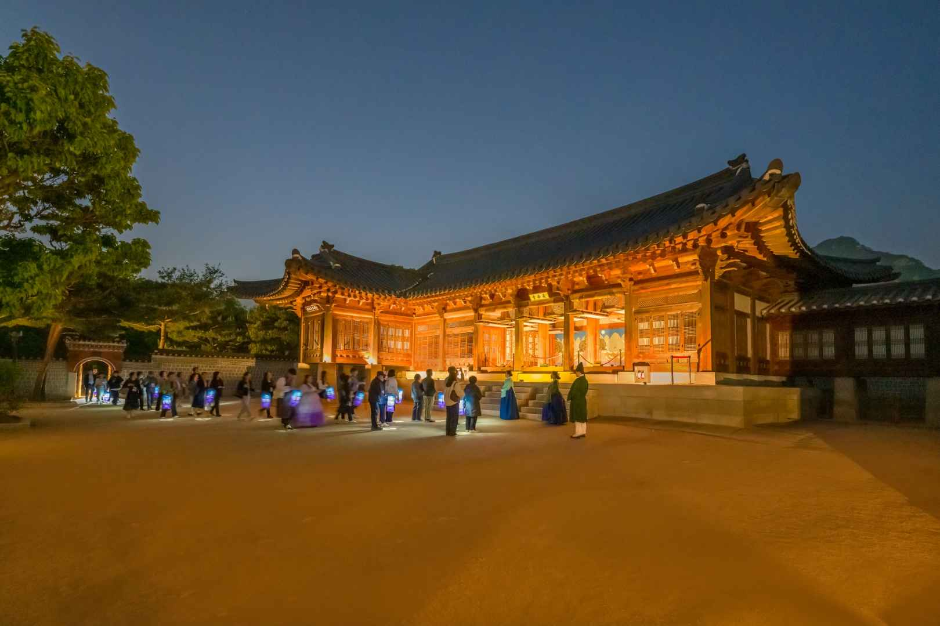
Es un tour nocturno por el palacio Gyeongbukgung que se realiza en la temporada de otoño. Los visitantes reciben la guía de un experto y tienen ocasión de disfrutar de un espectáculo en el área de la antigua cocina del palacio y degustar platillos de la cocina real, los que se le servían al rey como parte de la mesa surasang.
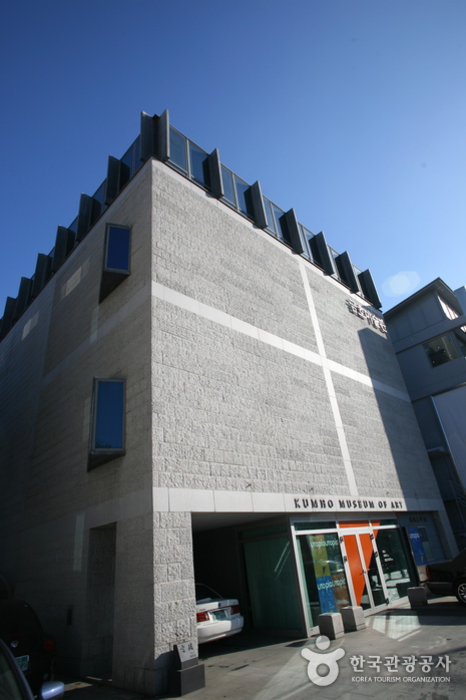
Museo de Arte Kumho (금호미술관)
4.5Km 2023-02-22
Samcheong-ro 18, Jongno-gu, Seúl.
El Museo de Arte Kumho fue inaugurado el 10 de mayo de 1989, con el objetivo de proporcionar espacio para la exposición de obras de los nuevos artistas y de esta manera desarrollar, capacitar y beneficiar el sector de la cultura artística. Luego, en octubre de 1999, con la llegada de Park Gang-ja, la nueva titular del museo, se transformó en un complejo artístico y cultural.

Museo del Hanbok de Lee Rhee-za (이리자 한복전시관)
4.5Km 2022-06-30
Samcheong-ro 20, Jongno-gu, Seúl.
Este museo, en lugar de representar simplemente los hanbok (trajes tradicionales), demuestra de manera simple los ritos de paso que debe atravesar una persona, desde su nacimiento hasta la muerte, y, en su conjunto, presenta la vestimenta y sus accesorios correspondientes. Los trajes tradicionales son obra de la famosa diseñadora de hanbok Lee Rhee-za, los cuales también se pueden utilizar en la actualidad. Además de los trajes, también podrá conocer la gran variedad de accesorios y adornos tradicionales.
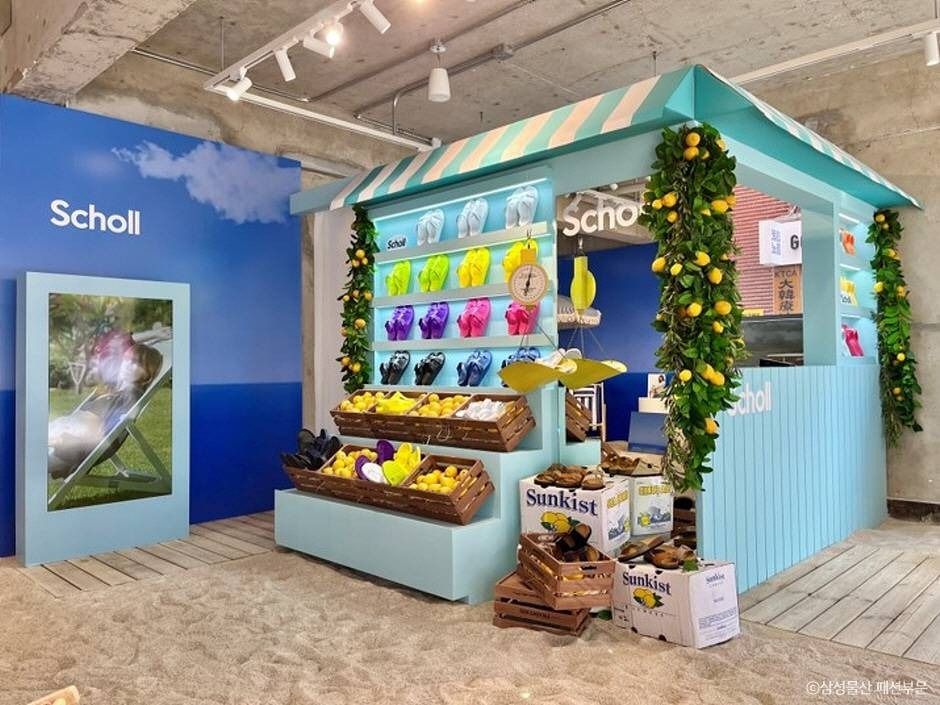
Stage 35 Seongsu (스테이지35 성수)
4.5Km 2025-07-17
Yeonmujang-gil 35, Seongdong-gu, Seúl
Stage 35 Seongsu es un espacio cultural de cuatro plantas ubicado en el barrio de Seongsu-dong de Seúl, el cual ofrece una variedad de cosas para ver, desde tiendas temporales hasta exposiciones de arte, muestras de lanzamientos y más. Fácilmente accesible en transporte público, es una visita obligada para quienes desean descubrir contenido que es tendencia y marcas de moda. También se realizan colaboraciones regulares con marcas reconocidas como Levi's, Comme des Garçons, Bao Bao y Thom Browne, entre otras.
![Palacio Changdeokgung y Jardín Huwon (창덕궁과 후원) [Patrimonio Cultural de la Humanidad de la Unesco]](http://tong.visitkorea.or.kr/cms/resource/03/3092503_image2_1.jpg)
Palacio Changdeokgung y Jardín Huwon (창덕궁과 후원) [Patrimonio Cultural de la Humanidad de la Unesco]
4.5Km 2025-08-08
Yulgok-ro 99, Jongno-gu, Seúl
El palacio Changdeokgung se compone de un espacio para el oficio de los funcionarios públicos, la residencia del rey y el jardín de la parte posterior. El palacio Changdeokgung es el único palacio que preserva el estilo arquitectónico de la dinastía Joseon. El jardín posterior, Huwon, utilizado por el monarca como lugar de descanso, tiene árboles de 300 años de edad, un estanque y un pabellón organizados en forma armoniosa con la naturaleza.
Entrando por la puerta Donhwamun se accede al interior del palacio, y allí aparece el puente Geumcheongyo hacia la derecha. Construido durante el 11er. año del gobierno del rey Taejong (1411), este puente de piedra es el más antiguo en su estilo que quedan en pie dentro de Seúl. La entrada a Injeongjeon (la cámara de la audiencia real) se encuentra al final de este puente y la cresta del techo de la cámara está decorada con figuras de flores. Estas figuras fueron añadidas por el gobierno de la ocupación japonesa para avergonzar a la familia real y no se las puede ver en ningún otro techo. Sobre cada alero del techo de Injeongjeon se colocaron nueve estatuas. Estas estatuas eran para ahuyentar los malos espíritus y el número de ellas difiere entre las edificaciones: cinco sobre cada alero del techo del Portal Jinseonmun y siete en la puerta Donhwamun. Detrás de la puerta derecha de Injeongjeon, se halla la cámara oficial del rey denominada Seonjeongjeon. Solo para este palacio se utilizaron tejas azules, lo que da a comprender el significado de las tejas azules de Cheong Wa Dae (también conocida como la Casa Azul).
El sendero de cemento que se extiende entre las paredes de los palacios Changdeokgung y Changgyeonggung conduce al jardín Huwon. Aquí se elevan los pabellones Buyongjeong y Juhamnu, que frecuentemente aparecen en fotografías que presentan Corea. El jardín tiene una forma similar a la letra C, con un estanque en el centro. Asimismo, para llegar a Yeongeongdang, la residencia de 99 ambientes de la familia noble de los más altos honores, uno debe pasar obligatoriamente por la puerta Bullomun hecha con una roca tallada en forma de C.
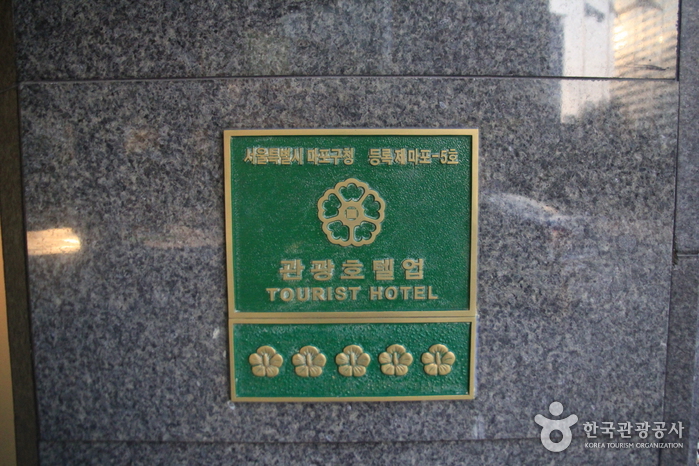
Lotte City Hotel Mapo (롯데시티호텔 마포)
4.6Km 2025-10-23
109, Mapo-daero, Mapo-gu, Seoul
Lotte City Hotel Mapo is a premium business hotel that opened on March 10, 2009. Conveniently located near Myeongdong, Seoul Station, Hongdae, and Yeouido, it has easy access to public transportation including the airport railroad to Incheon International Airport and Gimpo Airport. The hotel provides 5-star hotel facilities at reasonable prices. The 284 guestrooms include 100 twin rooms, 182 double rooms, and 2 ondol rooms, while the subsidiary facilities include a swimming pool, a gym, and a business center equipped with free internet service, a fax machine, a copy machine, a printer, and stationary. The double rooms feature a spacious workplace for business travelers, while twin rooms have a luxurious and comfortable interior. The family twin rooms are for family travelers, and ondol rooms provide a chance for visitors to experience the traditional Korean lifestyle. The buffet-style hotel restaurant ‘Naru’ features an elegant ambience and fresh dishes cooked at its open kitchen.
Paseos en Calesa Artee (아띠인력거)
4.6Km 2022-09-15
Bukchon-ro 5-gil 43, Jongno-gu, Seúl.
Reconocidos como los barrios más tradicionales de Seúl, Samcheong-dong y la Aldea Tradicional de Bukchon se destacan por las diversas atracciones que ofrecen a los turistas. En cada callejón se esconde algo interesante para ver. Sacar fotos de recuerdo es una manera de llevarse parte del encanto de estos barrios. En este entorno se realiza un programa de paseos en calesa que ofrece la empresa Artee. Existen diferentes rutas para elegir, y lo más interesante es la conversación que puede darse con el conductor, que hace comentarios divertidos en inglés sobre los lugares recorridos.
 Español
 한국어
한국어 English
 日本語
日本語 中文(简体)
 Deutsch
 Français
 Русский


