Sejonggwan of the Royal Room / 왕의지밀 세종관
1.2Km 2025-08-12
5218-22, Chunhyang-ro, Wansan-gu, Jeonju-si, Région Jeonbuk
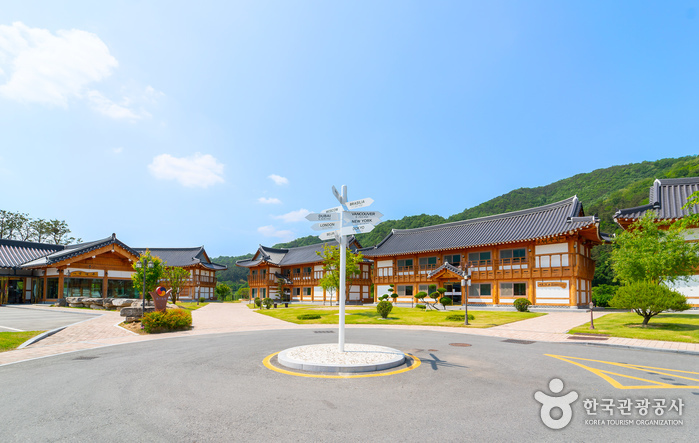
This hanok (traditional Korean house) hotel is located near Jeonju Hanok Village. The hotel has enjoyed great popularity among the tourists visiting Jeonju since its opening in 2018, for its convenient location of only a 7-min drive away from Jeonju Hanok Village and its faithful recreation of hanok’s beauty with modern sensibilities. The hotel complex stands on a plot of land spanning 19,840 m2, containing 11 residential buildings and other facilities. As the name of the hotel indicates, each building in the hotel is named after the kings of the Joseon Dynasty.
Sejonggwan is named after King Sejong. Sejonggwan has eight rooms, divided between Gold and Silver Rooms. Each room is a self-contained unit made up of bedrooms and restrooms, furnished with a combination of hanok’s unique charms and modern comfort. The view of the wooden exposed beams (Gold Room), paintings on the wall, and the view of the nature beyond the window wall recreate the unique scenery of the hanok, while amenities such as TV, refrigerator, and air conditioning offer a comfortable stay.
Other facilities inside the hotel complex include the spacious parking lot, an elegant hanok cafe, and the Convention Center, housing family-size Daejanggeum Hall and Hunminjeongeum Hall, a large hall suited for seminars. It takes only 10 min by car to reach any tourist sites near Jeonju Hanok Village from the hotel.
Omokdae et Imokdae (오목대와 이목대)
1.3Km 2025-08-12
1-3, Gyodong 1-ga, Wansan-gu, Jeonju-si, Région Jeonbuk
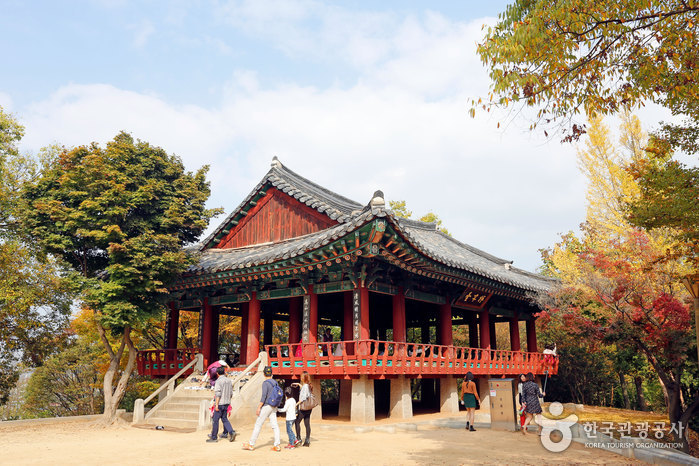
Omokdae, situé en haut d'une colline est le lieu où Yi Seong-gye (qui devint plus tard le Roi Taejo) s'arreta pour célébrer sa victoire lors d'une bataille contre l'armée japonaise au Mont Hwangsan à Unbong vers la fin de la période Goryeo. C'est aussi là où Mokjo, l'un des ancêtres de Yi Seong-gye, vécut. Plus tard, le Roi Gojong y établit une statue monumentale, “Taejogohwang Jejupilyujibi” avec une phrase écrite de sa propre main. De l'autre côté de Yukgyo, à partir d'Omokdae, se trouve Yimokdae, au pied du Mont Seungamsan où Chimyeongjasan, sité sacré pour les catholiques demeure. A 80 m de Yimokdae se trouvent un mémorial et une maison. “Mokjodaewang Gugeoyuji”, la phrase gravée sur le monument en pierre, fut écrite par le Roi Gojong en personne. Mokjo est le cinquième ancêtre du Roi Taejo, qui fonda la Dynastie Joseon. Imokdae est connue pour être le lieu où Mokjo vécut, jouant à des jeux de formation de bataille avec ses amis étant enfant. Cette anecdote apparait également dans le Yongbieocheonga (ballade du 15e siècle narrant la longévité nationale et la réussite culturelle). Mokjo se rendit à Hamgyeong-do à partir d'Imokdae (à Jeonju) en raison de la querelle qu'il eut avec le Jeonju Busan (officiel de l'etat gouvernant la région de Jeonju). Yi Seong-gye pensa que le départ de Mokjo était quelque chose ayant été guidé par les dieux afin qu'il (Yi Seong-gye) puisse fonder Joseon et devenir le premier roi de la dynastie.
Pont Namcheongyo (남천교 청연루)
1.3Km 2024-04-24
40, Cheongyeong-ro, Wansan-gu, Jeonju-si, région Jeonbuk
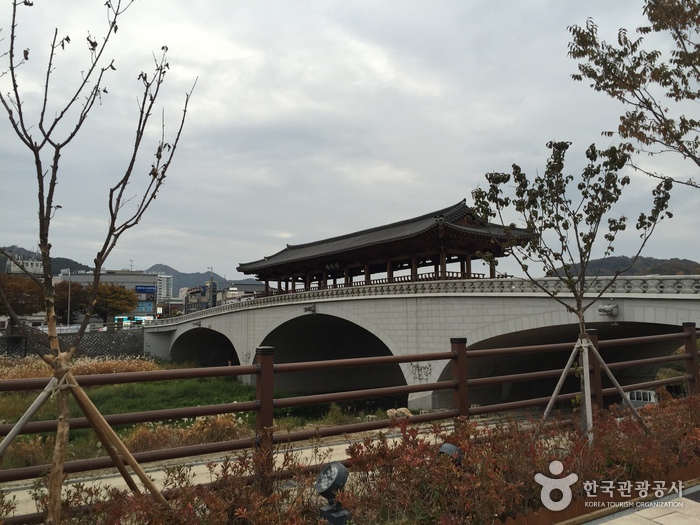
Le pont Namcheongyo est le principal pont pour entrer dans le village des hanok de Jeonju. Avec le projet dénommé "Jeonju Namcheongyo Luxury Project", la zone a connu des rénovations pour renforcer la structure et ajouter le pavillon Cheongyeonru.
Les visiteurs peuvent apprécier une vue panoramique de la zone depuis le pavillon hanok ou se reposer à l'abri de la chaleur en été.
Bu Yong Heon / 부용헌
1.3Km 2025-03-04
149-3, Hyanggyo-gil, Wansan-gu, Jeonju-si, Région Jeonbuk
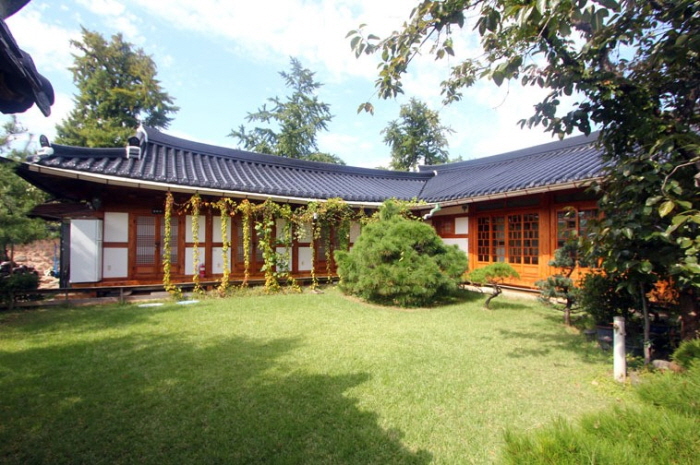
Buyongheon is located in Jeonju Hanok Village. Precisely speaking, Buyongheon is the very next door to Jeonju Hyanggyo (Confucian Temple and School). Across the alley are Jeonju Hyanggyo Culture Center and Wanpanbon Culture Center. If you walk a few more steps, you will reach Jeonju Hanbyeok Culture Center where you can see various performances and experience the culture and foods of Jeonju. Omokdae can be seen from the garden of Buyongheon. Across the Jeonjucheon Stream is the National Intangible Heritage Center.
The beginning of Buyongheon is deeply related with Jeonju Hyanggyo. In around 1935, the local bureaucrats lived around the Hyanggyo after building 12 houses one after another. Most of them came from rich families. These collective houses were called Buyong Houses, which meant rich houses. The name Buyongheon originated from Buyong Houses. The rooms of Buyongheon are composed of Toenmaru Bang, Daecheong Maru Bang, Large Daecheong Maru Bang and Big Sarangchae. The interior of the rooms looks neat with the beauty of blank space as they excluded unnecessary decorations. Carefully prepared breakfast is served upon request made in advance. Visitors can also experience traditional culture such as traditional etiquette education and Korean paper art.
In fall, the yellow leaves of the ginkgo tree in the garden of Jeonju Hyanggyo lights up the roof of Buyongheon. It is recommendable to walk along the Jeonjucheon Stream and take pictures of the colorful murals and the cafes in the Jaman Mural Village located on the left sie of the Hanok Village. It takes 15 minutes from Jeonju Station and 10 minutes from Jeonjuu Express Bus Terminal to Buyongheon by taxi.
Sukjonggwan of the Royal Room/ 왕의지밀 숙종관
1.3Km 2025-08-11
5218-14, Chunhyang-ro, Wansan-gu, Jeonju-si, Région Jeonbuk
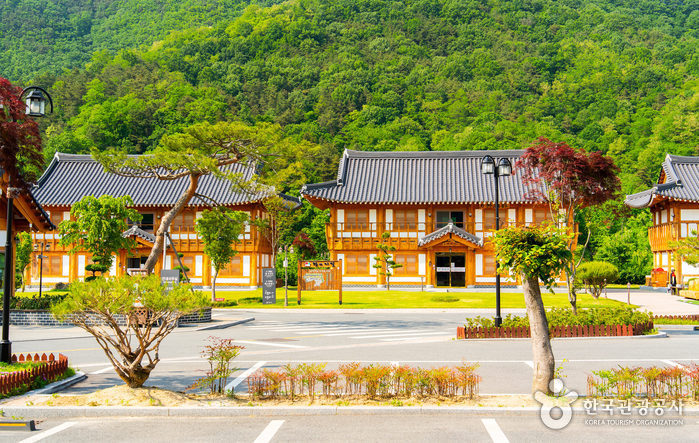
This hanok (traditional Korean house) hotel combines the unique aesthetics of hanok and modern comfort. Its location near Jeonju Hanok Village, the central point of Jeonju tourism, gives it excellent access to destinations in Jeonju. As evident from its name, the hotel promises a comfortable stay in a hanok since its opening in 2018. The hotel complex stands on a plot of land spanning 19,840 m2, containing 11 residential buildings that are named after the Joseon kings and other facilities.
The building Sukjonggwan contains four rooms. Each room is a self-contained unit made up of bedrooms and restrooms, furnished with a combination of hanok’s unique charms and modern comfort. Grade 1 Gold and Silver Rooms in particular have two beds and a whirlpool bathtub for the comfort of the guests. The view of the wooden exposed beams (Gold Room) speaks to the unique characteristics of hanok, while wooden pieces of furniture give the room an elegant finish. The scenery beyond the window wall is also the pride of the hotel.
The hotel has about 150 parking spots, a hanok cafe, and the Convention Center with spaces such as Daejanggeum Hall, Saimdang Hall, Chungmugong Hall, and Hunminjeongeum Hall. Samtaegeuk and Samjogo Restaurants are designated as COVID-19 Safe Restaurants by the city of Jeonju. It takes only 10 min by car to reach most tourist sites in Jeonju Hanok Village.
Jeongjogwan of the Royal Room / 왕의지밀 정조관
1.3Km 2025-08-13
5218-10, Chunhyang-ro, Wansan-gu, Jeonju-si, Région Jeonbuk
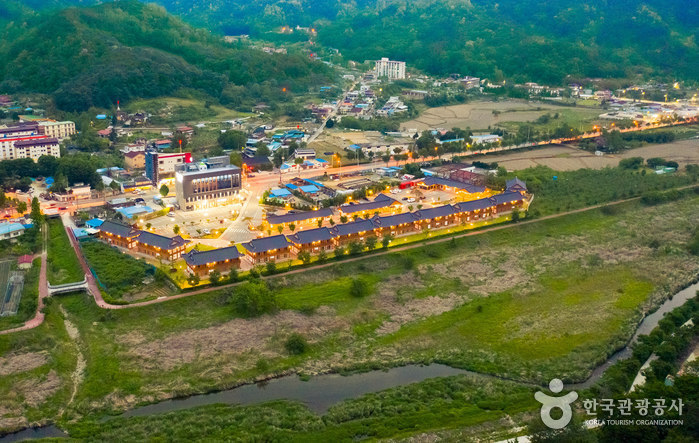
This hanok (traditional Korean house) hotel shows a different interpretation of hanok’s traditional beauty from Jeonju Hanok Village. The name of the hotel encapsulates Jeonju’s spirit as a city of tradition and art, and the exemplar of the state of Joseon. The hotel complex stands on a plot of land spanning 19,840 m2, containing 11 residential buildings and other facilities like hanok restaurants. Each residential building is named after the kings of the Joseon Dynasty. Jeongjogwan contains six rooms,
all built to modern comfort for all age groups. Grade 2 Silver and Gold Rooms, which can house up to 6 guests, are especially popular for families. The rooms combine modern comfort with hanok aesthetics, like wooden exposed beams and wooden furniture, which help to fill the room with the elegant fragrance of wood.
The hotel has about 150 parking spots, a hanok cafe, and the Convention Center with spaces such as Daejanggeum Hall, Saimdang Hall, Chungmugong Hall, and Hunminjeongeum Hall. Samtaegeuk and Samjogo Restaurants are designated as COVID-19 Safe Restaurants by the city of Jeonju. Jeonju Hanok Village is reachable by car in about 7 min.
Musée de la calligraphie Gangam (강암서예관)
1.4Km 2024-04-07
74, Jeonjucheondong-ro, Wansan-gu, Jeonju-si, Région Jeonbuk
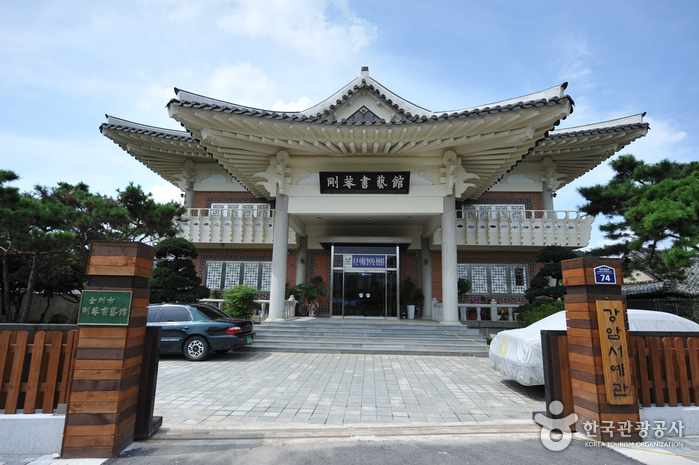
Inauguré en 1995, le musée Gang-am est un établissement spécialisé en calligraphie. Situé dans le village des hanok (maisons traditionnelles coréennes) de Jeonju, il expose environ mille œuvres de calligraphes illustres tel que Kim Jeong-Hui (1786-1856, peintre, calligraphe et savant), Lee Sam-Man (1770-1845, calligraphe), Kim Hong-Do (1745- ?, peintre), Jeong Yak-yong (1762-1836, savant), etc.. Le musée s’étend sur 872 ㎡, il comporte des salles d’expositions et des salles de conférences. Sa collection comprend 1.162 pièces.
Sunjonggwan of the Royal Room / 왕의지밀 순종관
1.4Km 2025-08-13
5218-6, Chunhyang-ro, Wansan-gu, Jeonju-si, Région Jeonbuk
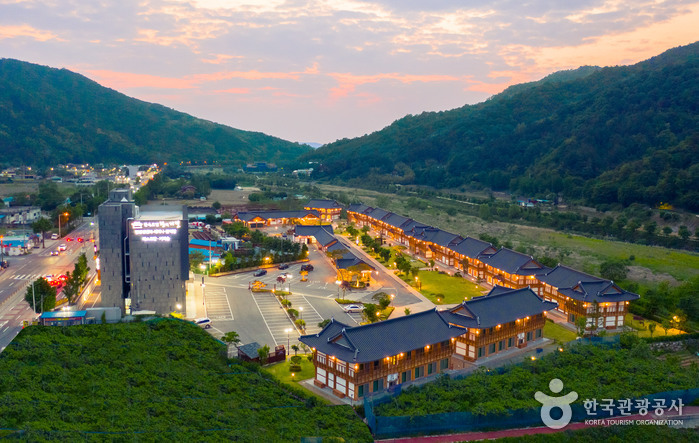
This hanok (traditional Korean house) hotel is located near Jeonju Hanok Village. The hotel complex stands on a plot of land spanning 19,840 m2, containing 11 residential buildings and other facilities. Modern hanok buildings are built on a line, blending with the surrounding nature to offer a comfortable stay. The name of the hotel is evident in the 11 residential buildings, all named after the kings of the Joseon Dynasty.
Sunjonggwan has six rooms in total. The rooms are divided into Gold and Silver Rooms, and are classified into Grade 2, Grade 3, and Grade 5 rooms, after the grading system used for government officials during the Joseon Period. Gold Rooms are located on the second floor, while the 1st floor is occupied by the Silver Rooms. Each room is furnished with a combination of hanok’s unique charms and modern comfort. Exposed wooden beams fill the room with a gentle scent of wood, while window walls offer an expansive view of the scenery outside.
Restaurants such as Samtaegeuk Restaurant, the site of the hotel’s breakfast offering, and Samjogo Restaurant, a Korean restaurant serving lunch and dinnertime, are designated as COVID-19 Safe Restaurants by the city of Jeonju. The Convention Center, which houses a hanok cafe, also offers a number of different facilities for the guests. It takes only 10 min by car to reach most tourist sites in Jeonju.
Gyodonggaon / 교동가온
1.4Km 2025-08-12
73-1, Eunhaeng-ro, Wansan-gu, Jeonju-si, Région Jeonbuk
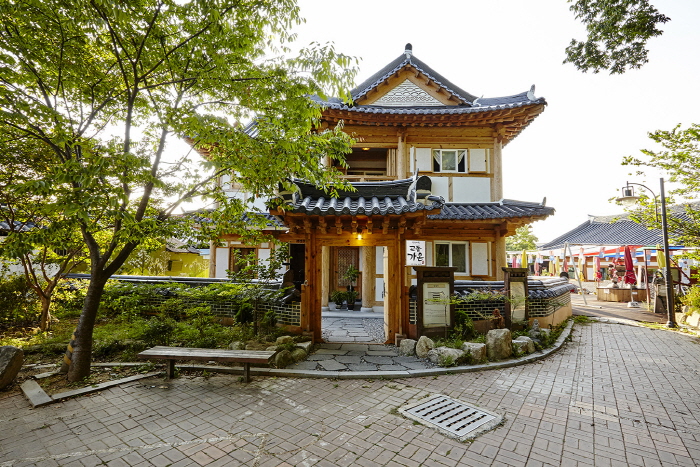
Gyodong Gaon is located right in the middle of the main street of Jeonju Hanok Village. The word "gaon" means "middle" in Korean. It's a two-story traditional Korean house that stands out among the rest of the traditional Korean houses in the alley leading to Omokdae. Just inside the gate is a yard with colorful flower trees, jars of sauces, and furnace. The mural on one of the walls is popular among the guests as a place to take photos.
The "numaru", or "loft" in Korean, overlooks the Hanok Village, and is one of the best places in the village to get a closer look at the 500 year old zelkova tree and the foot of the mountain nearby. Open to all the guests, the "numaru" is very popular during the winter as well as the summer. It's an open space with a wooden floor, so it's very cool during the summer, and it also serves as an observatory to enjoy the view of all the snow-covered trees and roofs in the Hanok Village during the winter while having a hot cup of tea.
The owner of the guesthouse has been living here for 37 years. He rebuilt his house and turned it into a hanok guesthouse in 2014 while making sure the rooms are well insulated and comfortable to stay.
He built a two-story building to make an efficient use of the space, and focused on making all the rooms look different. The house has five rooms, and only the “Meomulda Room” on the first floor is the only rooms with a living room separated from the bedroom. All you have to do is open the door to enjoy the view of the yard, Hanok Village, and Omokdae. The “Nanuda Room” on the second floor is the largest one that can accommodate more than five people, making it the most popular choice among families. The "Damda Room" and "Kkumkkuda Room" both have an attic that can be reached by a ladder. The attic is big enough to sleep two adults, and some guests actually sleep there for a unique experience. One of the walls of the attic is finished with cypress wood which has a pleasant scent. The “Geurida Room” has the best view through the two windows on the either side of the room, in addition to warm sunlight and cool wind that come through the window. Modern, not traditional, doors are installed in all the rooms for better sound proofing and insulation.
Gyodong Gaon offers a number of experience programs, such as traditional games like “gulleongsoe”, “tuho", and “Korean top”, As well as “sabang chigi”, “sampalseon”, and “ttangttameokgi”.
Many Korean adults are familiar with these games, while children and foreigners can find these games interesting. All these traditional Korean games are free to play.
Jeonggahanog / 정가한옥
1.4Km 2025-03-05
78-3, Girin-daero, Wansan-gu, Jeonju-si, Région Jeonbuk
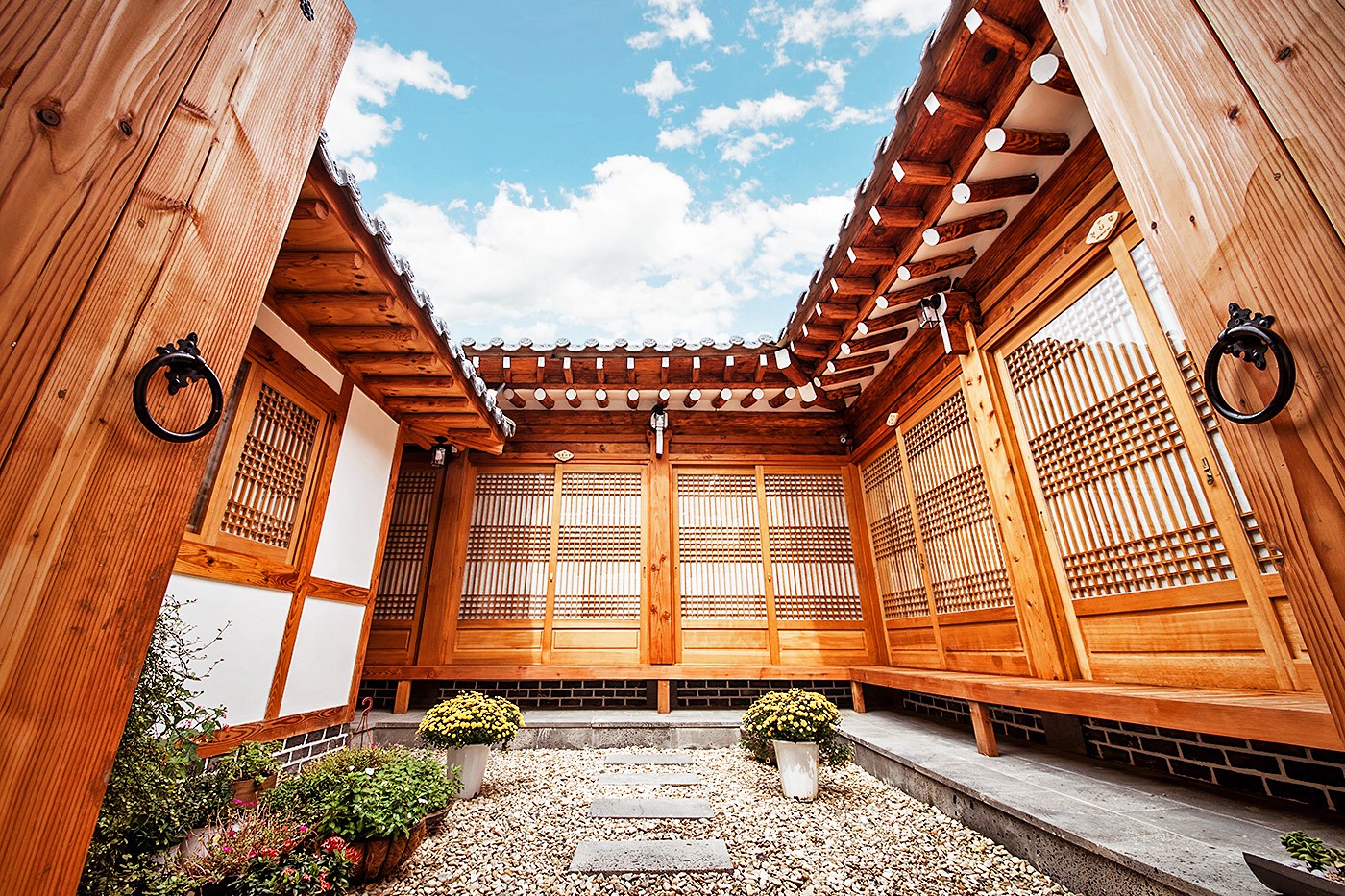
Jeongga Hanok is a space where the traditional beauty of hanok and the modern comfort co-exists. The newly built Hanok is neat and pleasant. When you enter the small cobbled yard, the porch and the eaves will welcome you, and you’ll find that the rooms are filled with delicate wood fragrance. The interior is furnished with Korean cypress trees and red clay. In particular, the Cypress Tree room is all made of cypress trees, from the walls to the ceiling, making guests feel like they are lying in a forest. Maple Room and Ginkgo Tree Room, meanwhile, have attics.
Jeongga Hanok faces Jeonju Hanok Village with the Girin-daero in the middle. Hanok Village is just across the road. Major attractions such as Gyeonggijeon, Jeondong Catholic Cathedral, and Jeonjuhyanggyo Confucian School are all within walkable distance. Omokdae, which offers an unhindered view of Hanok Village, is located over the pedestrian overpass. Jaman Mural Village, famous for colorful mural and cozy cafes, is about 300 meters away and a great spot for selfie lovers.
 Français
 한국어
한국어 English
 日本語
日本語 中文(简体)
 Deutsch
 Español
 Русский


